
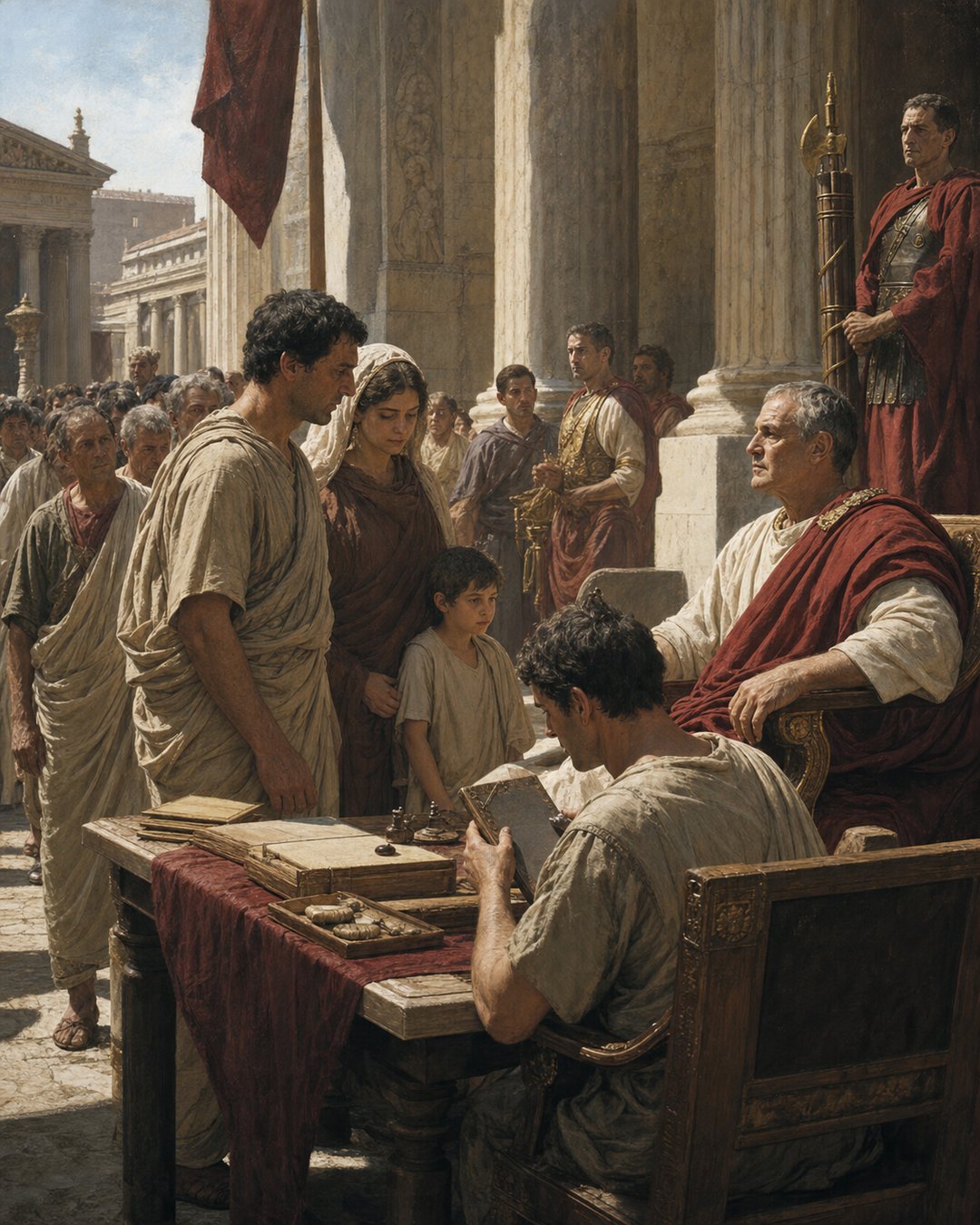
A Roman promise could be scratched into wax. That sounds fragile, but the object changed the argument. Once a name, sum, witness, obligation, or date had a surface, memory was no longer only a matter of who spoke most confidently.
Wax tablets mattered because they made promises harder to deny. They did not make Rome a paper bureaucracy in the modern sense. They gave households, soldiers, merchants, officials, and litigants a portable way to turn speech into evidence.
Writing gave memory a body
Oral promises depend on reputation, witnesses, and recall. A tablet added another witness: the object itself. Wax could be marked, sealed, stored, carried, shown, and compared against what someone later claimed.
The material was humble. A wooden frame, wax surface, and stylus were not impressive like marble. Yet the smallness was useful. An obligation could travel from a shop to a house, from a camp to an office, or from a dispute to a hearing.
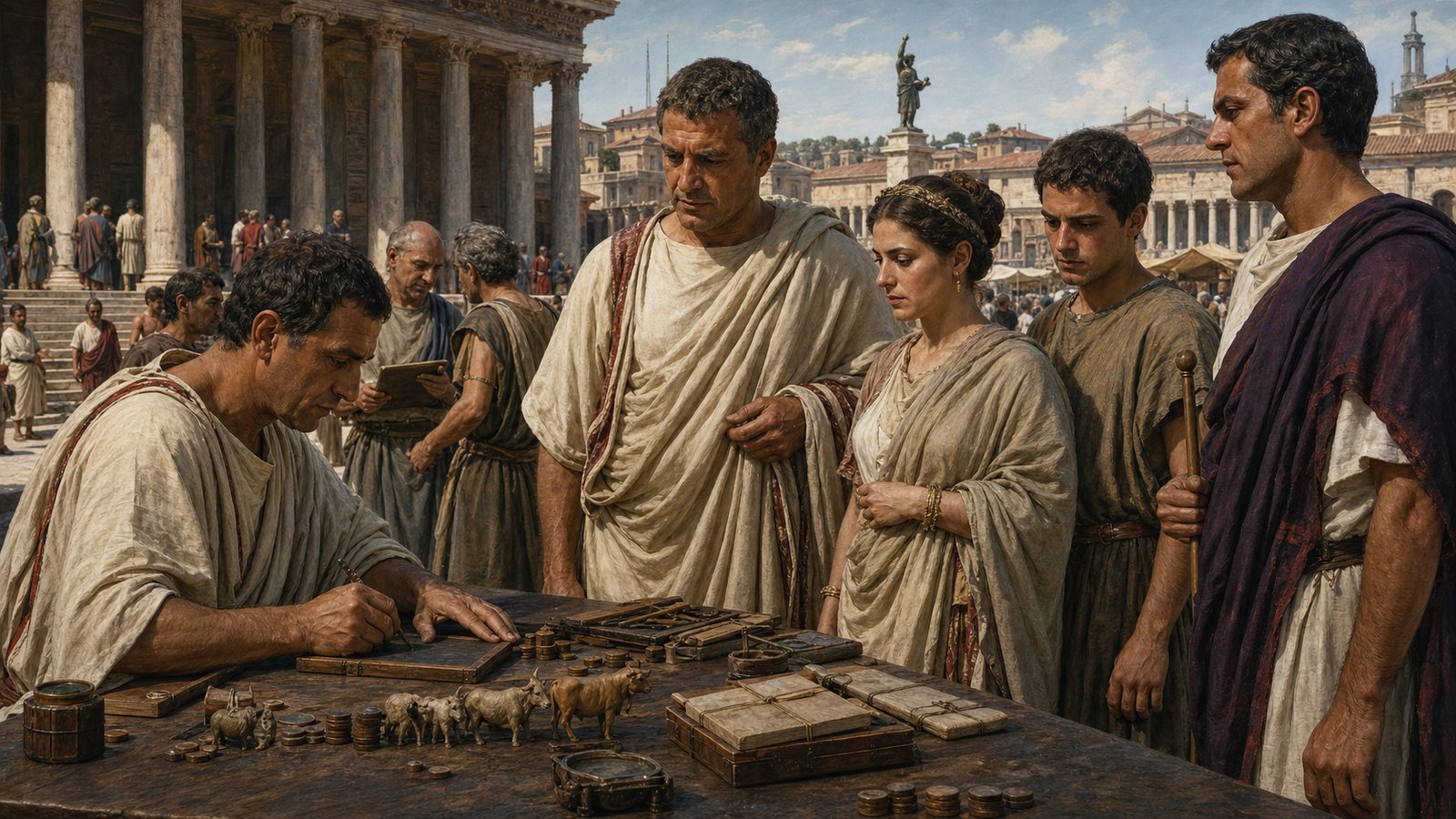
The stylus made business repeatable
A stylus could cut a line into wax and smooth it away again when revision was needed. That made tablets practical for accounts, drafts, lists, and temporary records. Roman business needed that flexibility because daily life produced countless small acts of remembering.
Imagine a clerk leaning over a table while a family waits, property is named, witnesses listen, and a sum is entered. The moment remains social, but the tablet gives it a second life after the people leave.
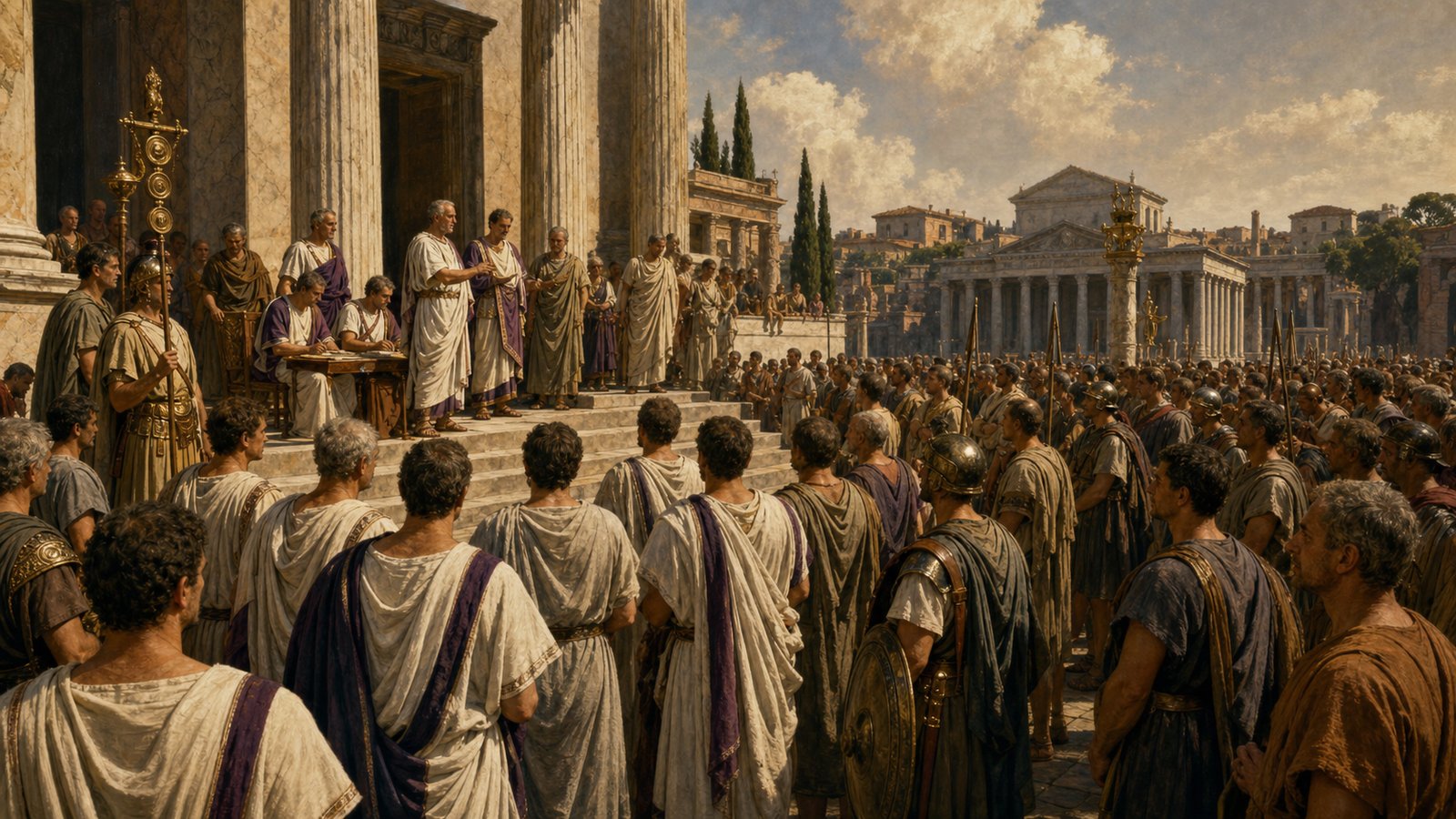
Documents could become weapons in argument
Cicero’s world shows how records could enter public conflict. Account books, tablets, witnesses, and written claims could be used to accuse, defend, embarrass, or prove. A document did not automatically win the argument, but it changed the terrain.
The person who possessed a record could force the other side to explain it. That was power. A promise preserved in writing could follow a debtor or official into a room where denial became more complicated.
Frontier tablets reveal ordinary writing
The Vindolanda tablets are famous because they preserve the everyday written life of a Roman frontier community: invitations, requests, lists, and reports. Their survival is accidental, but their ordinariness is the lesson. Writing belonged not only to emperors and historians.
Those small wooden documents show the empire working through messages that were practical, local, and personal. They make Roman administration feel less like an abstraction and more like people sending words to solve immediate problems.
Seals turned writing into trust
A tablet could be sealed so that contents were protected and authenticity signaled. The seal did not remove the possibility of fraud, but it created a visible claim: this record had a recognized form and a chain of handling.
Roman trust often worked through such layered signs. Witnesses, seals, names, formulas, and objects reinforced one another. The tablet was effective because it entered that social system.
A small object changed public order
Written records helped Rome connect status, property, obligation, and procedure. They made claims portable across distance and time. A promise made today could appear tomorrow before someone who had not heard the original words.
This is why Roman wax tablets made promises harder to deny. They gave memory edges, surfaces, marks, and seals. In a society built on rank and obligation, that made the small tablet one of the quiet instruments of power.
The tablet’s power was not that it was permanent. Wax could be erased, damaged, or overwritten. Its power was that it gave a temporary claim enough shape to be handled. A fragile record was still stronger than an unsupported memory in the right context.
That is a subtle but important point. Rome did not need every note to last forever. It needed records to last long enough to move through a transaction, a journey, an audit, a lawsuit, or a command chain. Durability was often practical rather than eternal.
The tablet also made literacy social. One person might write, another might dictate, others might witness, and still others might later read or interpret. The object gathered people around it and turned private intention into shared evidence.
For merchants and creditors, that mattered because numbers are easy to dispute after profit or loss changes the mood. A written sum, even a modest one, made later evasion more awkward. The tablet did not guarantee honesty; it raised the cost of dishonesty.
For officials, tablets and records helped convert persons into entries: names, property, obligations, ranks, deliveries, and decisions. Roman power often depended on that conversion. To be recorded was to become easier to tax, summon, classify, or defend.
For ordinary people, writing could protect as well as expose. A receipt, invitation, account, or sealed agreement could preserve a claim that might otherwise vanish beneath status. The weak did not become equal through tablets, but they gained another tool.
The sensory details are worth keeping. A stylus scraped; wax caught a groove; a seal pressed an image; tablets clacked shut. Roman written culture was not silent abstraction. It had sound, weight, smell, and touch.
Those details explain why a tablet could feel authoritative even before its words were read. It looked like a record. It behaved like a record. It could be placed before witnesses or officials as something more substantial than rumor.
Rome’s famous monuments projected memory on stone. Wax tablets did a humbler job. They carried the day-to-day memory of transactions, requests, and promises, making ordinary obligations visible for as long as society needed them to remain visible.
A written promise also changed behavior before any dispute began. People who knew a record existed had to imagine a future reader: a partner, heir, magistrate, commander, creditor, or judge. The tablet stretched the moment of agreement into a possible future confrontation.
That future mattered in a society where status could bend memory. A powerful person might still intimidate, but a marked and witnessed tablet made denial less clean. It introduced friction into the easy abuse of rank.
The household was one place where this friction mattered. Debts, dowries, rents, purchases, and loans could all become complicated when people died, moved, or quarreled. A tablet did not make family and business peaceful, but it gave conflict a starting point more concrete than recollection.
In military settings, records could be just as practical. Supplies, leave, pay, recommendations, and requests needed portable memory because camps were full of movement. The frontier tablet reminds us that Roman power often ran on ordinary notes rather than grand inscriptions.
The public scene and the private scene therefore belonged together. Registration made people legible to the community; accounts made obligations legible to households and partners. Both forms reduced the freedom to pretend that nothing had been said.
What looks like minor clerical culture was actually a discipline of accountability. A stylus, wax surface, seal, and witness could pull words out of the air and attach them to a person. That made Roman promises less comfortable to escape.
Sources & Further Reading
- Smith Dictionary, Tabulae
- Vindolanda Tablets Online
- Cambridge Companion to Roman Law
- Smith Dictionary, Stilus
- Cambridge Core, Pompeian business tablets
- Livy, History of Rome, Book 1
- Cicero, Pro Roscio Comoedo
- British Museum, Roman writing tablets
- Smith Dictionary, Signum
- Oxford Classical Dictionary, Roman administration