
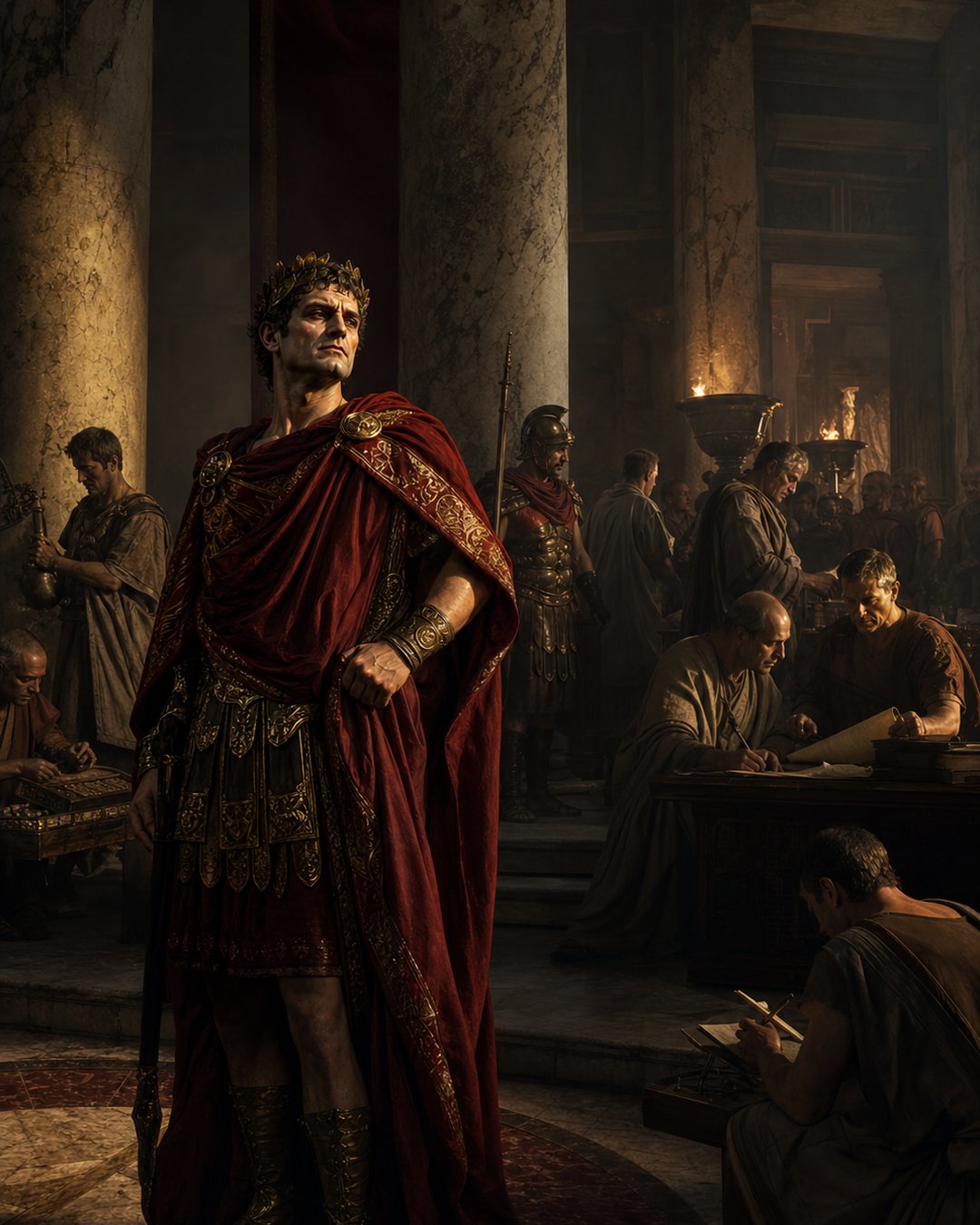
Why Bad Emperors Are Easier to Remember Than Competent Ones
Bad emperors are easy to remember. They come with torches, banquets, executions, insults, rumors, strange pleasures, and scenes that can be repeated in a sentence. Competent emperors are harder. Their achievement is often that the tax notice went out, the frontier held, the grain arrived, and nobody wrote a thrilling story about it.
That imbalance is not an accident. It is built into the way Roman imperial memory reached us.
Suetonius knew the power of the vivid scene
Suetonius did not write modern administrative reports. In The Twelve Caesars, he arranges emperors through ancestry, public acts, omens, habits, virtues, vices, and memorable anecdotes. The method creates portraits. Portraits need sharp lines.
A scandal gives the writer a line. An insult shows arrogance. A banquet shows excess. A private habit can stand in for a reign. That does not make Suetonius useless. It makes him dangerous in the best historical sense: he preserves details that demand interpretation rather than passive belief.
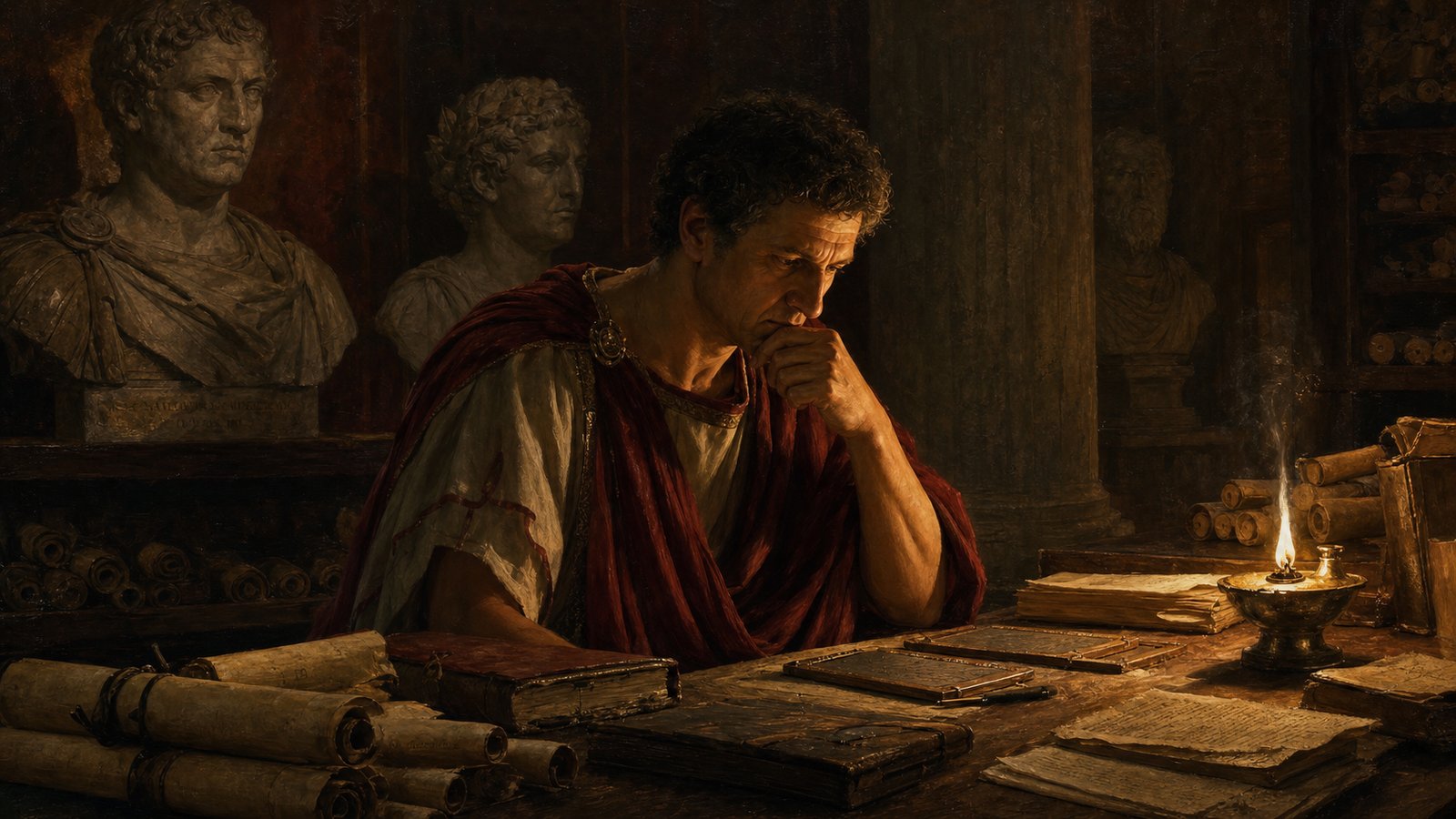
Administration leaves fewer sparks
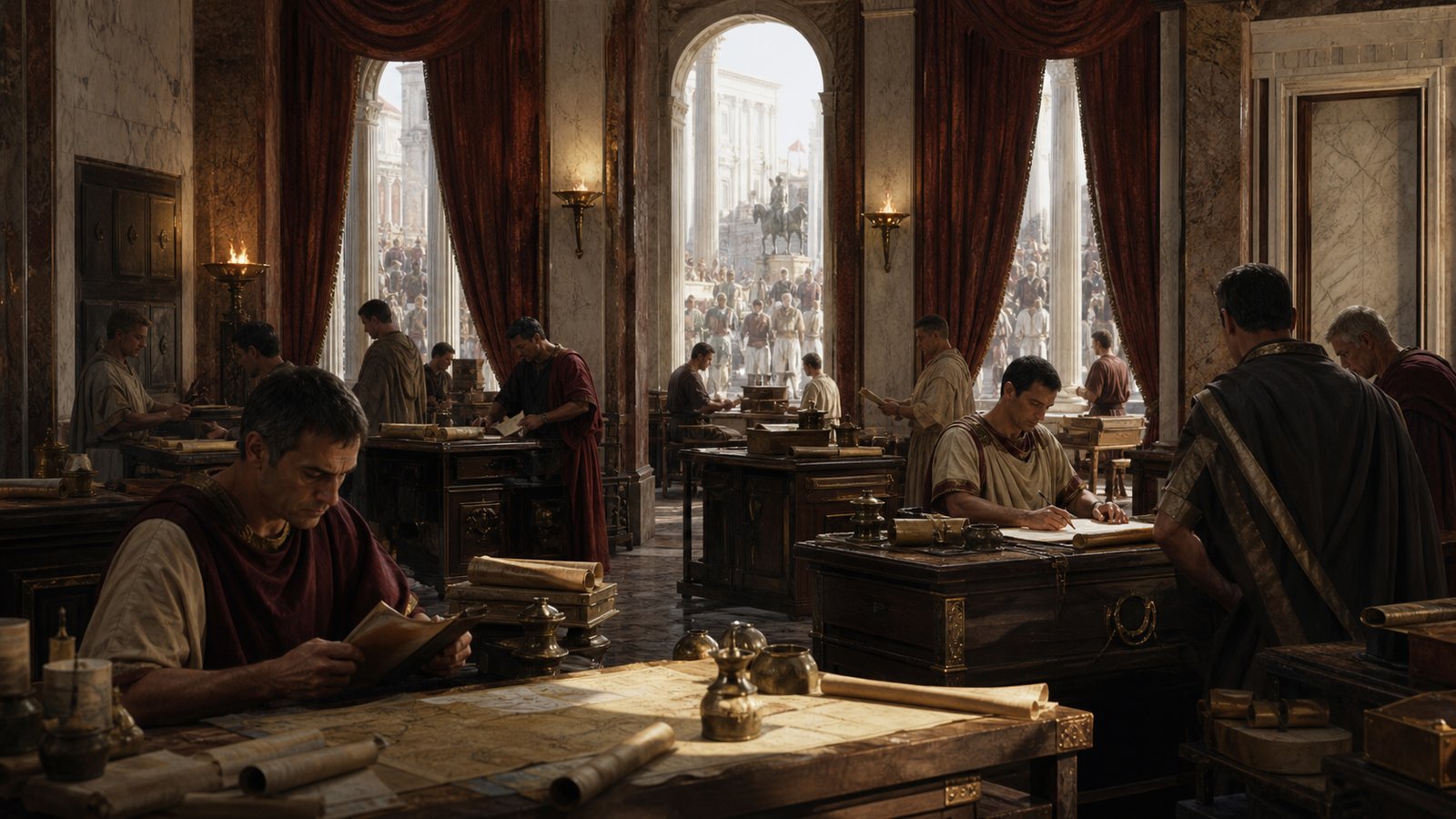
Competent government is full of dull verbs: appoint, answer, repair, audit, provision, inspect, rescript, fund, settle, pay. Those actions mattered enormously. They kept provinces functional, soldiers supplied, roads usable, petitions moving, and food available. They rarely become unforgettable scenes.
That is why an emperor who mostly kept the machine running can feel pale beside one who broke it spectacularly. A stable year has fewer hooks than a murderous week.
Tacitus warned that memory had politics inside it
Tacitus opens the Annals by reminding readers that the shift from Republic to imperial rule changed what could be said and why. Praise, fear, resentment, flattery, and senatorial injury all shaped the record. Imperial history was never written from nowhere.
Many surviving elite authors cared deeply about senatorial dignity. An emperor who humiliated that class might be remembered with special heat. An emperor who managed provinces efficiently while boring Rome’s storytellers could slide toward the background.
Monsters are portable
A monster travels well. Caligula as madness, Nero as performance, Domitian as fear, Tiberius as suspicion: these portraits compress reigns into moral weather. Later readers can carry them easily because they behave like warnings.
But warnings simplify. They turn government into character. They ask whether the ruler was cruel, luxurious, cowardly, theatrical, or paranoid, and sometimes they leave less room for ordinary administrative reality.
The boring machinery was still the empire
The empire did not live only in palaces. It lived in warehouses, tax registers, military diplomas, road stations, provincial courts, correspondence, harbors, aqueduct repairs, and appointments. A competent emperor’s success might mean that most of those systems stayed just functional enough to be invisible.
Invisibility is a problem for memory. People remember the fire, not the firebreak that worked. They remember the execution, not the paperwork that prevented one.
How to read a bad emperor story
The answer is not to rescue every notorious ruler or flatten every scandal into bias. Some emperors really were dangerous. Some stories preserve real terror. The better question is why this scene survived, who needed it, and what kind of political work it performed.
If a story is vivid, treat that vividness as evidence too. It tells us what ancient writers thought would persuade readers. It tells us what counted as vice, what frightened elites, what amused audiences, and what kind of ruler could be made memorable.
Why competence disappears
Bad emperors dominate memory because scandal has a shape. Competence often has only an absence: no riot, no mutiny, no famine, no spectacular collapse. Roman readers, like modern readers, noticed the crash more than the maintenance schedule.
That is why the Lost Eagles way of reading emperors has to slow down. The monster may be real. The anecdote may be precious. But behind every memorable imperial scene stands a quieter question: what machinery of rule has the story made us forget?
Senatorial pain became literary structure
Much of the surviving high literary tradition came from men who cared about rank, speech, ancestry, law, and the old dignity of public life. An emperor who made senators afraid did not merely govern badly in their eyes; he damaged the world through which they understood themselves. That injury shaped memory.
This does not mean every hostile story is false. It means hostility gave stories energy. A fearful elite preserved the scenes that explained its fear. Later readers inherited not only events but the emotional architecture around them.
The quiet emperor has a documentation problem
Imagine a reign in which the frontier accounts are paid, petitions answered, roads repaired, grain watched, governors rotated, and no spectacular scandal dominates the capital. That reign may have mattered deeply to millions of people. It still gives the storyteller fewer handles.
Roman imperial history therefore has a built-in distortion. Failure produces scenes. Maintenance produces continuity. The historian has to look for the continuity too, even when the sources invite us toward the flame.
Memory prefers the scene of judgment
Ancient readers wanted examples. A monstrous emperor could become a compact lesson about arrogance, cruelty, luxury, or fear. A competent emperor required a slower kind of attention. He had to be measured in systems that did not collapse, complaints that did not become revolts, and provinces that remained ordinary enough to be overlooked.
That difference still shapes us. We repeat the scandal because it has color and motion. We skip the functioning office because it seems gray. But Rome was governed in gray as well as red. To understand the emperors, we have to read both the memorable wound and the quiet scar tissue around it.
The detail changes the whole room
The useful habit is to stay with the concrete detail long enough for it to change the story. A furnace, a boundary trench, a thrown crust of bread, or a neglected bundle of petitions is not decoration. It is evidence of how Roman power entered daily life. The grand interpretation only works when it is tied to objects, places, bodies, and named ancient witnesses.
That is also why the simpler version is not enough. Rome did not survive as a set of slogans. It survived in practices that people repeated, feared, resented, enjoyed, and remembered. Follow those practices closely, and the familiar story becomes less flat, more human, and more dangerous.
That method also guards against the easy myth. Instead of saying that Rome was simply brutal, brilliant, decadent, or modern, it asks where the claim can be seen. Who is standing in the scene? What number, room, route, office, ritual, or ancient sentence anchors the argument? Once those anchors are visible, the article is no longer a recycled Roman mood. It becomes a specific case study in how a particular Roman system worked.
The result is a memory trap. Competent rule often leaves roads repaired, grain moving, and paperwork done; bad rule leaves stories with victims, witnesses, and scandal. Roman writers could turn those scandals into moral portraits, which is why administrative success so often sounds quieter than imperial disaster.
That imbalance rewards drama, not accuracy, and it still shapes the emperors modern readers meet first.
Sources & Further Reading
- Suetonius, The Twelve Caesars
- Tacitus, Annals, 1.1
- Cassius Dio, Roman History