
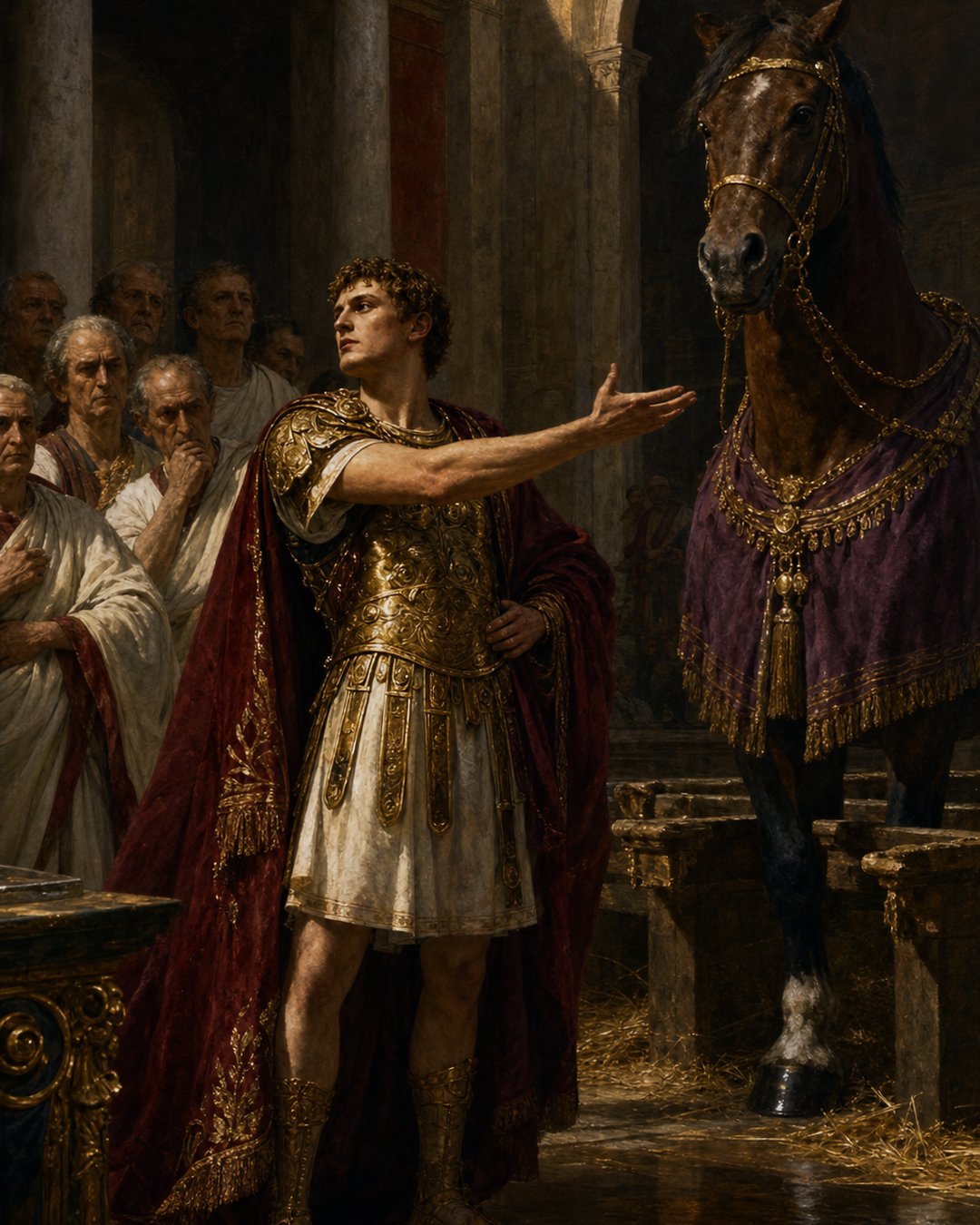
The famous joke is that Caligula made his horse a consul. The stranger truth is that the best ancient evidence does not quite say that. Suetonius says the emperor planned to make Incitatus consul. Cassius Dio says he promised it. The difference matters. A horse probably did not sit in Rome’s highest annual office. But the rumor survived because it caught something Romans feared about imperial power: an emperor could make a joke out of the Senate’s dignity and force serious men to treat the joke as dangerous.
Caligula ruled from AD 37 to 41, a short reign that later writers remembered through stories of extravagance, cruelty, theatricality, and insult. Incitatus became one of the sharpest stories because it compressed court politics into a single absurd image. A racehorse with elite honors could say what a long constitutional lecture could not. Under a bad emperor, the symbols that made Roman rank meaningful could be handed to an animal.
The consulship was not a punchline to senators
The consulship carried ancient prestige. By the imperial period, emperors controlled the political world, but senatorial offices still mattered as signs of ancestry, honor, and public hierarchy. A consulship said that a man belonged near the top of Rome’s civic order. To suggest that a horse might receive it was not only silly. It was a calculated fantasy of degradation.
That is why the story remains useful even if no actual appointment occurred. A threat can humiliate without being carried out. If Caligula said or staged something close to the reported promise, senators had to understand that their rank depended on imperial favor. The office they treated as sacred could be turned into court theater.
Suetonius remembered objects, not minutes
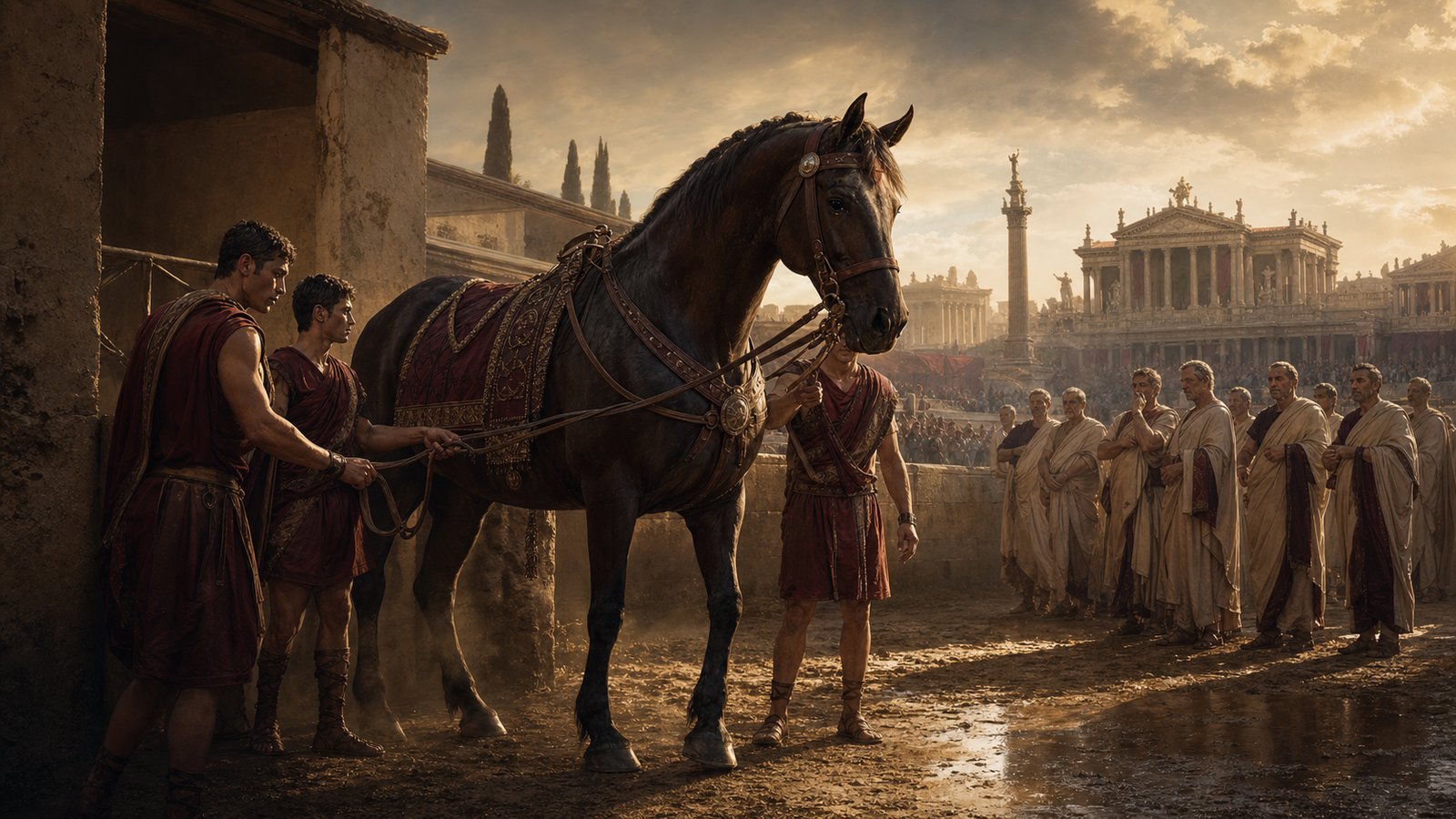
Suetonius gives the story its unforgettable physical details. Incitatus, he says, had a marble stable, an ivory manger, purple coverings, and a jeweled collar. Those details may be hostile biography, but they are not random. Marble, ivory, purple, and gems belong to the language of wealth and status. They turn the horse into a courtier without needing the horse to speak.
The objects matter because Roman insult often worked through visible rank. A man could be honored by where he sat, what he wore, who saluted him, and how others approached him. In the Incitatus anecdote, the animal receives signs that look uncomfortably close to elite privilege. The image mocks senators by making their world transferable to a stable.
The story may be about fear disguised as madness
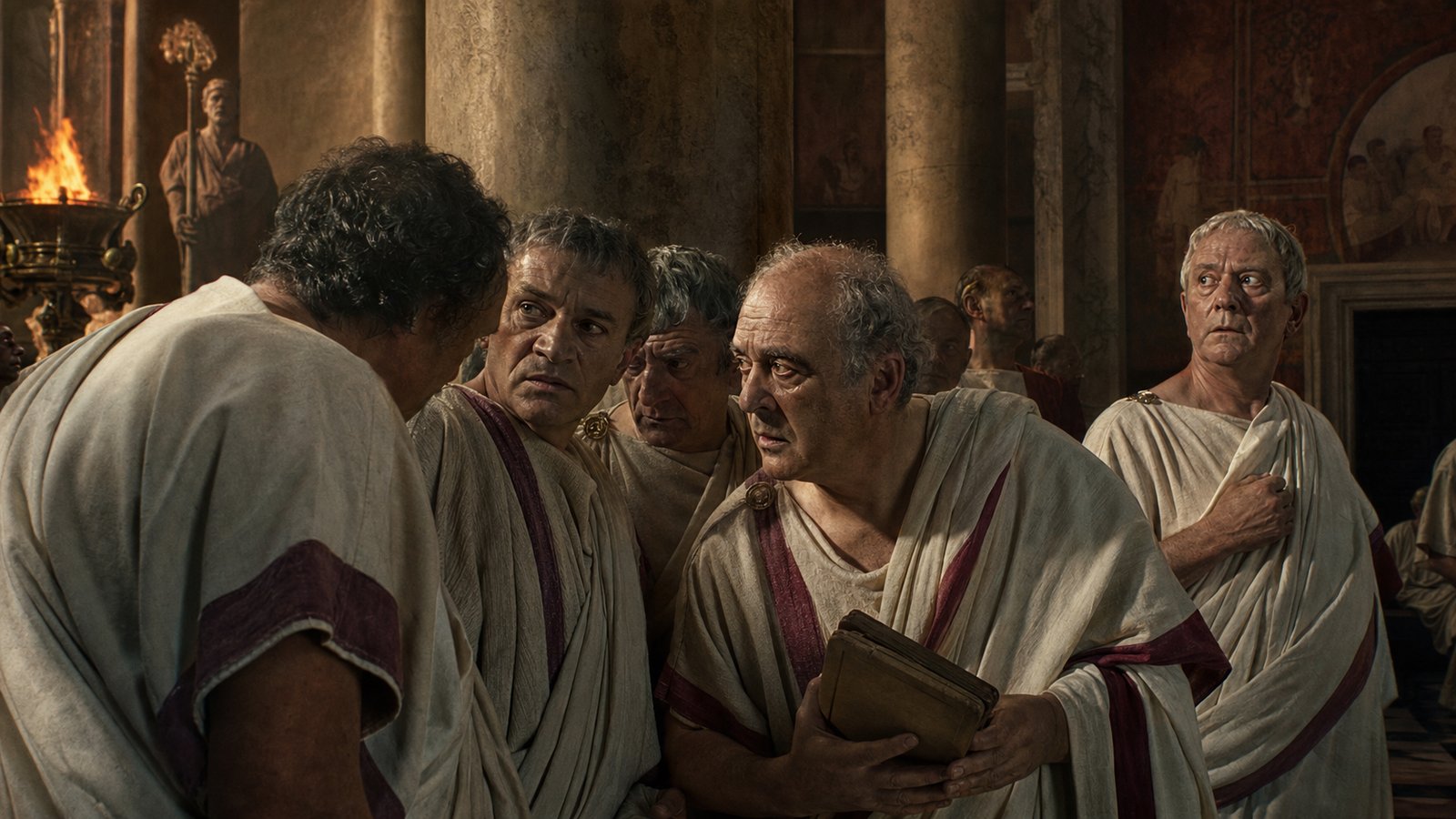
Modern readers often flatten Caligula into madness and leave the matter there. The ancient story is sharper if we ask what the supposed madness did politically. A ruler who behaved unpredictably made everyone else cautious. If a senator laughed at the wrong moment, he might expose contempt. If he treated the horse honors seriously, he helped the emperor’s humiliation succeed.
That double bind is the dark heart of the story. Incitatus did not need to become consul. The possibility was enough to make the Senate imagine itself trapped inside someone else’s performance. Caligula could test whether men of rank would swallow absurdity because they feared the person staging it.
Hostile memory made the horse immortal
The surviving sources are not neutral recordings from a palace stenographer. They are hostile memories shaped after Caligula’s death in AD 41. That does not make them useless. It tells us why the story endured. Romans who hated or feared Caligula preserved anecdotes that made his rule intelligible as a violation of order.
The Incitatus story worked because it made abuse visible without requiring a legal case. A horse with a marble stall and a threatened consulship became a symbol of offices emptied of dignity. The anecdote says, in effect, that under such an emperor rank could become costume and government could become spectacle.
The stranger point is not whether the horse governed
Asking whether Incitatus really became consul is the least interesting version of the question. The better question is why Romans found the claim believable enough to repeat. They lived in a system where old republican language survived under imperial control. Senators still held offices, but everyone understood that imperial will could make or unmake careers.
That is what makes the story stranger than the joke. It is not a tale about a horse doing paperwork. It is a tale about men who knew that the honor of their offices could be mocked from above. Caligula’s horse became immortal because the rumor exposed a political humiliation that Romans could recognize: when one man holds too much power, even the highest titles can be made to neigh.
The anecdote worked because it was almost believable
The most useful ancient anecdotes are rarely random. They exaggerate a pattern that readers already understand. Caligula did not need to complete a legal appointment for the story to bite. Roman senators already knew that the emperor could elevate unworthy favorites, punish dignity, and turn public honor into a private signal. Incitatus was the perfect vehicle because the horse could not desire office. Any honor given to him pointed back to the giver.
The dates sharpen the point. Caligula ruled only four years, from AD 37 to 41, yet later memory made him stand for a particular kind of imperial danger: power that behaved as if other people’s status existed for its amusement. The horse story let hostile writers make that danger concrete. Instead of saying “the emperor humiliated senators,” they could show a stable fitted with elite materials and a rumor about Rome’s highest office.
There is also a political reason the story outlived more ordinary accusations. A tax dispute or appointment quarrel needed context. A horse named Incitatus receiving marble, ivory, purple, and perhaps a threatened consulship needed almost none. Anyone who understood rank could understand the insult. The anecdote traveled because it was compact enough to remember and sharp enough to wound.
Why the detail still matters
The article’s central point depends on concrete evidence rather than a modern slogan. A named person, a dated reign or crisis, a physical setting, and an ancient-source detail give the story its weight. Without those anchors, Roman history turns into a parade of familiar legends. With them, the legend becomes a clue to how Romans explained power, fear, status, and memory.
That is also why the surviving ancient sources must be used with caution rather than discarded. Suetonius, Tacitus, Plutarch, Cassius Dio, and Appian often wrote with moral purpose, political memory, or hindsight. Their anecdotes may sharpen a scene, but the sharpening itself tells us what later Romans thought the scene meant. The safest reading keeps both truths in view: the exact detail needs scrutiny, and the fact that Romans preserved it still reveals the pressure points of their political world. For readers, the payoff is a firmer kind of curiosity: not whether the story is simply true or false, but why this particular story became the one Romans remembered.
Sources & Further Reading
- Britannica, Caligula
- Suetonius, Caligula, 55
- Cassius Dio, Roman History, 59.14
- Britannica, consul
- Smith Dictionary, Purpura
- Britannica, Roman Senate