
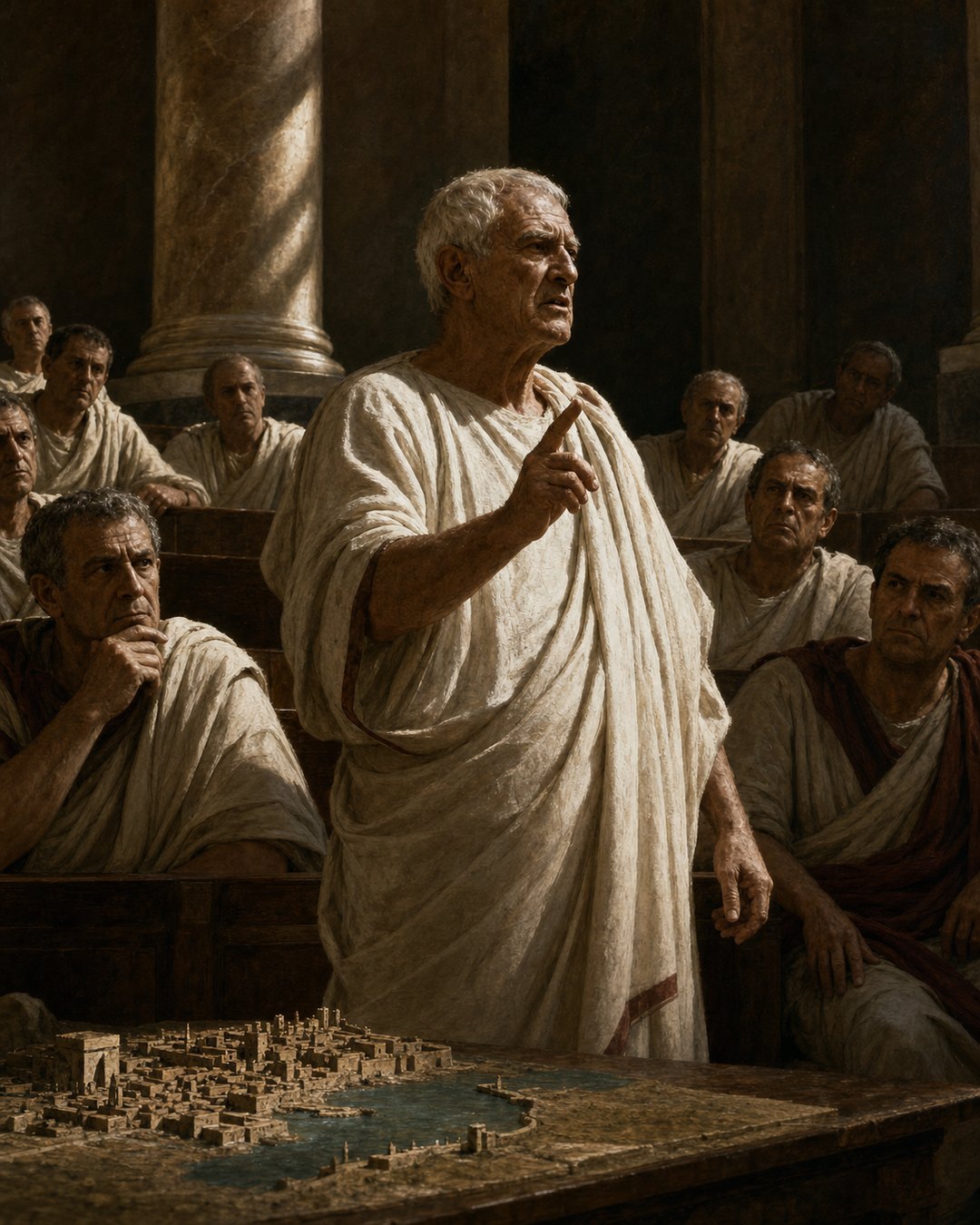
Cato the Elder did not need Carthage to be invading Italy in order to make Romans fear it. By his old age, Hannibal was gone, Rome had already defeated Carthage in the Second Punic War, and Roman power stretched farther than it had in the terrified years after Cannae. Yet Cato kept returning to the same theme: Carthage was still a danger, and Rome should not rest while it existed.
The famous line is usually remembered in Latin form, Carthago delenda est: Carthage must be destroyed. The more revealing detail is smaller. Plutarch says Cato once shook out fresh figs in the Senate and told the senators they had been picked near Carthage only a few days earlier. The point was not botany. It was distance. A rival city that could send fresh fruit to Rome was close enough, rich enough, and alive enough to be made frightening again.
The old enemy still looked alive
Carthage after the Second Punic War was not the Carthage that had sent Hannibal over the Alps. It had lost empire, fleet, and strategic freedom. But it had not vanished. It remained a commercial city in North Africa, tied to ships, warehouses, farms, and Mediterranean exchange. To many Romans, that was exactly the problem. A defeated rival that recovered prosperity could be described as a future rival waiting for permission.
Cato understood the political power of that picture. He did not have to prove that Carthage was currently stronger than Rome. He only had to make senators imagine what wealth, time, and resentment might become. Roman memory supplied the rest: elephants, burned farms, dead citizens, and the years when Hannibal had made Italy itself feel unsafe.
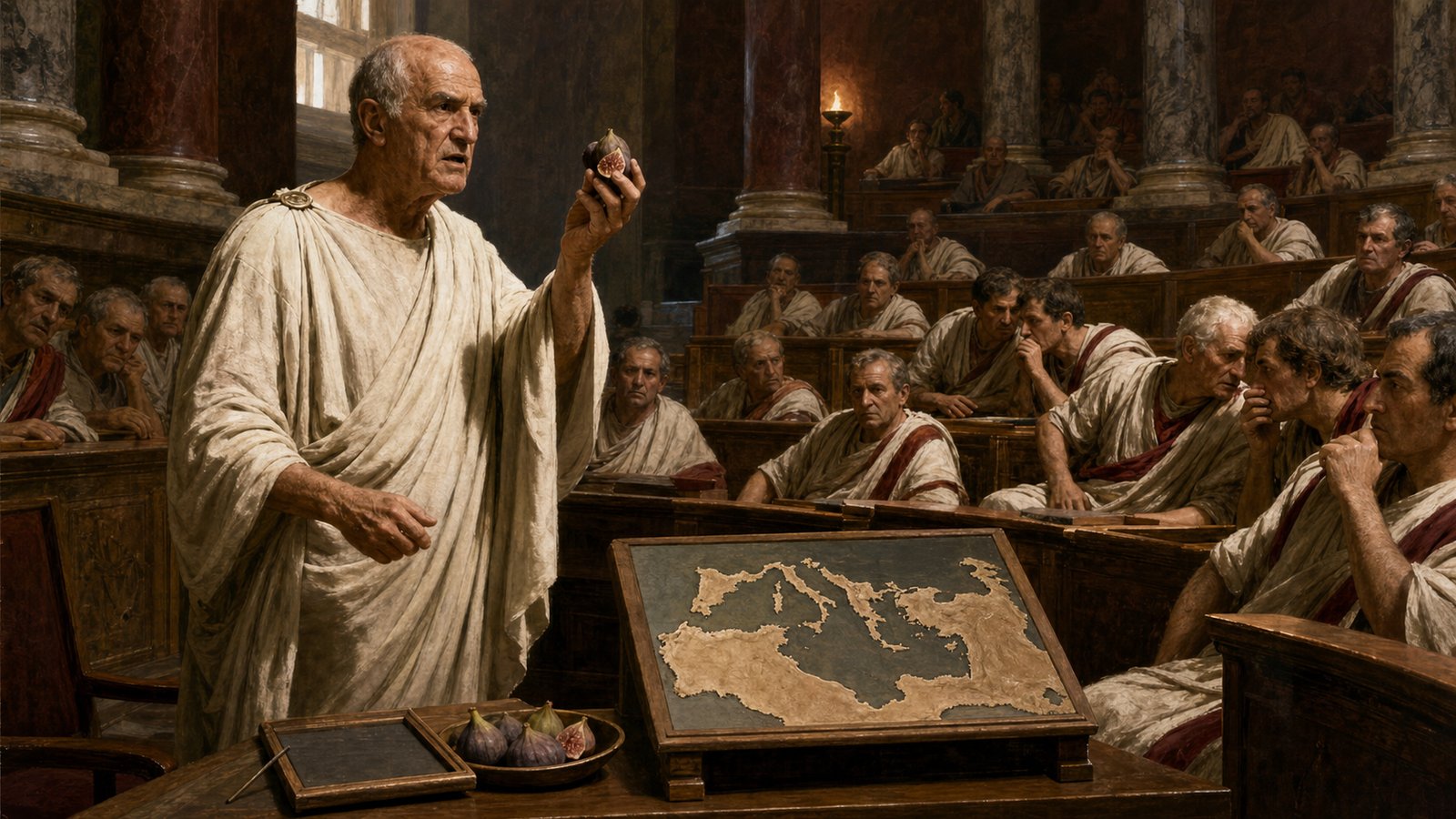
The fig story made strategy tangible
Political warnings often fail because they feel abstract. Cato’s figs worked because they were physical. A senator could see them, smell them, and understand the implied argument without needing a map lesson. If fruit could come from near Carthage to Rome while still fresh, then Carthage was not a remote legend. It was across the sea, active, connected, and close.
The scene also helped Cato compress several claims into one gesture. Carthage had fertile territory. Carthage had trade routes. Carthage had enough life after defeat to matter. Rome’s victory had not erased geography. The Mediterranean did not become wider because Rome felt superior.
Carthage was useful inside Roman politics
Cato’s repetition gave Rome a clean enemy at a time when Roman politics could be messy, personal, and factional. External danger simplified arguments. It let a senator sound severe rather than ambitious. It turned caution into patriotism. If someone resisted final war, he could be made to look naïve about Rome’s oldest nightmare.
That does not mean every Roman agreed with Cato in the same way. Ancient sources preserve debates and hesitations around the final conflict. But the pressure of memory was powerful. The Second Punic War had not been an ordinary war. Hannibal’s invasion became a political inheritance. A city associated with that fear could be invoked long after its immediate military capacity had changed.
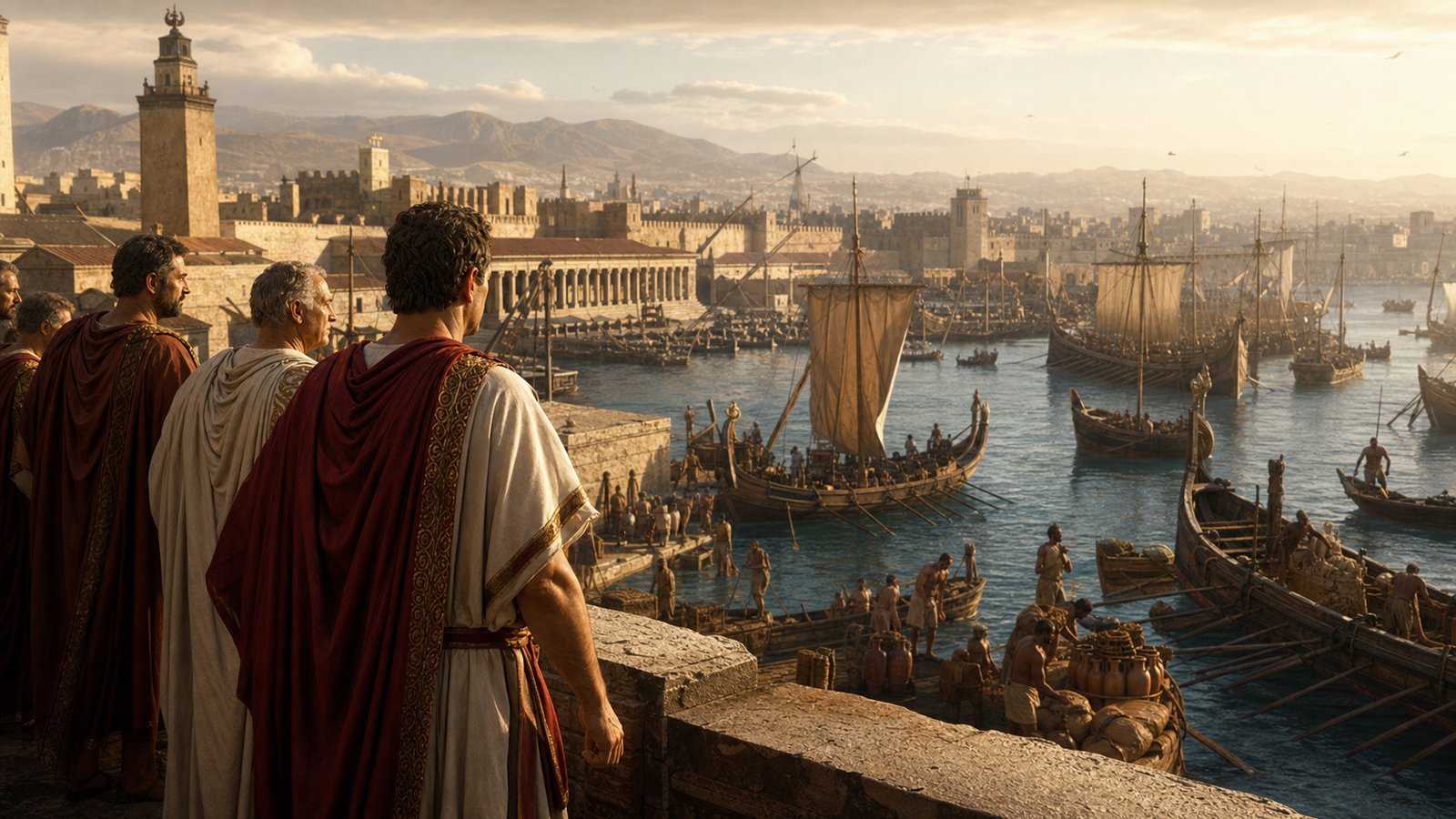
The final war turned warning into policy
The Third Punic War began in 149 BC, the year Cato died, and ended in 146 BC with Scipio Aemilianus taking Carthage. The destruction that followed became one of Rome’s hardest images of victory. Later legend added the famous claim that Romans salted the earth, but that detail is not supported by ancient evidence. The real story does not need it. Rome destroyed a city whose continued existence had been made politically unbearable.
Cato’s success lay in making Carthage impossible to treat as merely defeated. He framed it as unfinished business. Every sign of recovery could be recast as proof of danger. Every delay could look like weakness. Every memory of Hannibal made the future feel like it might repeat the past.
Rome kept talking because fear was practical
The reason Cato’s Rome could not stop talking about Carthage is that the conversation did work. It organized memory, justified severity, and kept an external rival at the center of domestic debate. The figs mattered because they made fear concrete. They turned distance into days, trade into threat, and prosperity into evidence.
That is the uncomfortable lesson. Rome did not need Carthage to be marching on the city for Carthage to be politically useful. A living rival could be made more frightening than a defeated one precisely because it still had streets, harbors, markets, and time. Cato saw that a small object in the Senate could carry an old war back into the present. Once that happened, the question was no longer whether Carthage had been beaten. It was whether Rome could tolerate seeing it alive.
The myth is weaker than the real warning
Modern retellings sometimes reach for the salting of Carthage because it sounds like the perfect symbol of Roman hatred. But the unsupported salt story can distract from the harder truth. Rome did not need a legendary curse to make the destruction severe. The political campaign against Carthage had already reduced a living city to a problem that could only be solved by removal.
That makes Cato’s rhetoric more revealing, not less. He helped teach Rome to see prosperity itself as evidence. A harbor full of ships, a field producing fruit, and a city recovering from defeat all became warning signs. The fear was practical because it pointed toward action. Once enough Romans accepted that Carthage’s ordinary life was intolerable, the final war could be presented not as aggression but as prudence delayed too long.
There was also a psychological advantage in repeating the warning until it sounded like common sense. A single speech could be dismissed as severity. A refrain at the end of speech after speech made Carthage part of the Senate’s background noise. By the time war came, the argument had been rehearsed so often that destruction could feel like the conclusion of a long public lesson.
For The Lost Eagles, the useful question is not whether later memory made the story dramatic. It did. The useful question is which hard details let the drama survive: a year, a named actor, a public setting, an ancient source, and a physical object or ritual that people could remember. Those details keep the article from floating into slogan. They also show why Roman political culture was so powerful and so fragile. It could turn law, religion, and memory into order; under pressure, the same tools could turn into accusation, panic, and force.
The fig story endures because it joins appetite to strategy. A fruit normally belongs to markets, tables, and ordinary pleasure. In Cato’s hand it became evidence in a geopolitical argument. That transformation is the essence of his campaign: everyday prosperity in Carthage was recast as a military warning for Rome.
It also let Cato argue from memory without sounding merely nostalgic. The past became a forecast, and a familiar enemy made the forecast easy to believe.
Sources & Further Reading
- Britannica
- Plutarch, Life of Cato the Elder, 27
- Britannica, Carthage
- Britannica, Third Punic War
- Appian, Punic Wars
- Britannica, Scipio Africanus the Younger
- Livius, Carthage
- Britannica, Hannibal
- Britannica, Cato the Elder