
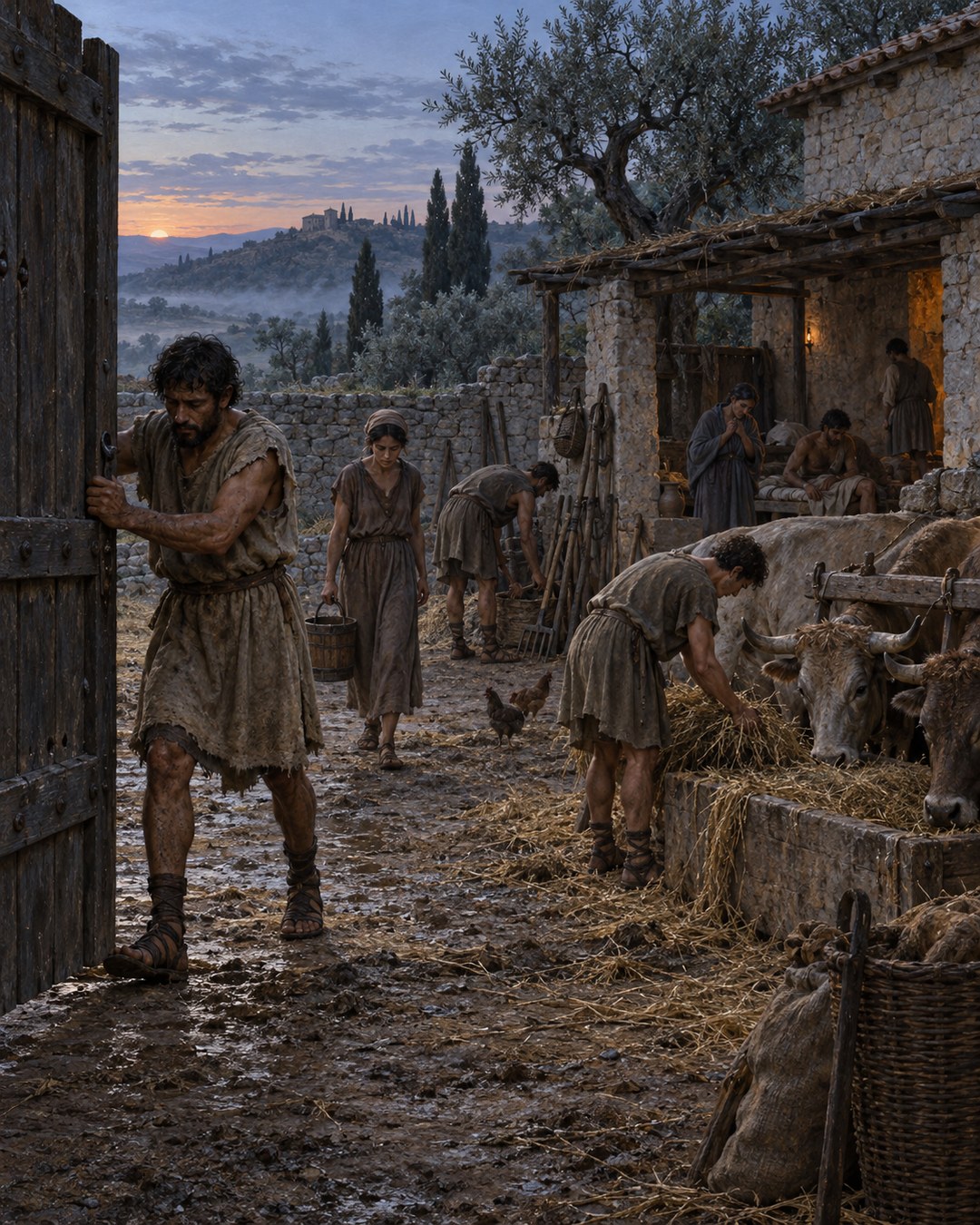
Before the overseer slept, he had to know who was in each bed, whether the gate was barred and whether the oxen had fodder.
At dawn, Cato wanted him up before everyone else.
Those two instructions are often read as a compact tribute to diligence. Inside On Agriculture, they form the outer frame of something harsher and more systematic: an estate regime that measured labor, challenged excuses, controlled movement and credit, rationed supplies and made one enslaved manager answer for other enslaved workers.
The long day closed a chain of surveillance.
The Owner Began with Ground, Not Excuses
When the master arrived, Cato told him first to honor the household god and then inspect the entire farm. If he could not finish that day, he should do so the next. Only after seeing conditions himself was he to call the overseer.
The questioning followed a practical order. What work had been completed? What remained? Had tasks been done at the proper time? Could the remainder still be finished? What had the estate produced in wine, grain and other goods?
Cato then moved from statements to calculation. The owner compared output with the number of laborers and the time consumed. The overseer might explain shortfalls through illness, bad weather, runaway slaves or public labor obligations. Cato’s answer was not to reject every explanation automatically, but to test it against the work that conditions still allowed.
A rainy season, for example, did not mean an idle estate. Workers could scrub and pitch wine vats, clean buildings, shift grain, haul manure, prepare a manure pit, clean seed, mend harness and repair their own smocks and hoods.
Inspection therefore converted weather into a narrower question: not “Could the preferred task happen?” but “What other useful task should have replaced it?”
Accounts Turned the Farm into Comparable Flows
After reviewing labor, the owner checked money, grain and fodder. Wine and oil received their own reckoning: what had been sold, what had been collected, what remained due and what stock was still available for sale.
Supplies on hand had to be verified. Missing necessities for the current year were to be obtained; surplus goods were to be sold. Work suitable for contracting went out to contractors. The owner then left written directions for what should happen on the estate and what should be let outside it.
This paperwork linked a visit to the weeks after departure. The owner did not need to remain beside each field if orders, inventories and later comparisons made the overseer’s decisions legible on return.
Processes such as sorting heavy seed on a sloped threshing floor appear intensely physical. Cato’s management instructions reveal another layer around that motion. Someone had to assign labor, preserve seed, count stores, record sales and explain delay.
The estate’s outputs could differ—wine, oil, grain, fodder, livestock—but the audit pulled them into one repeated comparison between resources consumed and work completed.
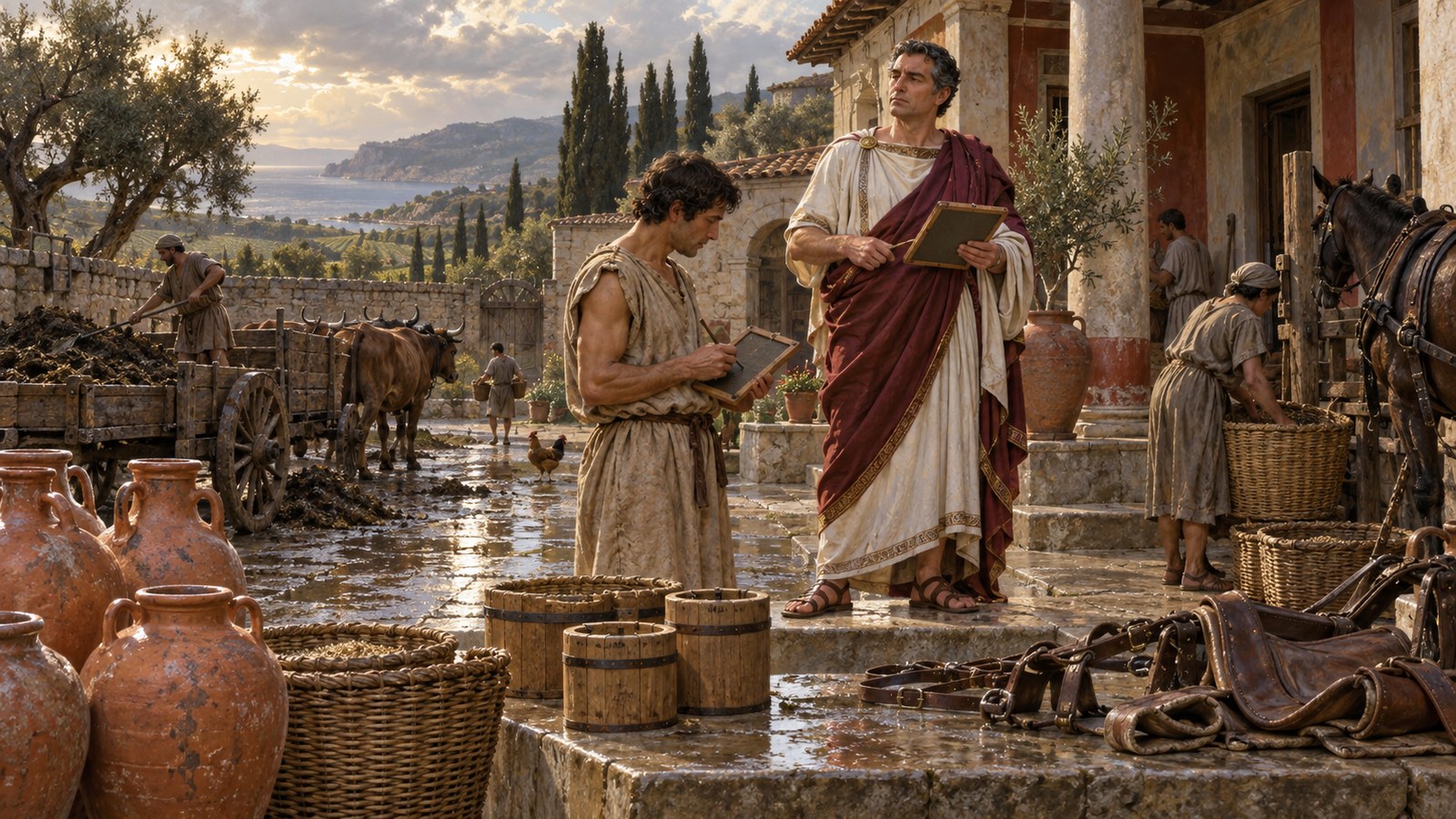
The Overseer Managed People by Restricting Himself
Cato required the overseer to settle disputes among the workers and punish an offense in proportion to the fault. He also insisted that servants receive enough food and protection to avoid cold and hunger. Provision and coercion belonged to the same unequal structure.
Keeping people occupied, Cato argued, made wrongdoing and meddling less likely. If the overseer tolerated misconduct, the owner was to punish him. Good work, by contrast, deserved acknowledgment so others might take pleasure in doing well.
The overseer’s own behavior was tightly bounded. He was not to wander, drink or dine outside. He had to carry out the master’s orders and resist assuming that he knew more than the owner. The master’s friends became his friends; people whom the master instructed him to hear gained his attention.
Religious practice was restricted as well. Cato allowed rites at the crossroads festival of the Compitalia or before the household hearth, but not an independent field of ritual commitments. He also barred consultation with fortune-tellers, prophets, diviners and astrologers.
These rules narrowed alternative loyalties and advice. Outside meals, companions, seers and private ceremonies could create relationships beyond the owner’s inspection. Cato’s ideal manager remained useful precisely by remaining enclosed within the estate’s command.
Credit Could Not Leak through the Farm Gate
The overseer could extend credit to no one without the master’s order. He was to collect debts already made by the master and maintain only a very small circle of households from which the estate borrowed and to which it lent.
Cato names the goods that must not leave as casual loans: seed grain, fodder, spelt, wine and oil. Each could look abundant in one moment and become essential later. Seed determined the next crop; fodder kept working animals alive; wine and oil were both household supplies and saleable stores.
Control over lending protected inventory, but it also controlled neighborhood reciprocity. A farm manager who loaned food or planting material could build obligations and influence of his own. Requiring permission kept those social exchanges attached to the owner.
The same defensive attention appears in the use of olive lees against ants on a threshing floor. There the barrier protected grain physically. Here, authorization protected it administratively.
Cato’s system did allow borrowing and lending between a few established households. It was not isolation. It was a limited network whose scale the owner expected to understand.
Knowing the Work Made Supervision Credible
The overseer was supposed to understand every operation on the farm and perform them often enough to know them in practice. Cato adds a limit: he should not work himself to exhaustion.
This was not mercy disguised as modern management. Practical participation served control. By doing tasks, the overseer learned what workers thought and what a job demanded. Workers, Cato believed, would perform more willingly when the person directing them demonstrated competence.
Knowledge also weakened excuses. A manager who had cleaned vats, repaired equipment, handled seed and tended livestock could estimate effort without relying entirely on reports from below. At the same time, avoiding exhaustion preserved his capacity to circulate and supervise.
The instruction places the overseer in an unstable middle position. He labored under the owner’s authority and could be punished for failure. He also distributed tasks, judged disputes and disciplined others. Skill increased his value without making him independent.
That tension explains the extreme hours. Being first awake let him begin assignments and inspect readiness. Remaining awake last let him verify the condition in which people, animals and property passed into the night.
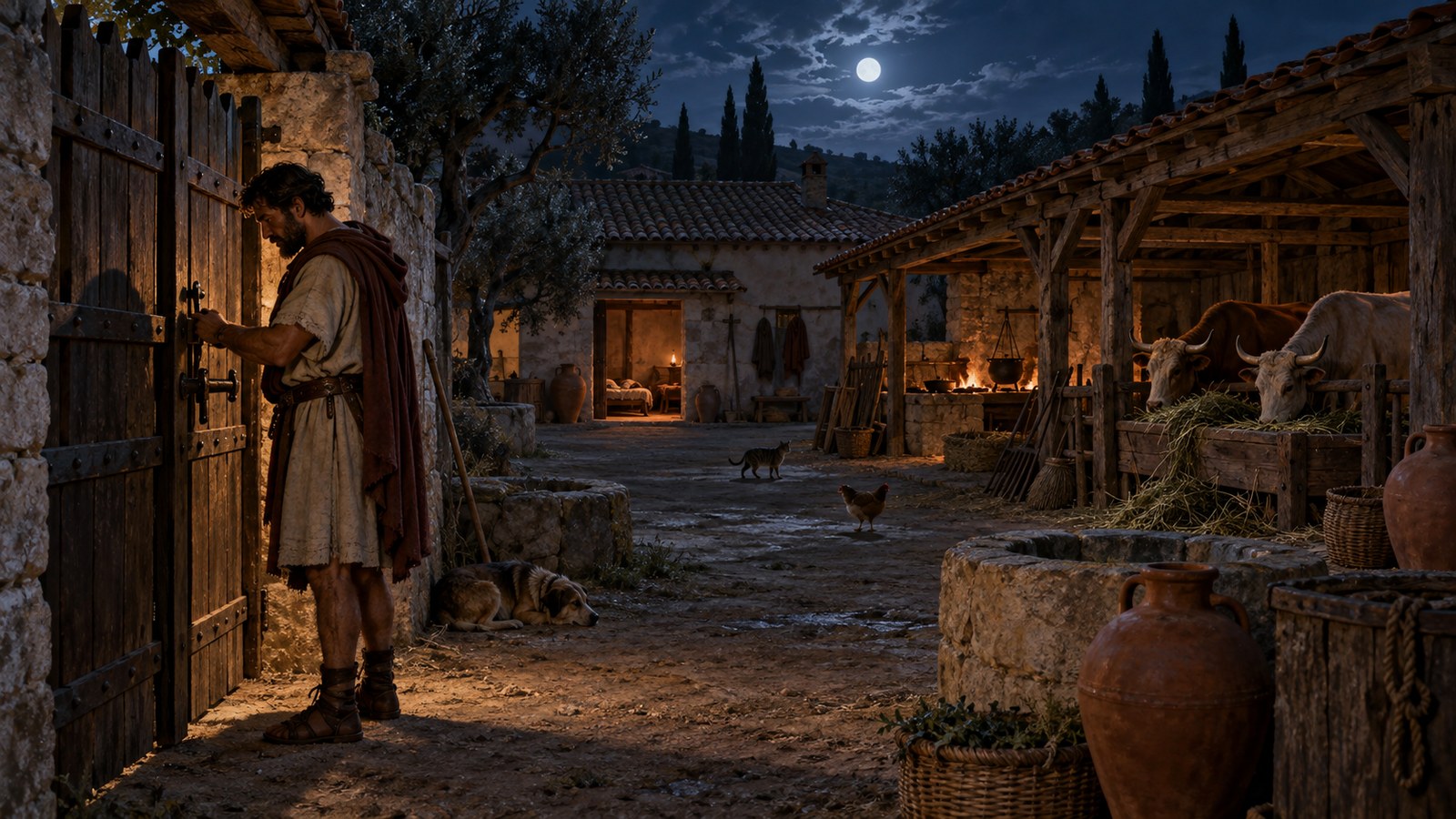
The last round closed more than a door.
Cato’s final checklist joins security to care. The farmstead had to be closed. Each person had to sleep in the proper place. Livestock needed fodder. Only then could the overseer go to bed.
The locked gate preserved tools, food and animals, but it also restricted human movement. Assigned sleeping places made the workforce countable. Fodder ensured that oxen and other stock remained capable of work after dawn.
The routine turned night into an accounted state. Nothing important was supposed to remain moving, hungry, open or unexplained. Morning began from conditions the overseer had personally checked a few hours earlier.
Cato’s instructions expose the human cost behind orderly agricultural prose. The regime depended on enslaved labor, unequal punishment and the compression of one manager’s life between an owner’s written orders and the needs of a confined workforce.
Calling that manager diligent is not wrong, but it is incomplete. His diligence was engineered by accountability above and coercive responsibility below.
He rose first and slept last because the estate demanded a witness at both edges of every working day.
Sources
Marcus Porcius Cato, On Agriculture 2 and 5.