
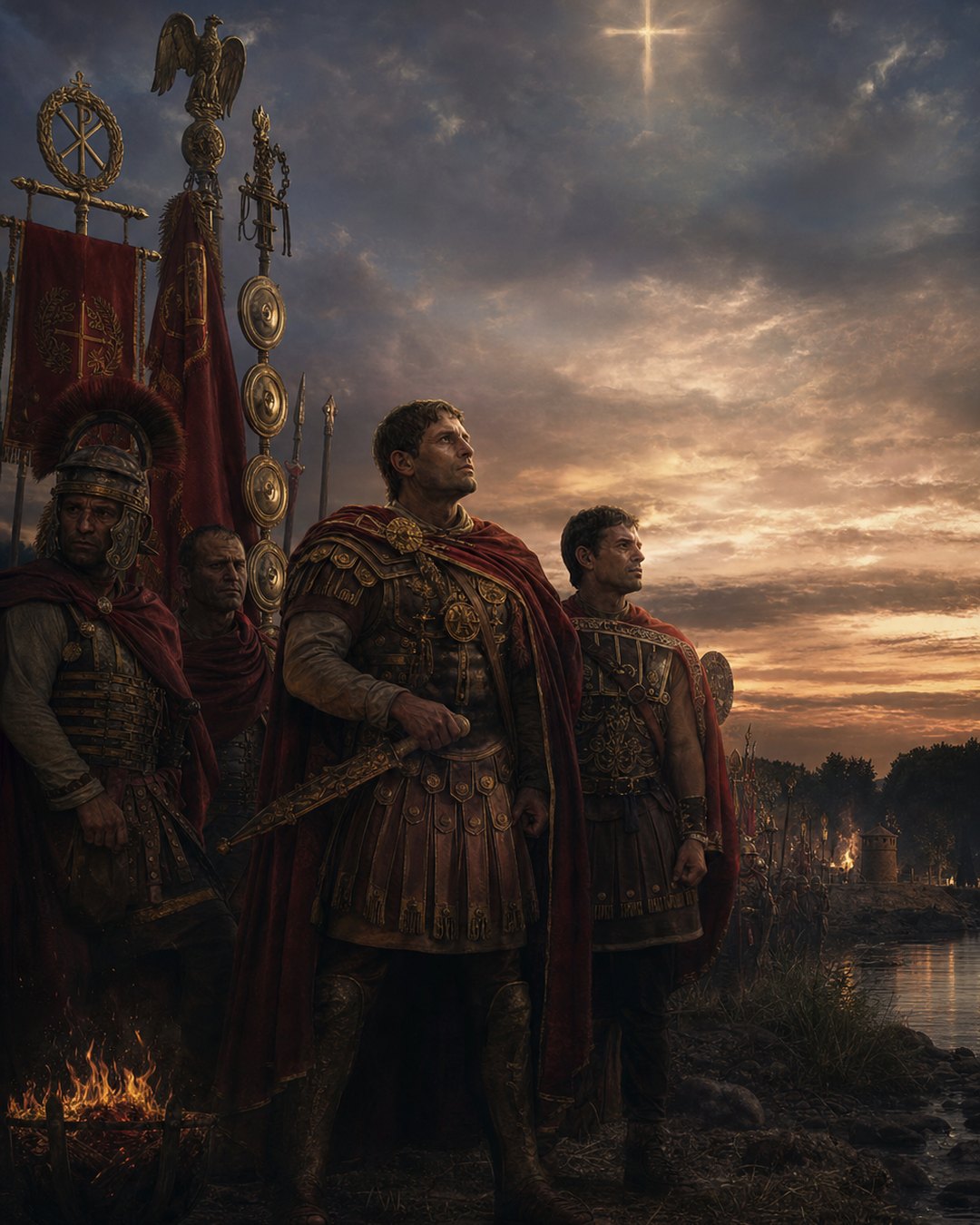
Constantine’s vision before the Milvian Bridge is often told as a sudden religious lightning strike: a sign appears, the emperor believes, Christianity rises. The story is powerful, but it becomes clearer when placed inside an older Roman habit. Rome had long wanted victory to look blessed.
Eusebius and Lactantius preserve different versions of the sign and its meaning. Their accounts are Christian and purposeful, not neutral camera footage. Yet the political logic is unmistakable: Constantine’s victory needed to be more than military luck. It needed to look like favor.
Romans already understood divine endorsement
Long before Constantine, Roman commanders sacrificed, consulted omens, thanked gods, vowed temples, and turned success into proof that heaven had not abandoned Rome. Religion and public power were not separate rooms. They were woven together through ritual, memory, and display.
That is why Constantine’s Christian language could work politically. It changed the divine vocabulary, but not the underlying grammar. A ruler wins; the win is interpreted as a sign; the sign becomes legitimacy.
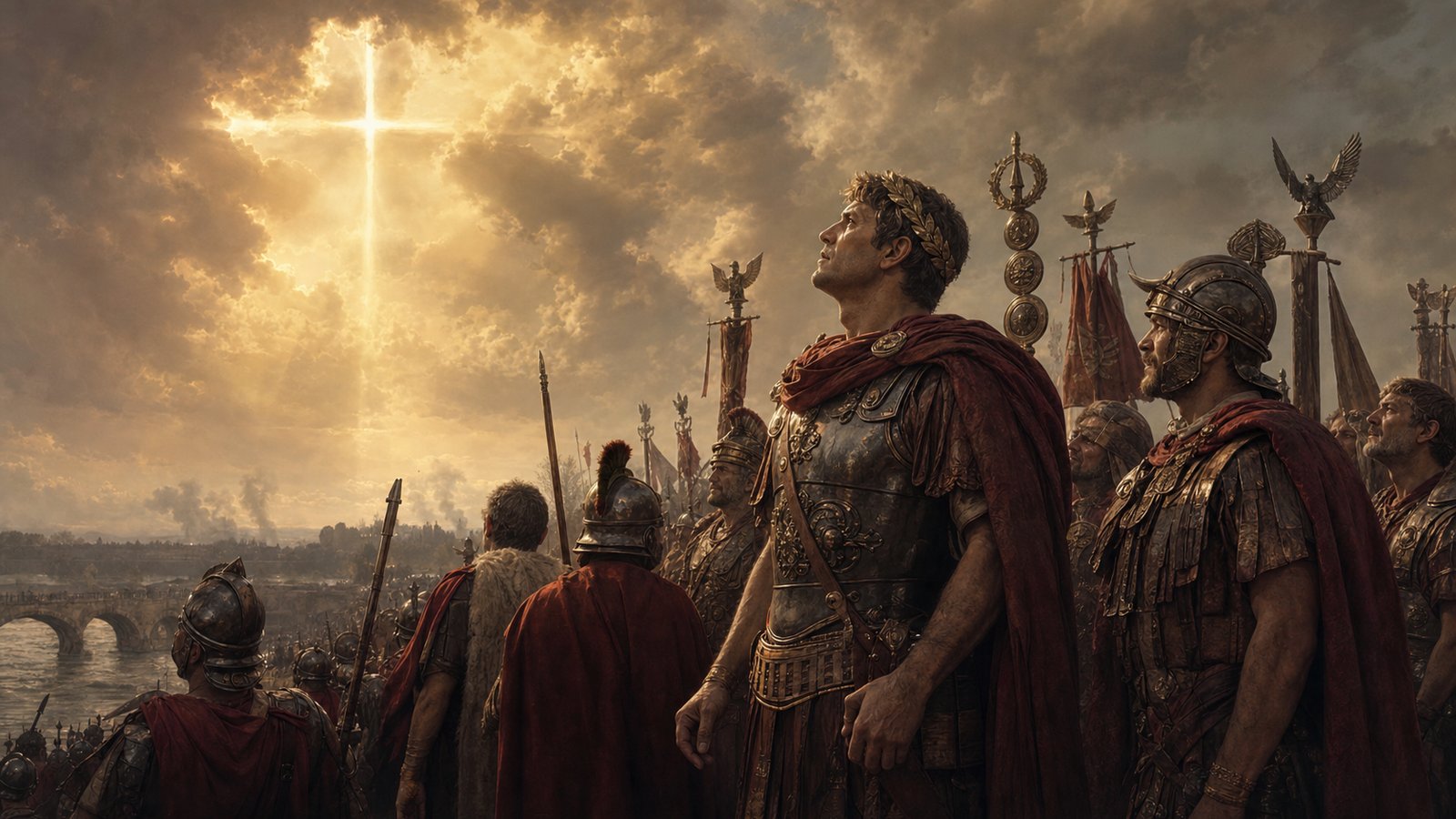
The Milvian Bridge was a battle for interpretation
Maxentius controlled Rome. Constantine approached as a rival with an army and a claim. The battle settled the immediate military question, but the story of the battle helped settle the moral one. Why had Constantine won? What did his victory mean? Who stood behind him?
The Christian answer gave Constantine a sharp and memorable explanation. It did not merely say he was stronger. It said his strength revealed a higher order.
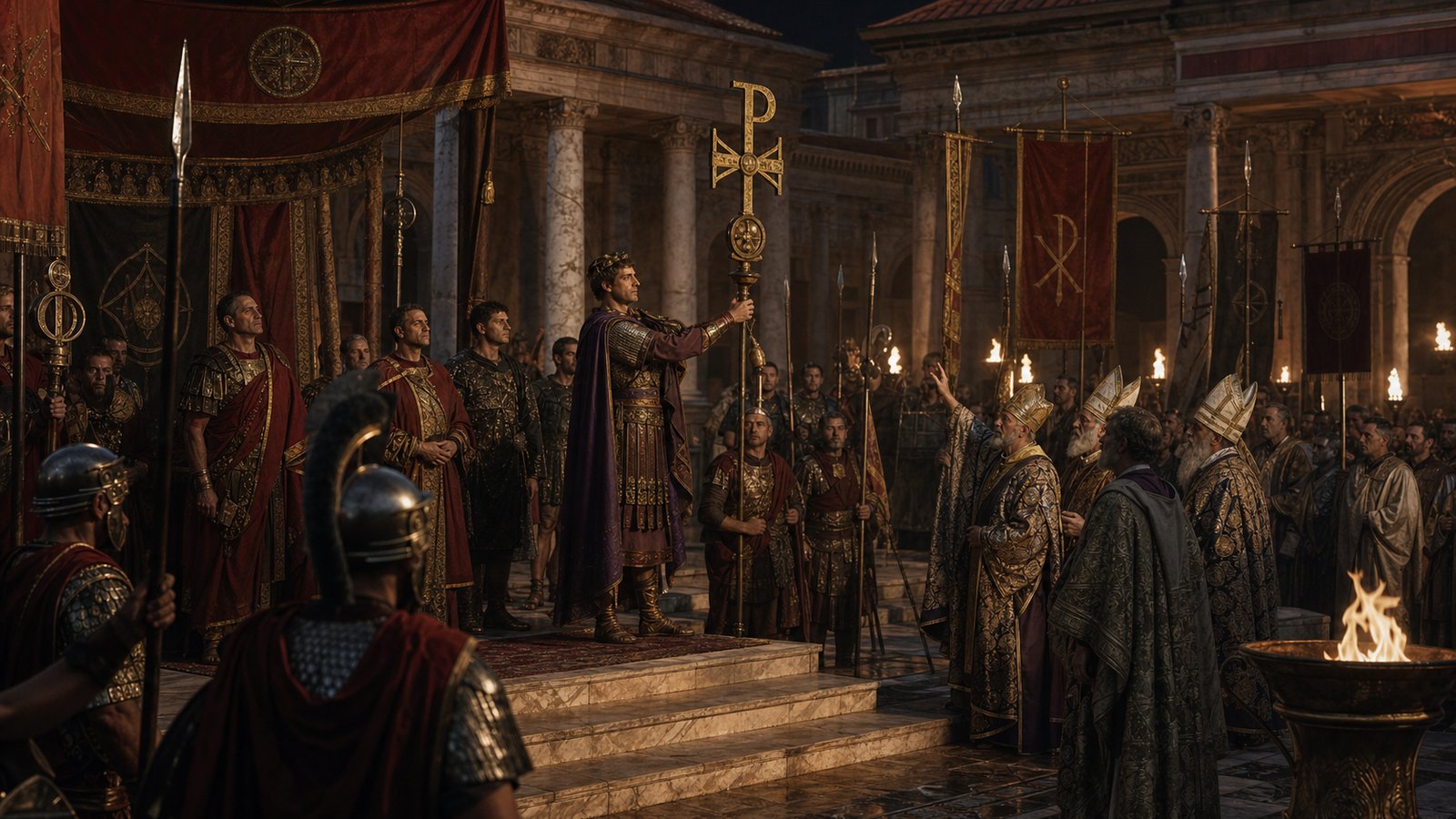
Conversion was also a public process
This does not require treating Constantine as cynical or perfectly sincere. Ancient rulers could believe, calculate, and perform at the same time. The modern desire to choose only one motive often makes the past smaller than it was.
Constantine’s religious policy unfolded over time. The vision story became part of a larger transformation in which Christian symbols, imperial patronage, councils, buildings, and law changed the empire’s public language. The bridge was not the whole revolution. It was the scene that made the revolution narratable.
Why sacred victory is so durable
People accept power more easily when it seems aligned with meaning. A battlefield victory can frighten enemies; a sacred victory can recruit memory. It tells supporters that history itself moved with their ruler.
Constantine’s vision worked because Rome was ready to understand victory as revelation. Christianity altered the sign above the army, but Rome already knew how to march beneath signs.
The old empire did not disappear overnight
Constantine’s Christian turn can sound like a clean break: pagan Rome before, Christian empire after. The reality was slower and more interesting. Imperial power kept many of its older habits — ceremony, victory language, public favor, monumental building, and the need to show that rule was supported by more than force.
Christianity changed the story Rome told about divine backing, but it did not remove the political need for divine backing. Constantine’s genius was not merely adopting a new sign. It was allowing that sign to answer an old Roman question: why should this ruler’s victory be understood as legitimate?
Why the story needed witnesses
A private vision changes a man. A public story changes an empire. Constantine’s sign mattered historically because it was narrated, repeated, interpreted, and attached to victory. Without that process, it would have remained an experience no one else could use.
Christian writers gave the event a memory strong enough to travel. The sign explained the battle, the battle validated the sign, and the emperor’s later patronage made the whole pattern look providential. That circular strength is exactly how sacred political stories endure.
A new symbol with an old job
The Christian sign did not need to replace every older Roman instinct in order to matter. It needed to do a job Romans already understood: mark the army, explain success, and bind followers to a ruler’s destiny. The novelty was theological. The political function — victory made meaningful — was deeply familiar.
This is also why arguments over the exact vision should not swallow the larger point. Whether emphasized through dream, sign, or later Christian memory, the story shows an empire learning to speak about power through a new sacred language while keeping the old need for victory intact.
The vision endured because it joined belief to outcome. Romans could see the victory, hear the explanation, and remember the ruler through both at once.
Sources & Further Reading
- Eusebius, Life of Constantine
- Lactantius, On the Deaths of the Persecutors
- For another case of Roman power needing public meaning, see why emperors needed crowds.