
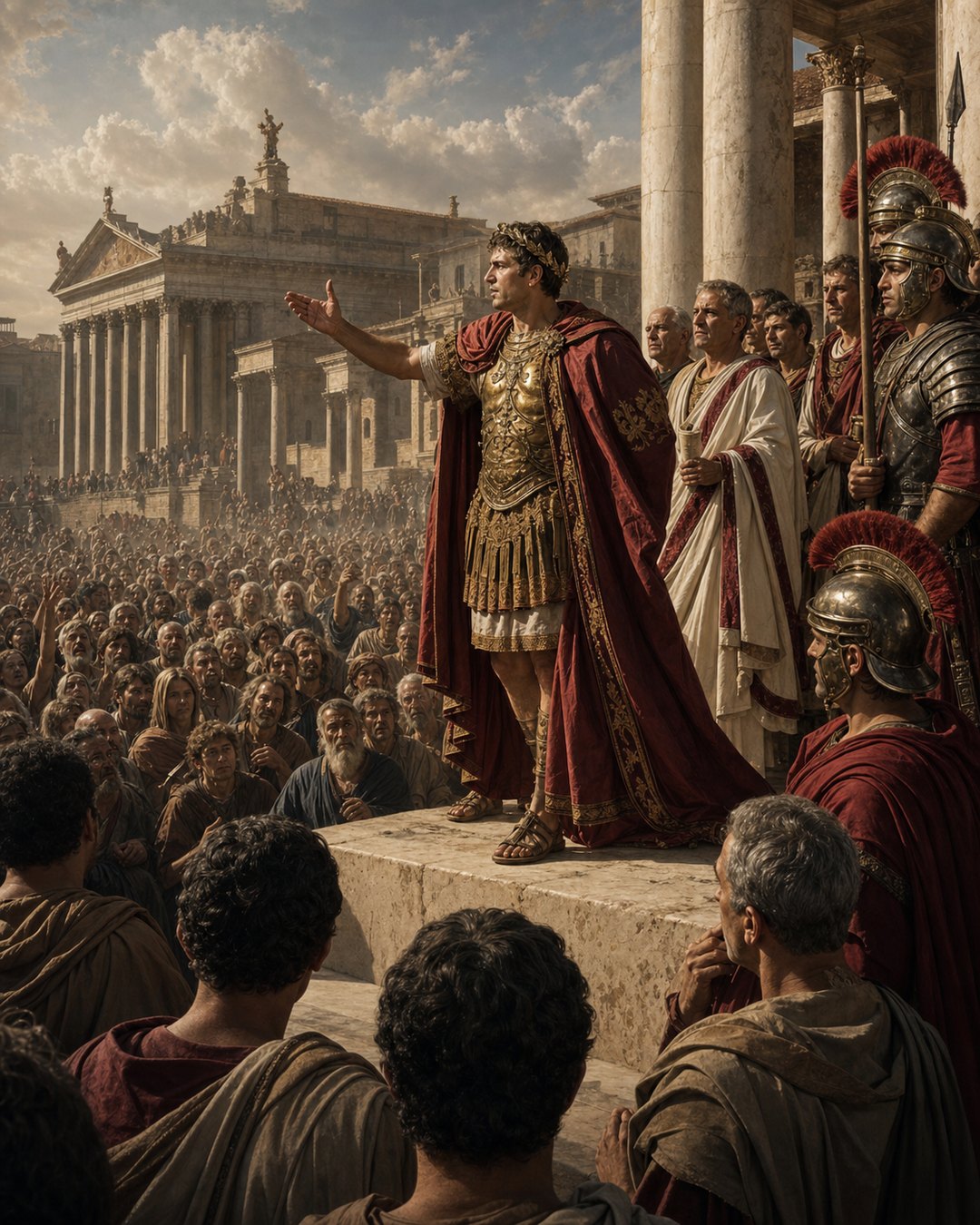
A Roman emperor could command legions and still worry about a crowd. That sounds strange only if power is imagined as pure force. In Rome, rule also needed to be seen, applauded, fed, entertained, forgiven, and feared in public.
Crowds did not make Rome a democracy under the emperors. They did something less formal and more volatile. They created political weather. A ruler could survive complaints, but he could not safely ignore a city whose mood turned visibly hostile.
Spectacle was not a distraction from politics
Games, distributions, triumphal imagery, public appearances, and imperial generosity all helped transform domination into relationship. The emperor gave; the crowd responded. The exchange was unequal, but it mattered because it made acceptance visible.
Suetonius and Tacitus repeatedly show rulers being judged through performance: how they appeared, what they funded, how they reacted to insult, whether they seemed generous, cruel, ridiculous, or afraid. The crowd was one of the mirrors in which imperial authority saw itself.
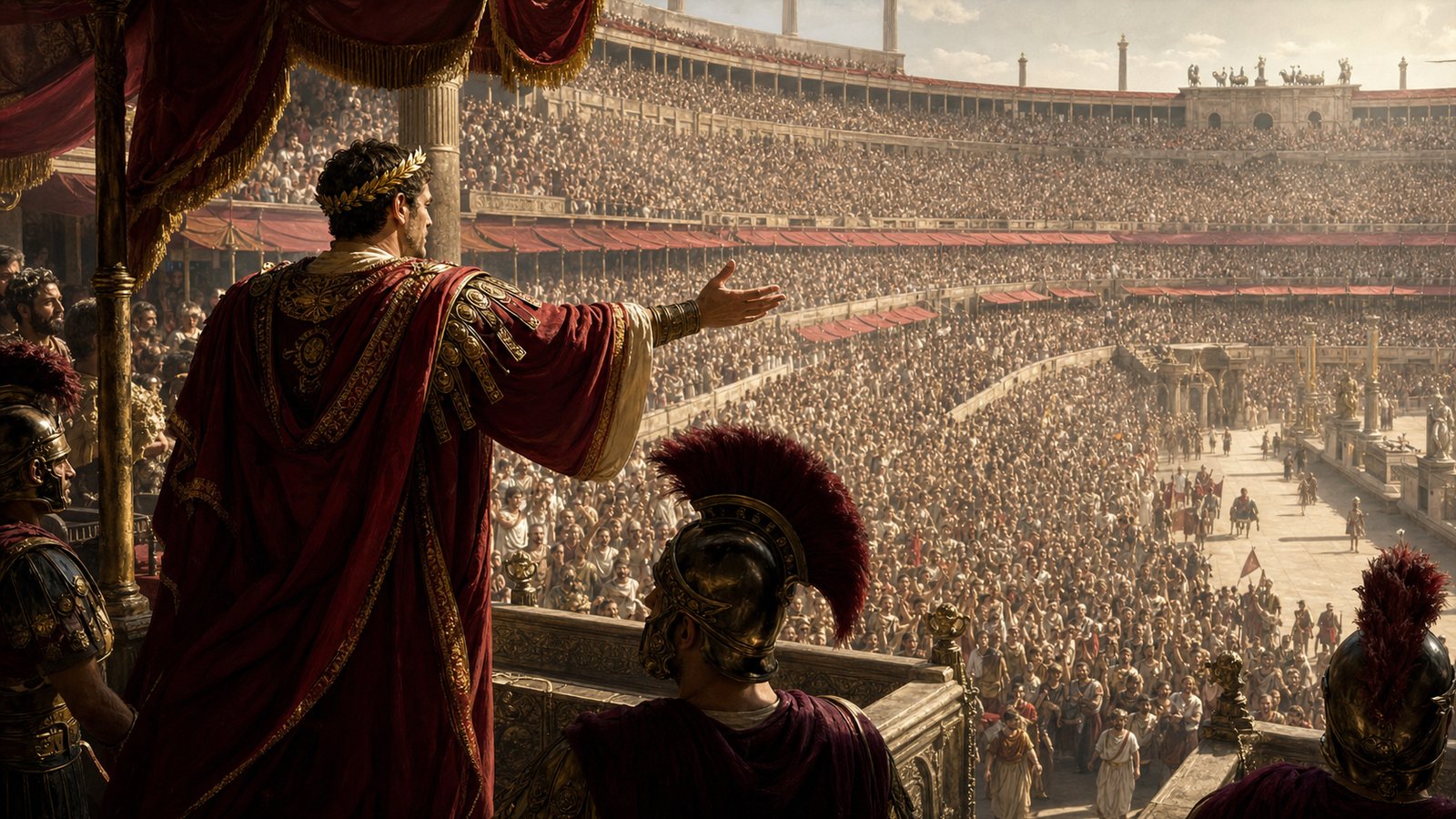
Bread and games were communication
The phrase “bread and circuses” can make Romans sound easily bribed. That is too simple. Food supply and spectacle were not trivial. Grain meant survival in a huge city. Games meant honor, hierarchy, memory, and the emperor’s ability to provide abundance.
When the system worked, the crowd saw a ruler capable of feeding and staging Rome. When it failed, shortages and anger could make weakness contagious. Public emotion moved fast in a city built on rumor.
The emperor needed applause because silence was dangerous
Applause did not guarantee love. Romans knew how to perform loyalty. But repeated public approval created a surface of stability. It reassured elites, soldiers, visitors, and the ruler himself that the center was holding.
A hostile crowd did the opposite. It made private doubts public. It suggested that fear had loosened, that mockery was safe, that the emperor’s image could be touched. For a monarchy pretending to be something more traditional, that mattered.
Armies made emperors. Rome judged them.
The army could raise an emperor, defend him, or destroy him. But the city of Rome remained a symbolic audience even when military power lay elsewhere. To be accepted in Rome was to occupy the old stage of Roman greatness.
That is why emperors invested so heavily in public generosity and spectacle. They were not merely amusing the masses. They were maintaining the emotional machinery of rule.
Public emotion was part of the machinery
Roman crowds did not vote emperors in and out, but public emotion could still become political material. Chants, complaints, applause, mockery, and panic moved through the city faster than official messages. An emperor who misread that atmosphere could look detached, weak, or hated.
This is why spectacle was serious work. The amphitheater, circus, and grain supply were not distractions from government; they were places where government touched the crowd. A ruler who fed and entertained Rome was not simply buying affection. He was reminding the city that imperial power could still produce order, abundance, and shared excitement.
The city was a stage no emperor could fully leave
Even when emperors spent long periods away from Rome, the city remained the symbolic heart of the old Roman world. Its crowds mattered because they occupied the place where Roman greatness imagined itself most intensely. To be mocked there, hated there, or seen as ungenerous there carried special danger.
The emperor’s relationship with the crowd was therefore part ritual, part performance, part management of fear. A ruler did not need to be loved by everyone. He needed the public surface of rule to keep working. In Rome, the surface was never only surface.
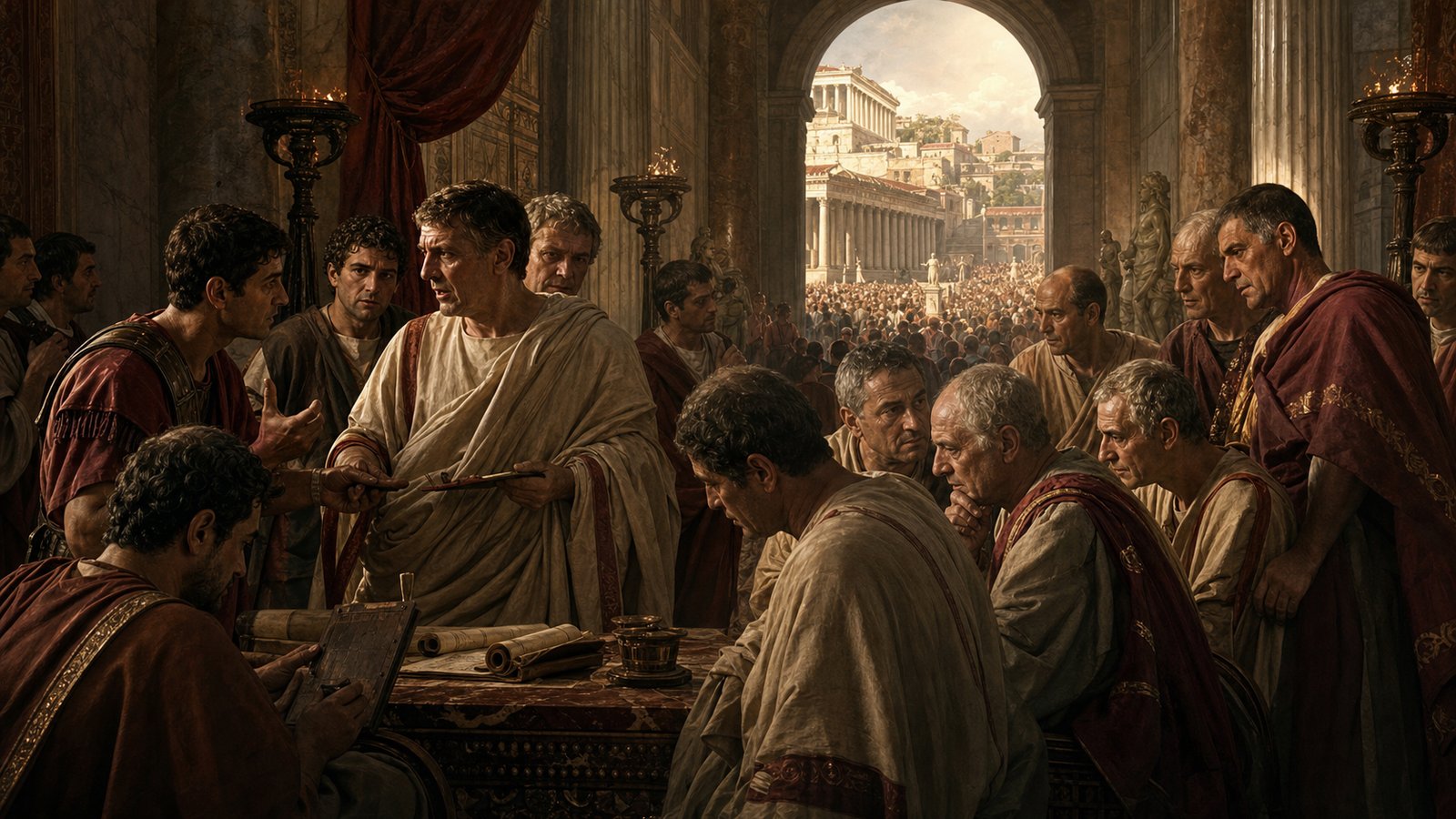
Rumor connected palace and street
The emperor’s image moved through Rome by rumor as much as by decree. A gesture at the games, a shortage in the grain supply, a cruel joke, or a generous gift could become part of the city’s shared judgment. Crowds mattered because they turned scattered impressions into noise. Once that noise was public, elites and soldiers could hear it too.
In that sense, the crowd was not outside the regime. It was one of the instruments through which the regime measured itself. The emperor listened because public emotion could reveal whether obedience still looked natural or had begun to look forced.
That made public appearances risky but necessary. To avoid the crowd entirely would itself suggest weakness, fear, or contempt for the city.
Sources & Further Reading
- Suetonius, The Twelve Caesars
- Tacitus, Annals
- For the armed side of palace politics, see why the Praetorian Guard became dangerous.