
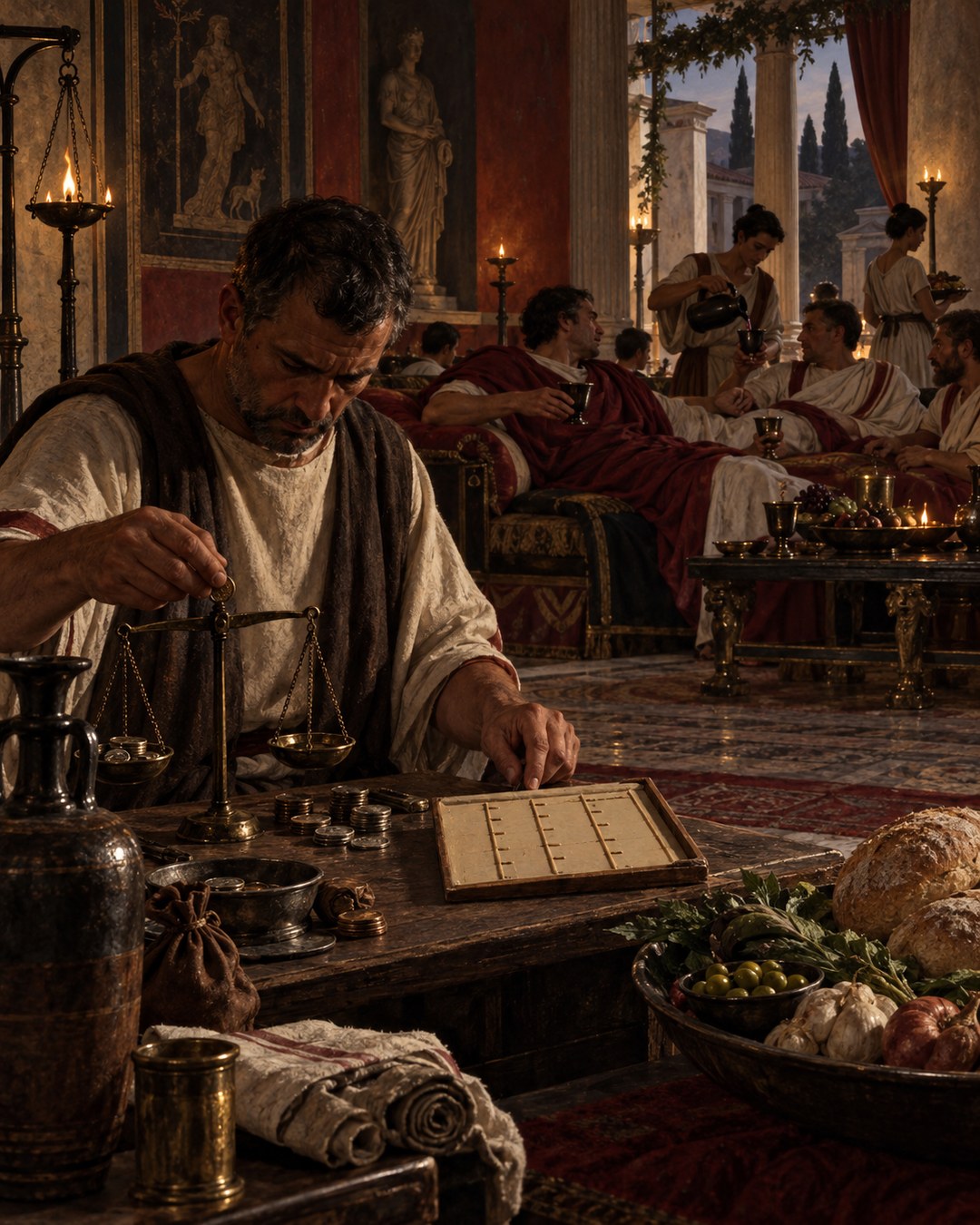
A host could serve the same dishes in the same dining room and face a different legal limit because the date had changed. One ceiling applied at named games, another on selected days each month, and a much smaller one on ordinary days.
Aulus Gellius preserves this moving schedule in a chapter on Roman frugality. It is not a simple story of stern ancestors banning luxury. The laws kept sorting dinners by occasion, ingredient, guest and calendar.
At the Roman table, restraint had a timetable.
One Early Oath Counted Money, Wine, and Silver
Gellius begins by saying that moderation in food and entertainment came from more than household discipline. Public penalties and numerous laws supported it. Dining was therefore treated as conduct that could reveal a family’s habits and also concern the state.
His first example came from the Miscellanies of Ateius Capito. An old senatorial decree governed leading citizens who hosted one another in rotation during the Megalensian games. Before the consuls, those hosts had to swear that each dinner would cost no more than one hundred and twenty asses, apart from vegetables, bread and wine.
The exceptions are as revealing as the number. Staples and produce sat outside the money ceiling, while other purchases entered it. The oath did not merely price a finished meal; it divided the table into categories that officials could name.
The same decree reached beyond expenditure. Hosts were to serve native rather than foreign wine. They were also to use no more than one hundred pounds of silverware at table. Origin and display mattered beside cost.
That design makes the dining room a place of visible evidence. Imported wine could betray a taste for distant prestige. A mass of silver vessels could turn service into spectacle. Bread and vegetables, by contrast, belonged to the acceptable base of the meal.
The rule attached these distinctions to an oath and a festival. The diners were not anonymous consumers. They were leading citizens entertaining one another while public games gave the occasion civic importance.
An earlier article on a thrush room earning sixty thousand sesterces follows elite profit at the edge of the dining economy. Gellius shows the other side: lawmakers repeatedly tried to define how elite consumption should appear once food reached the couch.
The Fannian Scale Moved Three Times in a Month
The Fannian law introduced a more elaborate rhythm. It allowed one hundred asses a day at the Roman and plebeian games, at Saturnalia and on certain other named days. Ten additional days in each month received a ceiling of thirty asses. All remaining days fell to ten.
This was not one maximum with occasional exemptions. It was a ladder. The highest level recognized communal celebration, the middle level created a limited number of less restrictive days, and the lowest level governed routine life.
Gellius pauses to correct commentators on the poet Lucilius. They had read the reference to the “hundred” as though the law permitted that sum regularly. He insists that the hundred belonged only to expressly named holidays. Thirty and ten completed the schedule.
His correction exposes a practical problem. A number detached from its date misrepresented the law. Anyone asking whether a dinner exceeded the ceiling first had to ask what kind of day it was.
The monthly ten-day allowance also suggests that regulation anticipated social life rather than trying to abolish it. Households could plan more generous meals, but the calendar rationed those opportunities. Permission was distributed in time.
That temporal design differed from a ban on one dish or a permanent tax. It required memory, classification and probably argument. Was this feast among the named occasions? Had a household already used the relevant days? Gellius does not preserve enforcement files, so those procedures remain unknown. The text securely preserves the structure of the limits, not every inspection behind them.
Weddings and Produce Broke the Simple Price Rule
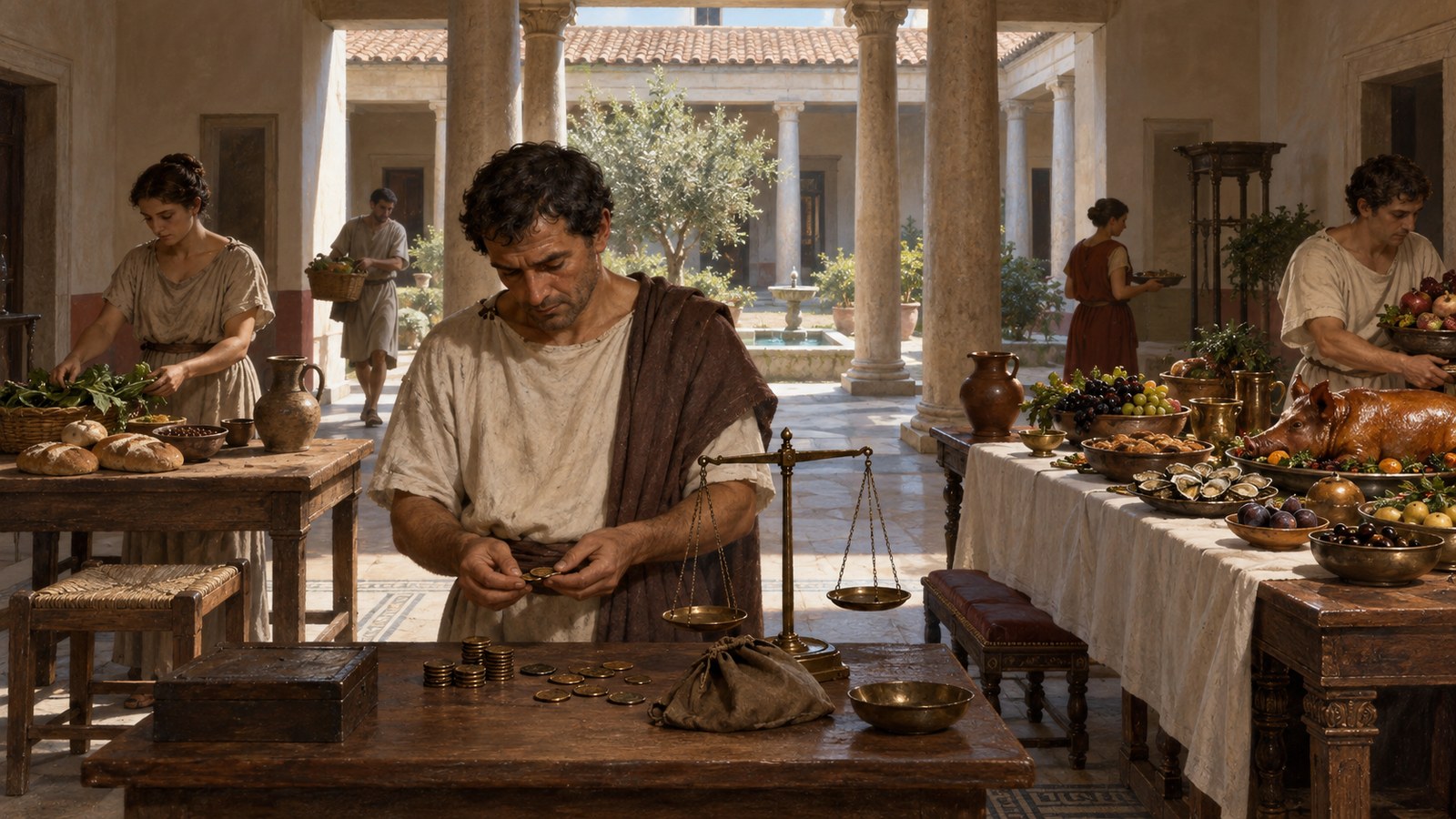
The Licinian law kept a ceiling of one hundred asses on designated days and allowed two hundred for weddings. Other days received thirty. Marriage therefore became its own legal occasion, expensive enough to justify a larger allowance but still measured.
The law also separated food by kind. It fixed daily weights for dried meat and salted provisions, while granting unrestricted use of produce from earth, vine and orchard. A host could not understand compliance by totaling coins alone.
This arrangement favored abundance in some categories and restriction in others. Fruit, vegetables and products of the vine could fill a table without violating the quoted provision. Preserved animal foods remained quantified.
Gellius preserves a comic fragment about a kid being sent away while fruit and vegetables supplied the dinner. The joke worked because diners knew that changing the menu could change its legal treatment. Regulation entered ordinary choices about what servants carried into the room.
Wedding status, ingredient type and daily expenditure now overlapped. A wedding feast might receive a larger monetary ceiling, but that did not erase every rule about provisions. Roman frugality in this catalogue was an exercise in classification.
That helps explain why the laws kept changing. A single price maximum could be evaded by shifting goods, redefining occasions or exploiting what the law left unmeasured. New measures adjusted not only the number but the object of regulation.
The future article on the wedding ornaments prepared for Fundanus’s daughter and redirected to her funeral shows how marriage goods carried emotional and social weight. Here, weddings appear from another angle: as occasions whose expected display required a distinct legal ceiling.
Sulla and Augustus Rewrote the Feast-Day Thresholds
By Gellius’s account, older provisions became unreadable with age and fell from use while wealthy men poured fortunes into dinners. Sulla answered with another calendar.
On Kalends, Ides and Nones, on game days and at specified regular festivals, Sulla permitted three hundred sesterces. On other days, the ceiling was thirty. The named monthly markers brought legal generosity into the recurring civic calendar rather than leaving it only to exceptional celebrations.
Other laws tried different levers. The Aemilian law limited the kind and quantity of food instead of dinner expense. The Antian law curtailed outlay but also said that a magistrate or magistrate-elect could not dine out except in the houses of stipulated persons.
The Antian provision turned the guest list into a political concern. A candidate’s dinner invitation could create obligation, access or suspicion. Controlling where officeholders ate addressed relationships that a spending total could miss.
Under Augustus, the Julian law again reset the figures: two hundred sesterces on working days, three hundred on Kalends, Ides, Nones and some holidays, and one thousand for weddings and the banquets that followed them.
A later edict reported by Capito raised some festival ceilings from three hundred to two thousand. Gellius says the purpose was to contain the rising tide of luxury at least within those bounds. The phrase captures the compromise. A higher legal maximum could be presented not as surrender, but as an attempt to make restraint credible.
The sequence warns against treating “Roman sumptuary law” as one stable rule. The unit of money changed from asses to sesterces in Gellius’s examples, ceilings rose, and lawmakers moved between expense, ingredients and social access.
The Law Had to Name the Dinner Before It Could Limit It
Gellius’s catalogue survives because he cared about old texts and misunderstood quotations. His chapter does not prove that every ceiling was enforced uniformly. It does show what legislators believed had to be made legible.
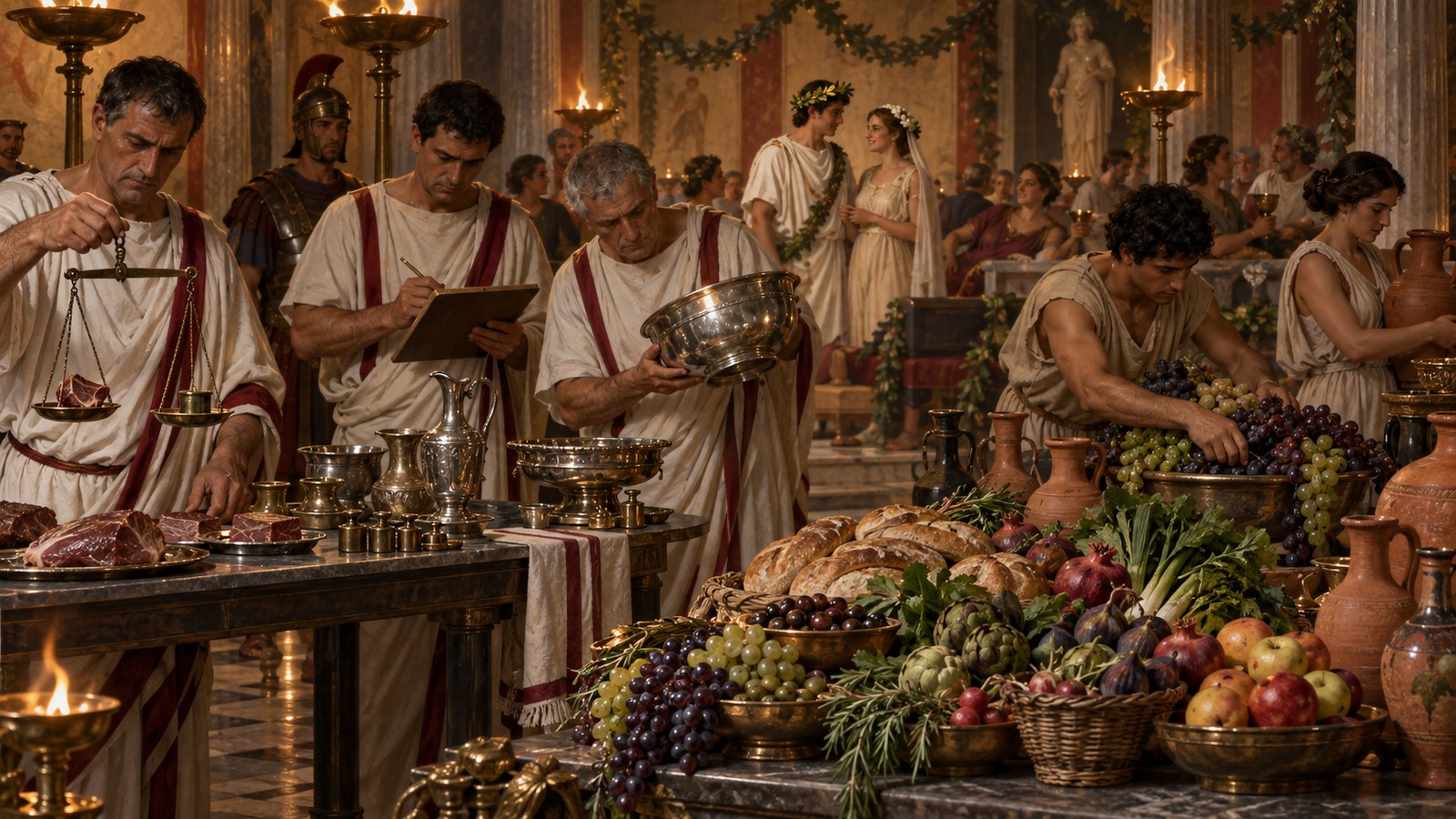
A dinner could be ordinary, monthly, festive, electoral or matrimonial. Wine could be native or foreign. Food could be salted meat or produce. Guests could be private citizens, magistrates or candidates. Silver could serve a meal or dominate it as display.
Each distinction created a boundary. Boundaries made control possible, but they also created places to negotiate and evade. Lucilius could joke about escaping the Licinian law because the audience recognized the ingenuity demanded by a detailed menu code.
The repeated reforms also reveal that austerity was not simply nostalgia. Roman authorities kept translating a moral preference into schedules and quantities. When conditions changed, they changed the numbers and categories rather than abandoning the project.
The article on the enormous quoted cost attached to Vespasian’s funeral concerns spectacular public expenditure at death. Gellius’s dinner laws worked at another scale, but both ask how a sum transformed ceremony into reputation.
The most revealing object in this story is not a rare dish. It is the calendar beside the dining couch. Before a Roman host could know the lawful size of a feast, someone had to name the day.
Sources
Aulus Gellius, Attic Nights, book 2, chapter 24.