
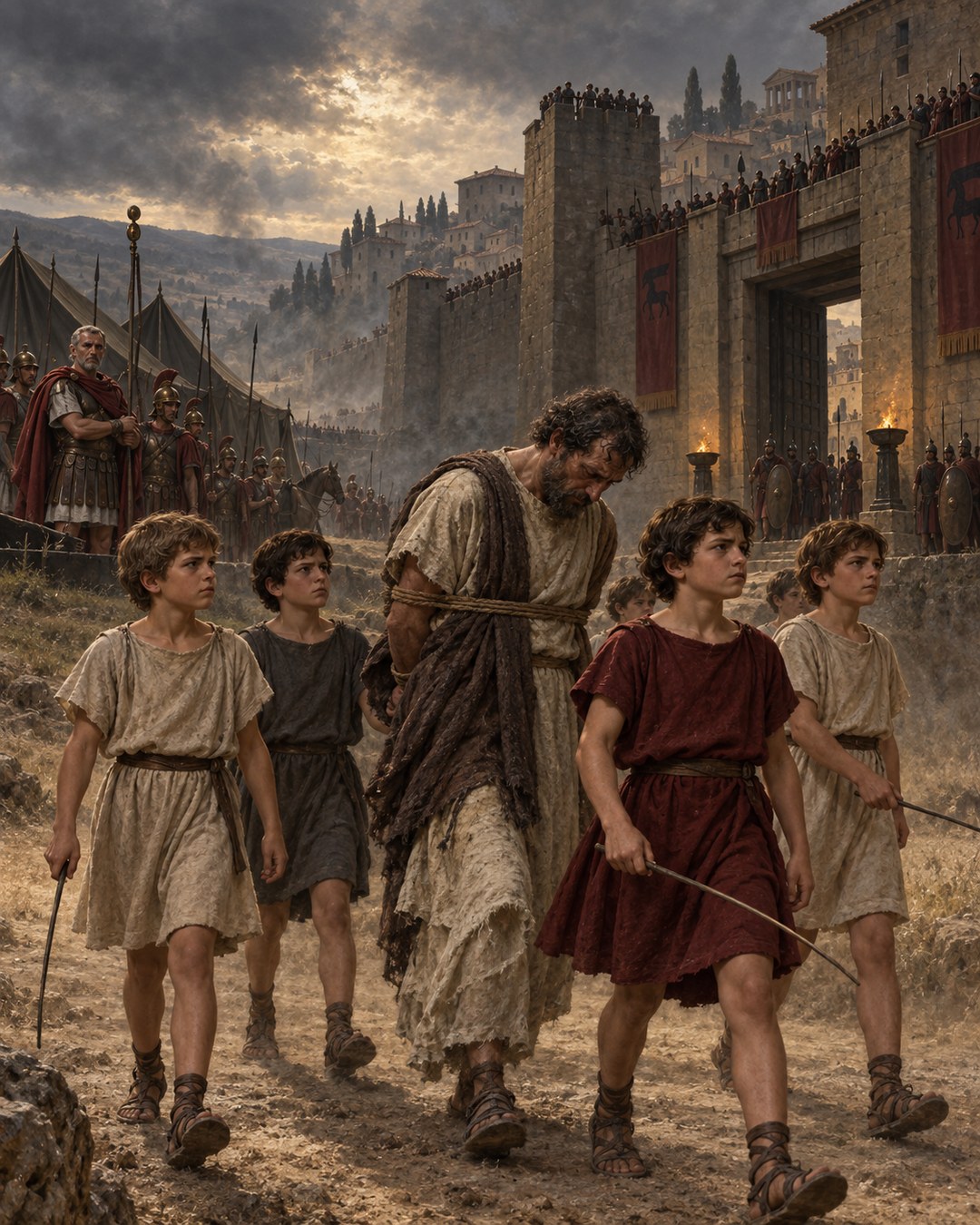
The schoolmaster arrived in the Roman camp with what he believed was the key to Falerii. Around him stood the sons of the city’s leading families, children he had guided beyond the walls and through the enemy lines.
Camillus could have kept them. Instead, he bound the teacher and placed rods in the boys’ hands. The intended hostages drove their betrayer back to the gate.
Livy makes that return journey do what the kidnapping was supposed to accomplish. Falerii surrendered.
A Peacetime Walk Became a Route through the Siege
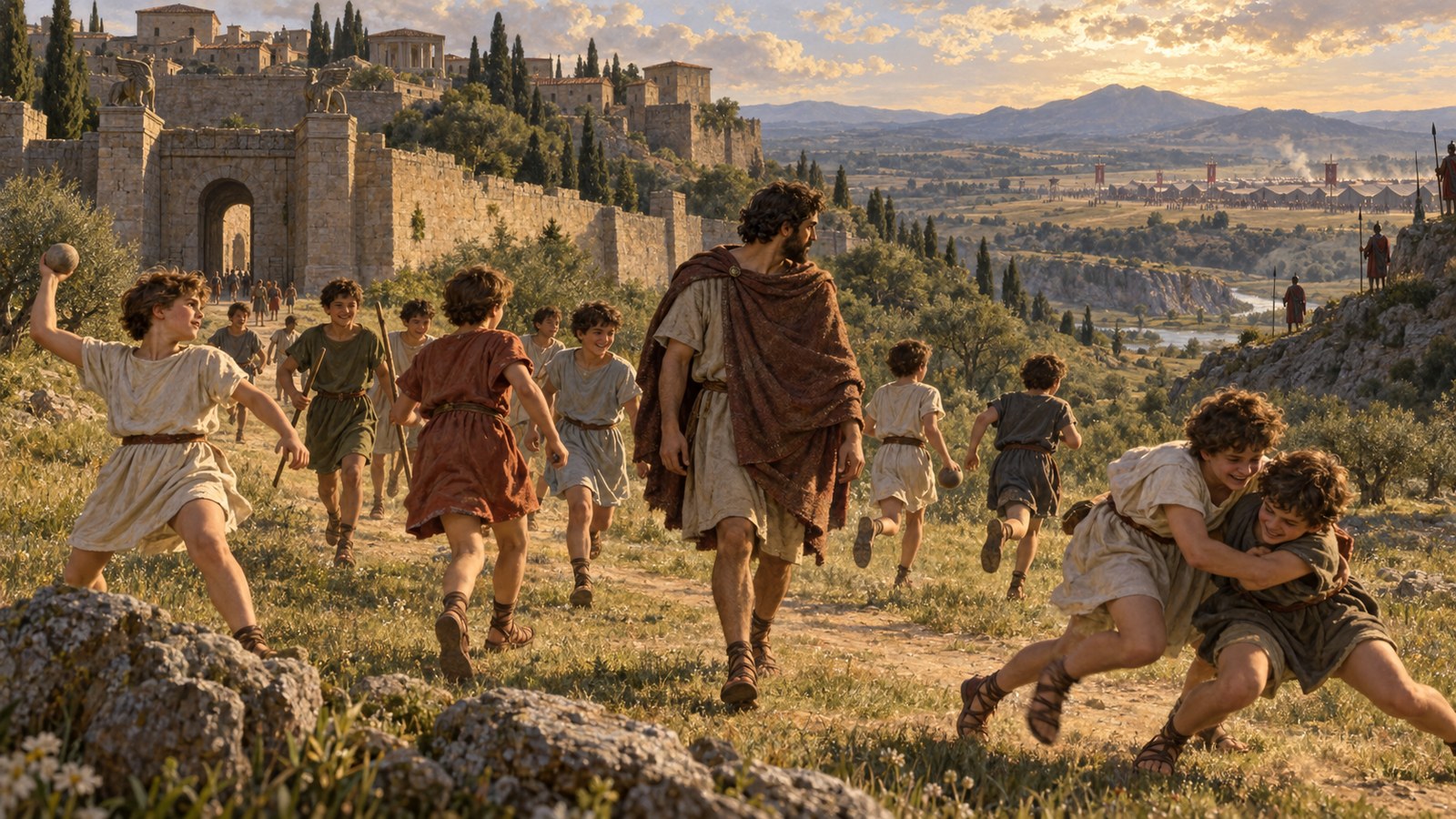
Livy begins with an ordinary educational arrangement. Among the Faliscians, one man could serve as preceptor and private tutor to several children. This particular teacher instructed the sons of the city’s leading men.
He had established a habit during peace of taking the boys outside for play and exercise. When war came, the habit continued. The familiar routine gave him a reason to approach the gates with politically valuable children without causing immediate alarm.
The betrayal developed by degrees. Livy says the teacher sometimes made shorter excursions and sometimes longer ones. By varying the boys’ play and conversation, he drew them farther than usual whenever opportunity allowed.
The method depended on trust accumulating before the decisive day. Parents trusted a teacher already responsible for their sons. Guards recognized a recurring group. The children experienced each outing as another version of the last.
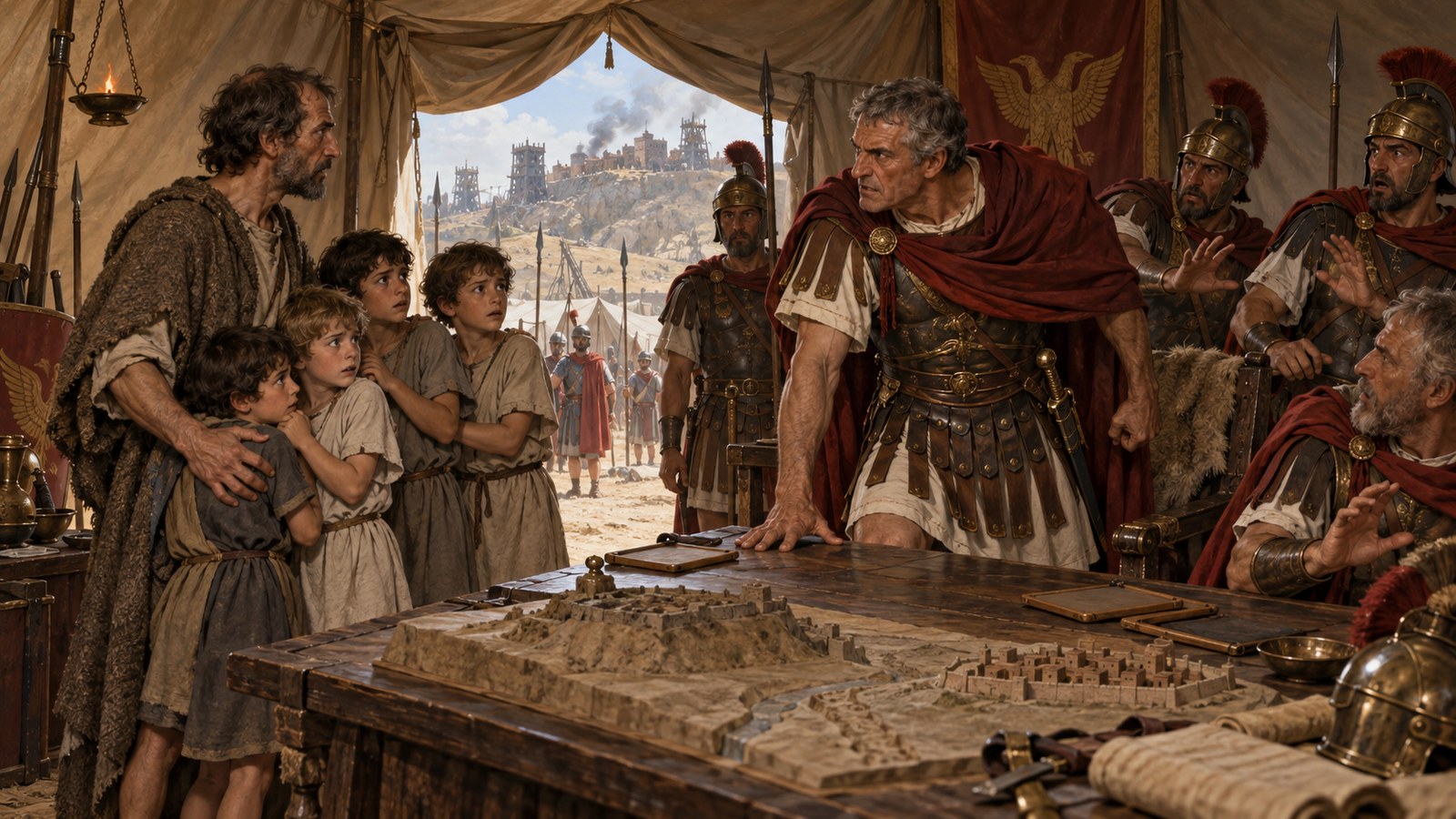
At last the schoolmaster led them between Roman guards and into Camillus’s camp. Livy places them in the commander’s tent, where the teacher translated his act into strategy.
He claimed that he had delivered Falerii into Roman hands because the children’s parents stood at the head of affairs. The bodies of the boys were meant to become pressure on the city’s decision-makers.
This was siegecraft without a breached wall. Instead of attacking stone, the teacher targeted the private vulnerability of the people directing resistance.
Camillus Refused the Shortcut in Front of Witnesses
Livy gives Camillus a formal rejection. The teacher had come with a wicked offering to neither a people nor a commander like himself. The insult separated Roman identity from the act being proposed.
Camillus then widened the ground of obligation. Rome and Falerii did not share a compact governing this moment, but he said a bond implanted by nature still existed between them. He presented limits on violence as valid even between enemies.
His most memorable distinction followed: there were laws of war as well as laws of peace. Romans had learned to wage war justly no less than bravely.
That claim did not make the siege harmless. Camillus was commanding an army against Falerii. His boundary concerned whom Roman arms properly targeted. The enemy’s armed men had attacked the Roman camp at Veii, he said; children belonged to an age spared even when towns were captured.
The speech matters because the teacher had offered usefulness. Keeping the boys might have shortened the war. Camillus answered that a useful act could still be an unacceptable instrument of victory.
Livy does not ask readers to believe that all Roman warfare followed this standard. He constructs a scene in which a commander publicly names the standard when violating it would be easiest to reward.
Lost Eagles has followed the story of Juno’s statue being asked to leave conquered Veii. That narrative uses ritual speech to present Roman appropriation as authorized. At Falerii, Livy uses direct refusal to distinguish conquest by arms from control purchased through children.
The Punishment Reversed Every Part of the Betrayal
Camillus did more than send the boys home. He turned the teacher’s procession around.
The man was stripped and his hands were bound behind his back. The children received rods and the authority to drive him toward Falerii. The teacher who had directed their movement now moved under their direction.
The reversal was exact. He had exploited his educational charge; the pupils administered the instrument associated with discipline. He had crossed the lines under cover of a trusted routine; he returned as visible proof that the Romans had rejected his offer.
The rods gave the scene a harsh physical edge, but Livy’s focus is political visibility. A simple release might have brought the children home with a report that could be doubted or softened. The bound teacher made Roman refusal visible from the walls.
The boys also ceased to be passive tokens. In the teacher’s plan, their importance lay only in who their parents were. In Camillus’s response, they became agents in exposing the betrayal.
The spectacle was carefully directed without requiring a written proclamation. Anyone at the gate could understand that Rome had possessed the children and returned them. The betrayer’s condition explained why.
Livy’s narrative therefore turns punishment into communication. Camillus disciplined one man, restored the children and sent a message to the whole city in the same act.
Falerii Read Restraint as Evidence about Roman Rule
A crowd gathered at the sight. Magistrates convened the Faliscan senate. Livy says the city’s attitude changed so greatly that people who had nearly preferred destruction to peace now demanded negotiations.
The change was not produced by Roman weakness. The army remained outside and Camillus remained capable of continuing the siege. Restraint mattered because it occurred while coercive power was plainly available.
Livy says Roman good faith and the commander’s justice were praised in the forum and senate house. Envoys went first to Camillus and then, with his permission, to the Roman Senate to offer Falerii’s surrender.
The Faliscan speech, as Livy reports it, describes a victory at which neither god nor man could feel displeasure. The envoys said they expected to live more happily under Roman rule than under their own laws.
That claim converts one command decision into evidence about future government. If Camillus would not seize an advantage over children during resistance, the city could imagine limits after submission.
Trust did not remove the terms of defeat. The wider passage says the Faliscans accepted Roman authority and an indemnity. The result was still expansion. Livy’s point is that the manner of victory shaped the conquered community’s willingness to enter it.
The story of Fabius Dorso crossing Gallic posts to complete a family sacrifice also makes conduct under siege into a public claim about Roman identity. Camillus’s test was different: not whether duty survived danger, but whether military advantage would erase restraint.
The City Fell to a Demonstration, Not a Hostage
Livy’s episode is often reduced to the goodness of Camillus. Its mechanism is sharper. The commander did not merely keep clean hands; he staged a counteroffer to the city.
The teacher offered Rome control over elite parents through their children. Camillus offered Falerii a reason to believe that Roman power recognized a boundary. One offer depended on private terror. The other became persuasive only when publicly seen.
The children’s route traces the entire contest. Outward, they crossed the lines as concealed leverage. Homeward, they crossed as evidence that the leverage had been refused. The same ground carried opposite political meanings.
Camillus also protected command from a corrosive precedent. Rewarding the schoolmaster would have invited future betrayal by people entrusted with dependants. A quick success could teach allies and enemies that Roman commanders purchased treachery against the vulnerable.
By rejecting him, Camillus made the Roman camp less useful to that kind of traitor. Livy presents principle and strategy as aligned, but only because the refusal was made legible to Falerii.
The article on close-set stakes reversing scythed chariots follows a battlefield device turned against its users. At Falerii, the reversal was moral and political: the children intended to break the city’s will instead broke its expectation of Roman conduct.
The boys did not open the gate as captives. They reached it as witnesses. Behind them walked the man who had mistaken betrayal for the shortest road to victory.
Sources
Livy, History of Rome, book 5, chapter 27.