
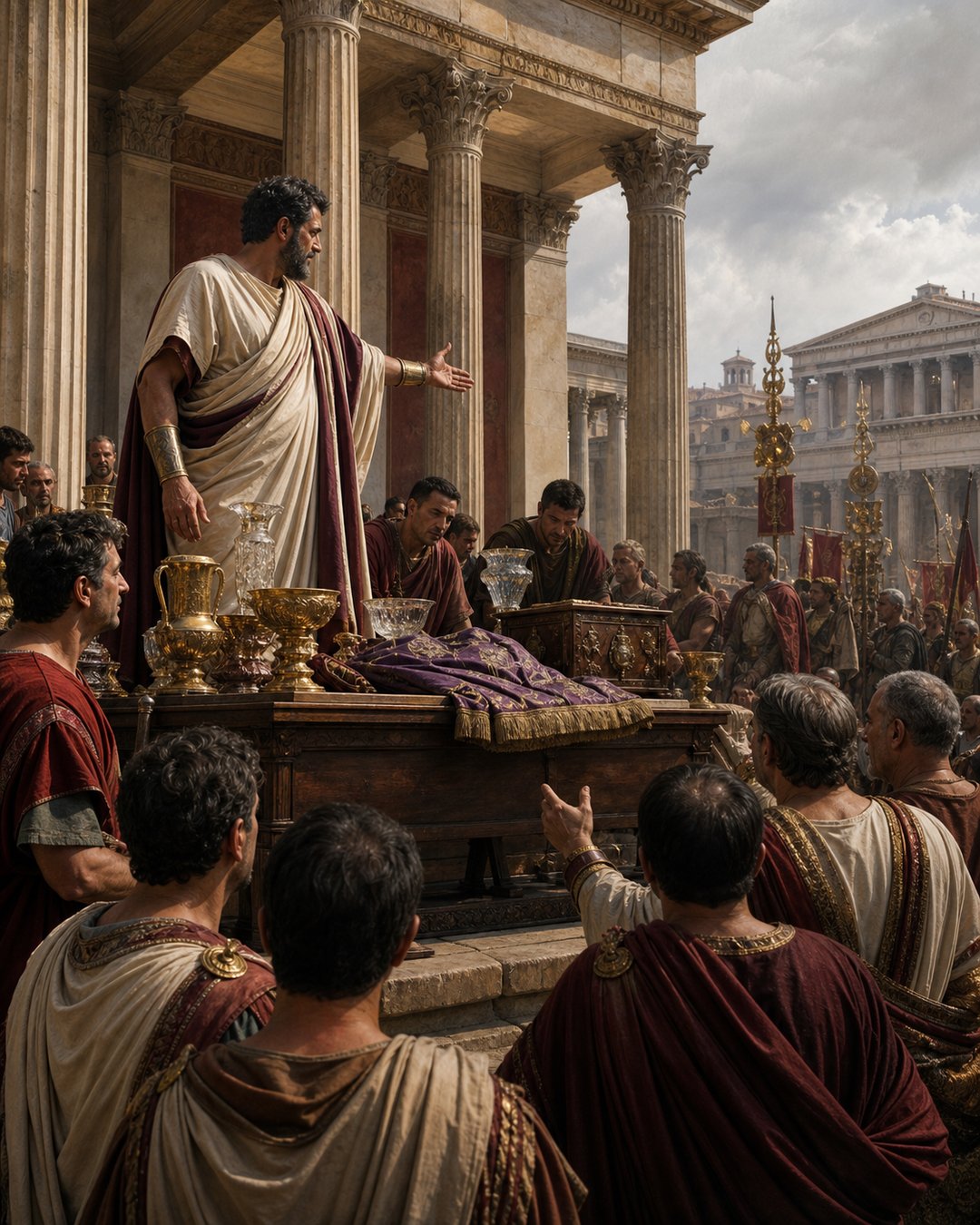
Gold cups, crystal, royal flagons, silk embroidered with gold and jewels from Hadrian’s cabinet left the imperial household for a public sale. The setting was not a discreet storeroom. An ancient account places the goods in the Forum of the deified Trajan, where Roman buyers could turn palace display into cash for a war.
The emperor was Marcus Aurelius. His northern campaigns had drained the treasury, yet two surviving narratives insist that he would not solve the shortage by imposing an extraordinary levy on the provinces. He sold possessions associated with the ruler instead. Cassius Dio reduces the episode to its political mechanism; the later Historia Augusta supplies the glittering inventory and says the auction continued for two months.
Neither author gives us an auction ledger, buyer list or total in sesterces. The details must be handled with the caution due literary accounts, especially the much later and often unreliable Historia Augusta. Even so, the agreement between the narratives preserves a remarkable choice: before asking subjects for exceptional money, an emperor exposed imperial heirlooms to voluntary purchase.
A War Shortage Reached the Palace Cupboards
The crisis belonged to the long wars on Rome’s Danubian frontier. Marcus faced the Marcomanni and other groups while military demands widened across the north. Soldiers, animals, weapons, transport and supplies converted danger into a cash problem. Dio’s fragment says that wars were impending and the emperor found himself short of funds. The Historia Augusta similarly says the treasury had been drained.
The later biography surrounds the sale with extreme recruiting measures. It says Marcus enrolled men for the Marcomannic and German war, armed gladiators, used Dalmatian and Dardanian bandits as soldiers, and hired German auxiliaries for service against Germans. The list has the moralizing sharpness typical of imperial biography, but its narrative purpose is clear: normal resources no longer matched the scale of the emergency.
Roman state finance did not separate neatly into modern ministries. The emperor commanded public revenues, military expenditure and an immense dynastic household. Yet the distinction between taking more from subjects and selling objects under his control still mattered. The sources praise Marcus precisely because he chose the second path.
This was not a claim that warfare had suddenly become cheap. The sale shifted the immediate burden. Buyers with available wealth exchanged money for prestigious goods; provincials did not face the extraordinary levy that the authors say Marcus rejected. The army received resources drawn from a different pool.
The contrast helps sharpen the wider problem of making Roman war expenditure countable. Ledgers and treasuries recorded obligations, but a military emergency still demanded liquid value at the right moment. A palace full of treasures represented wealth. An auction converted it into spendable money.
The Forum Turned Imperial Display into Public Lots
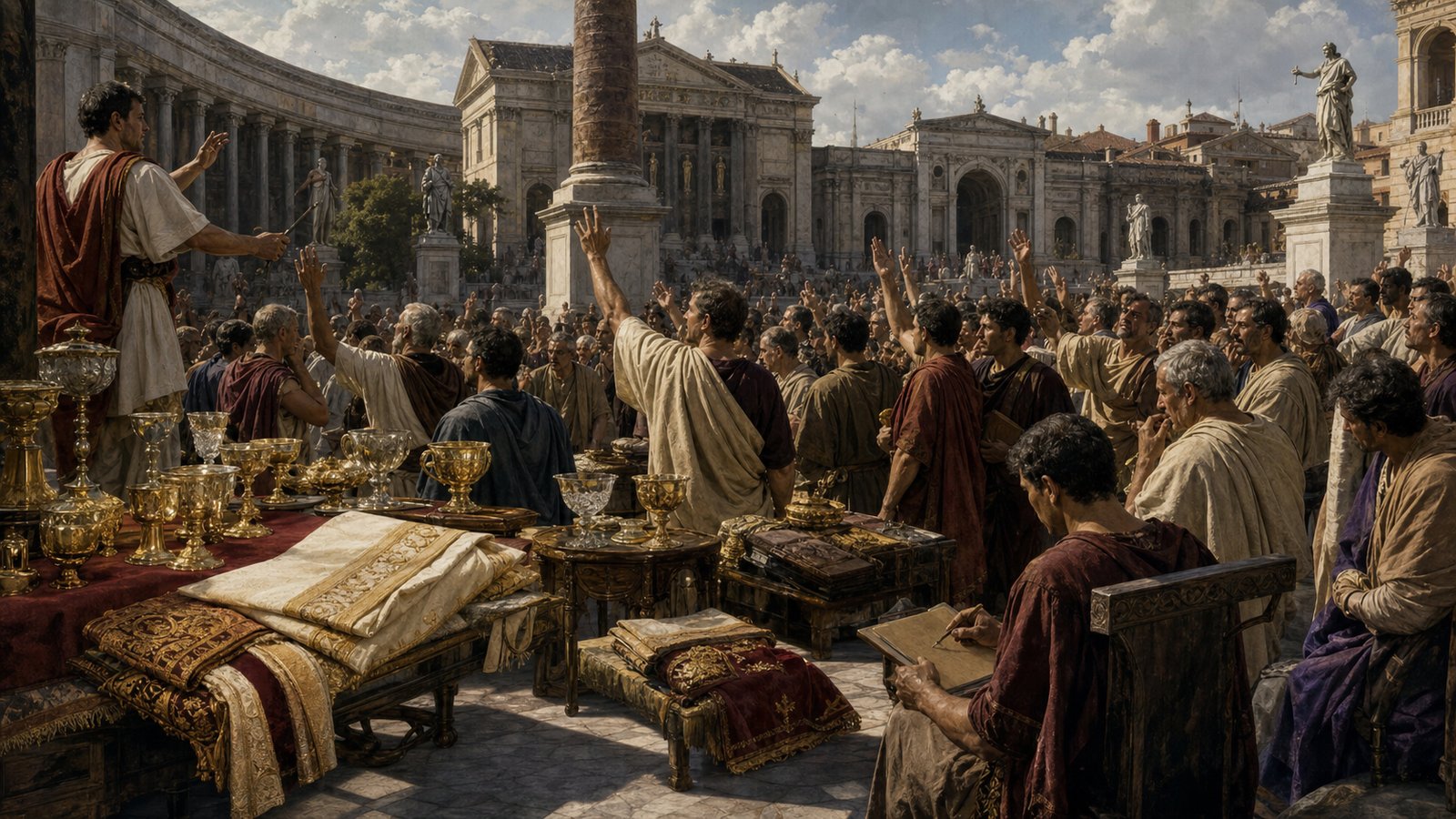
Dio says Marcus exposed palace heirlooms and ornaments belonging to his wife in the Forum, inviting anyone who wished to buy them. The Historia Augusta locates the sale in the Forum of the deified Trajan. That location made the solution visible in a monumental civic setting rather than hiding it behind palace walls.
The later biography lingers on categories of value: goblets of gold, crystal and murra; flagons made for kings; the empress’s silk robes embroidered with gold; jewels found in a particularly sacred cabinet of Hadrian. Elsewhere in its account it adds robes, statues and paintings by great artists. The catalogue joins portable precious material to dynastic memory.
Each object carried more than its raw substance. A golden cup could be weighed, but its path through imperial rooms added another form of value. A royal flagon hinted at courtly exchange or conquest. Hadrian’s jewels connected a buyer’s new possession to an earlier emperor. Faustina’s clothing made the ruler’s household physically imaginable through fabric that had touched or been prepared for an imperial body.
Those associations would have helped the sale. Rome’s wealthy did not merely purchase bullion and cloth. They acquired things whose previous owner or location could be named. The public setting authenticated that movement. The emperor himself had authorized palace property to cross into private houses.
The sources do not tell us how individual lots were called, whether a spear marked the auction in the ordinary Roman fashion, or who bid against whom. Supplying that scene would turn possibility into invention. What they do give is enough: imperial goods, public exposure, willing buyers and wartime need.
Two Months Made the Sacrifice Difficult to Miss
The Historia Augusta says the sale lasted two months. That duration transformed a single gesture into a sustained fiscal operation. Goods had to be identified, moved, displayed and transferred while the war continued. Buyers had repeated opportunities to see the palace being dismantled in portions.
A long sale also made the emperor’s restraint legible as performance. Ancient biography often constructs the good ruler by contrasting self-control with the demands he might impose on others. Marcus could have ordered an extraordinary contribution, the text argues, but instead allowed his own environment to thin out in public.
That praise should not erase hierarchy. Only an emperor possessed a palace inventory vast enough to become a military finance story. Only wealthy buyers could turn gold vessels, silk and artworks into immediate state liquidity. The arrangement did not distribute sacrifice evenly; it recruited elite appetite for prestigious objects.
Nor was every possession necessarily Marcus’s in a simple private sense. Imperial collections accumulated across reigns. The mention of Hadrian’s cabinet makes that continuity explicit. Marcus acted as both household head and custodian of objects inherited with power. Selling them placed dynastic memory at the service of current command.
The public nature of the auction distinguishes it from the notorious sale of imperial power after Pertinax’s murder. In that later story, armed men made sovereignty itself the object of bidding. Marcus’s transaction kept the office outside the sale. The emperor used authority to sell objects so that he could continue meeting the office’s obligations.
The Buyers Could Keep the Emperor’s Former Property
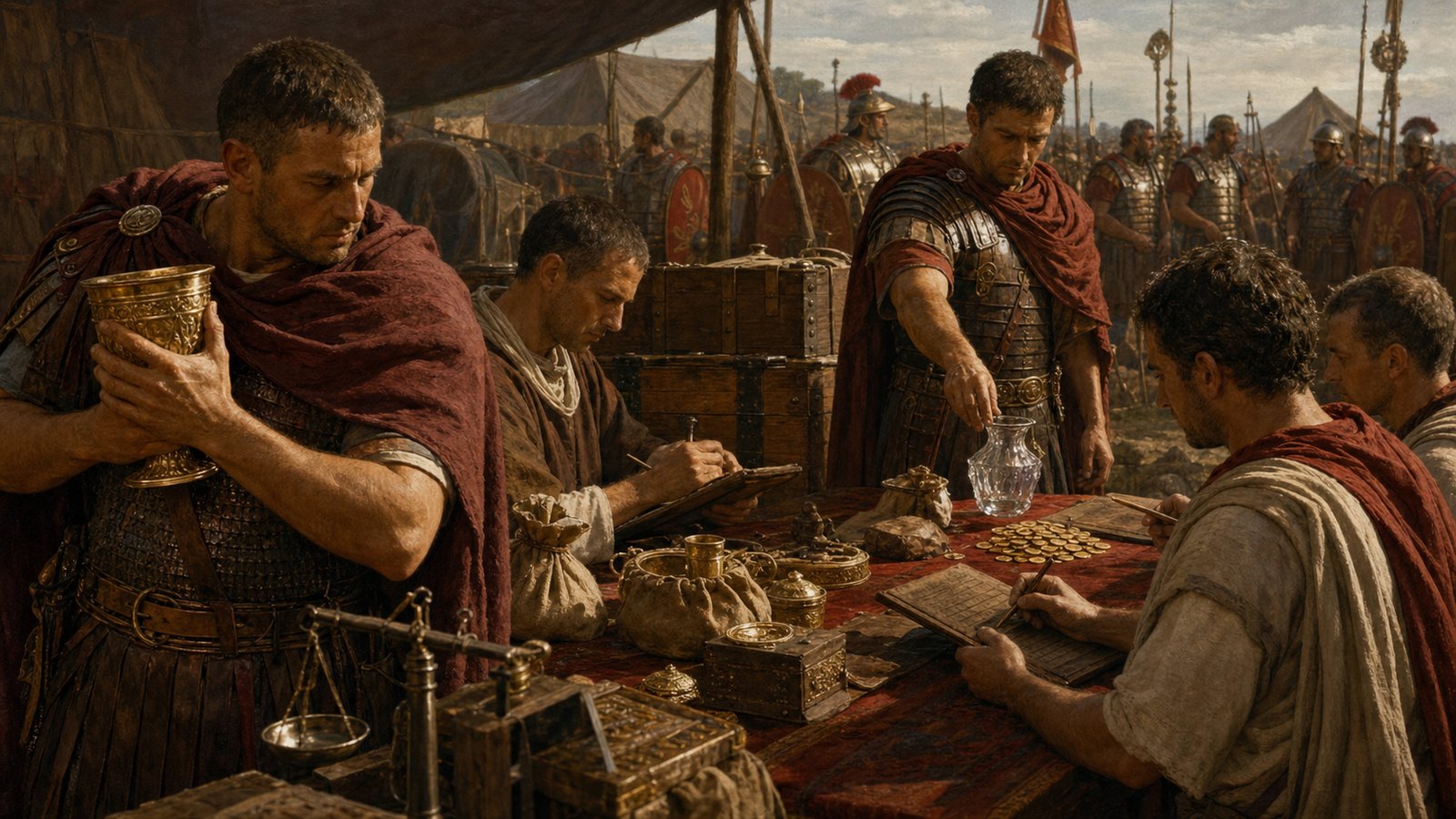
The most revealing part came after the war. Dio says that Marcus raised funds, paid the soldiers and later recovered many times the amount after victory. He then proclaimed that buyers could return imperial property and receive back its value. Some accepted. Most, Dio says, declined.
The Historia Augusta gives the same structure. After conducting the remainder of the Marcomannic war according to plan, Marcus let buyers know that anyone who wished could return a purchase and recover the money. He did not make matters unpleasant for people who kept what they had bought.
That last assurance matters. An imperial offer can become pressure without containing an explicit threat. If officials had treated refusal as disloyalty, the original sale would have looked less voluntary in retrospect. Both narratives therefore emphasize the absence of compulsion. The emperor did not punish a buyer for retaining an imperial robe, cup or jewel.
The refund option made the sale partly reversible without pretending it had never occurred. Returned objects could re-enter the palace; retained objects remained lawful private possessions. Money could travel back to purchasers after the treasury recovered. The arrangement separated emergency liquidity from permanent confiscation.
It also allowed buyers to choose between two kinds of prestige. Returning an object could advertise loyalty and restraint. Keeping it preserved a tangible association with the imperial household. The sources say nothing about individual motives, so we cannot assign virtue or greed to either group. Their choice is the evidence.
Two Histories Preserve One Fiscal Drama
Cassius Dio wrote closer to Marcus’s period than the Historia Augusta and held high office under later emperors. The surviving auction passage appears among fragments, however, which complicates the textual path. The Historia Augusta was composed much later and repeatedly mixes useful information with invention, exaggeration and moral portraiture.
Responsible reading therefore separates the shared core from the most decorative details. Both traditions say war exhausted available funds, Marcus avoided a new or extraordinary demand, imperial possessions went on public sale, proceeds supported the military effort, and postwar buyers could return objects for repayment without coercion. The two-month duration and elaborate catalogue come from the later biography and should remain attributed to it.
The episode works so well as praise because objects make fiscal policy visible. “No extraordinary tax” is an abstraction. A gold cup crossing the Forum is a scene. Silk leaving the empress’s store and jewels leaving Hadrian’s cabinet give the ruler’s decision weight, texture and color.
Yet the objects should not distract from the underlying mechanism. Marcus faced a question about compulsory and voluntary claims on wealth. Taxation would have reached subjects through authority. Auction reached buyers through desire and capacity. The emperor still controlled the terms, venue and inventory, but purchase required consent.
That did not make the war democratic, and it did not make imperial finance transparent in a modern sense. It showed a ruler choosing which reserve to consume first. Palace magnificence could support command only after it became cash; public sale performed the conversion before the city.
The final image is not Marcus admiring an empty shelf. It is a buyer deciding whether to return a cup after victory. In that choice, imperial property, military necessity and private ownership briefly met. Rome’s ruler had financed part of a war by letting pieces of the palace leave—and then honored the sale when many of them stayed gone.
Sources
Cassius Dio, Roman History 72, fragments on Marcus Aurelius.
Historia Augusta, Life of Marcus Aurelius 17 and 21.