
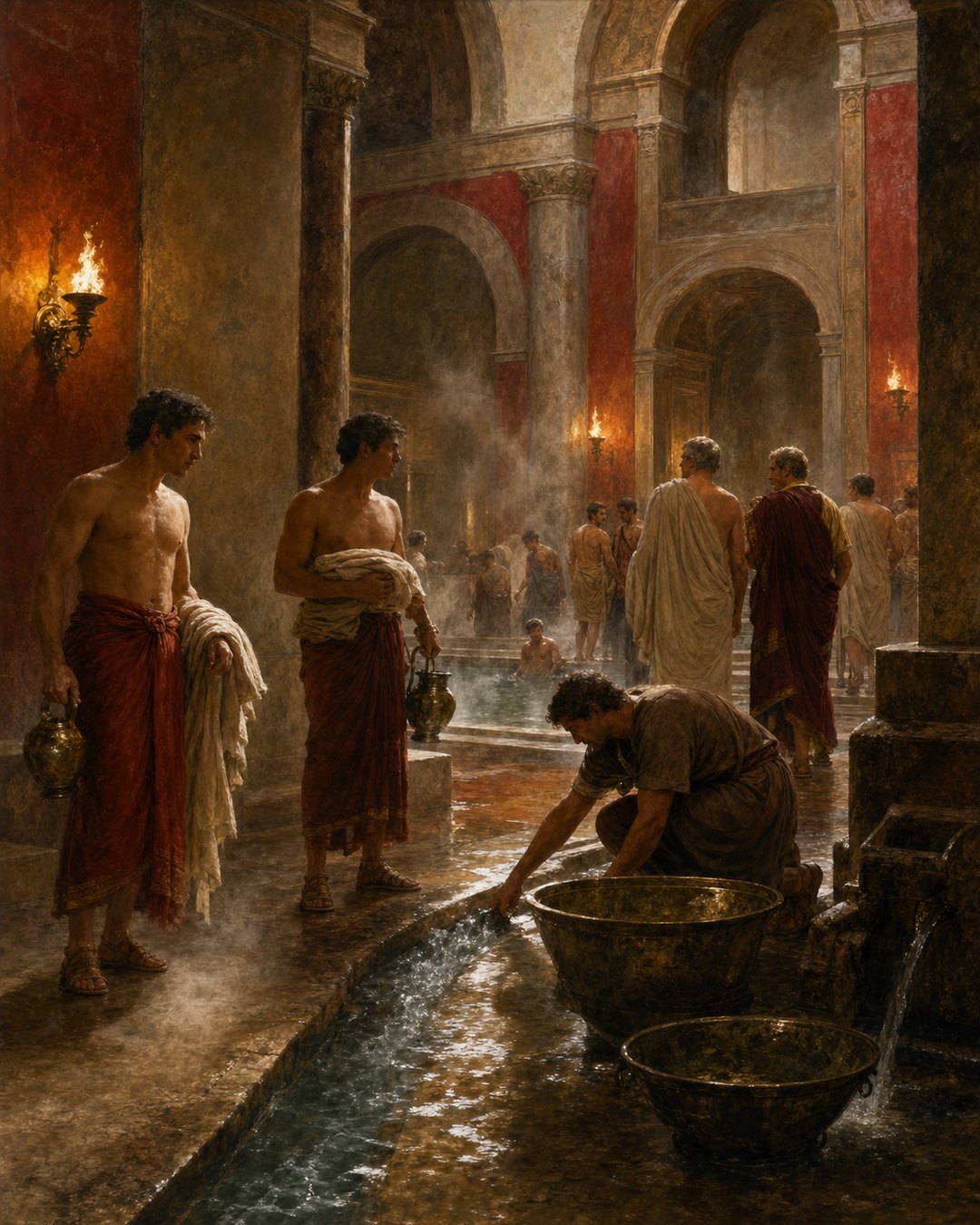
Roman bathing can look luxurious from the outside, all marble, steam, and leisure. But the deeper story is more practical. A bath made cleanliness social by gathering water, heat, attendants, bodies, and conversation into a shared routine.
The balneae were not simply rooms where people washed. They were places where infrastructure became a daily experience. Water had to arrive, heat had to be managed, surfaces had to be used and cleaned, and people had to move through the same public rhythm.
The Bath Made The Body Public
Bathing begins with the body, but Roman baths made bodily care visible among others. People entered, waited, undressed, oiled, rinsed, talked, watched, and moved through spaces designed for shared use. Cleanliness became a social act because it happened inside a managed public setting.
That social quality did not erase status. Some people entered with more comfort, better companions, or different expectations. Yet the same built environment still made bodies depend on water, heat, timing, and attendance. The bath exposed how private care required public systems.
Water Had To Arrive Before Leisure Could Begin
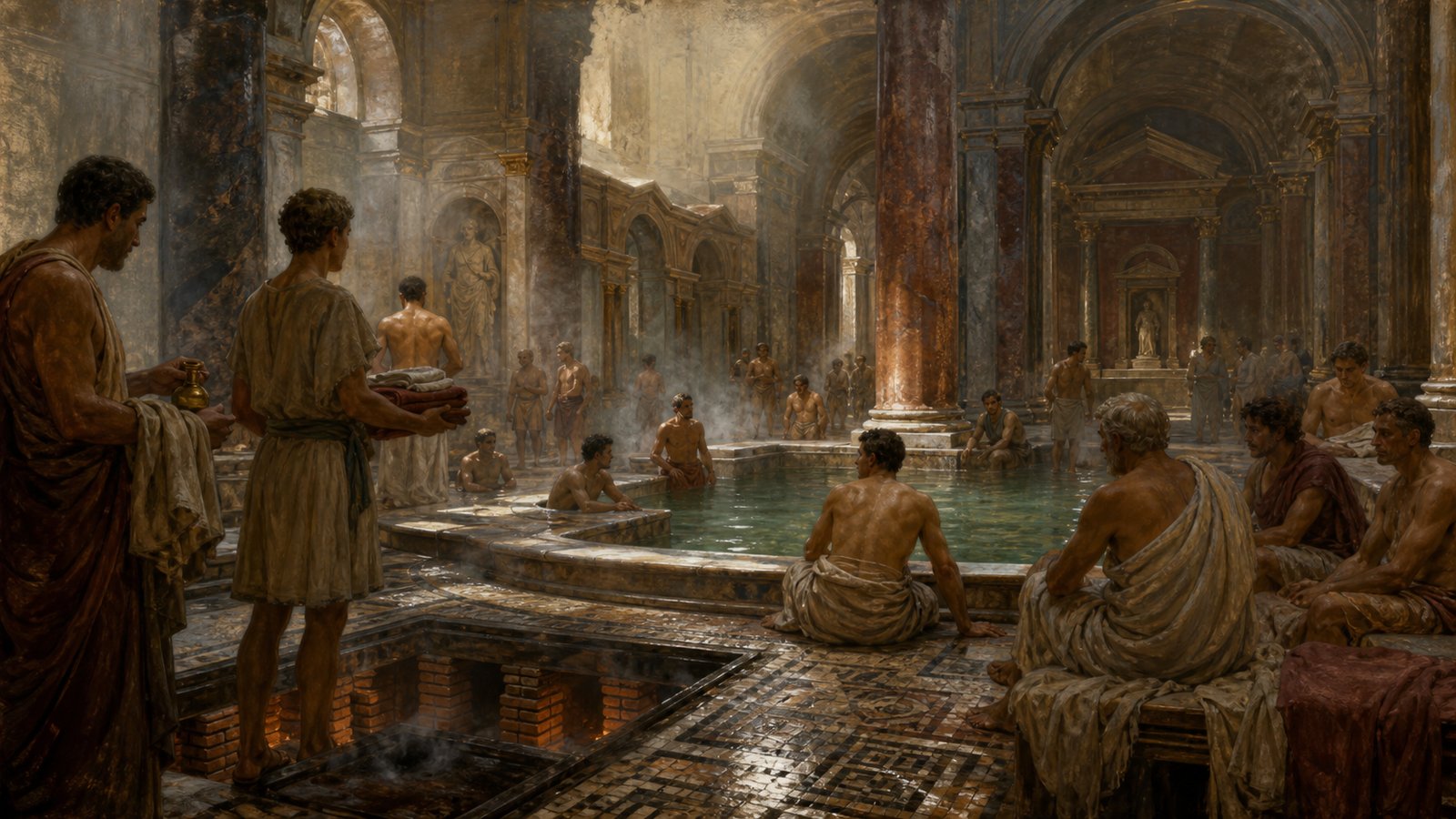
Aqueduct supply reminds us that a bath was not effortless. Before anyone enjoyed steam or a basin, water had to be brought through channels and directed into useful places. Infrastructure disappeared into habit only when it worked.
The bath therefore turned engineering into sensation. A person felt the success of supply as warmth, steam, splashing, and relief. The system became intimate because it touched skin.
Attendants Kept The Routine Moving
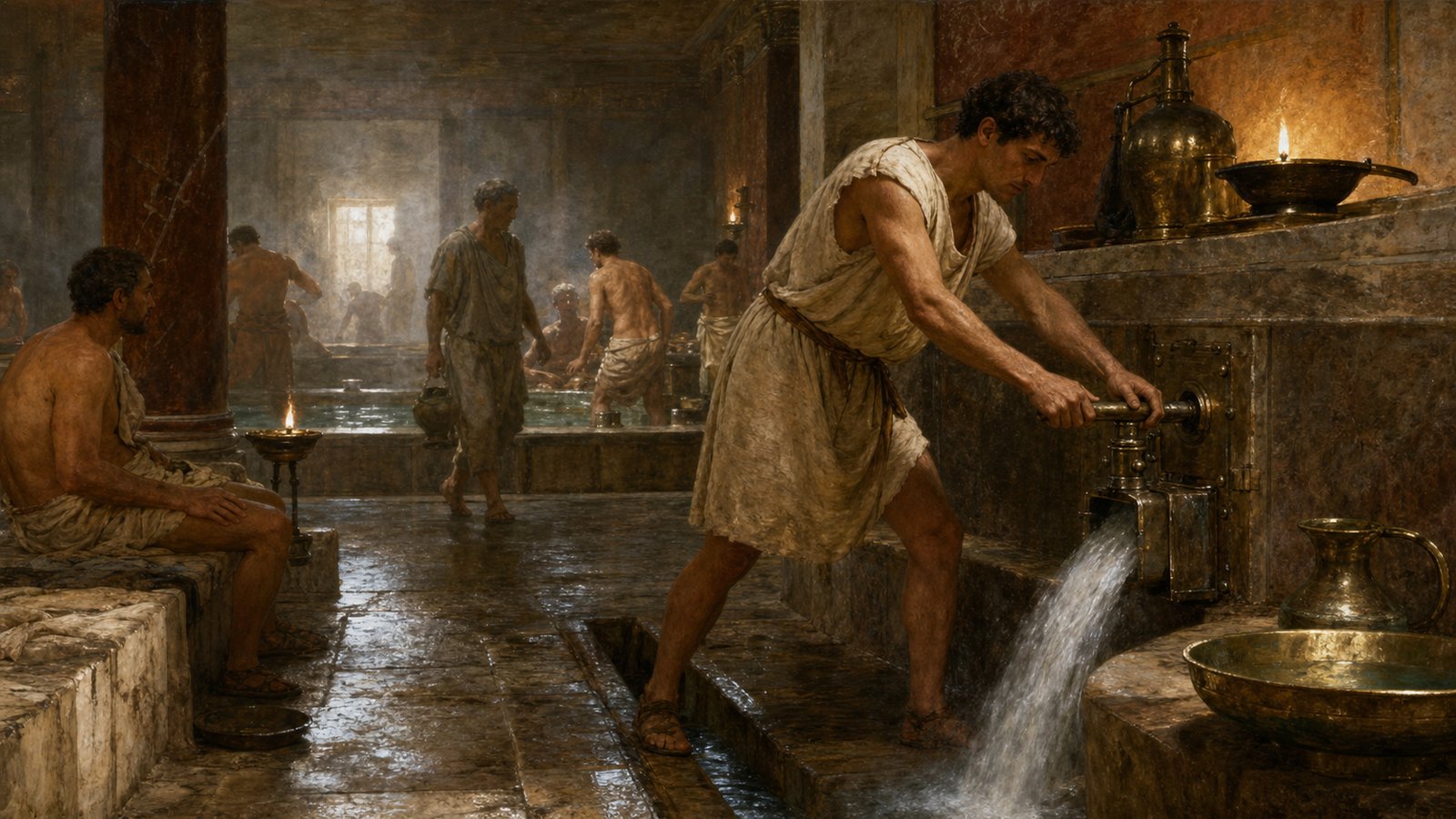
A bath needed more than architecture. Attendants, cleaners, fuel handlers, water managers, and servants made the rooms usable. Towels, oil flasks, basins, benches, lamps, and thresholds all required care. Without repeated labor, public cleanliness would quickly become public disorder.
Picture the scene: a worker adjusts water near a channel, steam curls under an arch, bathers speak in low voices, a bronze vessel catches lamplight, and wet footprints darken the floor. The civic system is visible in small actions.
Cleanliness Became Conversation
The bath gathered people who might otherwise meet only in streets, shops, courts, or houses. Waiting and washing created pauses where news, reputation, favors, and jokes could move. Cleanliness was not separated from social life; it helped stage it.
That made the bath more than a technical service. It was an urban room for repeated encounters. People returned because bodies needed care, but the habit also fed the city’s need for contact.
Shared Water Needed Shared Rules
Any shared water world creates problems of timing, crowding, maintenance, and behavior. Roman baths made those problems manageable by giving them rooms, sequences, and roles. The order of spaces helped people understand what to do next.
Rules could be formal or simply habitual. Either way, the bath depended on people recognizing the routine. A basin, doorway, heated room, or bench meant little unless users knew how to move through the system without collapsing it.
Why Public Cleanliness Felt Civic
Roman baths made public cleanliness social because they joined bodily need to urban organization. The water came from outside the room, the heat depended on labor, the surfaces required upkeep, and the experience unfolded among other people.
The result was a civic technology of habit. A person might enter for comfort, hygiene, or conversation, but the bath quietly taught the same lesson each day: even the care of the body could depend on a city’s ability to coordinate water, work, space, and trust.
The public bath also changed the meaning of routine. Washing could have remained a household act, hidden inside private walls and limited by private resources. In the bath, the same bodily need entered a place organized by urban systems and shared expectations.
That transformation depended on water behaving reliably. Channels, basins, drains, and heated rooms had to cooperate before the bath could feel natural. When the system worked, visitors experienced engineering not as a diagram but as warmth on skin, steam in the nose, and water moving where it was expected.
The bath therefore made infrastructure sociable. People did not gather around an aqueduct channel to admire hydraulic logic. They gathered in rooms where that logic had become useful, comfortable, noisy, and habitual. The city’s hidden coordination appeared as an ordinary afternoon.
Attendants gave the system its human edge. Someone had to carry, clean, watch, fuel, open, close, and correct. Public cleanliness depended on labor that could disappear into the background only when it was being done well. The smoothness of the experience was evidence of repeated work.
The rooms also created a sequence. Entering, changing, oiling, sweating, rinsing, cooling, waiting, and talking turned bodily care into a pattern people could learn. A newcomer might feel unsure, but the architecture and crowd taught the movement.
Social contact made the bath politically interesting without requiring formal politics in every conversation. Reputation, news, favors, complaints, and jokes all moved through places where people had time to linger. Cleanliness became one reason for assembling; conversation became one result.
This shared setting did not make Roman society equal. Wealth, status, gender, local custom, and access shaped the experience. Still, the bath revealed a common dependence on managed water and maintained space. Even privilege needed the channel to flow and the room to stay usable.
That is why Roman baths deserve attention beyond luxury. They show a city teaching people to trust a service through repetition. If the water came, the heat held, the floors were usable, and the routine made sense, public cleanliness could become part of urban confidence.
The bath made the body public not by exposing everything, but by placing ordinary care inside civic coordination. In steam, footsteps, wet stone, and conversation, Romans encountered the city as something that could touch the skin and still require everyone else.
The maintenance problem was constant. Heated rooms cooled, water dirtied, floors became slippery, vessels emptied, and crowds changed the room simply by using it. A public bath succeeded only when the ordinary damage of use was answered again and again.
That answer gave cleanliness a civic rhythm. People could return because the rooms were expected to be ready, and that expectation turned the bath into part of the mental map of the city. It was not an exception to daily life; it helped structure daily life.
The Roman bath therefore shows public order at a bodily scale. Roads moved armies and goods, but baths moved people through heat, water, waiting, and speech. The system was softer than a road and still depended on organization just as real.
Every visit also renewed the social proof. If neighbors, clients, freedmen, traders, and officials all used the same managed water world, the bath became evidence that the city could coordinate ordinary bodies as well as public ceremonies.
The room’s sounds carried that proof: splashing water, low voices, sandals on wet stone, attendants calling across steam. Cleanliness became memorable because it had a place, a sequence, and a crowd.
When the visitor stepped back into the street, the private benefit had already passed through public machinery. The washed body carried away evidence that urban coordination had worked for one more day.
Sources & Further Reading
- Smith Dictionary, Balneae
- Smith Dictionary, Aquaeductus