
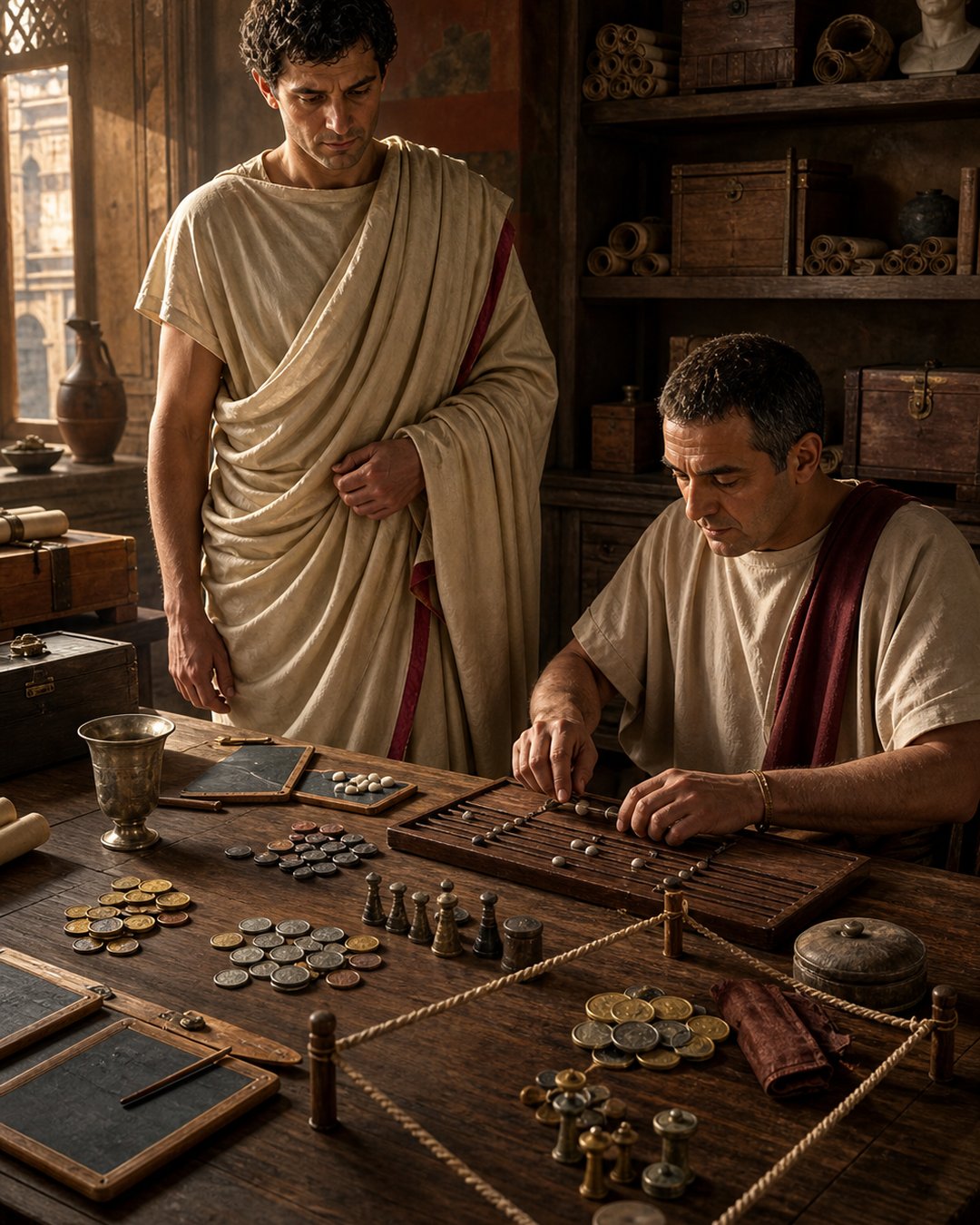
The will named an heir, then began giving the estate away. A house might go to one person, money to another, silver or land to several more. Each gift could be valid on its own, yet together they created a dangerous result: the person appointed to carry the inheritance might receive little reason to accept it.
Roman law answered with a fraction. Under the Lex Falcidia, legacies could not consume more than three quarters of the relevant estate. At least one quarter had to remain for the heir.
The rule, enacted in 40 BC, looks at first like a limit on a testator’s generosity. Roman jurists reveal a more practical engine. An instituted heir was not simply the largest beneficiary in a queue. The heir was central to testamentary succession. If excessive gifts emptied the inheritance and the heir refused it, the plan written across the tablets could fail with the very person meant to make it work.
A will could appoint an heir and still leave almost nothing
Roman testamentary language separated the heir from recipients of particular legacies. A legatee might receive a stated sum, a named object or another defined benefit. The instituted heir stepped into the broader position created by the inheritance. That difference made the heir necessary even when the document seemed mostly interested in everybody else.
Gaius explains the pressure behind reform. Earlier statutes had tried to restrain legacies. The Lex Furia limited what most recipients could take, while the Lex Voconia imposed another restriction. But a ceiling on each gift did not necessarily control the total. A determined testator could divide wealth among many people and still drain the estate through accumulation.
The failure was structural. Counting beneficiaries is not the same as protecting the residue. Ten gifts below an individual limit can be more destructive than one large gift if the heir receives what remains only after every instruction has been honored.
This problem belongs beside the formal care visible in the ten-witness confarreatio marriage. Roman private law often made relationships durable through roles, words and witnesses. The Falcidian solution added arithmetic: the testament needed enough value on the heir’s side to remain operational.
The new rule measured the whole burden, not each gift
The Lex Falcidia replaced the failing approach with an aggregate limit. Gaius states the result plainly: no more than three quarters could be distributed in legacies, so that a fourth remained with the heir. The law stopped asking only whether an individual gift was too large. It asked what all the gifts did together.
Imagine an estate valued at one hundred units after the relevant calculation. A will that assigned sixty units in legacies caused no Falcidian shortage; forty remained. A will that assigned ninety created a conflict. The heir’s protected amount was twenty-five, so the testamentary gifts could not all be delivered at their stated value.
The fraction did not make every estate equal or guarantee the heir comfort. A quarter of a modest inheritance remained modest, and legal calculations could become complicated by debts, valuation and the form of benefits. What the fraction did was preserve a ratio between the testamentary burden and the estate supporting it.
That ratio also explains why the law mattered whether there was one heir or several. Justinian’s Institutes later restated that a fourth must remain to the heir or heirs. Dividing the position among multiple successors did not allow legacies to swallow the protected share.
The rule changed how every number on a crowded testament related to every other number. A legacy could no longer be evaluated only as an isolated promise between the dead testator and one recipient. Its deliverable value depended on the estate, the other gifts and the quarter that the law placed beyond their combined reach. Private wishes had become entries in a shared calculation.
That is why the fraction was more useful than a fixed monetary allowance. Estates differed radically in scale, composition and number of beneficiaries. Reserving the same sum for every heir would protect too much in some cases and almost nothing in others. One quarter expanded and contracted with the property to which the testament applied.
Excess gifts were reduced rather than simply discarded
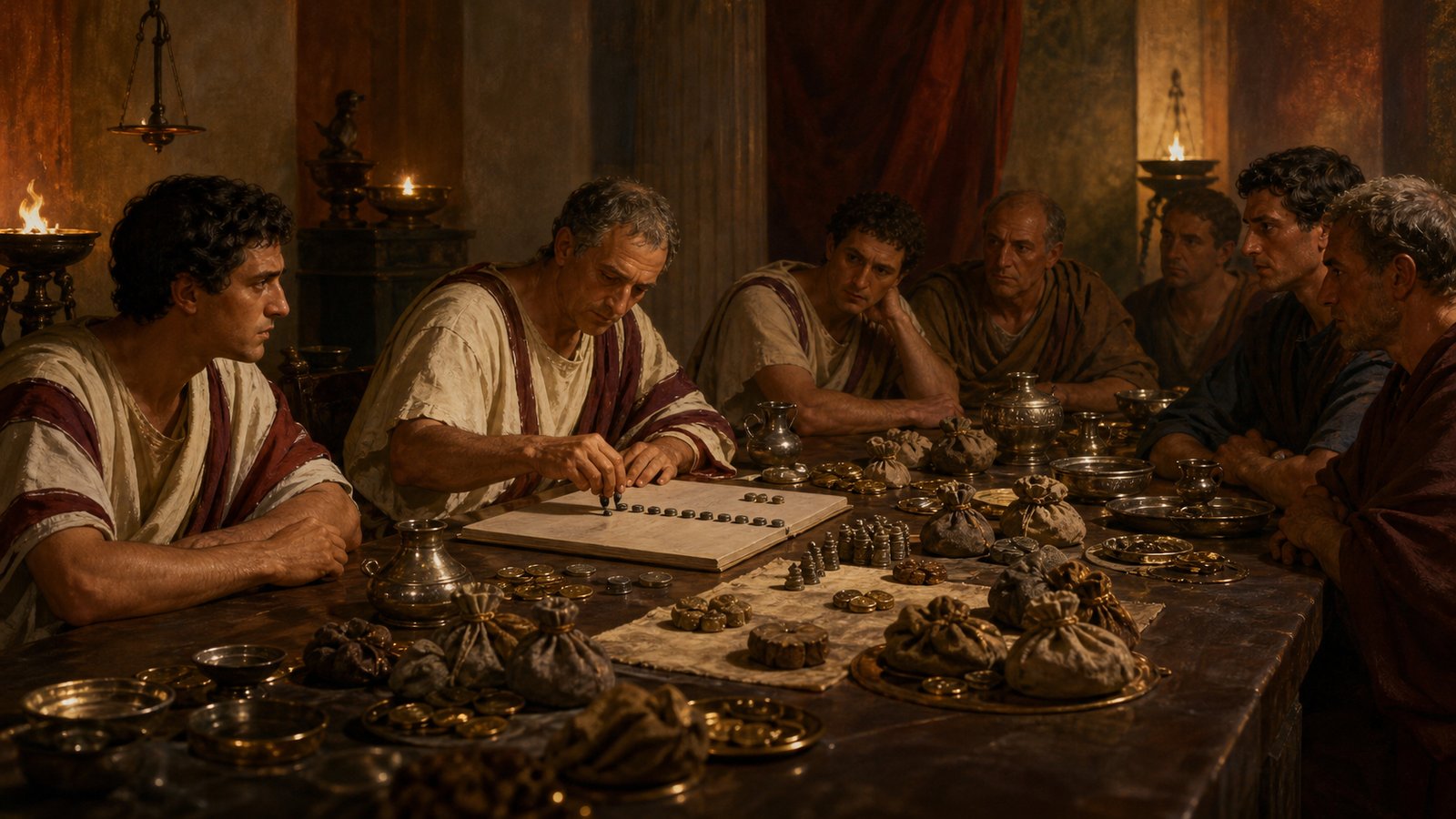
When the permitted limit was exceeded, the practical answer was reduction. The point was not to choose one unlucky legatee and cancel that gift while preserving all the rest. The gifts had to be brought within the amount the estate could legally bear while leaving the quarter intact.
This turns the law into a problem of proportion. Beneficiaries still had claims rooted in the testator’s instructions, but those claims could no longer be read as though the estate had no protected remainder. Each legacy existed inside a common limit.
The resulting settlement balanced two kinds of fidelity. Roman law respected the written desire to benefit named people, yet it refused to execute that desire in a way that removed the heir’s minimum stake. Testamentary freedom survived, but not as permission to create a self-defeating inheritance.
The beneficiaries remained connected by arithmetic even if the will had described them in separate clauses. If the combined burden crossed the legal ceiling, no clause could pretend that the others did not exist. The estate had to be viewed as one fund before its pieces could be distributed. That shift from individual wording to total effect is the Lex Falcidia’s most important legal technique.
There is a revealing contrast with the fixed twenty-five-as penalty for a slap. A fixed sum can become absurd when money and behavior change. The Falcidian quarter moved with the estate’s value. Its durability came from a proportion rather than a static price.
A protected quarter kept the testament alive
Gaius links the legislation to heirs refusing inheritances. That is the clue to the law’s deeper purpose. A testament full of attractive gifts could look generous from the viewpoint of the legatees while looking ruinous from the viewpoint of the person who had to accept the succession. If refusal followed, the elegant distribution risked losing its legal foundation.
The quarter gave the heir a defined floor. It did not erase family conflict, guarantee honest valuations or remove every burden. It supplied an incentive and a boundary. The heir could see that the law would not require acceptance while allowing specified legacies to consume the entire estate.
The measure also disciplined drafting. A testator could still favor friends, relatives, dependants and institutions through individual gifts, but those gifts had to fit inside a three-quarter envelope. The remaining quarter was not an accidental leftover. It was part of the design.
Justinian’s sixth-century compilers preserved the rule in their Institutes long after the late Republic that enacted it. They presented it as the successful answer after earlier statutes proved inadequate. That long afterlife shows the power of the mechanism: it converted a recurring clash between generosity and succession into a calculation jurists could apply.
The most important person in a Roman will was therefore not always the person receiving the most vivid gift. It was the heir whose acceptance allowed the document to function. By reserving one part in four, the Lex Falcidia protected that hidden architecture. The law did not oppose the will. It kept the will from giving away the means of carrying itself out.

Sources
Gaius, Institutes 2.224–228
Justinian, Institutes 2.22
Lex Falcidia legal reference