

A Roman treaty did not ask Carthage for silver in the abstract. It specified a yearly weight of argenti puri puti.
The phrase sent Aulus Gellius from legal language into vineyards, account keeping and the refiner’s furnace. What made the metal pure was not verbal emphasis alone.
Purity was what remained after foreign material had been cut away.
A Treaty Made One Old Expression Financially Exact
Gellius encountered the phrase through Alfenus, a jurist trained by Servius Sulpicius and interested in antiquarian problems. Alfenus had discussed its wording in his Digests and Miscellanies.
The underlying document was a treaty between Rome and Carthage. It required the Carthaginians to pay the Roman people a stated weight of argenti puri puti each year.
That context raised practical stakes. A description of metal inside a recurring payment clause had to distinguish acceptable tribute from adulterated or insufficient material. Weight answered how much. The disputed words answered what quality of silver belonged on the scale.
Ancient legal formulas often outlived ordinary speech. A jurist could therefore know the obligation while still needing to explain the older language that defined it.
Annual repetition increased the pressure for stable interpretation. Every delivery reopened practical questions about which material belonged in the total, whether impurities inflated the weight, and what condition satisfied the inherited phrase. An obscure adjective could affect recurring transfers of wealth.
Alfenus answered by making putus strengthen purus. On his reading the pair meant something like “very pure.” He compared the formation with words such as novicius and propicius.
The answer preserved the general idea of purity, but Gellius thought it explained the form badly. His correction begins in grammar and ends in a workshop.
The experiment that exposed silver hidden in Hiero’s crown made adulteration visible through displaced water. The treaty phrase approached the same material problem from the standard a payment was supposed to meet before acceptance.
Gellius Rejected an Intensifier That Did Not Fit Its Own Shape
Gellius first tested Alfenus’s analogy. If putus related to purus in the same way that novicius related to novus, he argued, the expected form would have been puricius.
The missing sounds mattered because Alfenus’s explanation depended on morphology, not merely on a loose resemblance in meaning. A proposed word family should account for the actual form being explained.
Gellius then challenged the comparison from the other direction. Novicius did not mean “more new.” It was a derivative or variant of novus, not a device that automatically amplified an adjective.
Alfenus had therefore made one analogy carry two unsupported claims: that the suffix intensified, and that putus had developed from purus in a matching way.
This is an antiquarian argument, and its conclusions belong to ancient scholarship. Its interest lies less in whether every modern etymologist would reproduce the derivation than in the evidence Gellius assembled.
He did not settle for saying that Alfenus was wrong. He looked for an older operation capable of explaining pronunciation, form and the metal’s condition at once.

Pruning Supplied the Action Hidden inside Purity
Gellius preferred to derive putus from putare. That choice also led him to insist on a short first syllable rather than the pronunciation implied by derivation from purus.
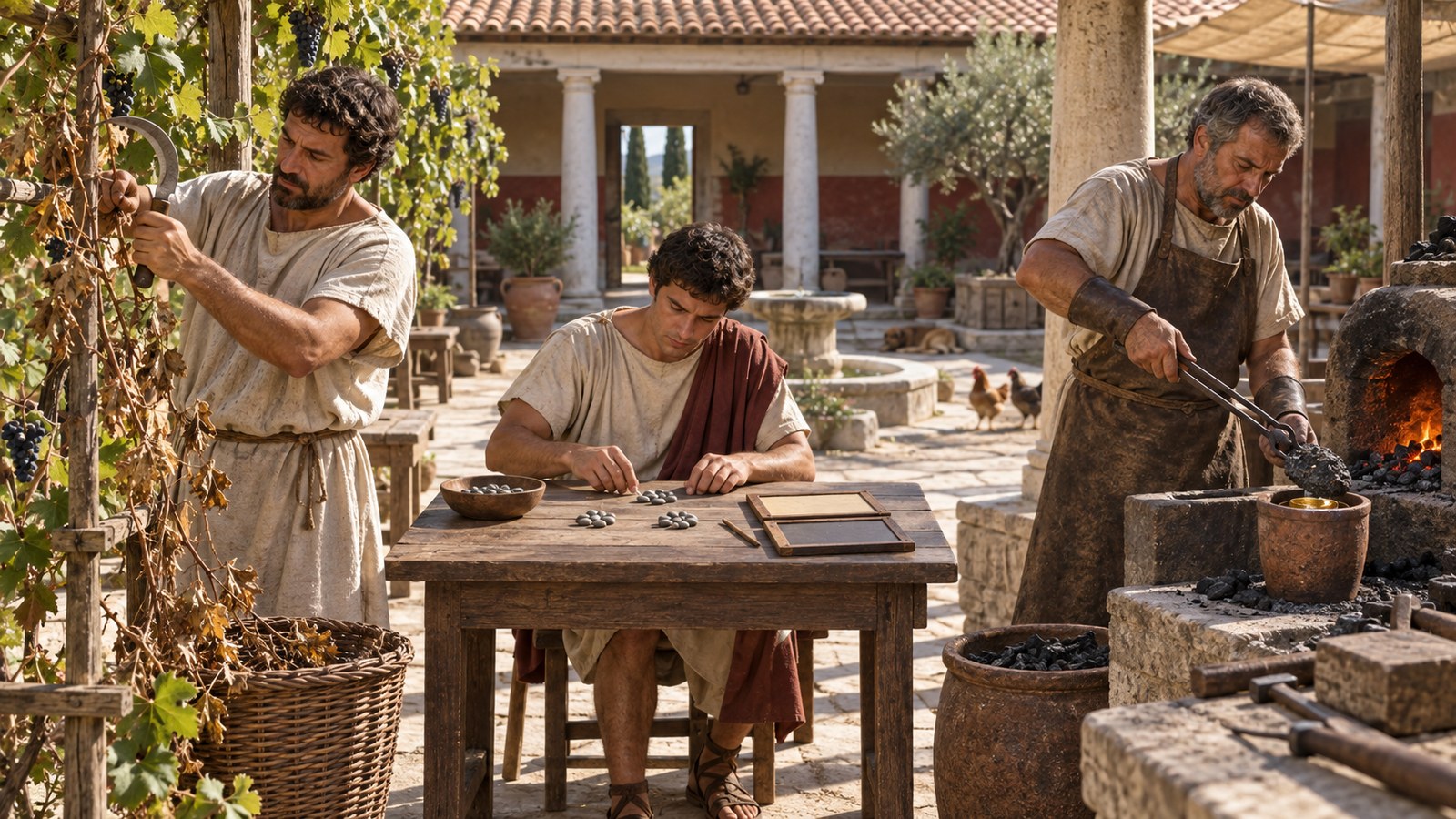
Earlier writers, he says, used putare for removing and pruning. A worker cut away what was superfluous, unnecessary, harmful or foreign and left what appeared useful and sound.
Trees and vines made the action visible. Pruning did not create a branch by adding more wood. It selected the living structure through subtraction.
The same logic could travel to metal. Ore or worked material might contain matter that did not belong in the accepted silver. Refining separated that foreign content from what was meant to remain.
Gellius’s explanation therefore gives puri puti more texture than “very pure.” The second term evokes a process completed: impurity has been removed until the metal stands clean of mixture.
The distinction is commercially useful. Praise can be elastic, but process language points toward inspection. A receiver can ask whether foreign matter remains and whether the delivered weight still satisfies the obligation after refinement.
Refining changes the relationship between gross and accepted weight. Material removed as slag may have sat inside the first mass, but it cannot count toward a debt denominated in purified silver. The phrase guarded against payment made heavier by what the recipient had not agreed to receive.
The recent account of vinegar vapor changing lead into white pigment follows addition and transformation inside a controlled vessel. Silver refining worked toward the opposite visual result: the unwanted portion was separated so the metal’s clean remainder could be judged.
Accounts Used the Same Motion without a Knife
Gellius says putare also applied to accounts. The connection becomes clearer when calculation is treated as clearing rather than merely adding.
An account begins with mixed claims, entries and obligations. Items are checked, offsets recognized, errors removed and a balance left. The final figure is a remainder made trustworthy by elimination.
This makes the accounting sense more than a literary flourish. A total cluttered with duplicated, false or irrelevant entries is not improved by adding another number. Reliability comes from deciding which entries survive scrutiny, just as the useful shoot survives pruning.
The verb could even describe forming an opinion. In an obscure matter, a thinker cuts away false views so that what seems true, pure and sound survives.
These are not three unrelated decorative metaphors in Gellius’s argument. Vine, ledger and judgment share a repeated structure. Each contains more than should remain. Deliberate removal reveals the useful part.
The movement also explains why a legal phrase about silver could preserve workshop knowledge without becoming a technical manual. The words specified the desired result by naming a familiar kind of operation.
Nothing in the chapter describes furnace temperature, flux or a particular assaying instrument. Those details should not be invented. Gellius’s evidence is linguistic: refined silver belongs to a family of things clarified by taking material away.
That family joined manual and intellectual labor. The pruner’s blade, the accountant’s cancellation and the critic’s rejection all made quality through disciplined exclusion.
Old Literature Kept the Refining Phrase beyond the Treaty
Gellius did not rely on the treaty alone. He found purum putum in other early writing, including Ennius’s tragedy Alexander.
The phrase also appeared in a satire by Marcus Varro with the Greek title translated as Old Men Are Children for a Second Time. Multiple settings showed that the expression was not an isolated error in a diplomatic document.
Literary survival mattered because it let Gellius compare usage across genres. Treaty language demonstrated material and financial precision. Tragedy and satire demonstrated that the paired words remained intelligible enough to carry force beyond an annual payment clause.
The witnesses also gave him a small archive of repetition. A rare phrase seen only once might be blamed on a damaged text or private eccentricity. Its reappearance in authors with different subjects made an older conventional meaning more plausible.
Alfenus had reached the right neighborhood—exceptional purity—but Gellius wanted the road by which the phrase arrived there. Intensification said only that the silver was purer. Pruning explained what had happened to it.
The explanation also placed verification before rhetoric. Silver was not acceptable because a seller praised it with two adjectives. It was acceptable because the foreign portion had been removed and the remaining weight met the stated obligation.
A short archaic phrase thus joined treaty, craft and calculation. Carthage owed metal; Rome needed a standard; antiquarians later recovered the action embedded in the words.
For Gellius, the clean ingot and the settled account belonged to the same mental world. Both became reliable only after everything that did not belong had been pruned away.
Sources
Aulus Gellius, Attic Nights, book 7, chapter 5.