
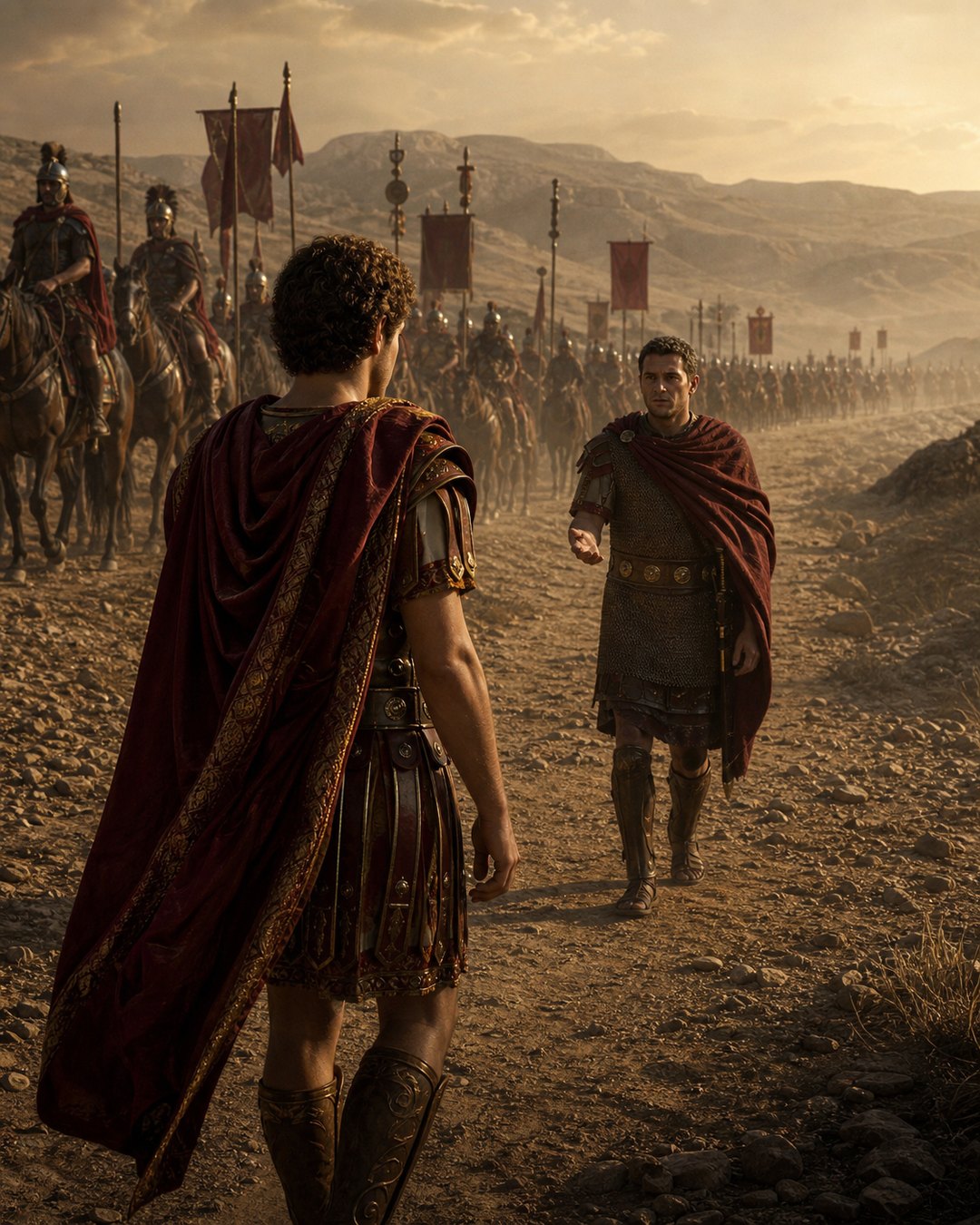
The emperor’s escort was close enough to avenge him and too far away to save him. On 8 April 217, Caracalla halted while travelling between Carrhae and Edessa in northern Mesopotamia. He stepped away from the road to relieve himself. Julius Martialis, an imperial guard, followed as though he had a message. When the emperor turned aside from his attendants, Martialis struck.
The attack lasted moments. A mounted guard killed Martialis with a javelin as he fled, erasing the easiest person to interrogate. Caracalla died on the ground at twenty-nine, far from Rome but in the middle of the military world on which his rule depended. The army had protected his dynasty, carried him east and now contained both his assassin and the man who would replace him.
Ancient accounts agree on the exposed halt more readily than on the conspiracy behind it. Cassius Dio makes the praetorian prefect Macrinus the organiser, driven by warnings that Caracalla intended to destroy him. Herodian gives Martialis a sharper personal grievance while still placing suspicion around Macrinus. The disagreement matters. It turns a famous murder from a neat plot into a problem of evidence, fear and opportunity.
A Campaign Put the Court on the Road
Caracalla had ruled alone since the killing of his brother Geta in 211. His public identity leaned heavily on the army: increased pay, campaigning energy and studied companionship with soldiers helped secure loyalty after a violent family succession. By 216–217 he was in the East, preparing and conducting war against the Parthian Empire.
An imperial campaign moved more than troops. The emperor travelled with guards, secretaries, commanders, petitioners, baggage and the routines of government. Orders that might have been handled in a palace now crossed roads and camps. Access changed with terrain. A ruler surrounded by thousands could still become briefly isolated when formation loosened around an ordinary bodily need.
Carrhae carried ominous Roman memory because Crassus’s army had been destroyed nearby in 53 BCE. Caracalla’s destination and religious intentions are described differently in the sources, but both place him on the route toward the city and its sanctuary. The landscape joined current strategy to an old defeat without providing the controlled space of a throne room.
This moving court should be read beside the Praetorian Guard’s dangerous proximity to imperial power. Praetorians were not simply a wall around the ruler. Their officers managed access, information and armed men. The same system that made travel governable also placed ambitious or frightened insiders inside the security perimeter.
Warnings Made Macrinus Fear the Next Message
Macrinus was one of Caracalla’s praetorian prefects, a high command that combined military responsibility with legal and administrative authority. He was an equestrian rather than a senator and had risen through imperial service. That ascent placed him close to the emperor but did not make him safe from suspicion.
Cassius Dio says prophecies and written warnings forecast that Macrinus would become emperor. In an autocracy, such a forecast could sound less like good fortune than evidence of treason. Dio’s narrative has messages exposing the danger intercepted or delayed while word also reached Macrinus. The prefect then acted because he expected Caracalla to act first.
This sequence cannot be verified like modern correspondence preserved in a complete file. Dio wrote with access to senatorial politics and near-contemporary knowledge, yet he shaped events around character, omens and the ironies of succession. His Macrinus is a man pushed into conspiracy by the prediction of the very promotion his conspiracy would achieve.
The mechanism is nevertheless plausible without treating every letter as certain. Imperial favour could reverse quickly. A praetorian prefect knew how accusations travelled and what happened when an emperor decided a servant was dangerous. If Macrinus believed exposure was imminent, Caracalla’s eastern road created a shrinking window in which proximity could be converted into survival.
Martialis Walked Through the Protective Ring
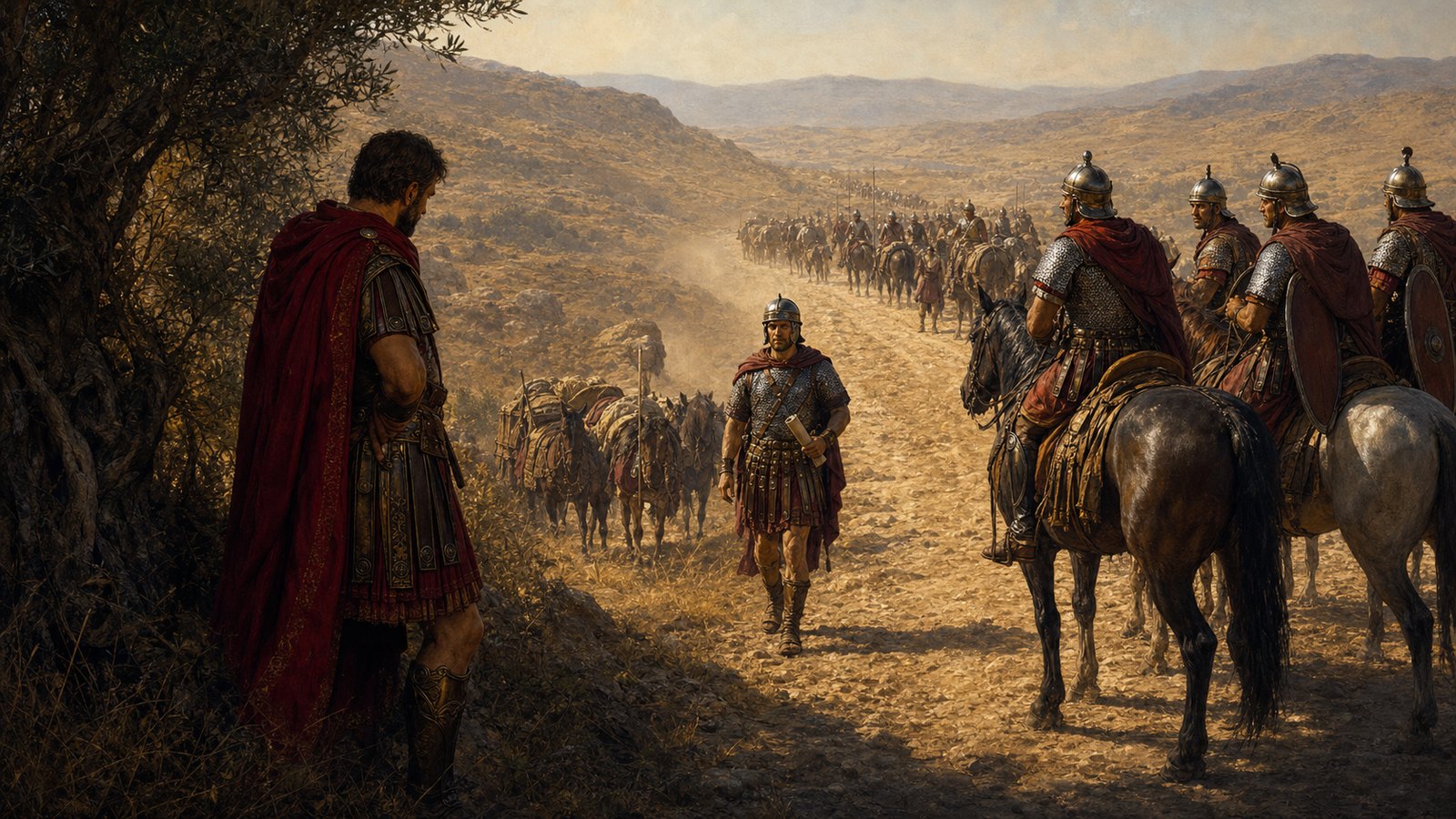
Martialis did not charge from an enemy line. He belonged to the emperor’s own armed surroundings and could approach without immediately looking like an attacker. Herodian says he carried a personal grievance: Caracalla had denied him promotion, and the emperor had also put his brother to death. Dio instead emphasizes Macrinus selecting him as the instrument.
Both versions make insider status essential. As Caracalla withdrew from the group, Martialis came forward on the pretext of delivering information. The gesture exploited a routine expectation that a guard or messenger might need the emperor’s attention. Only at close range did access become attack.
The blow landed while Caracalla was in a physically awkward and undignified position. Ancient historians used such reversals deliberately: an emperor who projected martial energy did not fall in a grand battle but during a roadside pause. Yet the detail also explains the security breach. Attendants gave him privacy; privacy removed the bodies that normally separated ruler from petitioner.
Martialis’s escape failed. Dio describes a Scythian member of the bodyguard striking him with a javelin. That immediate response proved the escort’s fighting capacity while exposing its deeper failure. The guard could kill the assassin once the attack was visible, but it could not distinguish a trusted approach from a lethal one soon enough to protect the emperor.
The Dead Assassin Left Two Competing Motives
Because Martialis died at the scene, the surviving story depended on people with interests of their own. Macrinus presented grief, reportedly tearing his clothes and lamenting with the others. If Dio is right, the organiser stood among the mourners while the man who could identify him lay dead. If Herodian’s emphasis is right, Macrinus may have exploited or encouraged a guard already determined by private anger.
The sources are not interchangeable witness statements. Dio was a senator and later served under several emperors; his history treats Macrinus’s rise within a larger judgement on imperial government. Herodian constructed a dramatic narrative of emperors from Marcus Aurelius onward and highlights emotional motives. Each writer offers concrete details while arranging responsibility differently.
A cautious reconstruction therefore has layers. Caracalla was killed by Martialis during the road halt; the assassin was immediately killed; Macrinus benefited and was soon acclaimed. Macrinus’s exact instructions, the route by which Martialis was recruited and the balance between personal grievance and organised conspiracy remain less secure than the physical sequence.
This distinction guards against a familiar mistake. A beneficiary is not automatically proven to be the planner, but benefit, prior warning and control of the guard make suspicion historically significant. The uncertainty does not weaken the story. It reveals how assassination destroys evidence at the same time that it creates an urgent demand for a successor.
Three Days Turned a Prefect into an Emperor
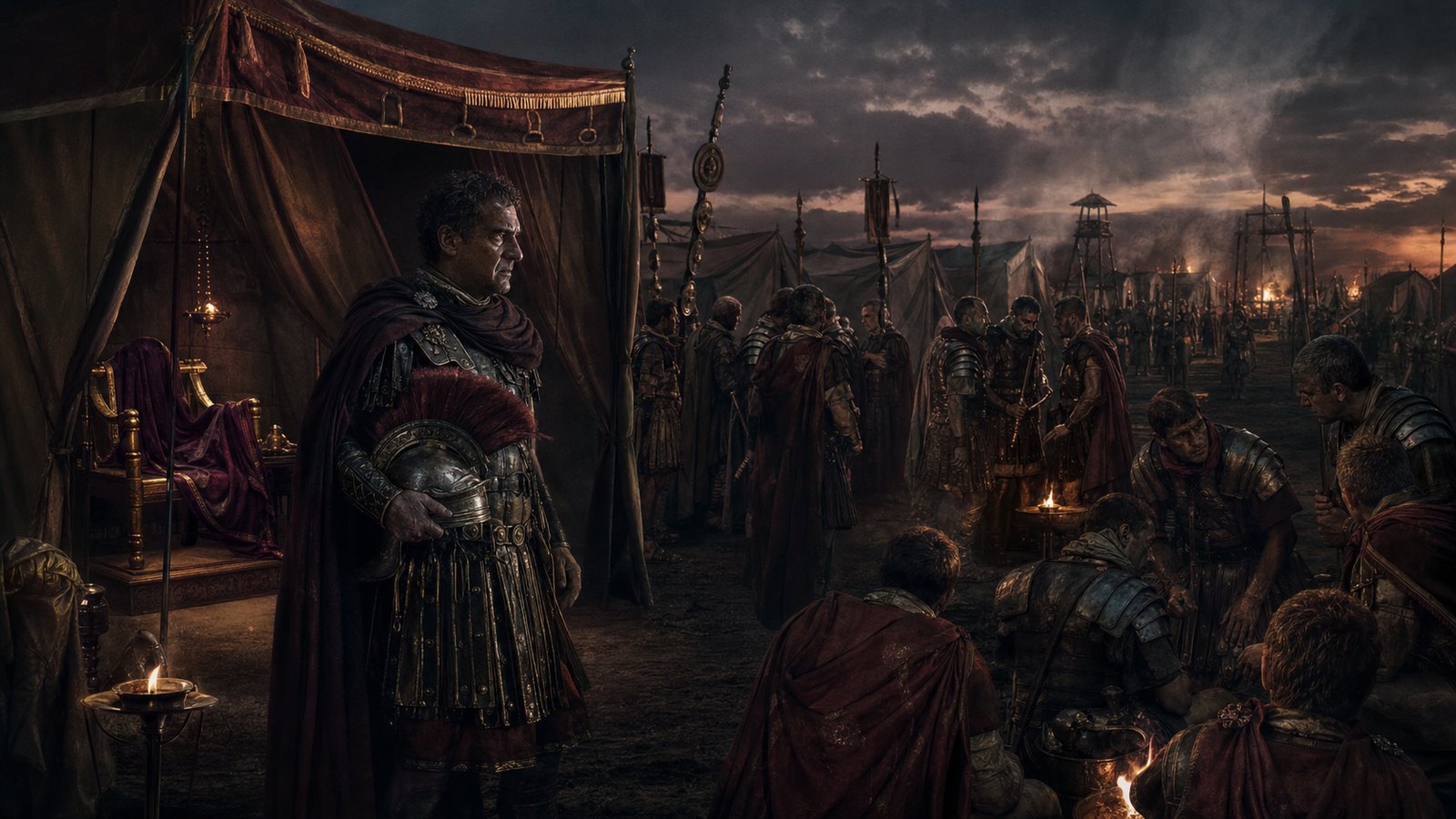
The army did not proclaim Macrinus at the instant Caracalla fell. Ancient accounts describe hesitation and a short interval, commonly reckoned as three days, before the troops acclaimed the praetorian prefect. The pause allowed him to appear reluctant rather than waiting eagerly beside the corpse, but it also reflected a real succession problem: Caracalla had no adult son ready to inherit.
Macrinus’s elevation was remarkable because his career had not passed through the Senate in the normal aristocratic pattern. An equestrian officer had reached the purple through command and proximity to the army. The route anticipates the increasingly military successions of the third century, when control of armed loyalty could outrun pedigree.
The comparison with the Praetorians’ sale of imperial support after Pertinax is revealing. In 193, the guard’s power was concentrated at Rome and displayed through rival bids. In 217, succession happened on campaign. No auction was needed. The decisive constituency was already assembled in the East, frightened by a dead emperor and in need of a commander.
Macrinus’s rule lasted only into 218. His settlement with Parthia, changes affecting military expectations and the emergence of Elagabalus undermined him. The roadside conspiracy solved an immediate danger but did not create a durable dynasty. It replaced Caracalla’s inherited legitimacy with the thinner authority of acclamation.
Caracalla’s last halt matters because it compresses an imperial system into a few metres of road. Privacy opened a gap. Insider access crossed it. A guard avenged the ruler but silenced the attacker. A prefect mourned, waited and accepted the army’s choice. Rome’s emperor died outside Carrhae; Rome’s next emperor emerged from the same escort.