
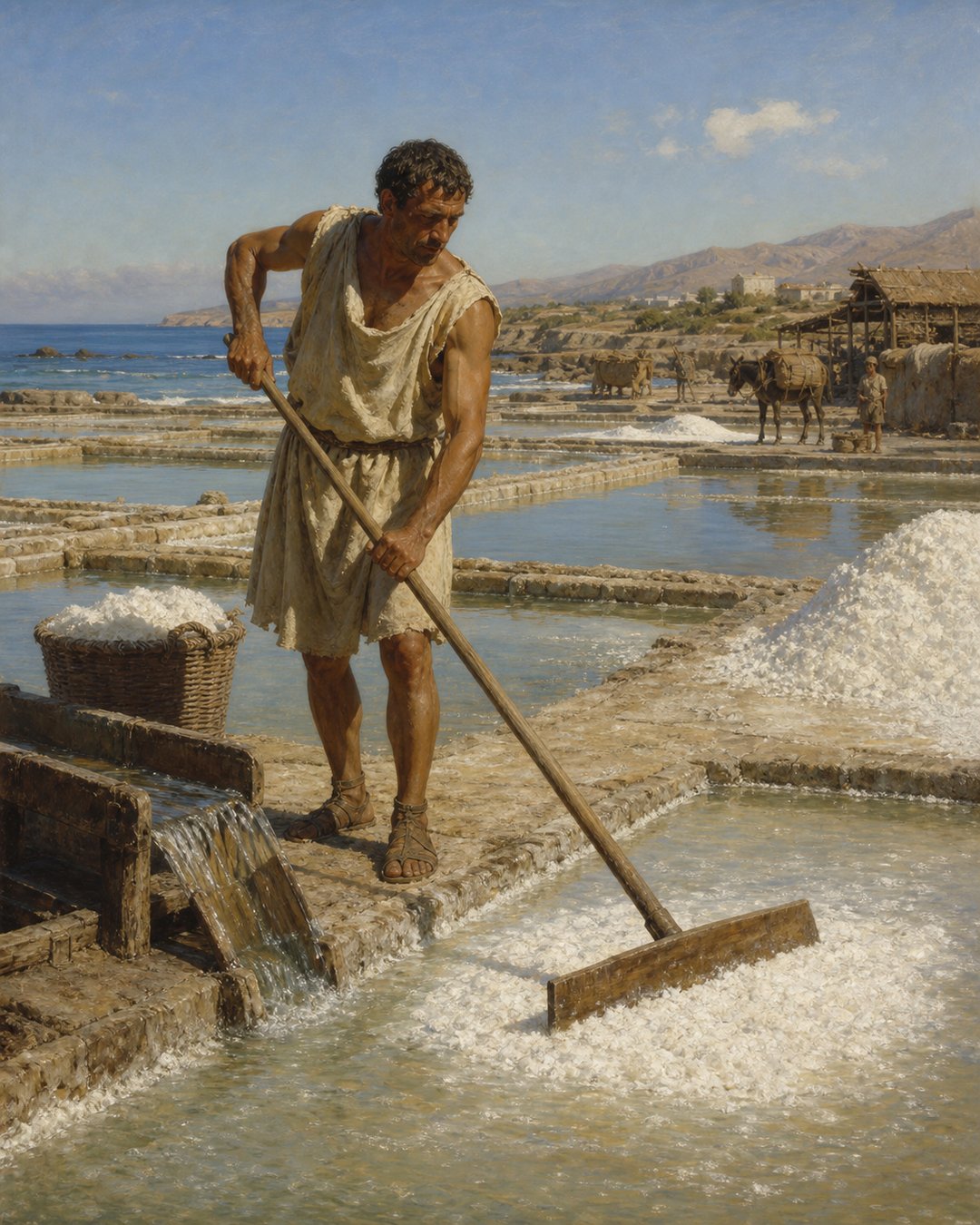
The sea could cover a Roman salt pan in the morning and leave a white mineral crust weeks later. Nothing had been added. Workers had moved water, controlled depth and waited while sun and wind carried most of the liquid away. The harvest looked simple only after an entire coastal landscape had been organized to make evaporation predictable.
Salt mattered in kitchens, preservation, animal care and exchange, but usefulness did not make every shoreline productive. A saltern needed flat ground, manageable tides or pumping, impermeable basins, dry weather and a path from wet crystals to protected storage. One broken bank could dilute brine that had taken days to concentrate.
The result was a harvest without seed and a crop that rain could erase. Salt workers read weather, water color, crust and density. Their tools were rakes, baskets, sluices and pond walls; their main source of energy arrived as sunlight and moving air.
A Productive Shore Had to Hold Water at the Right Depth
Natural lagoons and coastal flats suggested where salt might form, but production required control. Workers shaped low embankments and shallow basins that spread seawater over a large area. A broad, thin layer exposed more surface to dry air than a deep pool and warmed quickly under Mediterranean sun.
Basin floors had to resist leakage and contamination. Compacted clay and repeated salt deposition could create a workable surface, while muddy collapse mixed sediment into the product. Channels linked the ponds, and gates or temporary stops allowed workers to admit, retain or release water at chosen moments.
The site also needed elevation differences or another way to move brine. A slight fall let gravity perform part of the labor. Where intake depended on tides, crews had to capture water when conditions favored them without letting the next surge destroy concentrating ponds.
Saltworks occupied an edge shared by sea and land. Roads, pack animals, storage sheds and settlements connected a wet production zone to dry consumers. Like garum workshops, salinae made a strong coastal product useful only through containers and inland movement.
Evaporation Ponds Concentrated What Seawater Barely Revealed
Seawater contains dissolved salts, but ordinary water does not present them as a solid cargo. In preliminary ponds, evaporation removed part of the water and raised the concentration of the brine. Suspended material could settle, and some less desired minerals precipitated before the final crystallizing stage.
Moving brine through stages gave workers more control than leaving one pond to dry completely. An intake basin handled fresh seawater; concentrating ponds reduced its volume; crystallizers received liquid already near the point where common salt could form abundantly. The sequence converted space into a production schedule.
Depth was an operating decision. A very shallow layer evaporated rapidly but changed temperature and risked drying unevenly. Too much water prolonged the cycle and made a sudden rain more costly. Workers adjusted flows according to season, wind and the visible condition of each pond.
The principle resembles storage discipline in Roman dolia only in one respect: vessel condition changed the value of what it held. A cracked jar lost wine; a leaking or contaminated pan lost concentration. The saltern made the vessel as large as a field.
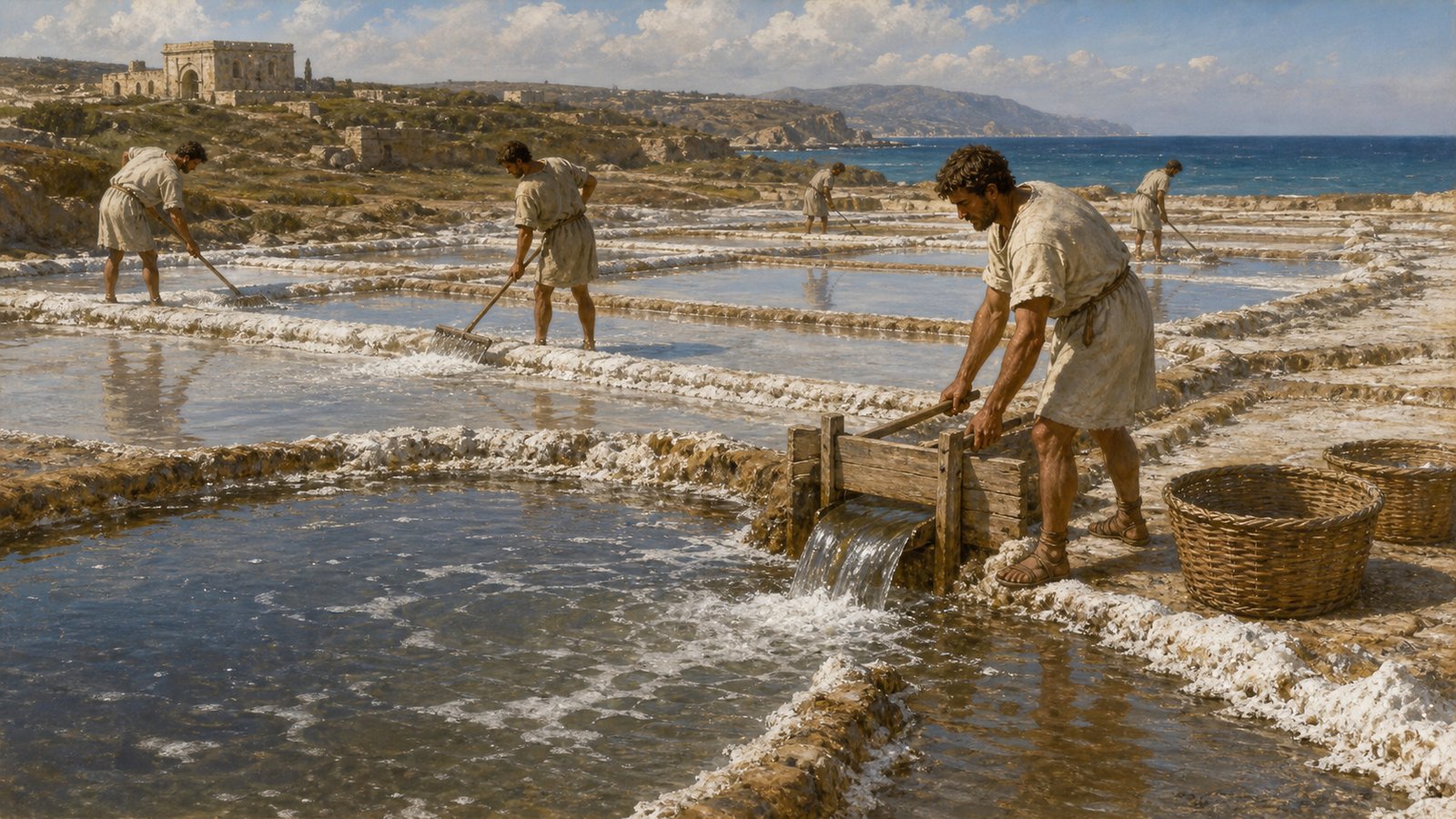
Sun and Wind Did the Heating, but Labor Managed the Result
Solar evaporation used environmental heat rather than a fuel-burning furnace. That reduced the need to carry wood to the shore, but it did not remove labor. Banks needed repair, channels needed clearing and brine had to be transferred as each pond reached the useful concentration.
Wind accelerated evaporation by replacing humid air above the water with drier air. It could also drive dust into ponds or push water against a weak embankment. A productive breeze and a damaging storm differed in degree, direction and timing rather than in kind.
Workers watched crystals along the edges, changes in brine and the response of floating or dipped gauges in later traditions. Ancient methods need not be reconstructed as one universal instrument. The secure practice was repeated observation: concentrated water behaved differently from the seawater first admitted.
Weather made the work seasonal in many regions. Long dry intervals favored accumulation; rain returned fresh water to the system and lowered salinity. A forecast existed as cloud, humidity and local experience. The saltern crew could accelerate transfer or protect a harvest, but it could not command the sky.
Crystallizing Pans Turned Clear Brine into a White Floor
When brine became sufficiently concentrated, sodium chloride crystallized. Small cubes formed, grew and settled into a crust over the pan floor. The transformation could spread visibly across shallow water, making the product appear where hours earlier a rake would have met only liquid.
Timing shaped quality and effort. Left too long, the crust thickened and incorporated more sediment or other precipitated material. Harvested too early, the crystals remained small and carried excessive brine. Workers judged when the layer was firm enough to rake without digging deeply into the floor beneath.
Rakes pulled crystals into ridges or heaps where liquid drained away. Feet and tools worked in caustic brine under reflected sunlight. Salt entered cuts, crust formed on skin and clothing, and the white surface intensified glare. The finished seasoning began as physically abrasive wet labor.
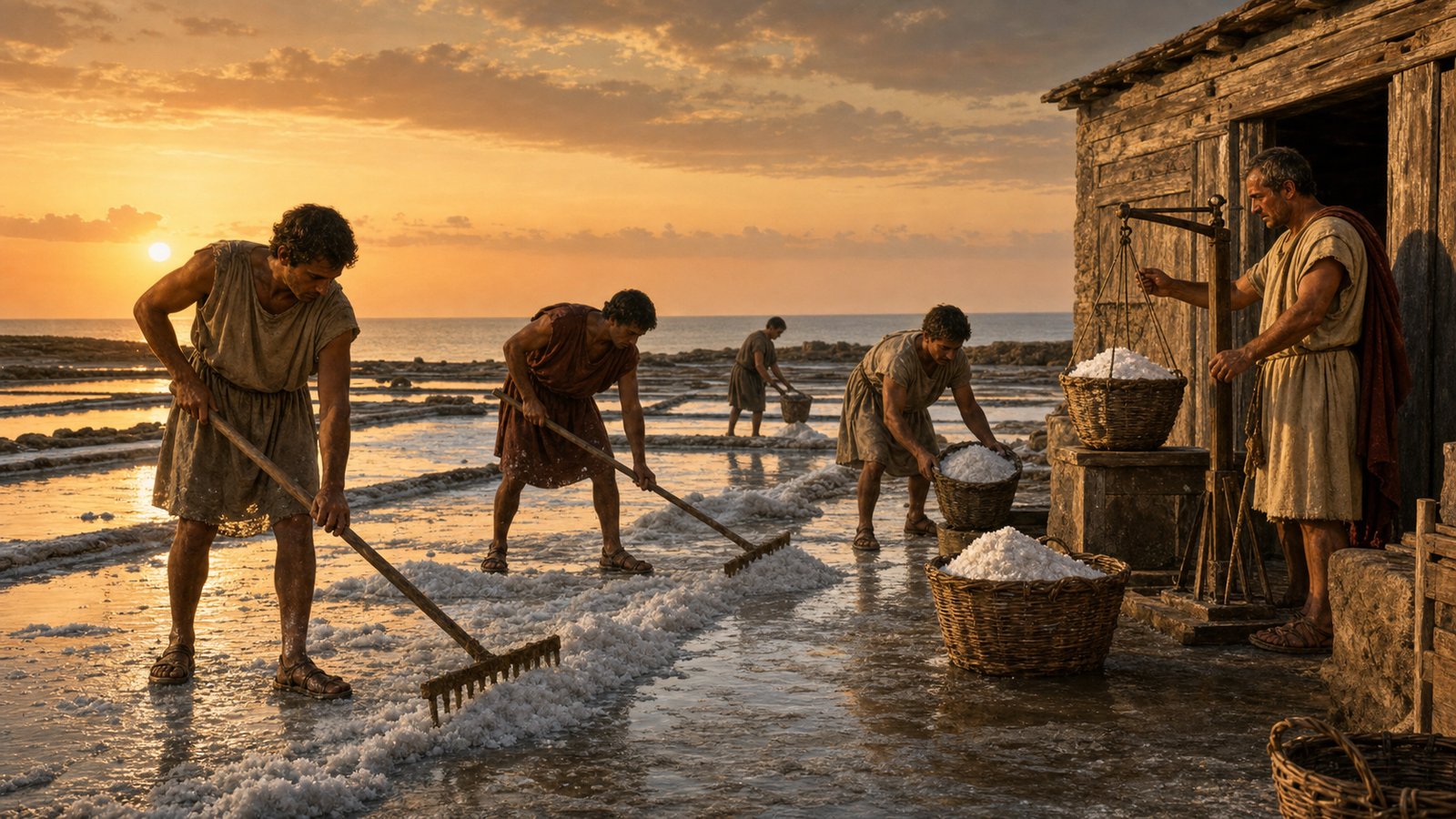
The mini-scene repeated across a harvest day: break the crust, draw it toward a ridge, lift heavy damp salt, and return before the remaining brine changed. Woven baskets shed some liquid but also had to survive mineral stiffness. Every load removed product while protecting the pan for another cycle.
Drying and Storage Kept the Harvest from Returning to Brine
Freshly raked salt contained trapped brine. Workers piled it where liquid could drain, then moved it to drier storage. A salt heap left in rain dissolved at the surface and carried value away in runoff. Roof, raised floor and drainage remained part of production after crystallization.
Grain and salt both demanded storage, but for opposite relationships with water. The Roman horreum kept damp from encouraging rot; a salt store kept damp from dissolving or caking the product. In both cases, architecture preserved work already invested elsewhere.
Product could be sorted by grain, cleanliness and intended use. Food preservation demanded dependable salt; industrial and animal uses might tolerate a rougher grade. Ancient categories varied, and modern purity percentages should not be projected backward without evidence, but visible dirt and moisture were practical distinctions.
Weighing translated the white heap into exchange. Baskets, sacks and bulk loads needed measures that buyers and officials could check. Salt’s importance made access and revenue politically interesting, yet every tax or price still depended on workers first creating a dry, movable quantity.
A Common Mineral Connected Coast, Kitchen, and Road
Salt preserved fish and meat by drawing water from tissues and creating conditions less favorable to spoilage. It seasoned food, entered some medicinal and ritual uses, and supported livestock. These applications differed, but all required a supply larger and more regular than accidental crust gathered from a beach.
Transport quickly added cost because salt was heavy and exposed to moisture. Roads, boats and pack animals extended the reach of coastal production. The association between salt and routes is old, although popular claims that every soldier’s pay directly became the word salary oversimplify a complicated linguistic and administrative history.
Pliny the Elder discussed natural and artificial salts and recognized differences in origin and use. His catalogue reminds us that Romans did not treat salt as one featureless substance. Sea, spring, lake and mining environments produced materials with different appearances, reputations and handling requirements.
Roman salt workers waited for the sea to become a crystal, but waiting was never passive. They built basins, staged concentration, repaired walls, chose harvest moments and defended the result from rain. The white grains carried the labor of moving water through a designed landscape until only its dissolved cargo remained.
Sources & Further Reading
- Pliny the Elder, Natural History, Book 31
- Encyclopaedia Britannica, “Salt processing”
- Encyclopaedia Britannica, “Salt”
- Wikipedia, “Salt evaporation pond”
- Wikipedia, “History of salt”