
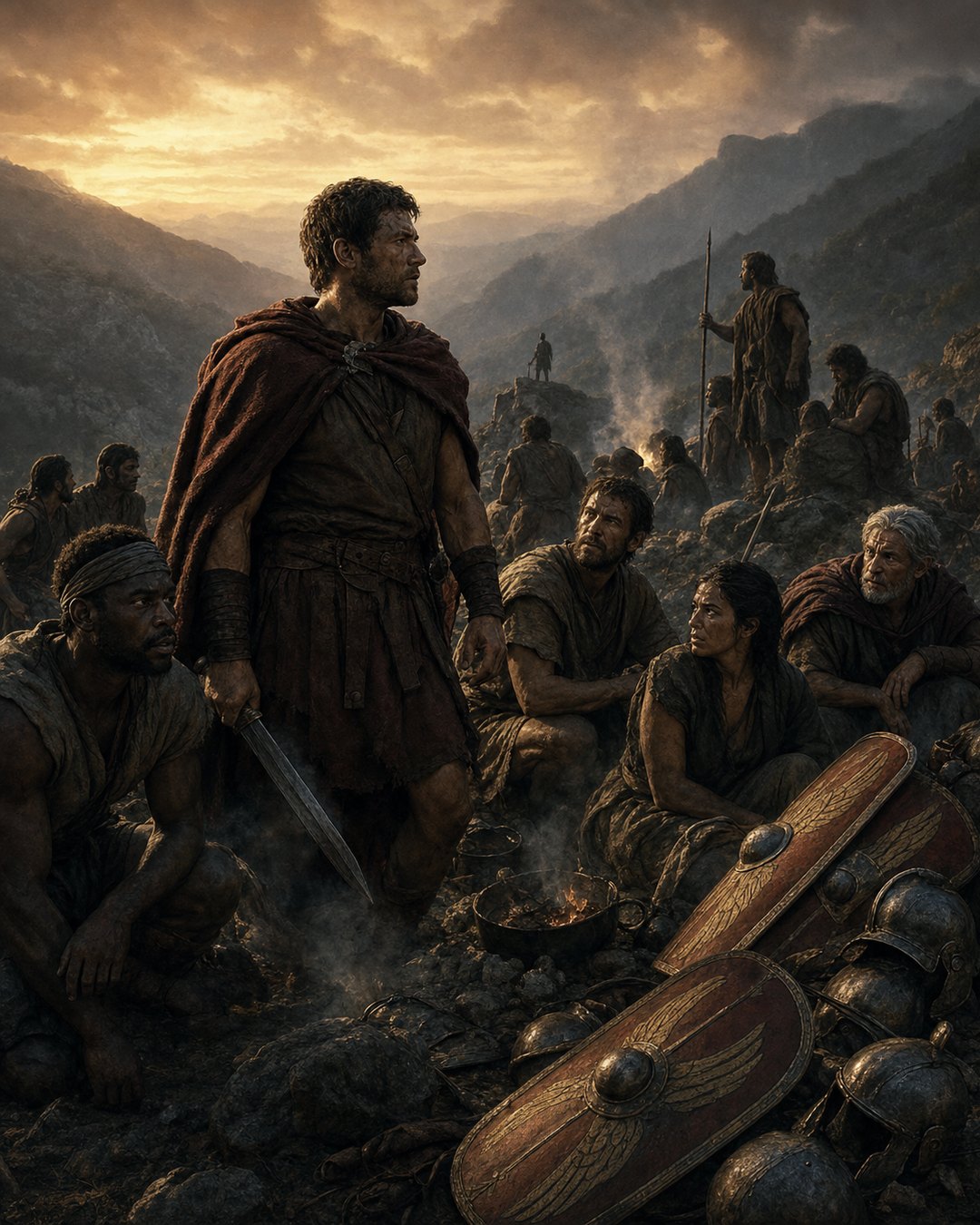
Spartacus terrified Rome not because one band of rebels could permanently conquer the Republic, but because the revolt made a hidden fact visible: Roman comfort rested on controlled human beings who were never as silent as the system needed them to be.
Ancient accounts by Plutarch and Appian treat the revolt as a military crisis, and it was one. Armies were defeated. Commanders were embarrassed. Italy itself became the theater. But the deeper fear was social. Enslaved people were in houses, fields, workshops, mines, schools, and estates. The enemy was not beyond the frontier. The enemy might be inside the door.
A gladiator school was a symbol before it was an army
The revolt began at Capua, among men trained to perform violence for Roman spectators. That origin mattered. Gladiators were supposed to turn danger into entertainment under elite control. When they broke out, the script inverted. The bodies Rome had displayed became bodies Rome had to chase.
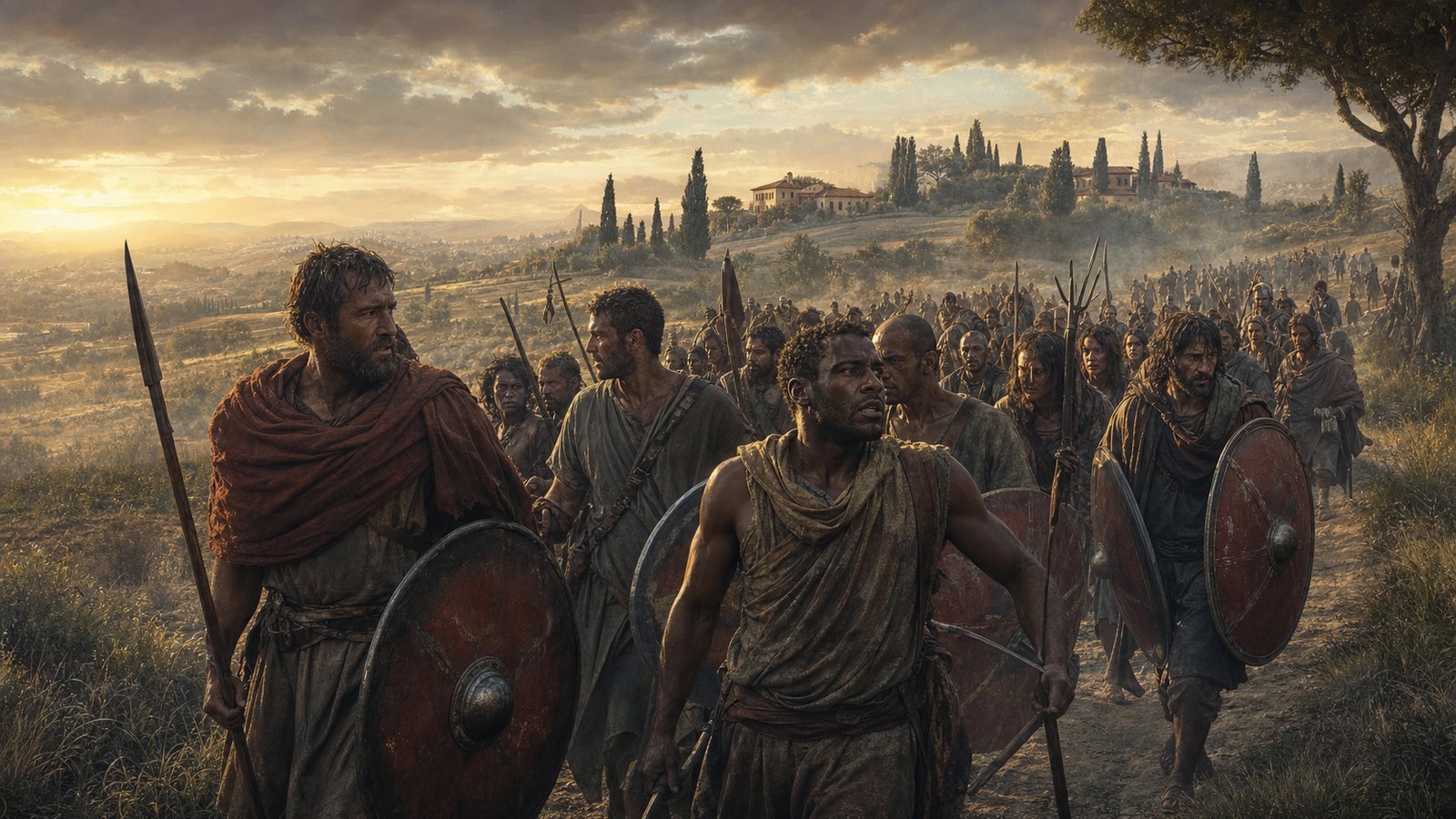
Spartacus then became harder to categorize. He was not merely a criminal, not simply a runaway, not a foreign king. He was a moving proof that coercion could fail. Every victory made the social imagination worse for Rome: if these people could run, fight, and organize, what else had been underestimated?
Why Crassus had to make fear visible again
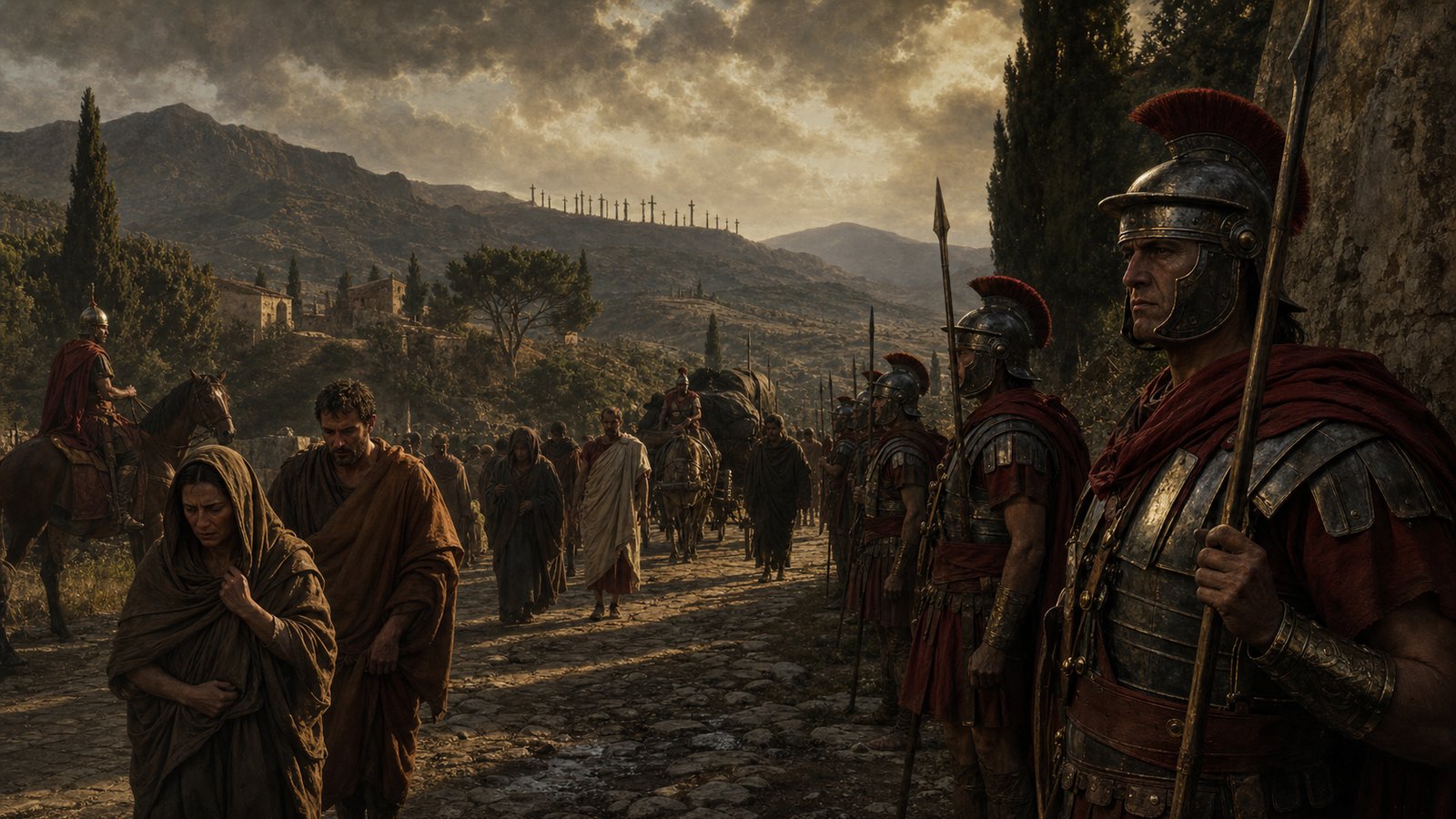
Crassus’ eventual suppression of the revolt was brutal because Rome needed more than military success. It needed a public answer. Appian describes mass crucifixions along the road from Capua to Rome. The message was not subtle: the state would turn the landscape itself into a warning.
That display reveals the nature of the panic. Rome was not only punishing rebels; it was speaking to everyone still enslaved, everyone tempted to imagine escape, and every owner afraid that discipline had cracked.
The uncomfortable dependence
Roman slavery was not a side feature of Roman society. It was woven into wealth, agriculture, households, status, and leisure. That dependence made revolt especially disturbing. A battlefield defeat could be blamed on tactics. A slave revolt asked whether the ordinary Roman world was built on permanent emergency.
The answer, in practice, was yes. Roman order required constant enforcement. Spartacus did not create that truth. He exposed it.
Why the story keeps changing
Modern retellings often make Spartacus a freedom hero in terms he would not necessarily have used. Ancient Roman writers made him a threat, sometimes with grudging respect. Both versions circle the same fact: the revolt broke the moral confidence of the system around it.
Spartacus frightened Rome because he turned property back into people in the most dangerous way possible — armed, mobile, and impossible to ignore.
The road of crosses was Rome answering back
The aftermath of the revolt shows what Rome believed had been threatened. Crucifixion along the Appian Way was not only punishment for the defeated; it was communication with the living. Every body on the roadside turned movement toward Rome into a lesson about obedience.
That kind of terror reveals insecurity. A society perfectly confident in its order does not need to write warnings across the landscape. Rome answered Spartacus with spectacle because Spartacus had used movement, victory, and rumor to make enslaved resistance imaginable. The executions tried to make imagination collapse back into fear.
Why Rome could admire and despise him at once
Ancient authors sometimes grant Spartacus qualities Romans respected: courage, leadership, endurance, and tactical sense. That admiration did not make him safe. It made him more alarming. A rebel who looked merely chaotic could be dismissed. A rebel who showed Roman virtues from outside Roman order exposed the arrogance of the categories themselves.
This is one reason the story remains alive. Spartacus stands at the point where Roman values contradict Roman society. Bravery was admirable, unless it belonged to the enslaved. Discipline was noble, unless it organized escape. The revolt forced Rome to confront virtues appearing in people the system was built to command.
The revolt exposed fear inside the household
Part of the terror was intimacy. Enslaved people were not only laborers far away in fields and mines; they were also inside Roman homes, near children, food, beds, accounts, and secrets. Spartacus made elite Romans imagine coordination among people they were used to seeing as isolated possessions. That possibility was more frightening than any single march through Italy.
That is why Spartacus belongs in Roman history as more than a rebel commander. His revolt revealed the emotional labor required to keep slavery normal: denial, punishment, distance, and ritualized terror. For a moment, the people Rome treated as background became the main event.
Sources & Further Reading
- Plutarch, Life of Crassus
- Appian, Civil Wars 1
- For another Roman fear of armed insiders, see the Praetorian Guard article.