
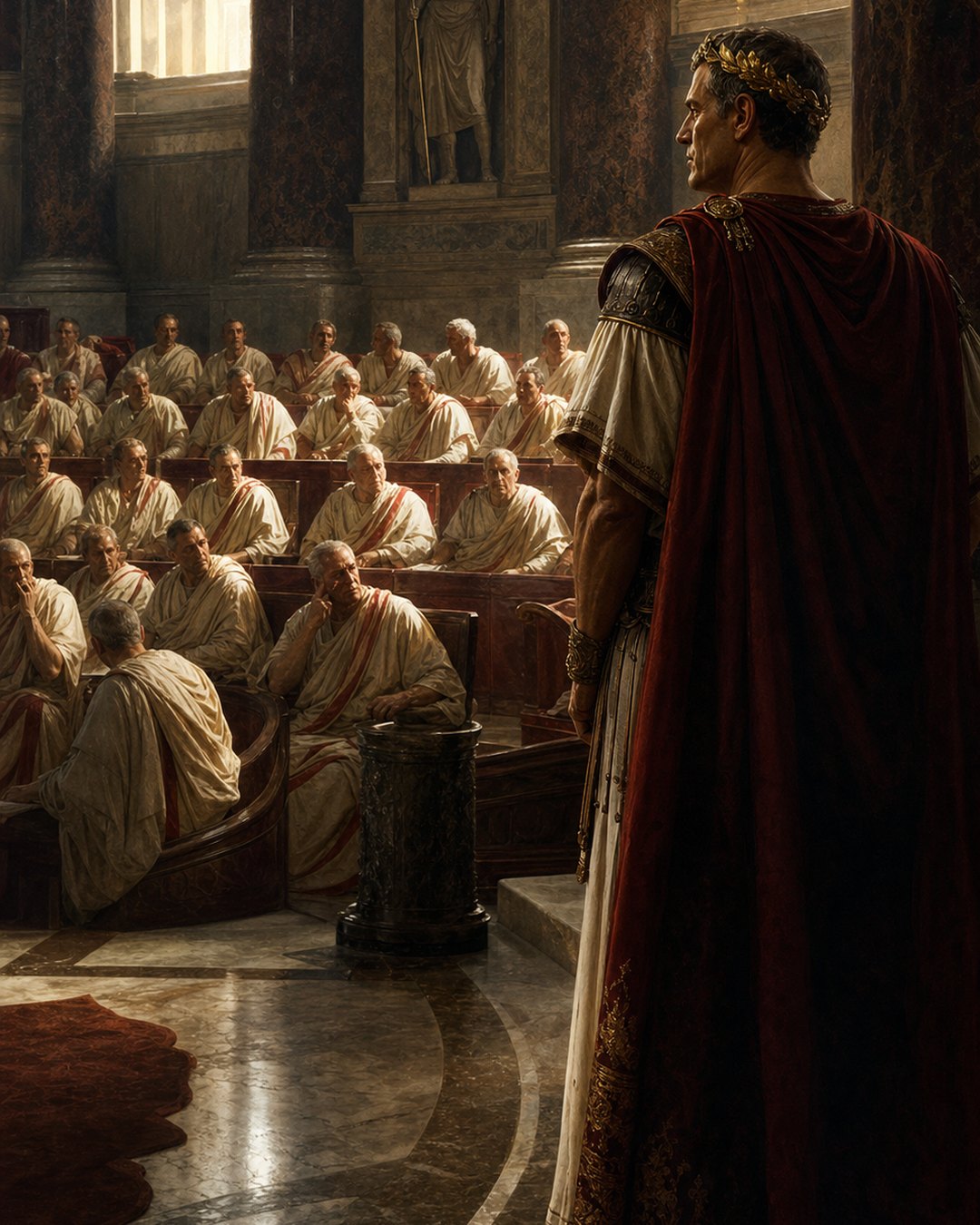
The Roman Senate did not wake up one morning powerless. That would have been too honest, and Augustus was rarely careless enough to be honest in that way. The Senate lost power while keeping its seats, its language, its ceremonies, and much of its prestige. The disappearance happened behind continuity.
That is what made the Principate so durable. It did not announce itself as a monarchy smashing the Republic. It presented itself as the Republic finally cured of chaos. Senators could still debate, hold office, receive honors, and imagine themselves central. But the most dangerous decisions increasingly orbited one household, one commander, one man’s authority.
Prestige survived where control weakened
Cassius Dio’s account of Augustus’ settlement shows the careful balance. Provinces, armies, honors, and titles were arranged so that old forms remained visible while real leverage shifted. The Senate still mattered, especially as a class of administrators and aristocrats. It just mattered inside a frame it no longer controlled.
That difference is easy to miss. Power is not only the right to speak. It is the ability to decide what speech can change. Under the emperors, senatorial speech could still be elegant, angry, loyal, or dangerous — but the center of gravity had moved.
Why Augustus kept the old language
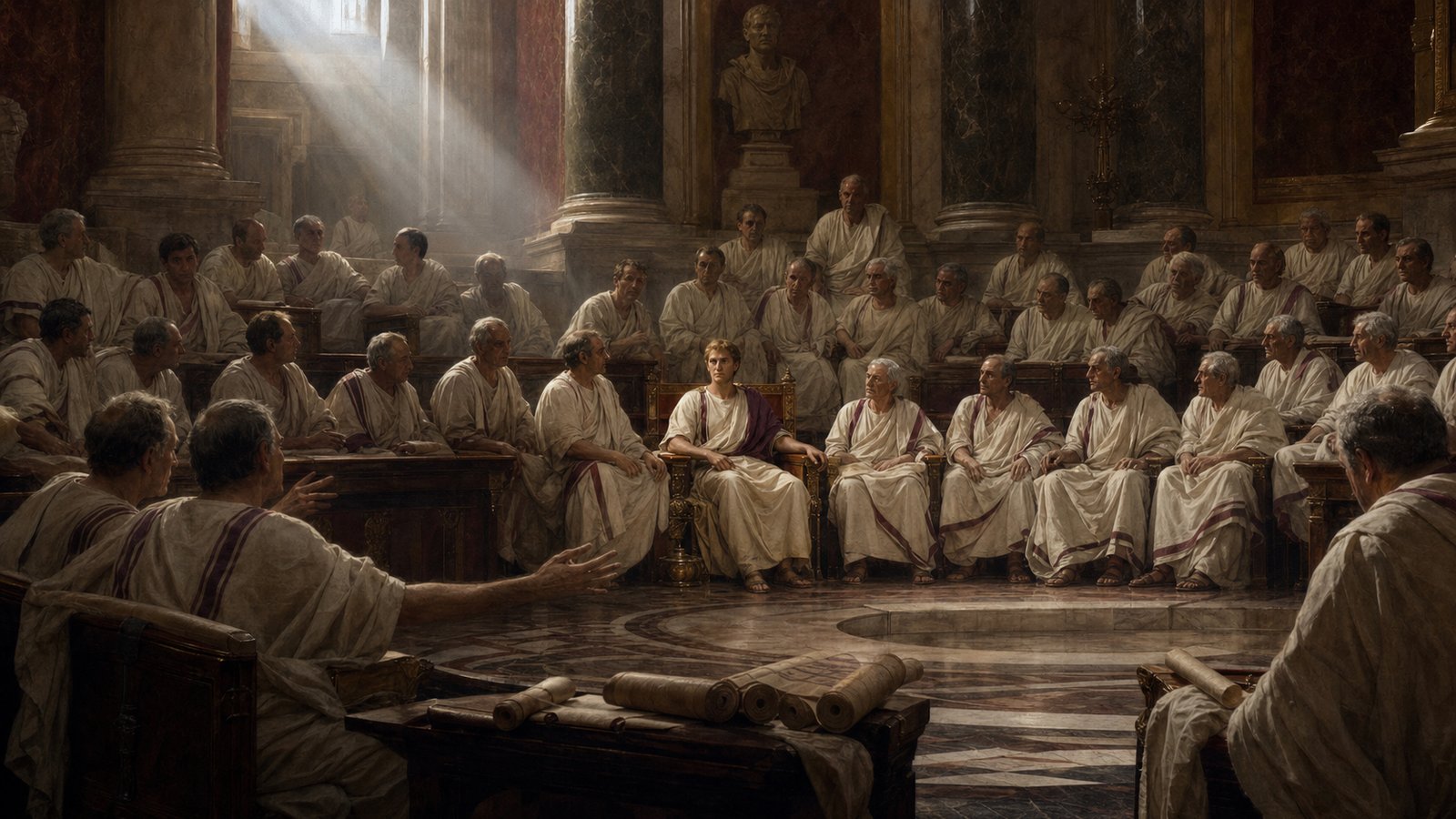
Abolishing the Senate would have made the new order look like tyranny. Keeping it made monarchy feel like recovery. Augustus understood that Romans hated kingship as a word more than they hated concentrated power as a practice, provided it arrived dressed in Republican costume.
The Senate therefore became part of the empire’s theater of legitimacy. Its decrees, honors, and rituals helped translate one-man dominance into something Rome could recognize. The old institution gave the new system an ancestral face.
Tacitus and the sadness of polite obedience
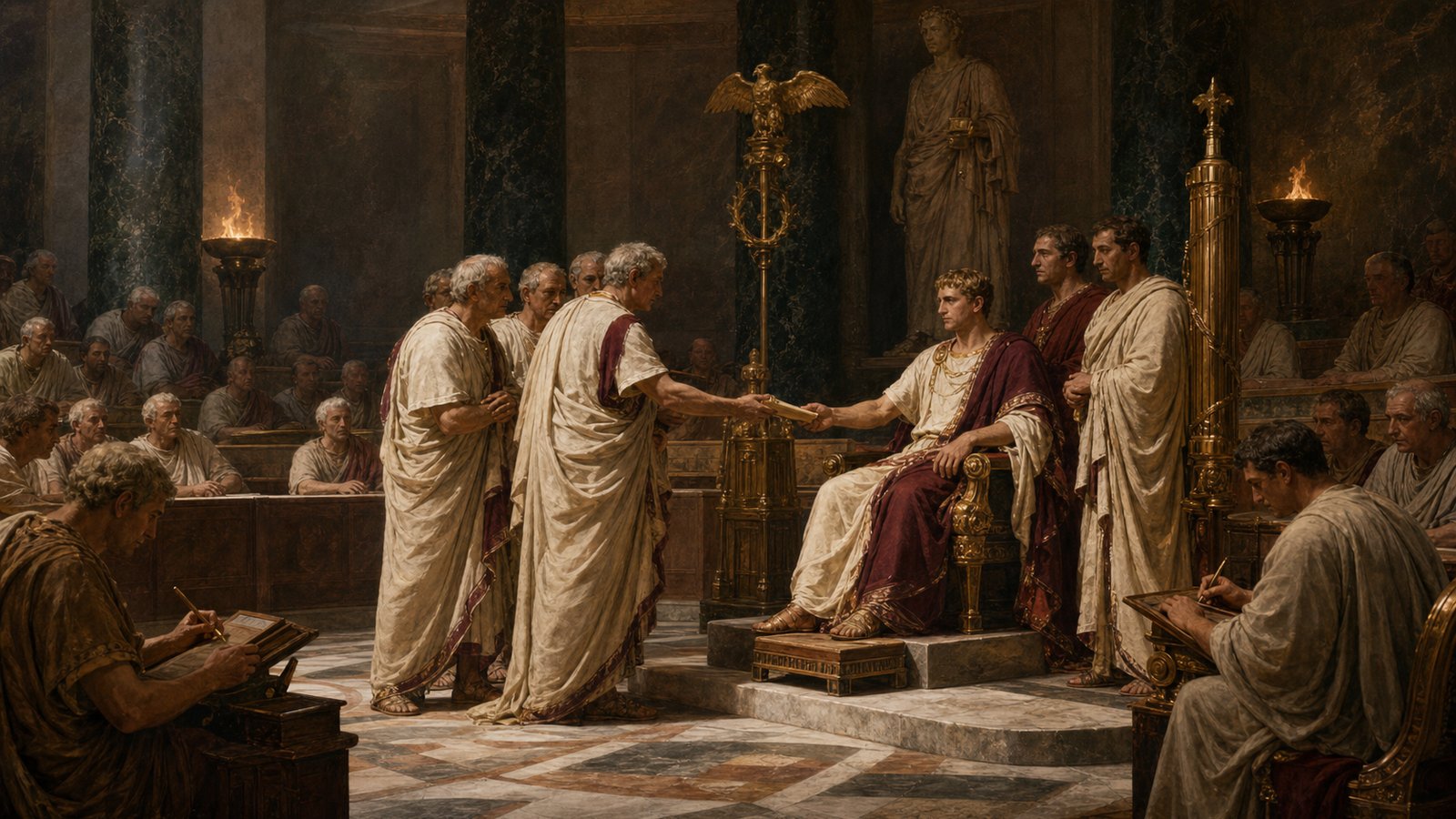
Tacitus opens the Annals with a world where Republican memory still exists but no longer commands events. That is the emotional truth of the Senate under the early empire: not instant destruction, but narrowing possibilities. Men still knew the language of liberty. They also knew the cost of speaking it too directly.
This produced a politics of hints, flattery, silence, and occasional doomed courage. The Senate could be humiliated by bad emperors and courted by careful ones, but in both cases it lived under the fact of imperial power.
The real decline
The Senate’s story is not simply “Republic good, Empire bad.” The late Republic had already damaged senatorial rule through civil war, private armies, corruption, and competition among aristocrats. Augustus did not steal a healthy system from innocent hands. He stabilized a broken one by making himself indispensable.
That is why the loss was so hard to resist. Many senators gained safety, office, and status from the arrangement. The price was paid in independence, and it was paid gradually enough to feel like normal life.
The Senate became a language emperors could use
One reason the Senate survived was that emperors needed it. A decree, an embassy, a title, a ceremony, or a carefully staged consultation could make imperial will look less naked. The Senate gave decisions a Roman accent. Even when senators knew the outcome, their participation helped the system pretend that Rome’s old political body still breathed.
This does not make the Senate meaningless. Institutions can lose command and still shape behavior. Senators governed provinces, guarded memory, competed for honor, and sometimes paid with their lives when imperial suspicion turned on them. The tragedy was not that the Senate vanished. It was that it remained visible enough to remind Romans what had changed.
Why no one could simply turn the clock back
Once Augustus had attached peace to his own position, opposition became difficult to describe without sounding like a desire for renewed chaos. That was the political trap. Many Romans remembered liberty, but they also remembered proscriptions, armies in Italy, assassinations, and civil war. The emperor could present obedience as the price of calm.
The Senate therefore lived inside a bargain that was both humiliating and attractive. It lost the old supremacy, but it also gained survival after a century of aristocratic violence. The result was not clean tyranny replacing clean freedom. It was a damaged republic accepting a beautifully disguised master.
Old offices, new gravity
The genius of the new order was that offices continued to exist while gravity changed around them. Consulships, priesthoods, triumphal honors, and senatorial debates still carried prestige, but the decisive question increasingly became how each honor related to the emperor. The Senate remained a ladder of status. It was no longer the roof of the political house.
Sources & Further Reading
- Cassius Dio, Roman History 53
- Tacitus, Annals 1
- For the public mask of Augustan power, see why Augustus pretended he was not Rome’s first king.