
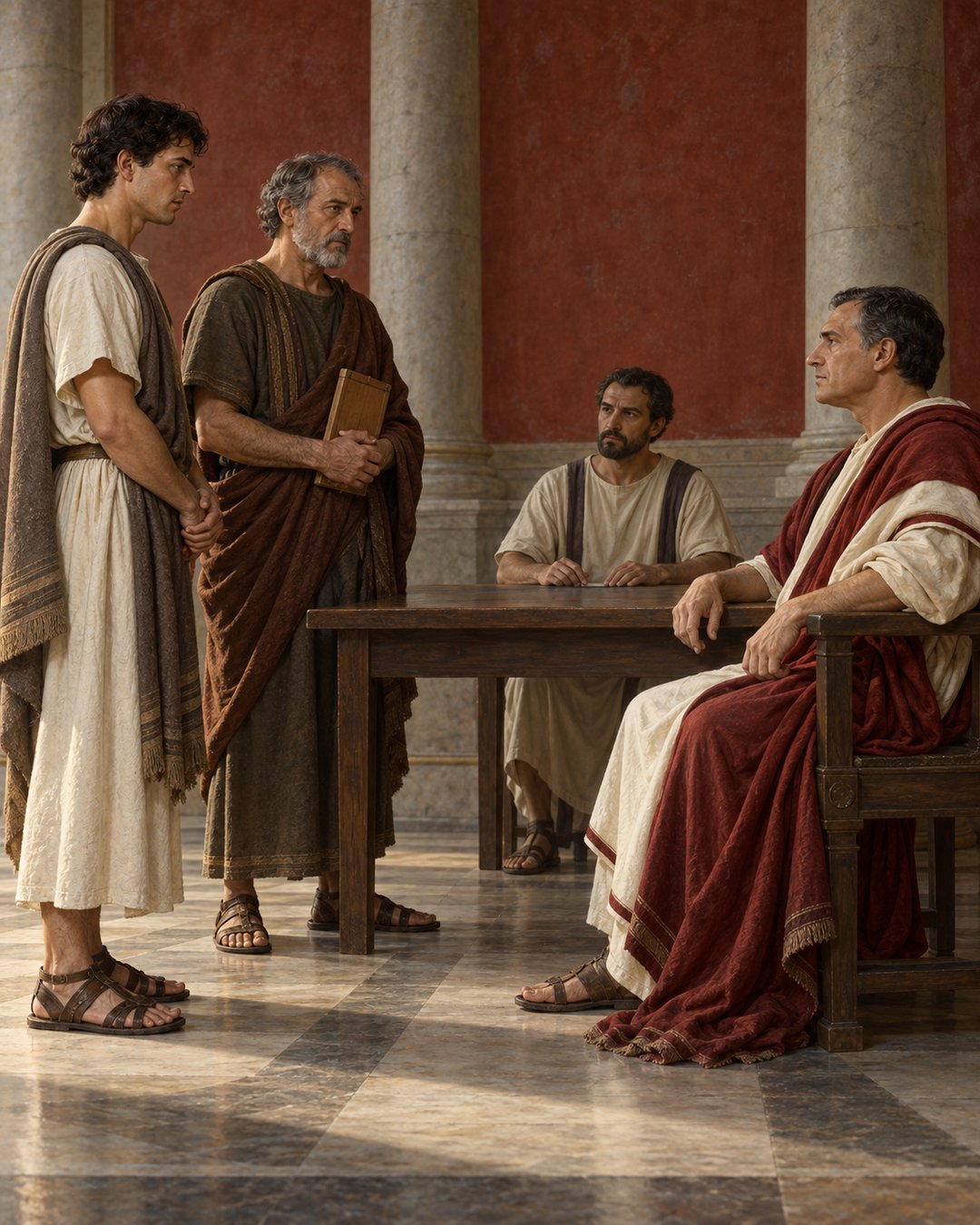
A freedom claim reached Pliny with an account attached to it. In Bithynia, children who had been exposed by their parents had survived because other people took them in and raised them. Some had then grown up in a condition of servitude despite having been born free. If they claimed their original status, could the household that maintained them demand its money back?
Pliny did not answer from instinct. He searched imperial constitutions, listened as documents attributed to Augustus, Vespasian, Titus and Domitian were read, and found that the available copies were either unreliable or directed elsewhere. The question affected the whole province, but the precedents did not cleanly govern Bithynia.
Trajan’s reply was short. Claims to freedom on this footing were to be allowed. The claimant would not have to purchase liberty by repaying the cost of maintenance. In two letters, the imperial correspondence separates three things that a household might try to bind together: free birth, years of upbringing and ownership.
Pliny Met a Province-Wide Status Dispute
Pliny introduces the matter as both considerable and provincial in reach. This was not a request about one named child whose biography he narrates for the emperor. It was a recurring legal problem about status and support, serious enough that the governor expected his answer to shape cases across Bithynia.
The people at the center of the dispute had begun life under an act of abandonment or exposure. Trajan’s response says that others preserved and educated them. Those words acknowledge a real expenditure of food, shelter and labor without turning the rescuing household into an uncomplicated benefactor. The same upbringing had placed people born free into servitude.
That combination produced the dispute. Birth pointed toward freedom. Household practice pointed toward dependency and control. Maintenance supplied a financial argument that could keep the two connected: if the person left, perhaps freedom should be conditional on reimbursing whoever had paid for the intervening years.
Roman status normally depended on recognized legal routes and public consequences. The archive’s explanation of manumission as a ceremony that made an enslaved person free shows one formal passage out of slavery. Pliny’s petitioners posed a different question. They did not claim that an owner had chosen to free them; they argued that free birth had never been erased by the way another household raised them.
Pliny’s phrasing also keeps the problem administrative. He does not reconstruct why individual parents exposed children, how each child was found or what every upbringing looked like. Those details are absent. The governor asks which rule should control when a claim of free origin collides with a demand based on maintenance.
The Archive Could Not Supply a Bithynian Rule
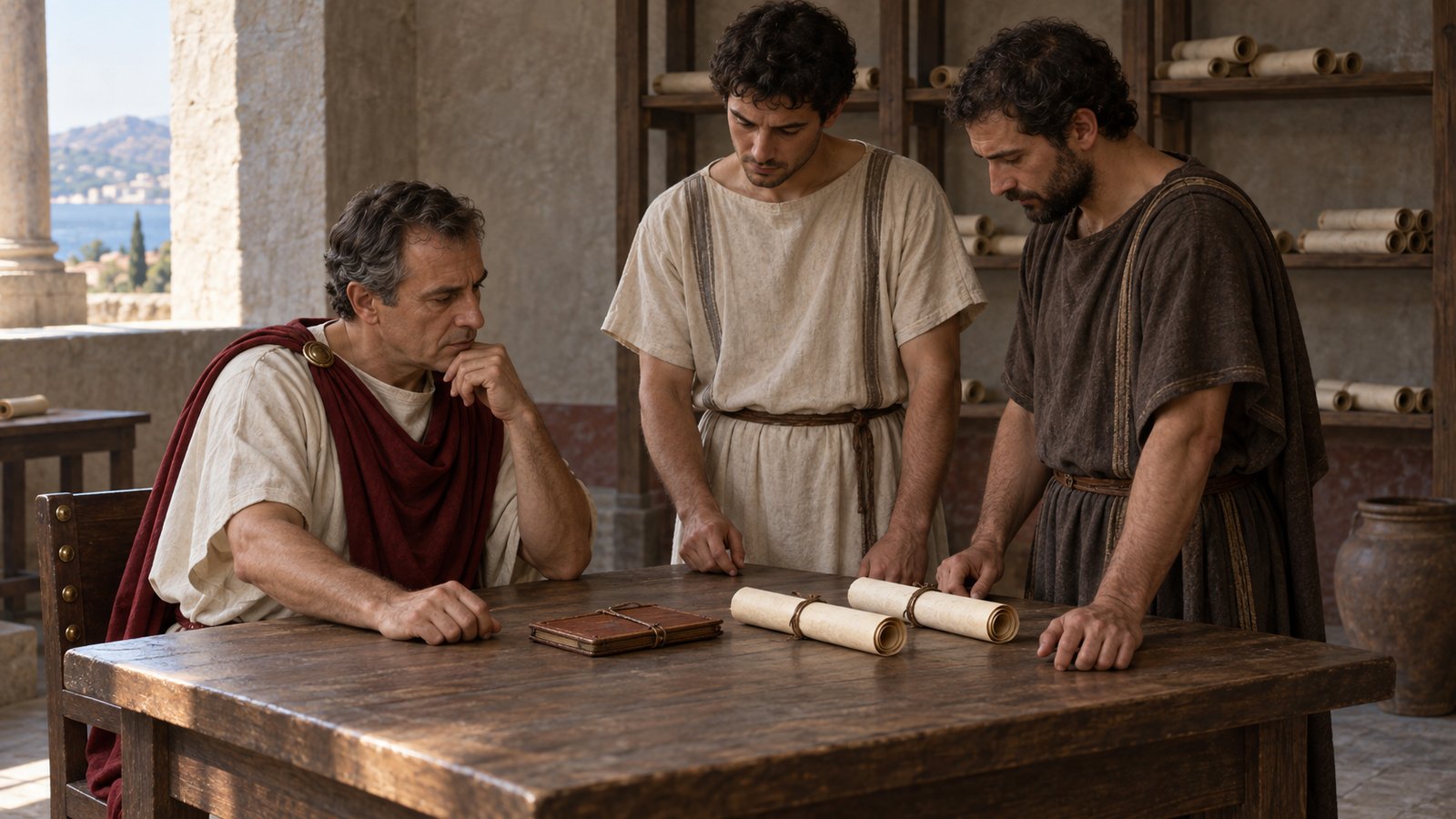
Before writing to Trajan, Pliny examined earlier imperial constitutions. This was the ordinary attraction of precedent: a previous emperor’s answer might already contain the rule. Yet a document needed more than an imperial name. Its text had to be trustworthy, and its intended reach had to include the province now facing the case.
The collection shown to Pliny sounded impressive. It included what was said to be an edict of Augustus concerning a woman named Annia. There were letters from Vespasian and Titus to the Spartans, another from Titus to the Achaeans, and documents attributed to Domitian for Avidius Nigrinus, Armenius Brocchus and the Spartans.
Pliny refused to treat that pile as self-authenticating. He did not send the copies to Trajan because they were not accurate, and some were of doubtful authenticity. He assumed reliable versions would be held in the imperial archives. The passage gives us a governor confronting not a lack of paperwork but too much uncertain paperwork.
Geography created a second obstacle. A letter to Sparta or Achaea did not automatically govern Bithynia. Even a genuine rescript could answer the case and jurisdiction for which it was written without becoming a universal statute. Pliny therefore found nothing that applied either generally or specifically to the Bithynians.
Another Bithynian exchange shows the same habit of escalating a local dilemma rather than pretending that a familiar Roman concern settled it. When Nicomedia asked for a 150-man fire brigade, municipal safety collided with Trajan’s fear of organized associations. Here a household’s maintenance claim collided with free status. In both cases, provincial facts arrived at the emperor through a governor who made the unresolved mechanism visible.
Trajan Tested the Reach of Earlier Rescripts
Trajan begins by acknowledging that the status of exposed children had often been discussed. Frequency, however, had not produced a general imperial rule covering every province. He says he could find no predecessor’s constitution with that universal extent.
He did locate relevant decisions from Domitian to Avidius Nigrinus and Armenius Brocchus. Trajan did not dismiss them merely because they came from Domitian. The problem was territorial: Bithynia was not among the provinces comprehended by those rescripts.
This point is easy to lose if the exchange is summarized only as an emperor making a humane choice. The route to the answer runs through document control. Pliny tests the copies in front of him and finds them defective. Trajan checks the archive and finds genuine precedents, but then limits their force to the places they addressed. Authenticity and scope have to pass separately.
The result left Trajan room—and placed him under pressure—to decide for Bithynia. His rescript supplied what the inherited file could not: an answer directed to Pliny’s province. Roman imperial government appears here as correspondence working case by case, with the center asked to make a rule travel only after saying where earlier rules did not.
We should not imagine that this neat exchange erased every practical difficulty. A claimant would still have to assert free birth, and the letters do not explain the evidence used in individual hearings. Nor do they tell us how quickly a household surrendered control. The rescript determines the principle Pliny should apply; it does not preserve the lives of the people who had to invoke it.
Maintenance Could Not Become a Price for Liberty
Trajan’s operative decision has two linked parts. First, people who asserted freedom on the basis described were to have those claims allowed. Second, they were not to be forced to purchase that liberty by repaying what had been spent on their maintenance.
The second clause prevents the first from becoming hollow. A nominal right to freedom could be unreachable if years of food and upbringing were converted into a debt payable before release. The household would retain control until the claimant produced a sum created by the very dependency being challenged.
Trajan does not deny that maintenance occurred. His own description says the children were preserved and educated by others. He instead denies that those costs can transform free birth into a reimbursable form of ownership. Care may generate an expense, but in this ruling the expense does not buy the person.
The distinction also keeps the rescript narrower than a general history of child welfare. It does not establish a provincial support system, punish parents or describe adoption. It answers the status consequence of a particular arrangement: a freeborn exposed child has been raised as a servant, later claims freedom, and faces a demand to refund the household.
That narrowness gives the decision its force. Pliny had presented layers of uncertain precedent, local practice and financial expectation. Trajan cut through them by refusing the proposed exchange rate. Liberty was not a balance remaining after maintenance had been paid.
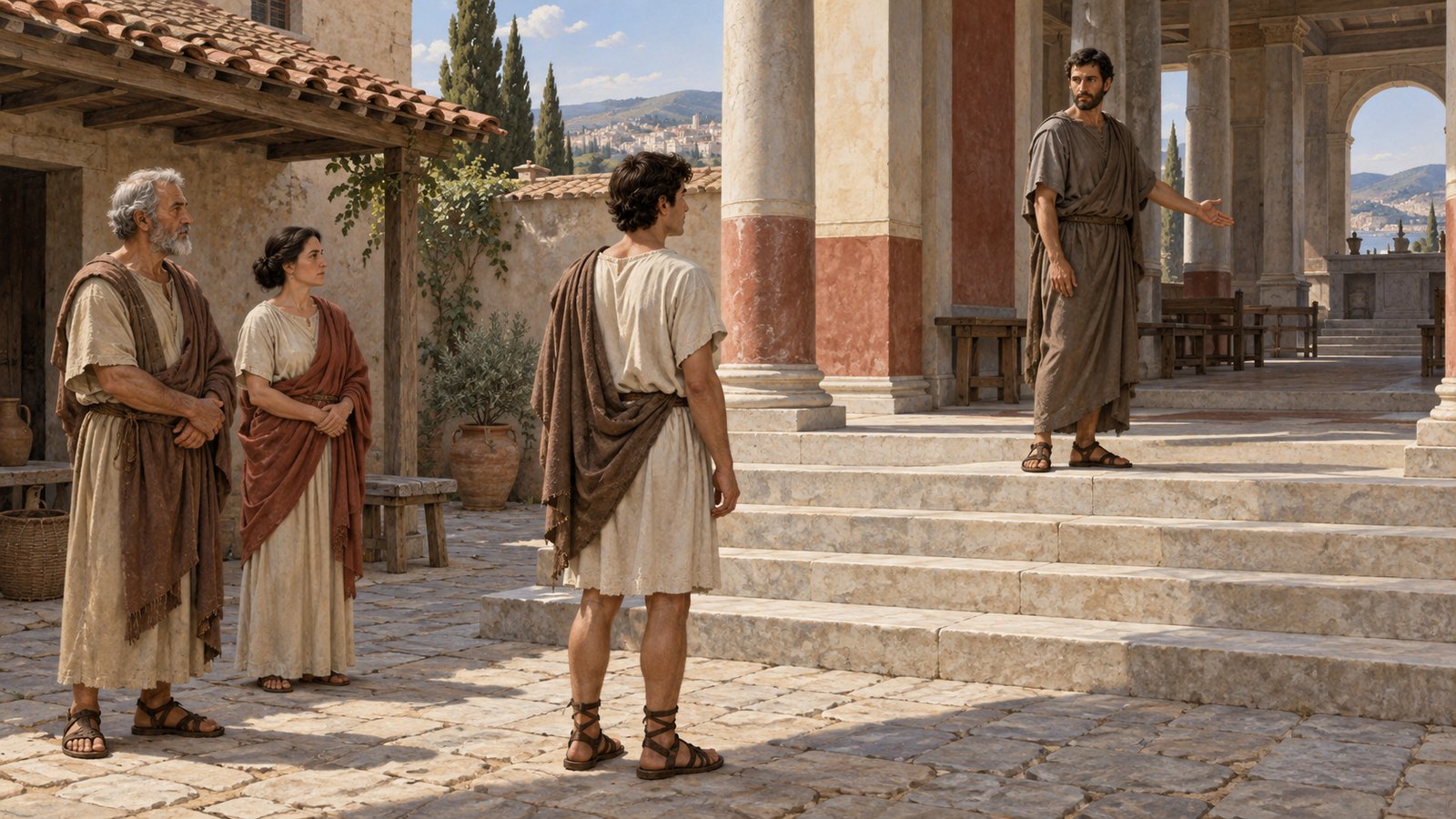
The letters leave the petitioners unnamed, which can make them seem abstract. Yet the administrative vocabulary points to concrete thresholds: a person standing before a provincial authority, a household producing its account, a governor deciding whether old documents apply, and an imperial answer arriving from the archive. At that threshold, Trajan’s rescript says that the cost of surviving childhood cannot be collected as the purchase price of a freedom the claimant says was there at birth.
Sources
Pliny the Younger, Letters 10.71–72; William Melmoth translation, revised by F. C. T. Bosanquet.