
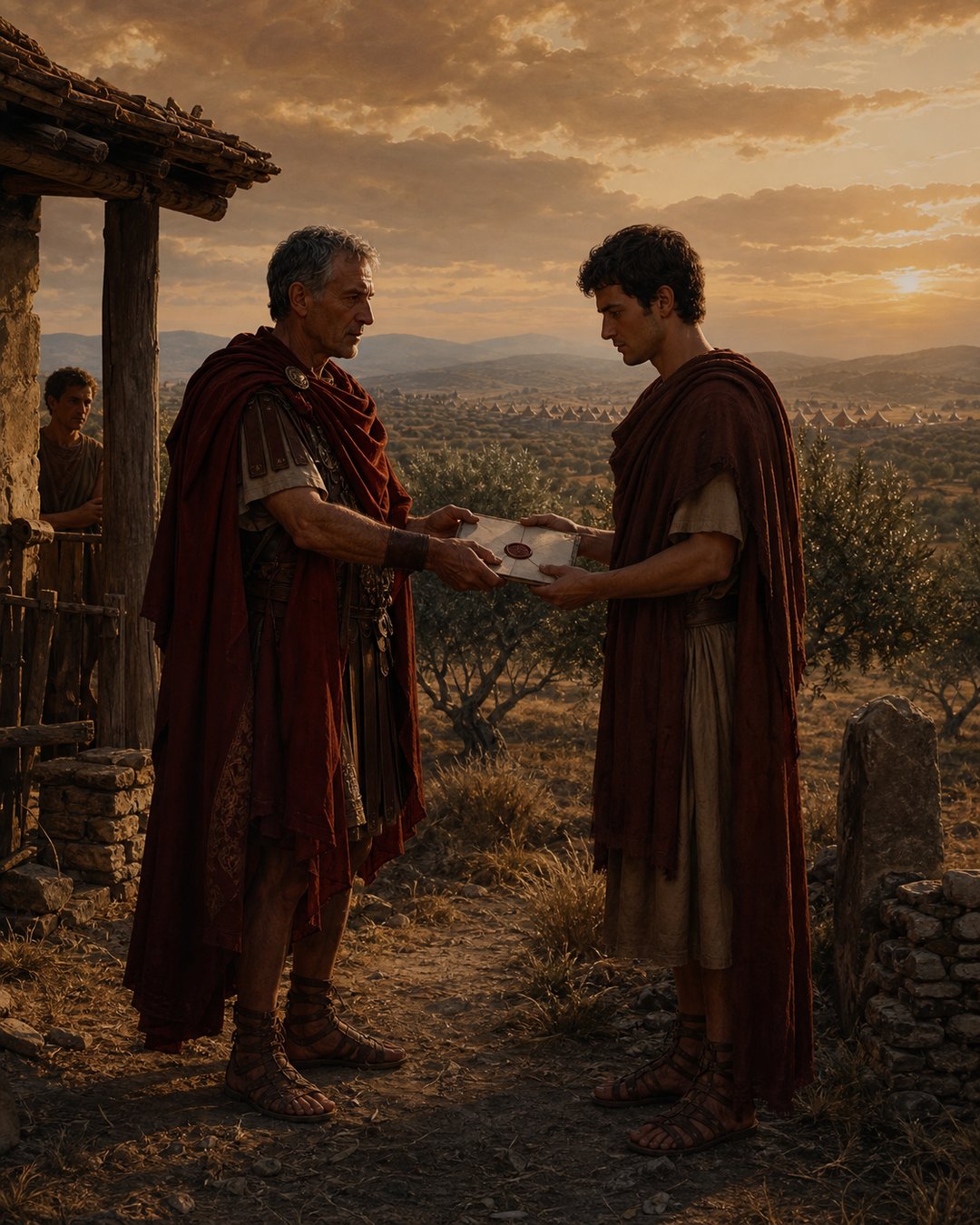
The prisoner exchange began with a clean rule and ended at the boundary of Fabius Maximus’s land. He and Hannibal agreed to trade captives man for man. When the matched exchanges were complete, Hannibal still held 240 Romans. The contract gave that remainder a price: 250 drachmas for every man recovered.
Rome’s Senate refused to pay. Its objection was not that the agreement had been miscounted. Senators condemned the idea of spending public money on soldiers whom they treated as responsible for their own capture. Fabius now faced a liability created in command but rejected at home. Plutarch says he answered by ordering his son to sell his fields and bring the proceeds to camp.
The story is often folded into a moral portrait of a grave, steadfast general. Its machinery deserves equal attention. Prisoners were paired, a surplus was calculated, and a military promise became a debt. When the treasury withdrew, private land supplied the credit that kept a Roman commander’s word to Hannibal and returned the unmatched men.
The agreement reduced captivity to a balance sheet
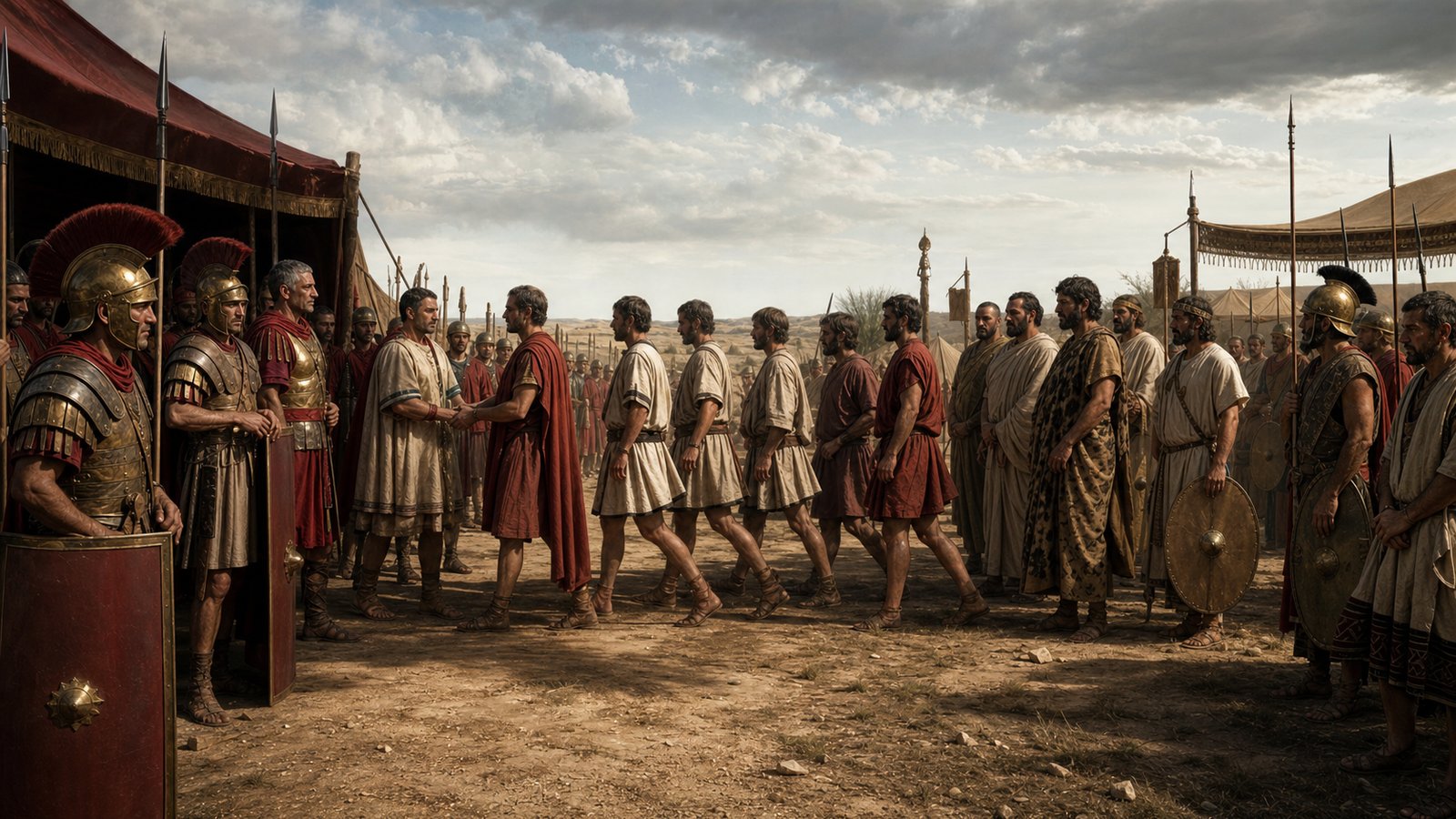
Plutarch introduces the dispute while describing political attacks on Fabius. His enemies criticized his handling of the war, and the Senate was angry about the prisoner terms. The agreement itself was symmetrical. Each army would release one captive for every captive recovered from the other side. Equal numbers could therefore cross without money changing hands.
The symmetry ended when the numbers did not. Hannibal possessed 240 Romans beyond the matched total. A second clause covered that possibility: whichever party recovered more people would pay 250 drachmas for each unmatched captive. The remaining Romans were not an accidental loose end. They were a priced remainder anticipated by the agreement.
That arithmetic transformed a battlefield consequence into an enforceable claim. An army could lose men in combat, regain others by exchange, and still confront a monetary obligation after the paired bodies had crossed. The exchange did not erase defeat; it translated part of defeat into a bill.
The mechanism differed from the moral test in Fabricius’s warning to Pyrrhus about a poison plot. There, integrity appeared in refusing a treacherous shortcut. Here, it appeared in accepting the financial consequence of an openly negotiated rule.
The Senate drew a hard line around public loss
The Senate’s refusal rested on judgment as much as economy. Plutarch says senators called recovery unbecoming and unprofitable because they viewed the prisoners as men whose cowardice had made them prey to the enemy. In that account, capture became evidence against the captive. Paying the ransom risked rewarding failure with public funds.
This reasoning separated collective obligation from individual blame. The men were Roman countrymen, but the Senate did not accept that identity as sufficient reason to spend. It treated the circumstances of capture as a filter on who deserved recovery. The treasury’s boundary was therefore ethical and political, not merely fiscal.
Plutarch does not give the debate in competing speeches, and he does not tell us how each prisoner was captured. The Senate’s accusation must remain the Senate’s accusation. It cannot prove that all 240 fled, surrendered too soon or behaved alike. What the passage securely shows is the official rationale used to refuse the money.
The decision resembles the institutional severity behind Camillus’s rejection of a teacher who betrayed the children of Falerii. Both episodes define Roman conduct through a refusal. Fabius’s crisis, however, began when his own government refused him, leaving personal action to absorb the cost.
Private fields became the security behind a commander’s promise
Fabius did not have the necessary cash. Plutarch says he could neither cheat Hannibal nor abandon his countrymen. Those two objections joined enemies and captives inside one obligation. The agreement had been made across enemy lines, while the men waiting under it belonged to Rome. Breaking it would damage both the commander’s credit and the prisoners’ prospects.
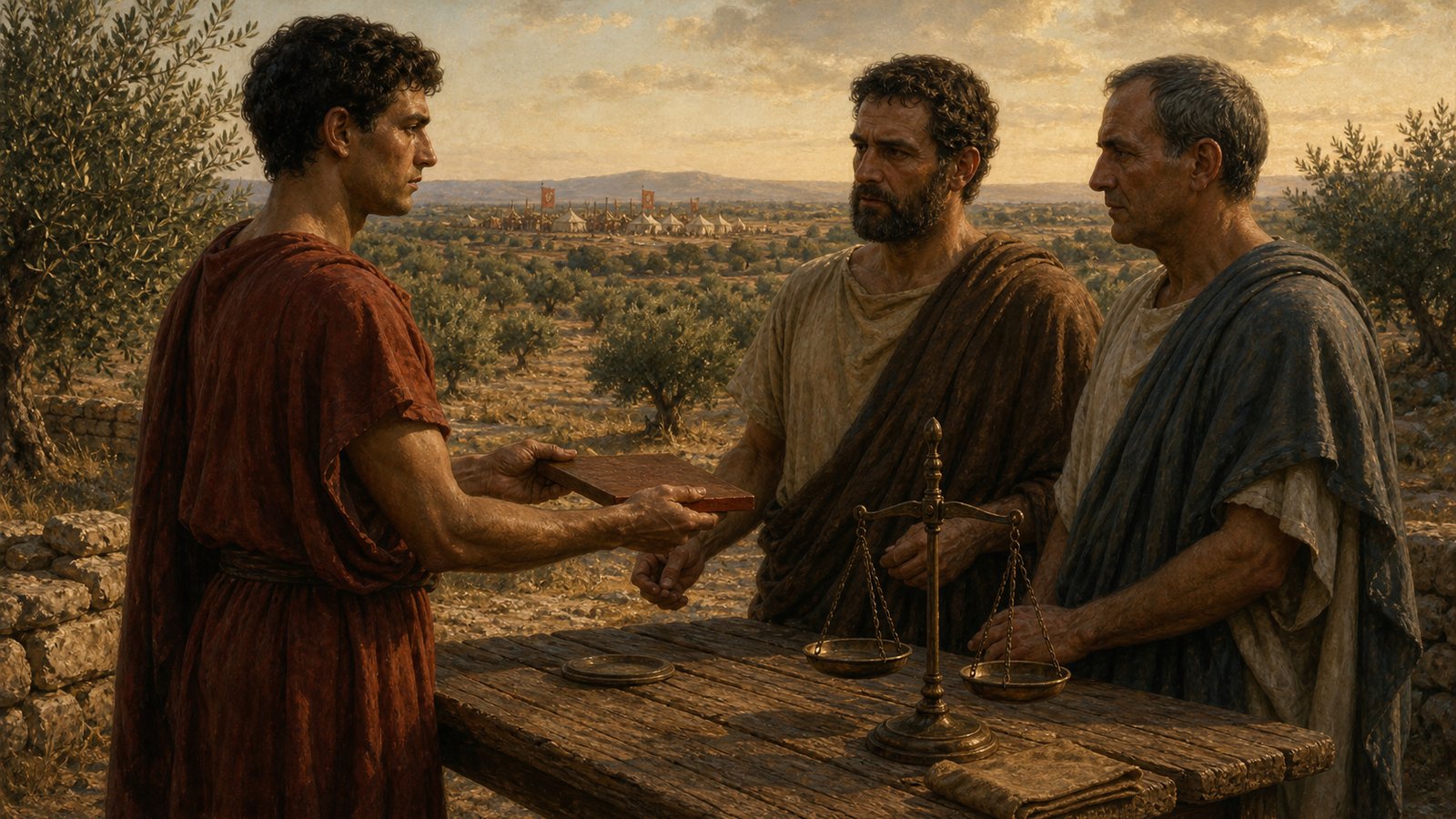
His solution was to send his son to Rome. The instruction was concrete: sell the fields and return with the money. The son sold the estates, came back quickly to camp, and allowed the ransom to proceed. Property held away from the army thus became a reserve for a military promise that the state had declined to honour.
The sale mattered because land was not a purse opened at the command tent. It had to be transferred through a family agent before value could return to the front. Plutarch compresses the transaction, but even that compressed sequence preserves distance and delay: order from camp, sale at Rome, proceeds carried back, payment sent onward.
Fabius’s battlefield method depended on denying Hannibal the decisive encounter he wanted. In the ransom episode, delay would have served no similar purpose. Once the Senate refused, Fabius moved through the available chain—son, fields, buyer, camp, Hannibal—until the obligation was funded.
The returned men offered repayment and met another refusal
The transaction did not end when the prisoners came back. Plutarch says many offered to repay Fabius the price of their ransom. Their proposal could have converted his emergency sacrifice into a set of private debts. Each recovered man might bear his own share, restoring some or all of the estate’s lost value.
Fabius refused every offer. Plutarch describes him as remitting the price for all. That second refusal prevents the land sale from functioning as a short-term loan. He had not merely advanced money until the captives could reimburse him. He accepted the cost as his own.
The gesture also answered the Senate’s accusation without formally reversing it. Senators had argued that captured men should not burden the public because their conduct made them undeserving. Fabius recovered them and then declined to place the same burden directly on them. His action did not prove their courage, but it refused to make their return conditional on purchasing themselves twice—first from Hannibal and then from their Roman commander.
Plutarch’s moral emphasis is clear, yet the economic detail gives it force. Refusing repayment matters only because the source has shown the count, rate, refusal and sale. Virtue is not left as an adjective. It appears as property that did not come back.
The ransom exposes a second kind of Roman command
Fabius is remembered as the Cunctator, the Delayer, a commander whose strategic patience frustrated Hannibal. The prisoner story presents a related but distinct quality. He could resist pressure to fight, yet he also treated an agreed liability as immediate enough to consume his own assets.
The contrast prevents a simple portrait of caution. His choices depended on what had to be preserved. An army should not be gambled for an enemy’s preferred battle. A negotiated exchange should not be abandoned because the Senate disliked its remainder. Restraint governed one problem; personal expenditure resolved the other.
The fields made command answerable beyond office. Fabius could have pointed to the Senate and declared the deal impossible. Instead, Plutarch’s sequence makes his household carry the difference between state policy and his word. The commander’s authority created the promise, but ownership supplied the final guarantee.
Two hundred forty prisoners returned because a numerical imbalance was converted into drachmas and then into land sold. The episode’s scale is military, but its decisive movement is civilian and familial. A son carried an order to the estate; a sale carried value back to camp; and a general’s property crossed the gap his government would not.
Sources
Plutarch, Life of Fabius Maximus, 7.3–5.