
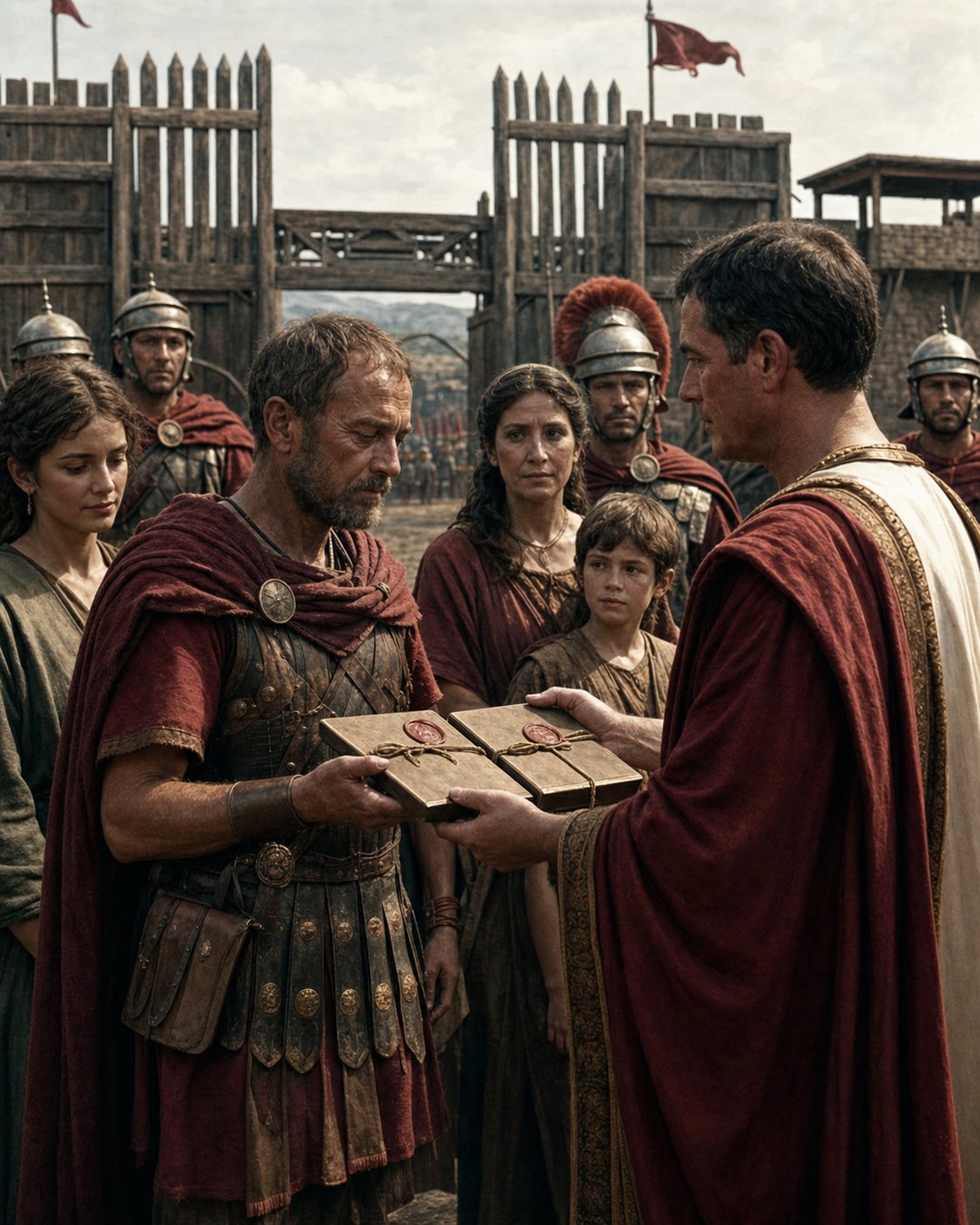
A Roman military diploma made citizenship something a veteran could hold. Two bronze tablets, sealed and witnessed, carried the memory of years spent far from home and turned imperial reward into portable proof. For an auxiliary soldier who had not been born a Roman citizen, the object could change more than his own name.
The diploma matters because it made a legal identity visible. Rome did not only conquer with forts, roads, and legions. It also created documents that told people what they had become after serving the empire. Bronze gave law a weight that memory alone could not provide.
The diploma was a copy of imperial favor
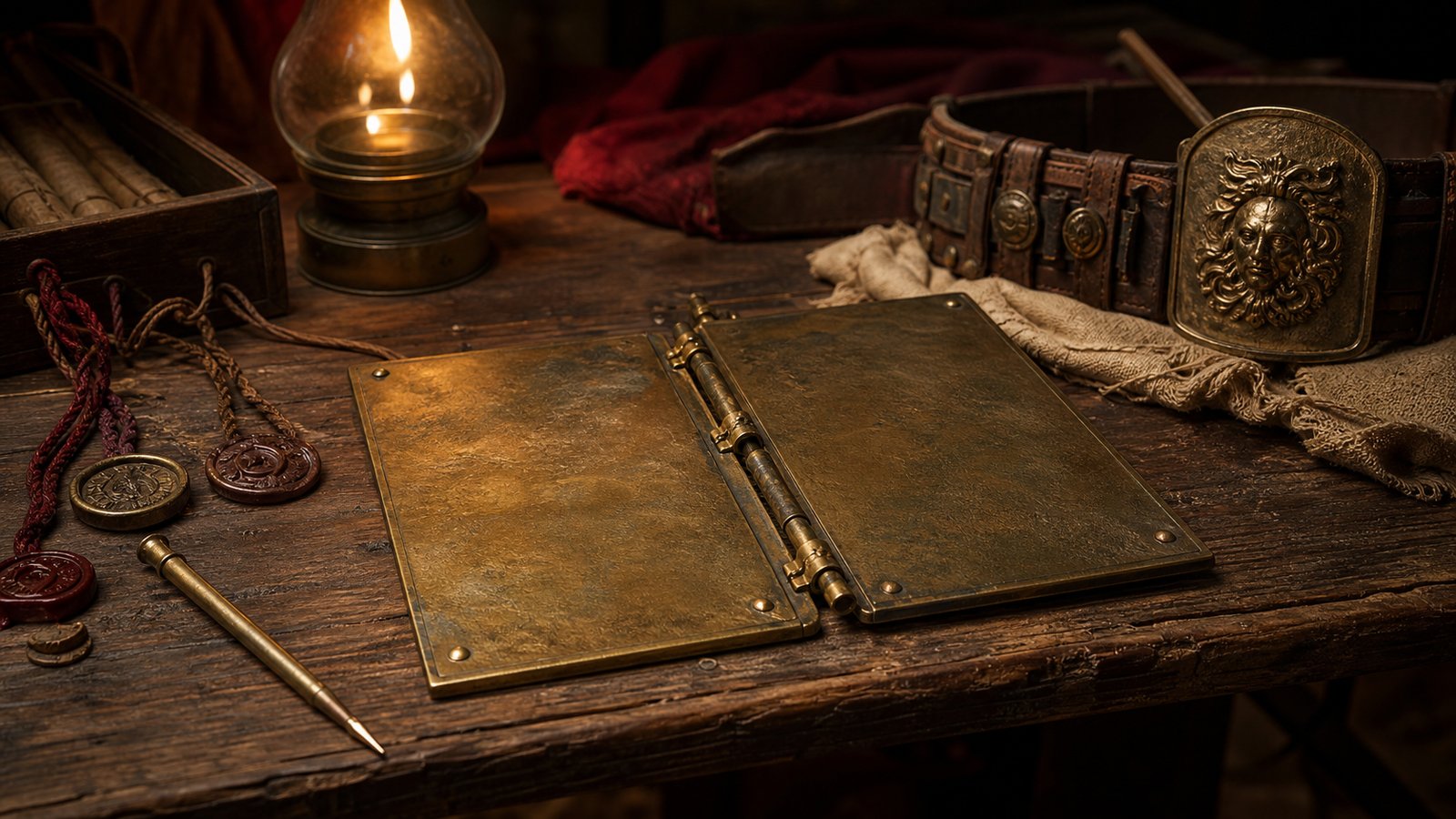
Military diplomas were not casual certificates. They were bronze copies of an official grant, usually derived from a constitution posted in Rome. The veteran received a portable version of a decision made in the emperor’s name, with witnesses and formulae to make denial harder.
That structure is important. Citizenship was not only a feeling of belonging. It had to be proved before officials, communities, heirs, and perhaps suspicious neighbors. The diploma turned imperial favor into evidence.
Auxiliary service made the reward meaningful
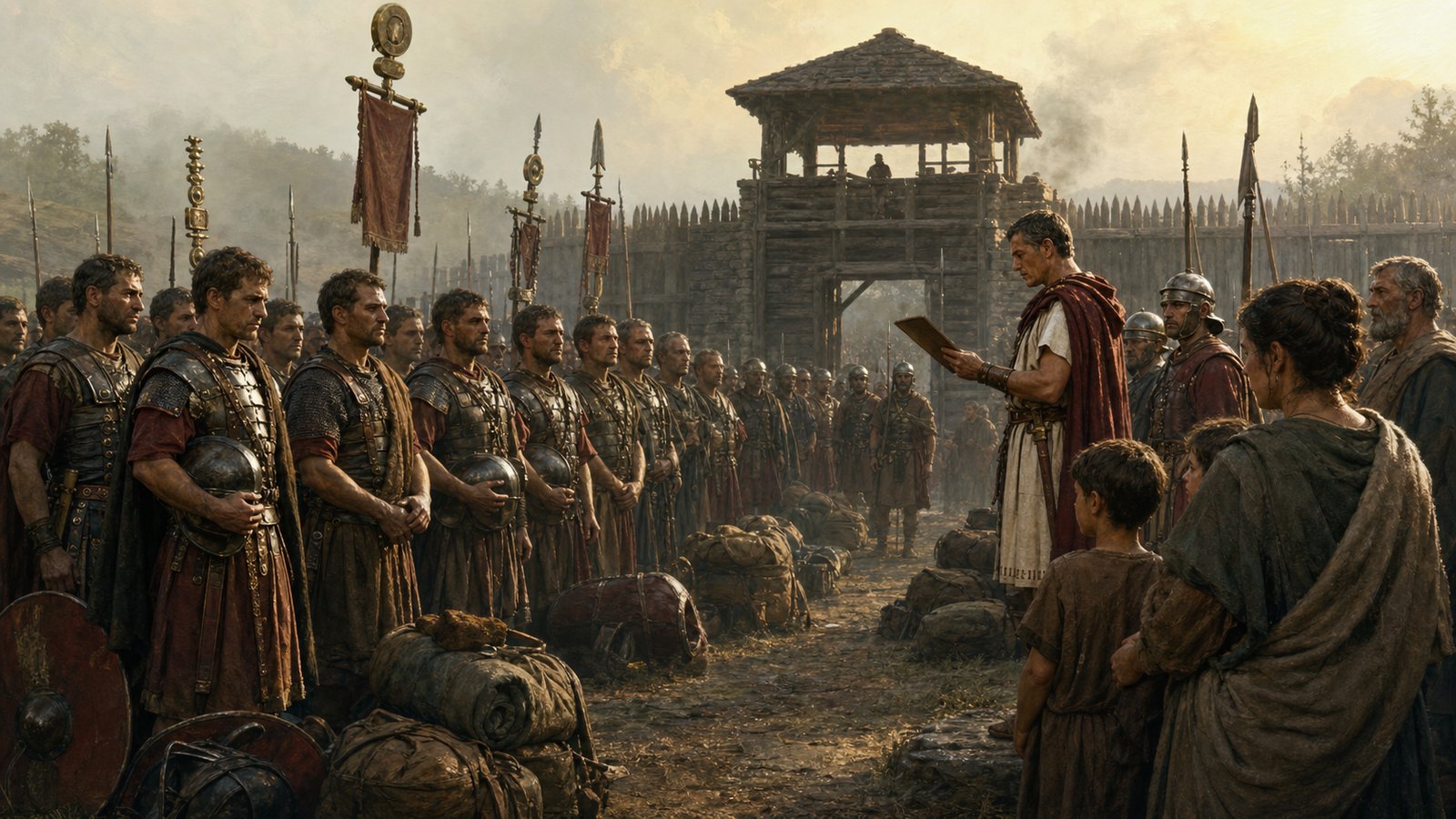
Auxiliary soldiers were often non-citizens serving alongside the citizen legions. Long service, commonly around twenty-five years, could end with a grant of citizenship and related rights. The reward was therefore tied to time, discipline, distance, and risk.
Imagine the discharge scene: a man who had spent decades under Roman command receives bronze tablets while comrades, officers, and family watch. The object is small, but it carries years of obedience, movement, wounds, waiting, and hope.
Bronze made law durable
The material mattered. Papyrus could rot, wax could be smoothed, memory could be challenged, but bronze endured. A diploma could be stored, shown, inherited, and rediscovered. Its durability matched the seriousness of the legal transition it recorded.
The two-tablet form also made the document feel official. Outer and inner texts, seals, witnesses, and named authorities created layers of authentication. Rome understood that identity needed paperwork long before paperwork looked modern.
The family stood behind the soldier
Diplomas could affect more than the recipient. Grants sometimes touched marriage rights and the legal standing of children or family relationships, depending on date and formula. That means the diploma could reshape a household’s future, not merely decorate a veteran’s wall.
This is where the document becomes emotional. A veteran did not bring home only pay or scars. He could bring home a new legal status that changed how his family related to Roman society. Citizenship became a family threshold.
Names turned empire into biography
Surviving diplomas are crowded with names: emperors, governors, commanders, units, witnesses, and recipients. That crowded naming is one reason they are so valuable to historians. They connect large imperial structures to specific people in specific places.
A diploma can show a unit in a province, a date in a reign, a commander in office, and a veteran whose service earned recognition. The empire becomes legible not as an abstraction, but as a chain of named relationships.
Citizenship became less rare, but the diplomas preserve the older world
The Constitutio Antoniniana in AD 212 extended citizenship broadly, changing the meaning of older citizenship grants. Before that, the diploma belonged to a world in which citizenship remained a powerful reward for those outside the citizen body.
That older world is why the bronze tablets still feel charged. They show Rome manufacturing belonging through service. The veteran’s body had belonged to the army for years; at discharge, Rome could answer with a status his descendants might remember.
The diploma also exposes a practical problem of empire: how do you make a promise travel? A spoken grant could fade as the veteran moved from camp to town to village. A bronze copy could cross that distance with him.
It is tempting to treat citizenship as a grand idea, but diplomas show it as an administrative act. Someone drafted the constitution, copied the text, sealed tablets, listed witnesses, and handed an object to a person whose life would now be described differently.
That does not make the process cold. Bureaucracy can be emotional when it changes status. The veteran’s diploma may have been a family treasure because it joined official language to lived sacrifice.
The witnesses are especially revealing. They show that Roman legal culture did not rely on object alone. The tablet, the seal, the public original, and named witnesses all supported each other. Proof was built in layers.
The diploma also helped bind distant provincial soldiers to Rome. A man from a non-citizen background could spend decades guarding imperial frontiers, then receive a status that tied his future to the legal order he had served.
That bargain was not purely generous. Rome needed manpower and loyalty. Citizenship worked as an incentive, a reward, and a story the army could tell recruits: service could transform you.
The object therefore sits between coercion and aspiration. Military life was hard, disciplined, and dangerous. Yet the bronze tablets show that empire could convert hardship into privilege when it suited imperial needs.
Surviving examples also help us see the army as socially creative. It moved men, mixed communities, created veterans, and planted Roman legal identities in places far from the city of Rome. A diploma could be one seed of that process.
The small scale of the object is part of the lesson. Empire often appears huge: forts, walls, roads, fleets, emperors. Here it fits into two plates that could rest on a table. The vast system had to become small enough for one veteran to keep.
This is why Roman military diplomas made citizenship visible. They transformed an imperial decision into bronze, a legal category into a family possession, and decades of service into proof that could outlast the man who earned it.
The diploma also gave the veteran a way to speak across distance. If he settled in a town far from the unit that had known him, the bronze could introduce his past before any old comrade appeared. It carried the emperor, the unit, the witnesses, and the date into a new local setting.
That portability mattered because Roman identity was often tested in practical moments: marriage, inheritance, taxation, status disputes, dealings with officials, and the social ranking of a household. Citizenship became real when someone had to prove it. The diploma existed for exactly those moments.
Its value was therefore both public and intimate. Publicly, it tied a discharged auxiliary to imperial order. Intimately, it told a family that long service had not vanished into memory. Rome had answered in metal, and metal could be opened, shown, and kept.
For historians, that kept metal reverses the usual scale of military history. Instead of beginning with campaigns, it begins with discharge: one named person, one unit, one grant, one date, and one small object proving that imperial service had crossed into civilian life.
Sources & Further Reading
- British Museum, Roman military diploma
- Roman Military Diplomas Online
- Encyclopaedia Britannica, Auxilia
- Livius, Roman army: auxilia
- University of Oxford, Roman military diplomas
- Roman Inscriptions of Britain, Military diplomas
- Cassius Dio, Roman History, 78.9
- Encyclopaedia Britannica, Roman citizenship