
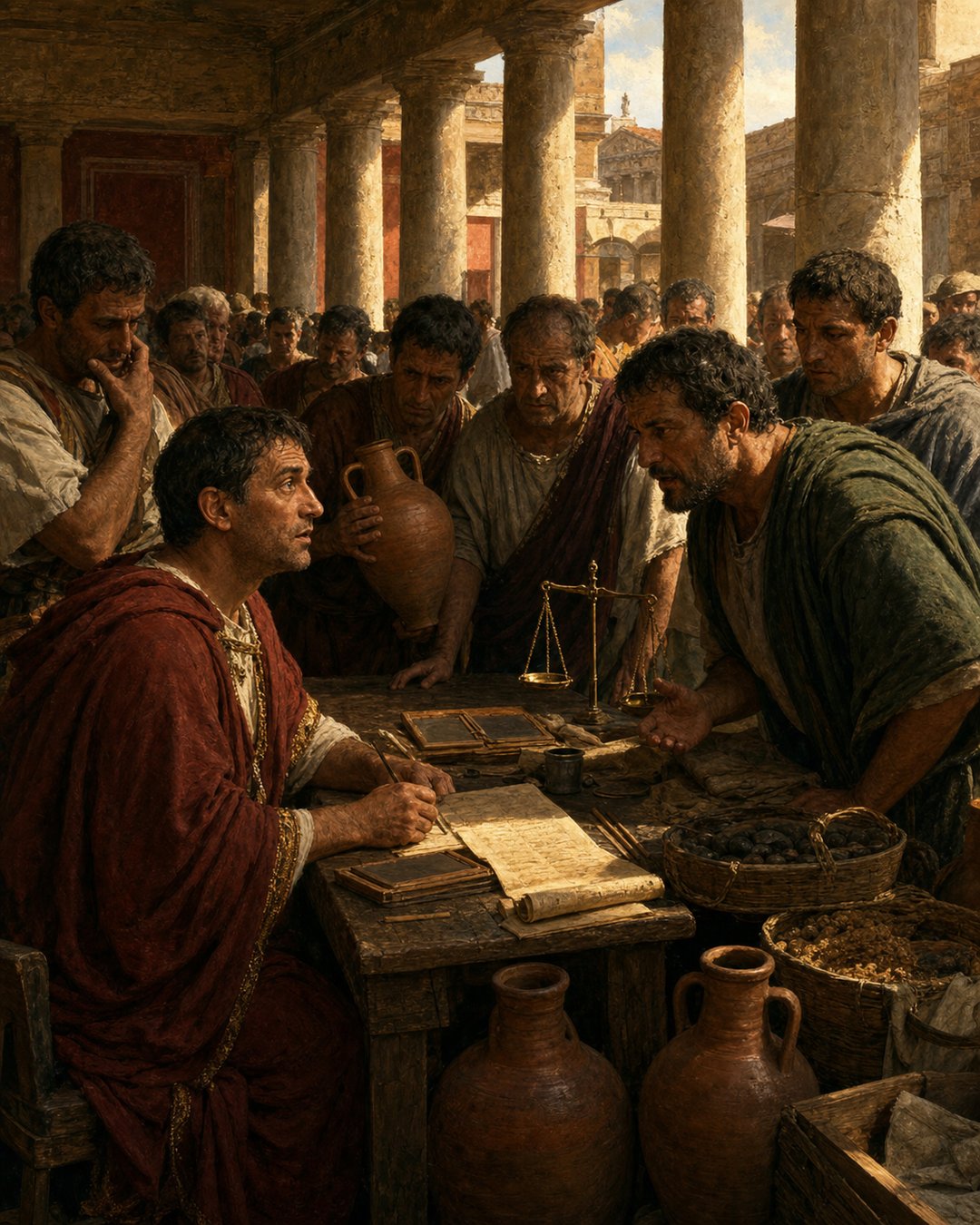
Diocletian’s price edict was not a calm spreadsheet from a confident empire. It was a public confession that ordinary exchange had become frightening. In AD 301, the state tried to name maximum prices for food, wages, transport, textiles, animals, and services, then backed those numbers with terrifying penalties.
The edict matters because it made anxiety visible. It tells us that imperial order was not only threatened by barbarians, usurpers, or generals. It could also be threatened by the price of bread, a soldier’s pay, a merchant’s margin, and the feeling that no one knew what a fair exchange was anymore.
The empire tried to write calm into stone
The most striking thing about the edict is its ambition. It did not simply scold a few traders. It tried to place a ceiling over a huge range of economic life, from staple foods to transport costs and skilled labor. The state wanted numbers to do what confidence no longer could.
Those numbers were meant to be public. Surviving inscriptions show that the edict could be displayed monumentally, turning economic policy into a visible civic warning. A shopper, merchant, soldier, or local official could encounter imperial command not as rumor but as carved authority.
The preface blamed greed, but revealed fear
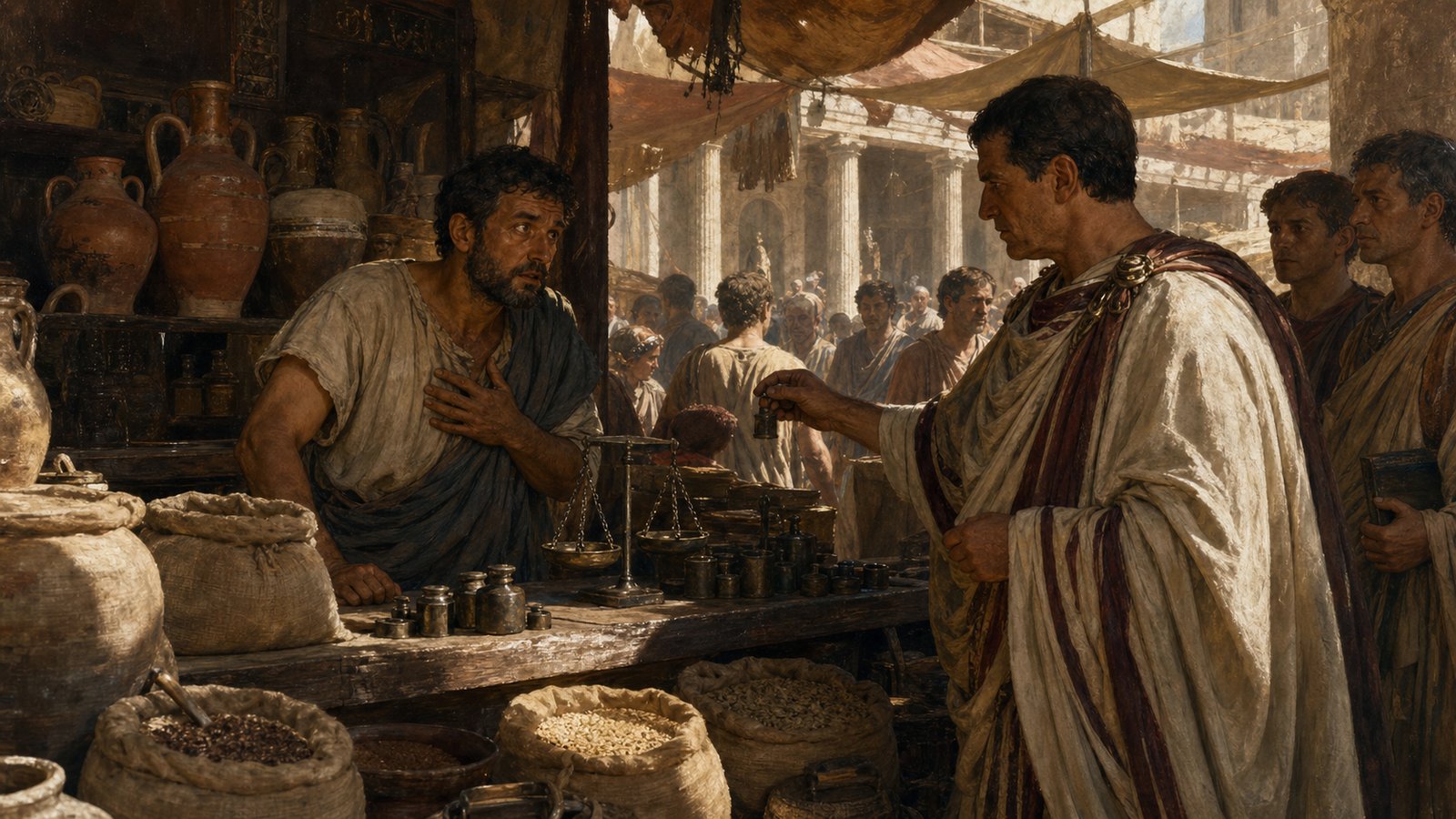
The edict’s preface attacks greed and uncontrolled profit. That language is politically useful: it turns disorder into a moral failure by people who can be blamed. Yet the anger also reveals fear. If prices had to be threatened into obedience, then the emperor knew his command over daily life was incomplete.
Soldiers mattered in that fear. An army paid in a troubled currency and buying in unstable markets was not a small administrative problem. Soldiers guarded the empire, but they also had to eat, clothe themselves, and believe service still made sense.
Punishment replaced trust
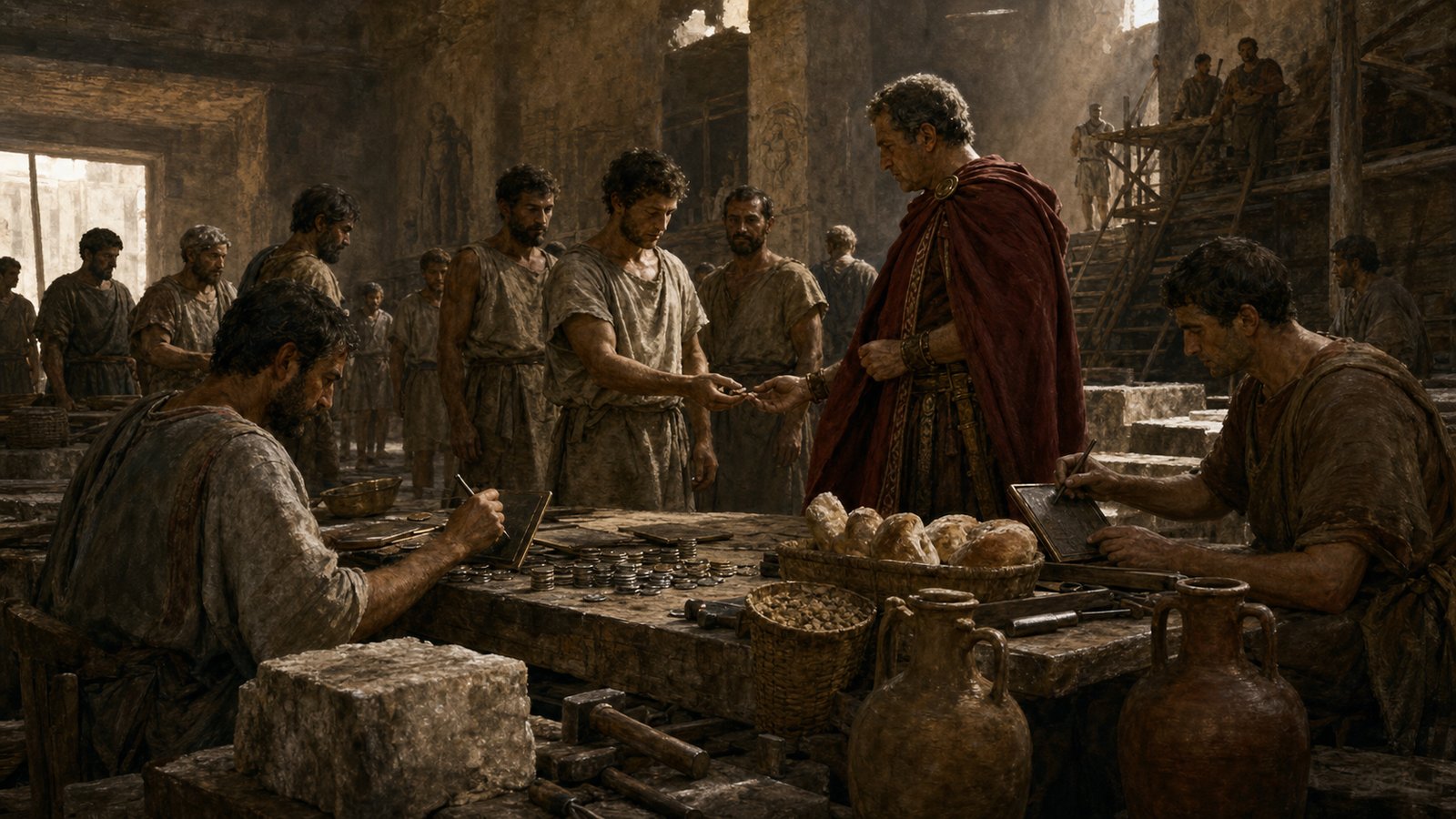
The edict threatened severe punishment for exceeding the maxima. That fact changes how we should read it. This was not guidance. It was a coercive attempt to make markets behave as if imperial will could fix scarcity, expectation, transport, and bargaining all at once.
Picture the scene in a late Roman market: scales on a table, sacks of grain, a clerk with a tablet, a merchant calculating quietly, and a customer wondering whether today’s price would become tomorrow’s crime. The law entered the stall as an extra presence.
The list shows what people could not ignore
Because the edict lists so many goods and services, it accidentally preserves the texture of anxiety. Food, clothing, freight, animals, wages, and professional work all appear because all of them mattered. Imperial crisis was not abstract if it reached the cost of a cloak or a cartload.
This is why the document is more revealing than a simple decree against profiteering. It maps the points where daily life could hurt. Every category suggests a place where people argued, paid, resented, hoarded, pleaded, or suspected that someone else was taking advantage.
Diocletian’s strength had limits
Diocletian was one of Rome’s great system builders. He reorganized authority through the Tetrarchy, strengthened administration, and tried to make rule more durable after decades of instability. The price edict belongs inside that larger habit: identify disorder, classify it, command it, and make officials enforce it.
But economic trust is not a frontier fort. It cannot simply be garrisoned. Lactantius, hostile though he was, preserves the memory that the measure could produce turmoil and shortages. Even if his account is sharpened by dislike, it points toward the obvious difficulty of commanding exchange by fear.
The edict is powerful because it failed to sound relaxed
The price edict does not show a weak emperor doing nothing. It shows a strong emperor reaching for an extreme tool because normal confidence had broken down. Its severity is the evidence. The more the state threatened, the more visible the underlying anxiety became.
That makes the document one of the clearest windows into late Roman pressure. It is not only an economic text. It is a political scene carved in stone: emperor, soldier, trader, laborer, taxpayer, and customer all trapped inside the question of what a price meant when trust was gone.
The edict’s moral language also tells us how Roman power explained crisis to itself. Greed was easier to name than monetary instability, supply pressure, distance, speculation, or fear. By blaming avarice, the law could imagine a cleaner battlefield: honest people on one side, profiteers on the other.
Reality was messier. A merchant might raise a price because supply was uncertain. A shipper might demand more because transport was risky. A worker might want more because money bought less. The edict flattened these pressures into forbidden numbers.
That flattening was part of its appeal. A maximum price looks decisive. It gives the public a visible standard and gives officials a rule to enforce. In a frightened society, even an impractical rule can feel like proof that someone powerful has noticed the pain.
The danger is that public certainty can become private evasion. If a legal price does not match scarcity or risk, goods may vanish, quality may fall, bargains may move into whispers, and enforcement may create new opportunities for corruption. The edict’s violence hints that Diocletian understood resistance would be real.
Its survival in fragments is fitting. We do not possess a perfectly functioning imperial solution. We possess broken stones from a vast attempt to control what people paid. The fragments themselves feel like evidence of ambition outlasting success.
The edict also reminds us that late Roman government was not passive. It could be intrusive, energetic, and ideologically confident. The state did not shrug at economic disorder. It tried to publish a moral universe in which every fair price could be known.
That universe depended on the belief that command could substitute for trust. Roman emperors had long staged power through monuments, ceremonies, coin portraits, and law. In 301, Diocletian staged power through prices.
The result is a document that is both administrative and emotional. It tells us what people bought, but also what rulers feared: that daily exchange might turn subjects against sellers, soldiers against supply, and communities against the imperial promise of order.
The most human detail is the scale of the list. Great history often notices wars and successions. This edict notices meat, wine, shoes, freight, wages, and work. The empire entered the small transactions where anxiety was already living.
That is why Diocletian’s price edict still matters. It did not solve the deeper crisis, but it preserved the moment when an emperor tried to make fear obey a table of numbers. In doing so, it made late Roman anxiety unusually visible.
The decree also shows how easily Roman moral language could become a governing tool. By naming greed as the enemy, the state gave frightened buyers and soldiers a villain they could recognize. But the very need to publish so many maximums shows that the problem had spread beyond one market, one town, or one dishonest trader.
Sources & Further Reading
- Diocletian, Edict on Maximum Prices
- Lactantius, On the Deaths of the Persecutors, 7
- Encyclopaedia Britannica, Diocletian
- Encyclopaedia Britannica, Tetrarchy
- World History Encyclopedia, Diocletian’s Price Edict