
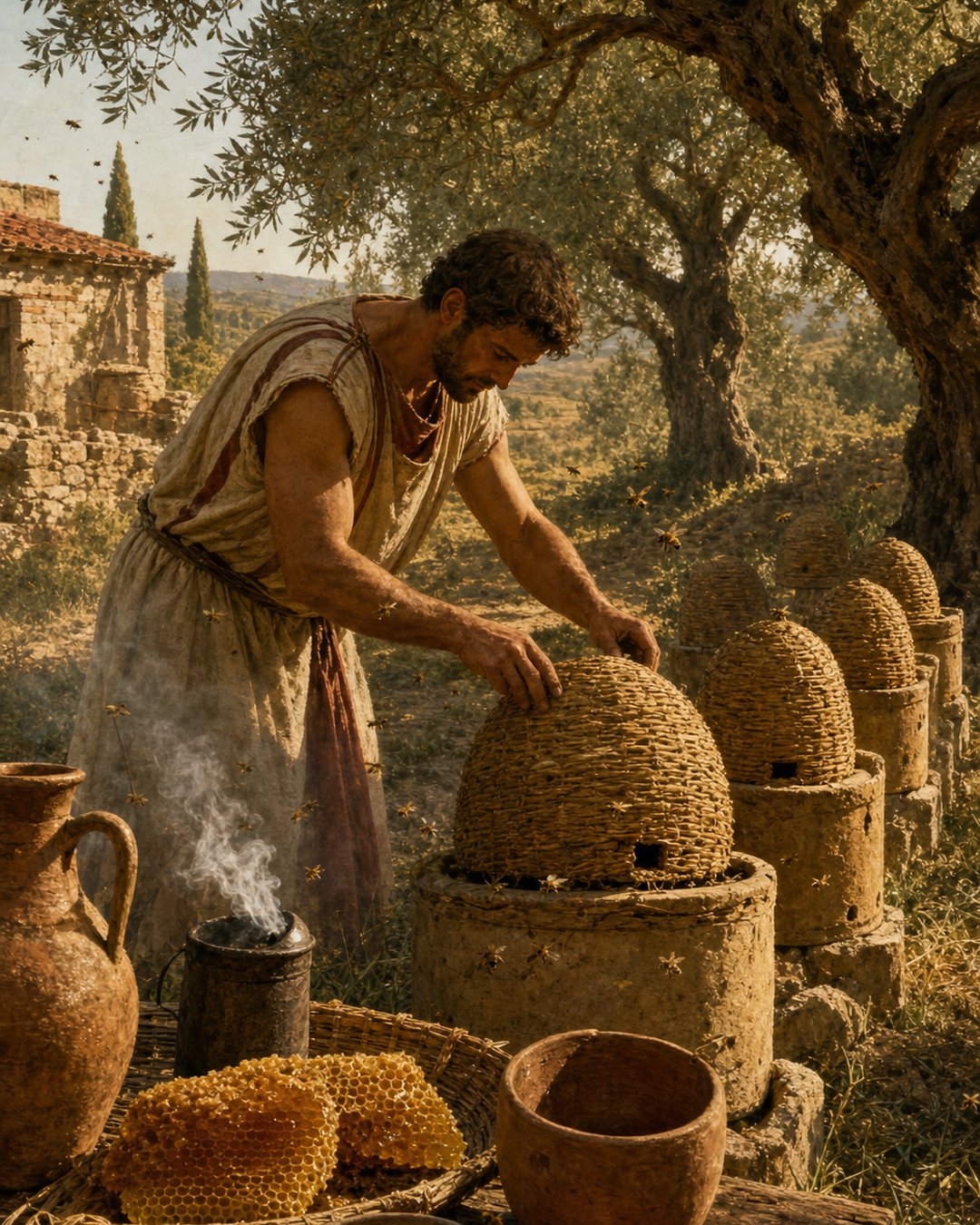
A Roman beekeeper approaching a hive faced a problem that brute force could only ruin. The comb held sweetness and wax, but it also held brood and the colony’s future. Tear out everything, and one harvest could destroy the living machinery that made the next. Leave everything untouched, and a valuable farm product remained beyond use.
Agricultural writers treated bees as creatures that had to be observed, placed, fed by the landscape, protected from weather and pests, and handled at the right season. Columella devoted an entire book’s latter portion to them. His advice mixed sharp practical observation with ancient beliefs that modern entomology does not accept. Read carefully, it still reveals sustained management rather than accidental foraging.
Honey was Rome’s concentrated sweetener before cane sugar became an ordinary Mediterranean commodity. Beeswax sealed, modeled, lit, polished, medicated, and received the stylus. A well-kept apiary therefore connected flowers and insects to kitchens, workshops, shrines, writing desks, and markets.
The Best Hive Began with the Landscape
Columella advised placing bees where forage and clean water were close, winds were moderated, and people or livestock would not constantly disturb the flight path. Thyme and other flowering plants mattered because an apiary depended on what workers could gather within reach. The beekeeper managed territory before touching comb.
Hive location also shaped temperature. Ancient writers favored sheltered sites that could receive winter sun without becoming punishing ovens in summer. Mud, shade, walls, and orientation offered simple environmental control. The insects produced their own heat, but the container and its setting could either support or fight the colony.
This was agriculture at a small scale. Unlike the heavy press described in our article on Roman harvest presses, an apiary used no visible beam to multiply force. Its productive engine flew out over the farm and returned carrying traces of the surrounding season.
Hives Were Containers, Not Modern Boxes
Roman hives varied by region and available material. Agricultural texts mention containers made from woven wicker coated with dung or mud, hollow wood, bark, fennel stalks, and fired clay. These were not standardized removable-frame hives. The beekeeper’s access to comb was more intrusive and demanded judgment.
Rows of cylindrical or domed hives could be protected under a roof or behind a wall. Openings needed to be large enough for traffic but small enough to defend. Ancient advice included keeping the approach clean and preventing lizards, moths, mice, and other intruders from exploiting the stored food. A keeper inspecting the row was therefore reading more than bee activity. Damaged plaster, debris at an entrance, unusual silence, or evidence of a pest could signal a problem before the honey harvest exposed it.
Archaeology adds a physical counterpart to the texts. Terracotta hive fragments from Mediterranean sites show repeated horizontal grooves inside, giving comb a surface to attach to, and openings that allowed management from an end. No single form covered the empire, but purpose shaped material: enclosure, attachment, access, and weather protection.
A Swarm Was a Crisis and an Opportunity
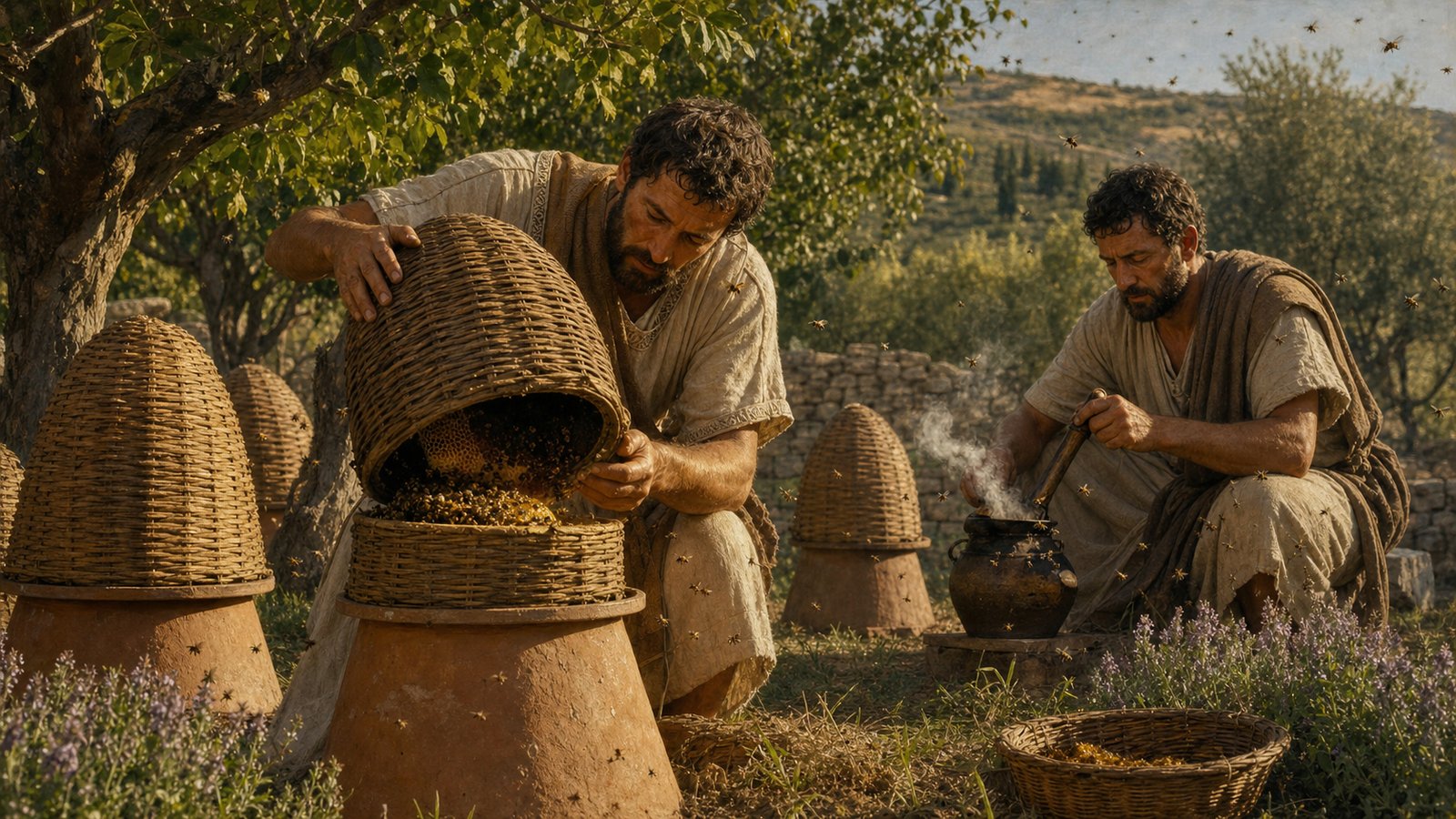
When part of a colony swarmed, a cloud of bees could settle on a branch before choosing a new home. To the beekeeper, that movement threatened the loss of productive animals and offered the chance to populate another hive. Columella described watching for swarms and using sound, scent, and prepared containers to gather them.
Some ancient explanations of bee society were mistaken. Roman writers often imagined a king rather than a queen and attached moral lessons to the colony’s order. Their practical dependence on observation was nevertheless real. A keeper had to notice unusual clustering, flight, sound, and the moment a mass landed within reach. The error about sex did not prevent farmers from distinguishing leaders, workers, brood, and seasonal behavior. It reminds us that useful husbandry can grow from repeated observation even when the explanatory biology remains wrong.
Capturing a swarm required patience rather than a chase across fields. A prepared hive could be rubbed with attractive herbs, and the clustered bees encouraged inside. Success turned one colony’s reproductive movement into expanded farm capacity. Failure meant watching labor and future honey vanish over the boundary.
Smoke and Timing Made Handling Possible
Ancient beekeepers used smoke or aromatic fumes to calm or move bees during inspection and harvest. The method did not make stings impossible. It gave the handler a narrow advantage while opening a defended space. Protective clothing was limited compared with a modern suit, so steadiness and timing mattered.
Harvest followed flowering and season rather than appetite alone. Agricultural calendars advised when comb was likely to be full and when bees needed stores for scarcity. The keeper could remove selected sections while leaving brood comb and enough honey to sustain the colony. The exact practice varied with hive form, climate, and local forage.
The central discipline was restraint. A full-looking comb was not simply inventory. Part of it fed adults; part protected developing bees; part carried the apiary through a poor interval. The keeper’s skill appeared in what remained after the knife as much as in what entered the basket.
Honey Left the Comb by Pressure and Patience
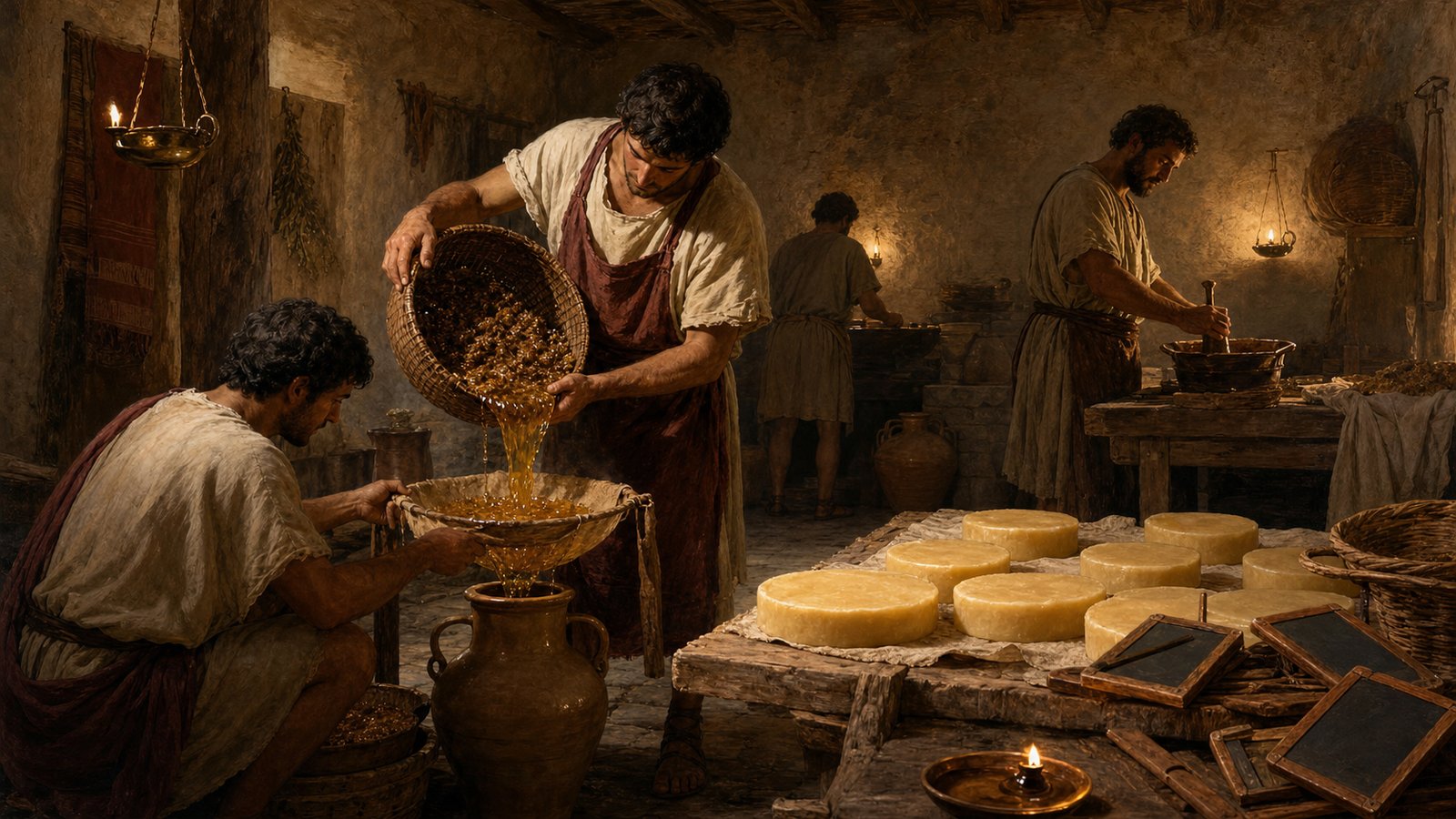
Fresh comb could be drained or strained so honey flowed into ceramic vessels. Crushing and pressing recovered more but mixed wax and debris into the mass, requiring filtering and settling. Different runs could produce different qualities. Heat made handling easier but risked altering flavor and cleanliness if badly controlled.
Honey entered sauces, drinks, preserved fruit, cakes, medicines, and offerings. Roman recipes paired sweetness with wine, vinegar, herbs, and fermented fish sauce in combinations that challenge modern divisions between dessert and savory food. Its concentration made it storable and tradable, though quality depended on forage and handling. Thyme honey could carry a reputation tied to landscape, while smoke, dirt, overheated comb, or careless storage could lower a batch. The jar preserved not only sweetness but evidence of where and how the colony had worked.
The connected food economy in our article on garum provides a useful comparison. Both products turned biological processes into durable flavor. Honey differed because the farm had to preserve the insect workforce that gathered its raw material.
Wax Gave the Apiary a Second Market
After honey was removed, comb still had value. Beeswax could be washed, melted, strained, and formed into cakes. It served as a modeling material in casting, a coating and seal, an ingredient in compounds, a fuel for candles, and the reusable surface inside writing tablets. The hive produced infrastructure as well as food.
The bronze process described in lost-wax casting consumed a carefully shaped wax model to create a void for metal. At a desk, wax did the opposite kind of work: it remained soft enough to receive words and be smoothed again. Both uses began with comb managed by people who may never have seen the final object.
Roman beekeeping joined close animal observation to a wide material network. Its writers misunderstood some bee biology, but they understood dependence. The harvest returned only if flowers, shelter, colony, and keeper survived together. A jar of honey and a cake of wax were therefore not leftovers from nature. They were the divided yield of a living system kept productive by measured interference.
Sources & Further Reading
- Columella, On Agriculture, Book 9
- Pliny the Elder, Natural History, Book 11
- FAO, “History of Beekeeping”
- Encyclopaedia Britannica, “Beekeeping”