
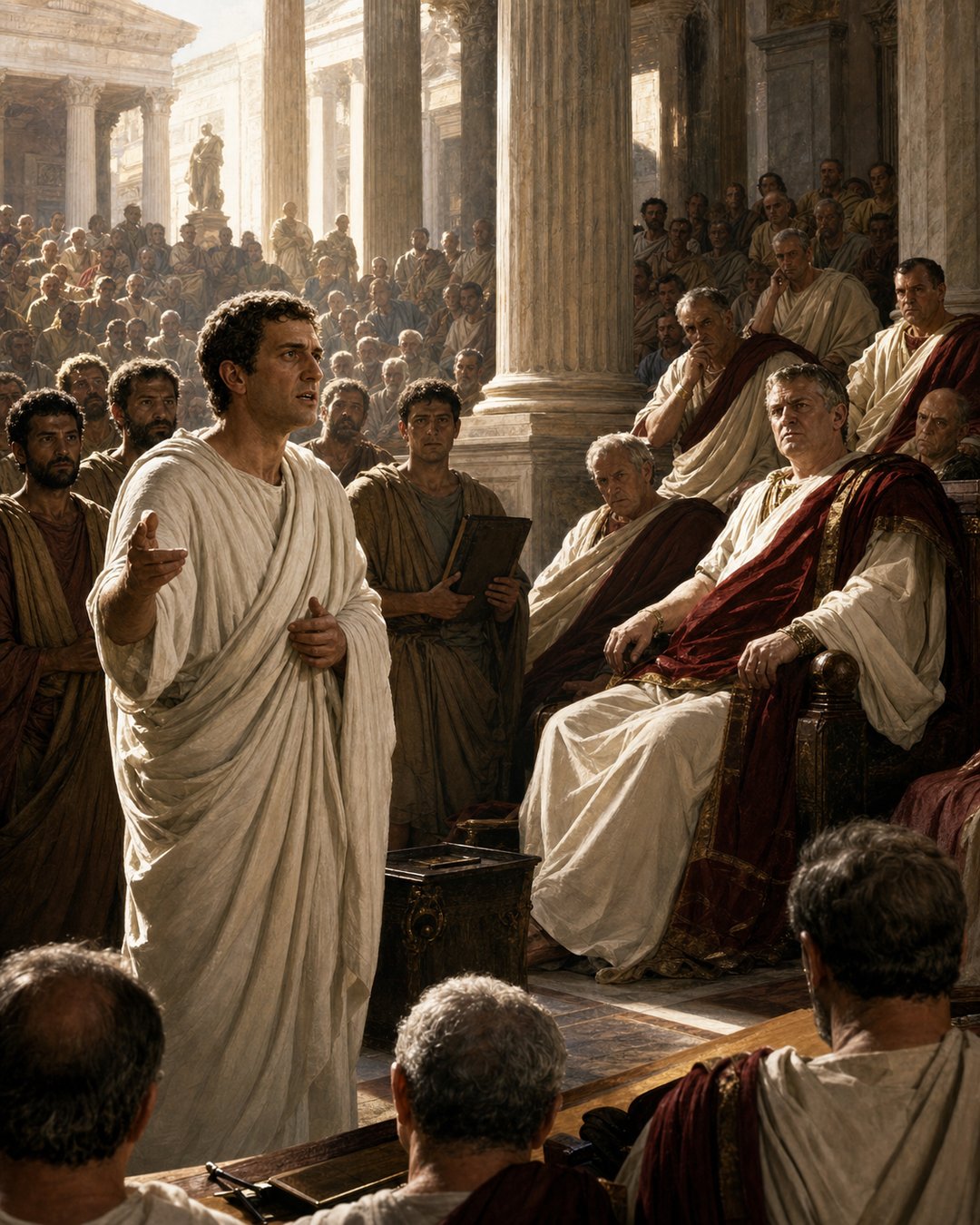
When Gaius Verres entered court in 70 BCE, he expected a long contest. Delay favoured him. Elections and public games could interrupt proceedings, a friend might soon hold the consulship, and the case could be pushed into a political climate kinder to a former governor with money and connections. Marcus Tullius Cicero answered by refusing to perform the trial Verres had prepared for.
Instead of opening with weeks of polished oratory, Cicero gave a short statement and brought witnesses forward at once. Sicilians described extortion, judicial abuse, stolen art and punishment carried out under provincial power. After the first phase of evidence, Verres left Rome for Massilia. Cicero’s great published speeches against him were mostly weapons the court never heard.
Sicily chose a prosecutor who knew the province
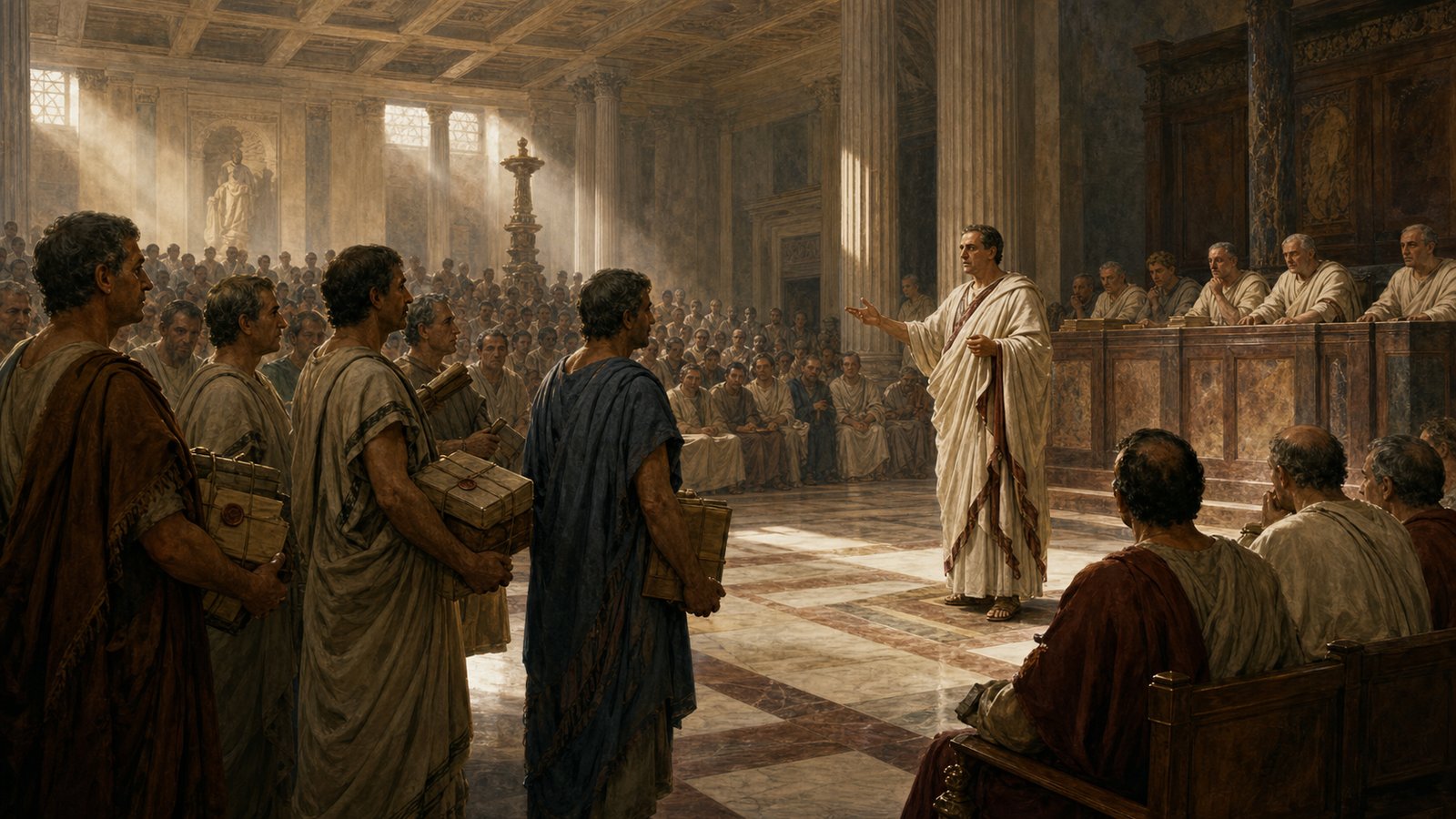
Verres had governed Sicily from 73 to 71 BCE. The province was wealthy, strategically vital and burdened by the power a Roman governor could exercise far from daily scrutiny in the capital. When Sicilian communities sought a prosecution for misconduct and extortion, they approached Cicero, who had served there earlier as quaestor and maintained local connections.
Cicero was not yet the unmatched elder statesman familiar from later accounts. He was building a career through the courts. Taking the Sicilian case placed him against Quintus Hortensius Hortalus, the most celebrated advocate of the day, and against a network with deep senatorial influence. A victory could expose abuse and announce that Cicero could defeat Rome’s established courtroom star.
Before prosecuting, Cicero had to win the right to conduct the case. A rival claimant, Quintus Caecilius Niger, also sought the role. Cicero argued that the former associate of Verres was not the proper champion of the Sicilians. The preliminary contest was therefore about trust before it was about evidence: who genuinely represented the injured communities?
Evidence had to travel before it could speak
Cicero received permission to collect evidence in Sicily. He worked against time and obstruction, visiting communities and gathering records and witnesses. Provincial abuse rarely arrived in Rome as one perfect document. It had to be reconstructed from local decrees, account books, testimony and objects whose removal left a visible absence.
The allegations covered several kinds of power. Verres was accused of manipulating courts, extracting money, mishandling grain obligations, taking statues and precious objects, and ordering punishments without lawful restraint. The range mattered because it showed governorship not as one isolated bribe but as a system in which judicial, fiscal and military authority could reinforce personal appetite.
Art theft gave Cicero unusually concrete material. A governor might describe a payment as tax or requisition, but an empty sanctuary and a named statue could make loss visible. The speeches repeatedly turn objects into witnesses: something once displayed before a community had appeared in a governor’s possession or vanished under pressure.
The calendar was part of the defence
Verres’ supporters did not need to prove innocence immediately if they could prevent a decisive trial in 70 BCE. The Roman calendar contained public games and interruptions. Hortensius had been elected consul for the following year, while Quintus Caecilius Metellus Creticus, another ally, would hold the other consulship. Marcus Caecilius Metellus was due to govern Sicily. Time promised to rearrange the officials around the case.
Cicero made this delaying strategy the centre of his procedural response. Dickinson College Commentaries notes that the extortion court heard the case in two phases. Ordinarily the prosecution and defence delivered extended speeches before the witnesses. Cicero compressed his first presentation and proceeded directly to testimony, reserving the mass of material he had prepared.
This was advocacy through schedule design. Cicero did not merely make a better argument inside the available process; he changed how he used the process. Readers of Rome’s public law courts will recognize the larger setting, but Verres’ trial shows how the order of speaking and evidence could decide whether publicity arrived before political protection.
Witnesses replaced the expected performance
The first hearing began in August. Cicero’s brief opening told the judges that he would prove the case through witnesses and records. Sicilian testimony then occupied the court. The tactic gave Hortensius less room to answer a single continuous speech with an equally shaped performance. New allegations and local voices accumulated in front of the jury.
Cicero still framed what the court heard. A witness does not enter history without selection, sequence and questioning. Yet the decision to foreground provincial speakers mattered. Roman political culture often reduced provinces to revenues, commands and opportunities for distinction. In this trial, individuals from Sicily appeared in Rome to describe what provincial government had done to their cities and households.
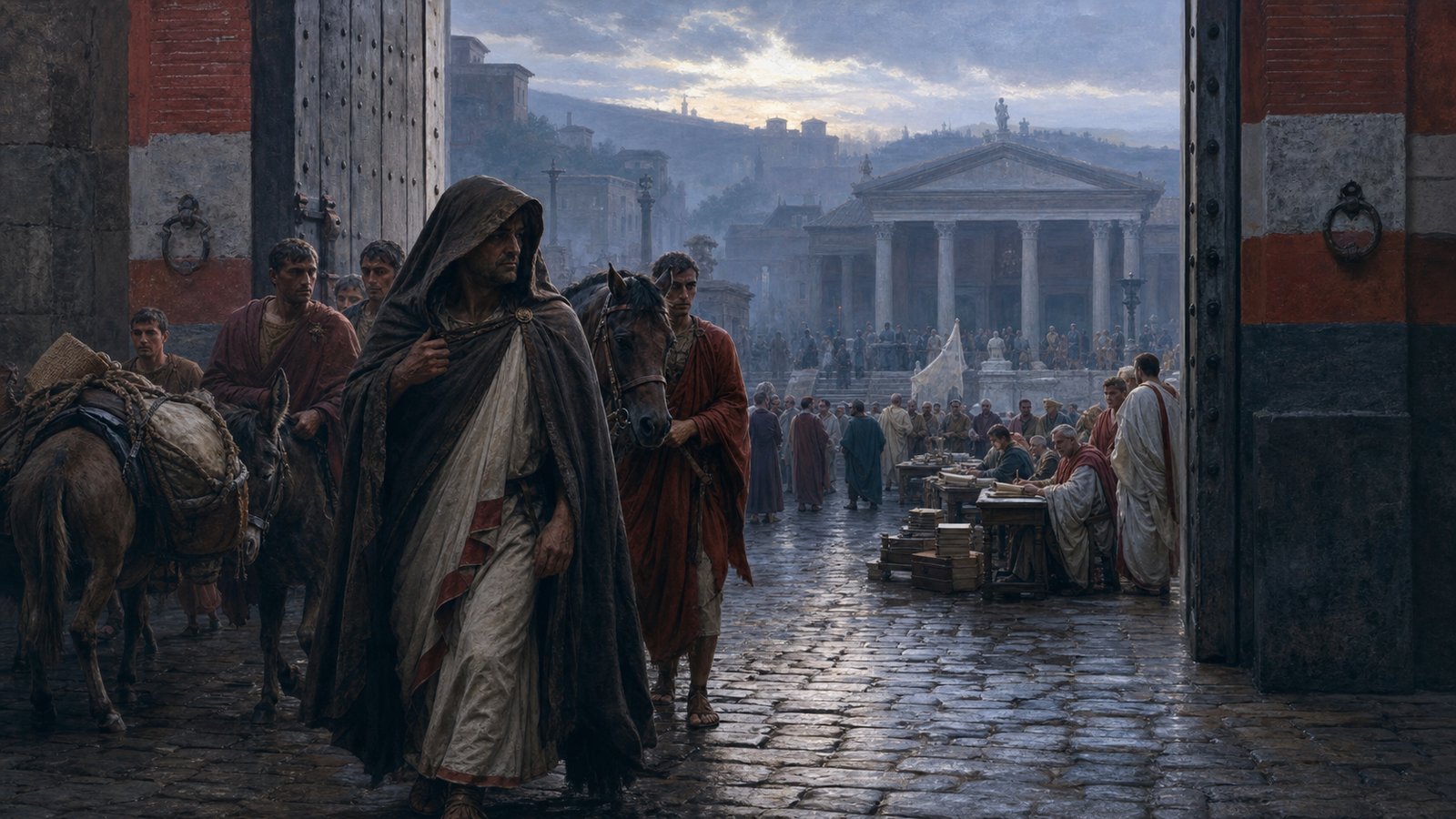
The evidence was damaging enough that Verres did not remain for the full process. He went into exile at Massilia, modern Marseille. The court imposed a financial penalty, though ancient and modern discussions differ over how closely the final sum matched the vast scale alleged by Cicero. The practical result came before Cicero delivered the elaborate second action he had written.
Unspoken speeches built Cicero’s victory
Cicero published the five books of the second action as if they completed the prosecution. They organize accusations around Verres’ earlier career, judicial misconduct, grain administration, art plunder and cruel punishments. Their survival can mislead a reader into imagining a courtroom audience listening to the whole sequence. Most of that sequence belongs to literary and political aftermath.
Publication allowed Cicero to define why Verres had fled. The written case displayed evidence, preserved names and demonstrated the prosecutor’s command of the material. It also prevented Hortensius and Verres’ allies from reducing the withdrawal to a tactical choice or private settlement. Cicero won the immediate case with speed, then won its memory with abundance.
The episode therefore anticipates the political oratory visible in Cicero’s later confrontation with Catiline, but the narrative engines differ. Against Catiline, a public speech sought to isolate a present senator in a crisis. Against Verres, Cicero curtailed speech so that a chain of provincial witnesses could outrun the calendar.
A conviction could not repair provincial rule
The trial elevated Cicero and damaged the reputation of senatorial juries already accused of shielding their own order. It also arrived amid legislation that changed the composition of juries, distributing places among senators, equites and tribuni aerarii. Verres became evidence in a broader argument over whether Rome’s governing class could judge provincial misconduct credibly.
One exile did not transform the incentives of empire. Governors still operated with enormous discretion, provincial communities still needed patrons in Rome, and a successful prosecution depended on resources that many victims could not assemble. The case was exceptional partly because the Sicilians found an ambitious advocate able to gather evidence and convert their complaints into a major Roman contest.
Nor should Cicero’s rhetoric be treated as a transparent transcript. Prosecutors select, exaggerate and arrange. His speeches are partisan works designed to convict Verres and promote Cicero. The hard historical value lies in reading that strategy alongside the procedure: the preliminary fight for the prosecution, the evidence-gathering tour, the shortened opening, the witnesses, Verres’ departure and the later publication.
The sharpest argument was procedural
Verres prepared for eloquence, influence and delay. Cicero’s decisive move was to deny him delay. By altering the expected rhythm of the trial, he made the evidence arrive while the current judges and political conditions still held. The courtroom victory depended on knowing when not to deliver the grand speech.
That is the lasting paradox of the Verrines. They became some of antiquity’s most famous prosecution speeches even though the most extensive books were not required to secure the defendant’s flight. Their brilliance should not conceal the compact manoeuvre beneath them: a short opening, immediate witnesses and a calendar that could no longer be used as shelter.
Verres left before Cicero finished the case in the form Cicero had prepared. Cicero then finished it for Rome’s reading public. Procedure produced the result; publication decided what the result would mean.
Sources
Dickinson College Commentaries, “Cicero and Verres”
Dickinson College Commentaries, “The Trial of Verres and Cicero’s Speeches”
Cicero, Against Verres, First Action and Second Action