
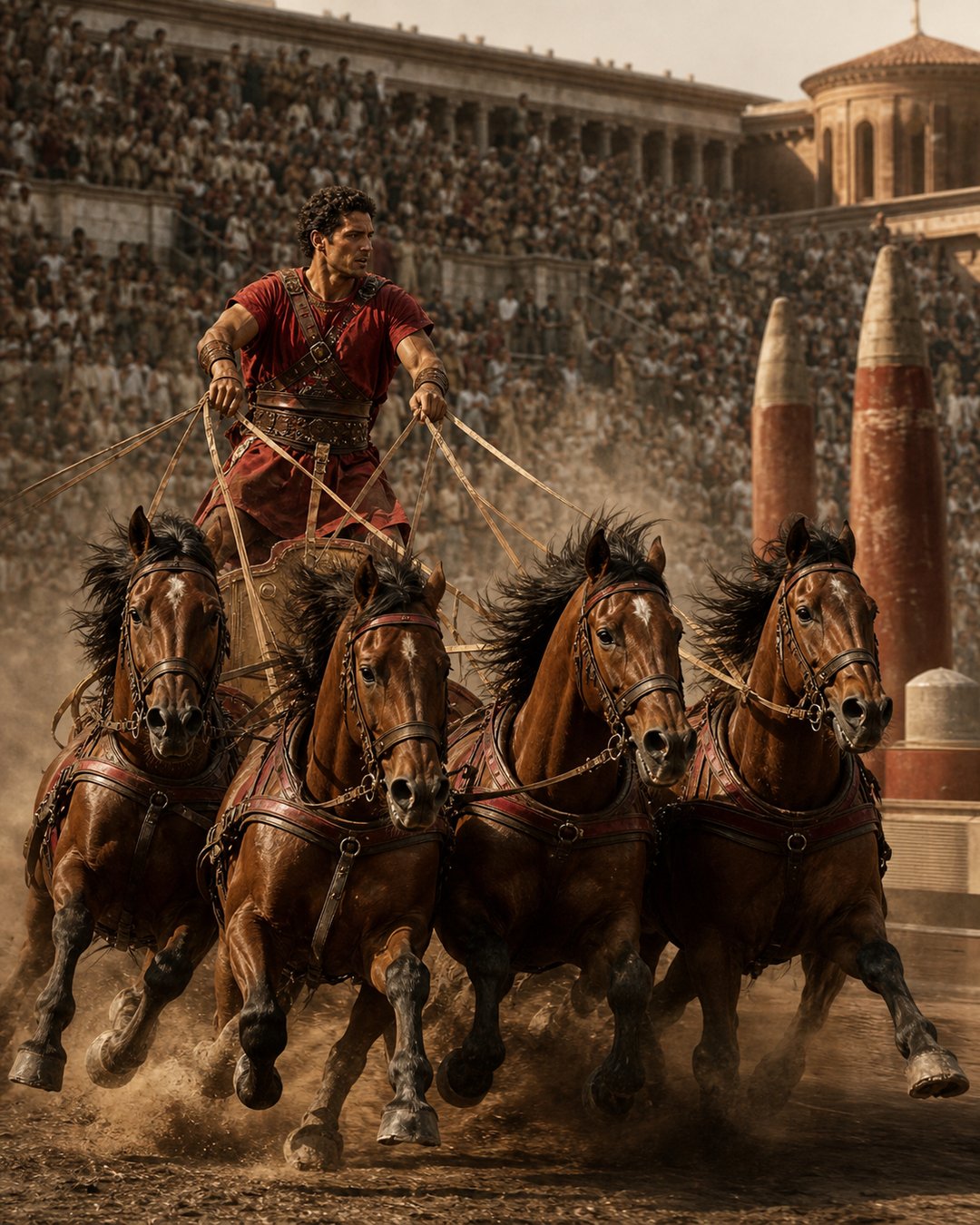
A stone inscription set up at Praeneste does something modern sports archives would recognize immediately: it turns a career into numbers. Gaius Appuleius Diocles raced for twenty-four years, entered 4,257 contests, won 1,462 times and accumulated 35,863,120 sesterces in prize money. Those figures are so large that they can make him look like a legend invented by accountants.
The inscription is more interesting than a claim that Diocles was “the richest athlete ever.” It records teams, types of victory, prize levels and tactical preferences. It shows a performer who crossed faction lines, built a long career in an extraordinarily dangerous spectacle and made restraint part of his public identity. Rome did not merely cheer speed. It learned to read a charioteer’s decisions.
A Lusitanian reached Rome’s largest stage
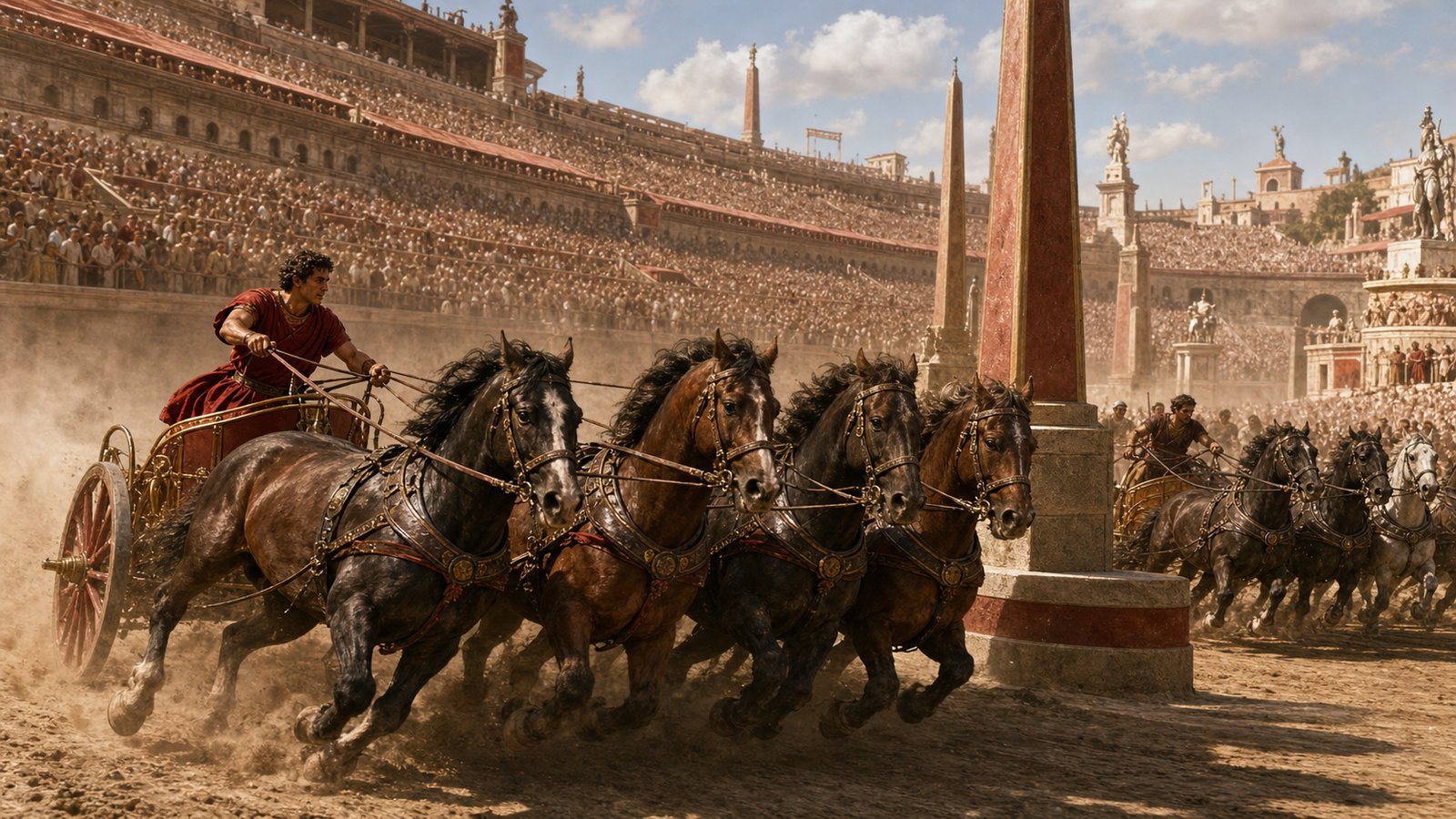
Diocles was born in 104 CE in Lusitania, the Roman province covering much of modern Portugal and western Spain. His commemorative text calls him a Lusitanian from Emerita Augusta, today’s Mérida. He began racing at eighteen, an age when a skilled driver still had to prove that he could control a team amid noise, dust and tightly packed competitors.
The arena was not a small provincial track. In Rome, the Circus Maximus could gather an immense crowd around a long central barrier and dangerous turning posts. Teams represented colour factions with organizations, owners, supporters and reputations. Spectators followed Reds, Whites, Blues and Greens with an attachment that made an individual driver part athlete and part public emblem.
Diocles first raced for the Whites. His first victory came two years later. At twenty-four he moved to the Greens, then at twenty-seven joined the Reds, the faction with which he spent most of his career. The switches reveal a professional market beneath the colours. A successful driver could change employers, and the public could continue tracking the man even when his tunic changed.
The inscription counted more than wins
The career total of 4,257 starts is extraordinary on its own. Diocles won 1,462, placed second 861 times and finished third 576 times. The inscription also grouped victories by the number of horses and by the size of the purse. It was not satisfied with a single total because Roman racing audiences understood different conditions as different accomplishments.
Most races used a four-horse team, the quadriga. A driver stood in a light chariot, balanced the pull of four animals and approached the turning posts closely enough to save distance without catching a wheel or losing the team. Reins could be wrapped around the driver’s waist, while a knife offered the desperate possibility of cutting free after a crash. The spectacle rewarded control at the edge of catastrophe.
Diocles’ earnings reached 35,863,120 sesterces. Converting that sum into modern currency produces sensational but unstable headlines because ancient wealth, wages and prices do not share one clean exchange rate with the present. The defensible point is simpler: the inscription presents a fortune on a scale that made prize distribution central to his fame. The numbers are Roman numbers, chosen by Roman commemorators to impress Roman readers.
Holding back became a signature
One of the most revealing details concerns how Diocles won. His record celebrates victories after he had held back, rather than only races led from the opening. A driver who stayed behind could avoid some early congestion, preserve his horses and judge when rivals had spent too much energy. He also risked running out of laps, becoming boxed in or giving the leader an unanswerable gap.
The inscription’s attention to this pattern suggests that spectators could distinguish a tactical victory from raw dominance. They watched position, timing and the condition of the team. Diocles was not simply the man attached to the fastest horses. He was remembered as someone who could delay the decisive move and still arrive first.
That makes the race a different kind of Roman contest from the one described in the social world surrounding gladiators. Both spectacles combined danger, status and mass attention, but the charioteer repeatedly demonstrated decisions at speed. Every lap renewed the question of whether to challenge, wait or protect the inside line.
Teams made individual fame possible
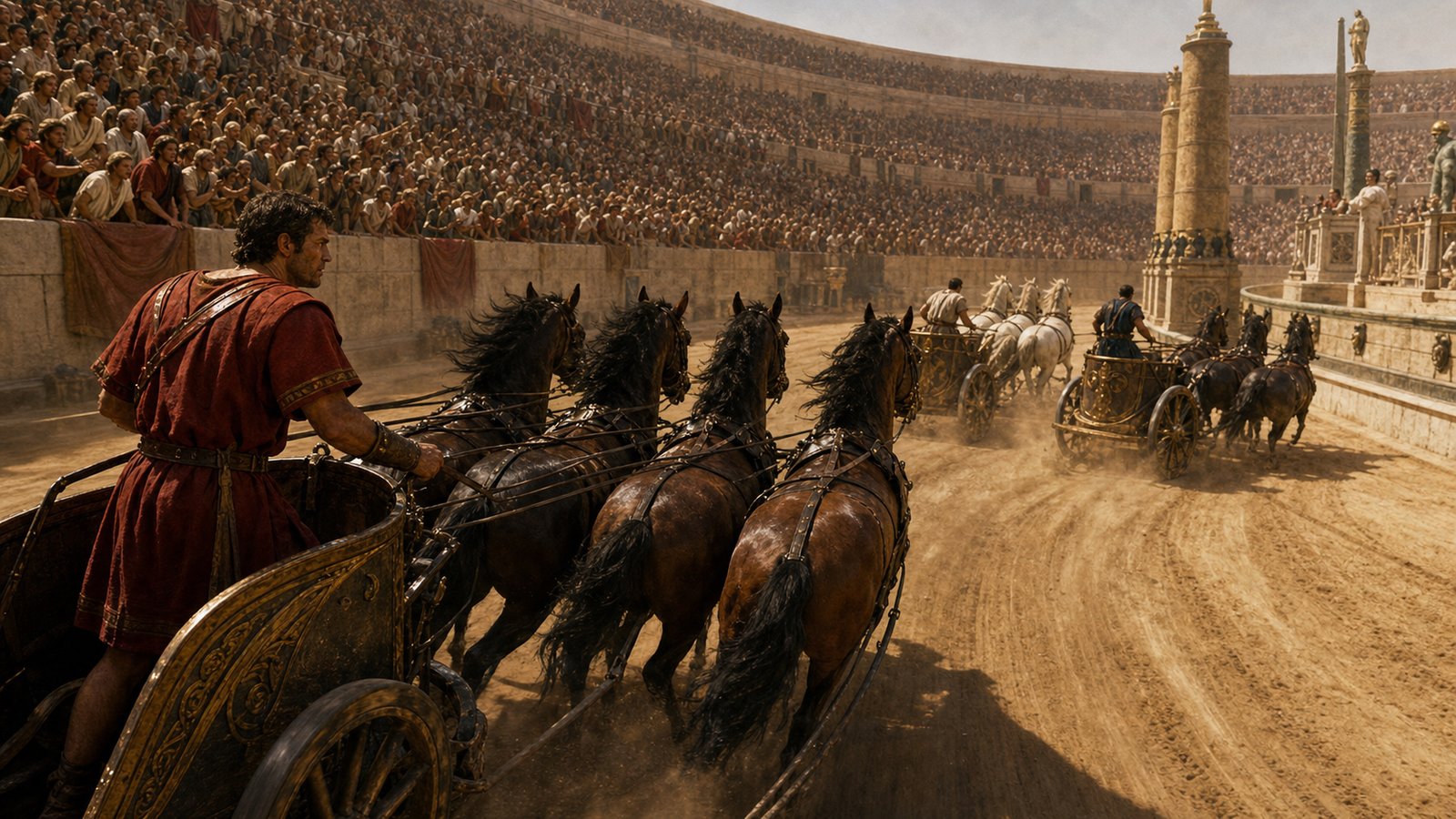
Diocles’ name dominates his monument, but no charioteer raced alone. Owners supplied horses, grooms prepared them, trainers built teams and faction staff moved animals and equipment through a demanding calendar. A quadriga required four horses to accelerate together, tolerate the crowd and respond to pressure through reins running back to one driver.
Star culture can hide this labour. The driver received the public roar and the inscription, while the organization made repeated starts possible. Diocles’ movement from Whites to Greens to Reds also means that his statistical career crossed several institutional settings. His longevity depended on adapting to new stables and preserving his body through more than four thousand starts.
The factions gave spectators a stable allegiance while individual drivers came and went. That structure resembles other Roman practices in which personal distinction operated inside a durable group. Even a quiet pastime such as the encirclement game latrunculi rewarded reading position rather than admiring one piece. In the circus, Diocles was the most visible piece in a much larger arrangement.
Retirement was part of the achievement
Diocles retired at forty-two. That age matters because racing careers could end through injury, declining reactions or a fatal crash long before a driver chose a final season. Twenty-four years in the circus transformed survival into evidence of skill. The inscription does not record a glorious death; it records that he stopped.
His monument at Praeneste was dedicated by fellow drivers and admirers. They did not need to invent a mythic ancestry or compare him to a god. Starts, wins and winnings carried the argument. A numerical memorial suited a professional whose excellence had been witnessed repeatedly by crowds and measured against purses and rivals.
The career also complicates simple pictures of Roman status. Charioteers could occupy a socially disreputable profession while becoming rich and famous. Public enthusiasm did not erase elite contempt, yet contempt did not prevent the crowd from recognizing expertise. Diocles lived in that contradiction: celebrated through a detailed monument because he mastered a spectacle some respectable Romans claimed to view from above.
The record preserves a way of watching
Diocles’ totals are not only facts about one exceptional athlete. They reveal the categories that mattered to his audience: which faction he represented, how many horses he drove, how large the prize was, where he sat during the race and when he made his move. The inscription is a fossil of spectatorship.
That is why the famous fortune should not swallow the story. Money demonstrates the scale of Roman racing, but the tactical entries explain the fascination. A man from Lusitania reached Rome, changed factions, survived thousands of violent starts and became known for delaying his challenge. His audience did not merely remember that he won. It remembered how.
Across 1,462 victories, no single finish could define Diocles. The monument solved that problem by making accumulation itself dramatic. Four thousand two hundred and fifty-seven starts became proof of endurance; twenty-four seasons became proof of survival; a preference for holding back became proof that patience could be visible even at full speed.
Sources
Corpus Inscriptionum Latinarum VI 10048
Fik Meijer, Chariot Racing in the Roman Empire
Spectacles in the Roman World Sourcebook, “Famous Charioteers”