
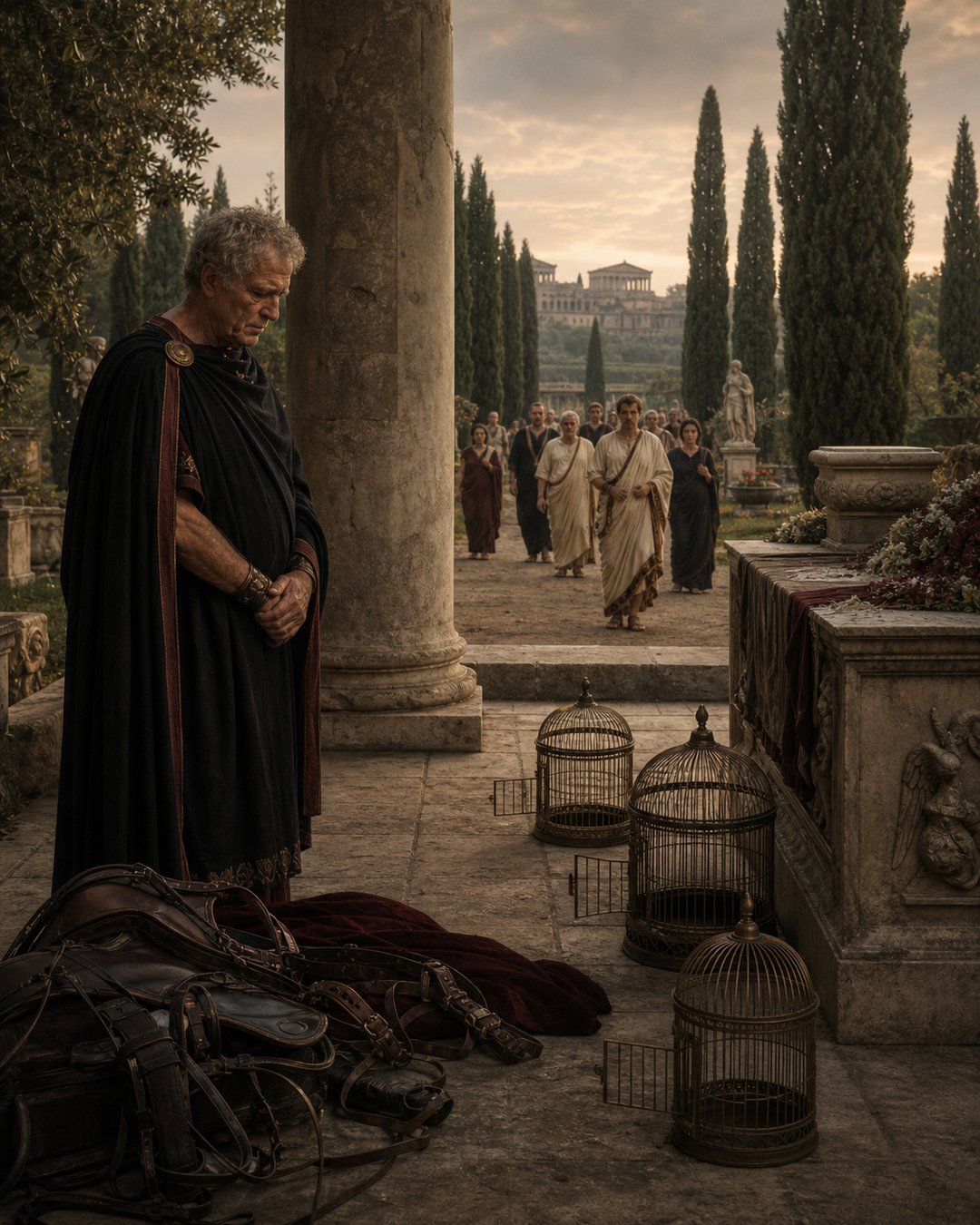
First came the ponies: some trained to harness, others still unbroken. Then the dogs, large and small. Nightingales, parrots and blackbirds followed. According to Pliny the Younger, Marcus Aquilius Regulus had every one of these animals killed at the funeral pyre of his only son.
Pliny did not offer the inventory to prove that Regulus loved deeply. He used it to make the opposite accusation. The slaughter, he told Attius Clemens, was not grief but a display of grief. That verdict belongs to a hostile witness, and the hostility matters. Pliny’s short letter is less a transparent window into a bereaved household than a carefully sharpened portrait of a man whose every gesture could be read as performance.
The result is a strange social scene. Regulus loses a son, destroys the boy’s animals, withdraws to vast gardens across the Tiber and receives crowds of callers. Pliny insists those visitors detest him. They come anyway. The pyre consumes possessions, while reputation turns condolence into an obligation.
An Inheritance Had Already Rearranged Father and Son
Pliny begins before the death. He describes the son as quick-witted and capable of honorable choices if he did not follow his father’s example. The compliment is conditional and the insult is aimed squarely at Regulus. Even the dead youth becomes material in Pliny’s judgment of the living parent.
The legal step at the center of their relationship was emancipation from paternal control. Pliny says Regulus released the boy so that he could succeed to his mother’s property. In this account, affection and inheritance were already entangled before bereavement entered the story. The son’s legal position changed because property from his maternal side required it.
Pliny adds a cruel parenthesis: people who knew Regulus’s character called the emancipation a release from slavery. The phrase does not establish how the son himself understood the act. It tells us how Pliny says the father’s reputation shaped other people’s language. A formal change that enabled inheritance also became an opportunity for a social verdict.
After emancipation, Regulus tried to win the boy’s affection through indulgence. Pliny labels that indulgence both pretended and disgraceful. Again, the letter denies its subject a neutral motive. Legal freedom becomes calculation; generosity becomes strategy; later grief becomes theater. The sequence is built to prevent any sympathetic interpretation from settling.
This makes the letter very different from the legal movement of heirs through Roman adoption. There the mechanism is a formal transfer into a family line. Here Pliny describes emancipation as one move in a damaged relationship, opening access to a maternal estate while changing how father and son dealt with each other.
The Pyre Turned a Boy’s Animals into an Audience’s Evidence
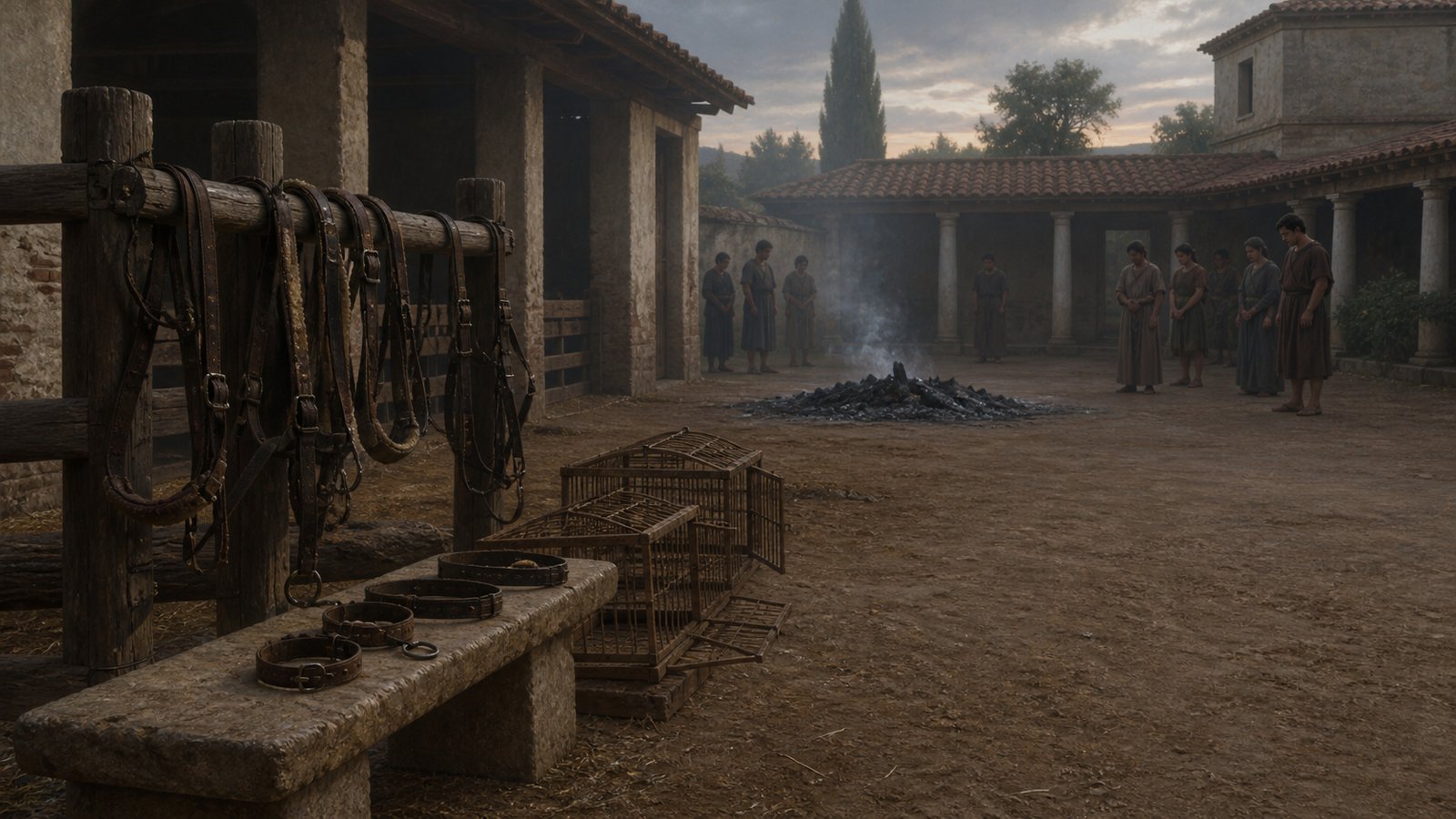
When the son died, Pliny says Regulus became frantic with grief. The animal list then slows the narrative. Ponies appear in two conditions, harnessed and unbroken. Dogs are divided by size. The birds are named species by species. The precision makes the loss physical and countable without giving an exact total.
These were not generic sacrificial animals in Pliny’s telling. They belonged to the boy. Their variety suggests the different spaces of an elite household: stable, kennel and cages or aviaries. A reader can move through those spaces as the list grows, then watch every category converge at one pyre.
Pliny’s accusation depends on excess made visible. He does not deny that Regulus was distraught. He writes that the man was mad with grief, then distinguishes emotion from the act chosen to represent it. The slaughter becomes “parade” because it converts the dead son’s living possessions into a spectacle no visitor could miss.
The letter does not tell us who performed the killings, how the animals reached the funeral or whether the pyre received them at the same moment. Those gaps should remain gaps. What survives is Pliny’s compact claim that all were slaughtered there and his immediate interpretation of why.
Another Roman animal funeral produced a sharply different public story. In the procession for a talking raven, the crowd honored an animal whose greetings had made it famous. Regulus’s animals had no such public identity. Pliny presents them as the dead boy’s property turned into evidence about the father.
People Who Hated Regulus Still Crossed the Tiber
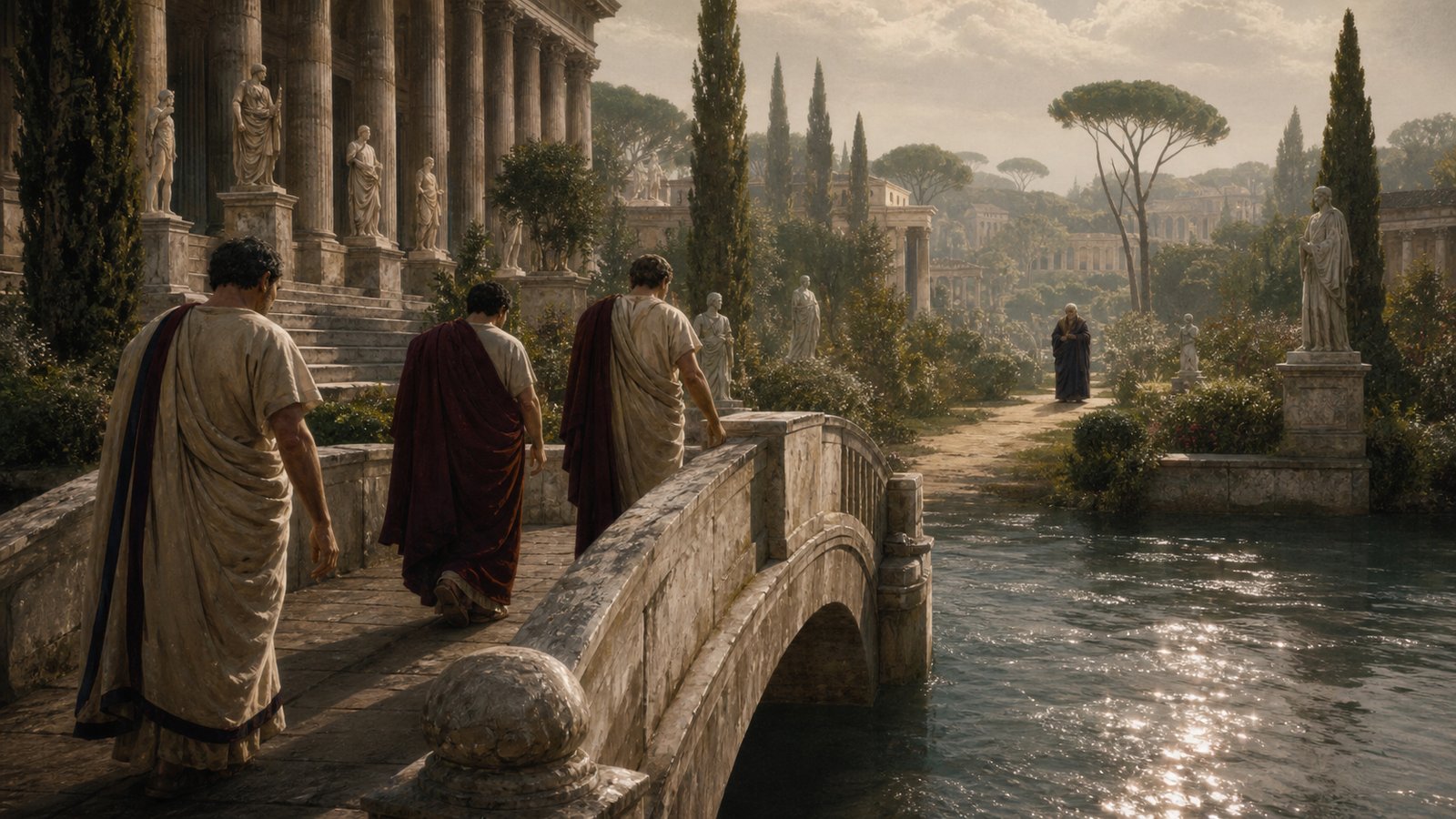
The response did not end at the pyre. Pliny says people flocked to call on Regulus in shoals. He then supplies the contradiction that drives the second half of the letter: everyone detested and hated the man, yet they visited as though they admired and loved him.
Pliny explains the behavior as imitation. By paying court to Regulus, the visitors copied the example Regulus himself had set. The sentence points to a world of strategic attendance in which dislike did not cancel usefulness. One could condemn the mourner and still decide that absence carried a cost.
Location increased that cost. Regulus remained in his gardens across the Tiber. Pliny describes an immense area covered with colossal porticoes and a riverbank crowded with the owner’s statues. The mourner did not appear in a small, private room. Callers entered a landscape already built to project scale and presence.
Pliny sharpens the architecture with another contradiction. Regulus was, in his words, the meanest of misers, yet he scattered money freely. His name was a byword, yet he continually proclaimed his own glory. Porticoes and statues become architectural versions of the funeral gesture: expenditure does not redeem character because Pliny reads the spending as self-advertisement.
The season made each visit more irritating. Pliny calls it the most unhealthy time of year and complains that Regulus disrupted everybody’s arrangements. A condolence call therefore required more than the correct expression of sorrow. It demanded time, travel across the river and presence at a suburban estate when callers preferred to be elsewhere.
Pliny Made Inconvenience the Measure of the Performance
Regulus, Pliny says, believed it eased his grief to inconvenience everyone. The line completes the movement from animals to people. First, the son’s possessions were consumed at the pyre. Then visitors surrendered their plans. In both cases, loss became legible through what others had to give up.
That is Pliny’s construction, not an unfiltered account of Regulus’s mind. The author claims to know how the mourner used inconvenience, just as he claims to know that indulgence toward the son had been false. His certainty is part of the letter’s rhetoric. Attius Clemens is invited to recognize a familiar villain whose actions require no charitable reading.
The closing prediction pushes that method into the future. Regulus said he wished to marry. Pliny forecast that the old mourner would soon take a wife, too quickly for bereavement and too late for his age. He did not trust the statement because Regulus made it. He trusted only his belief that Regulus would do what he ought not to do.
By ending on remarriage, Pliny refuses to let the funeral settle into dignified memory. The son’s death, the animal slaughter, the crowds and the marriage rumor become episodes in one continuing character attack. Even an event Pliny calls undeserved cannot suspend his prosecution of the father.
The letter’s most valuable evidence therefore lies in its friction. It records legal emancipation for an inheritance, a startling list of animals, gardens across the Tiber, giant porticoes, riverbank statues, seasonal visits and marriage talk. At the same time, every detail arrives through an author determined to make Regulus contemptible.
The pyre is unforgettable because the list is so exact. Yet Pliny’s larger mechanism is social. Ponies, dogs and birds could be destroyed once. A reputation kept producing consequences afterward, drawing hostile callers into Regulus’s gardens and turning their attendance into another part of the display.
Sources
Pliny the Younger, Letters 4.2.
J. B. Firth’s translation of Pliny, Book IV.