
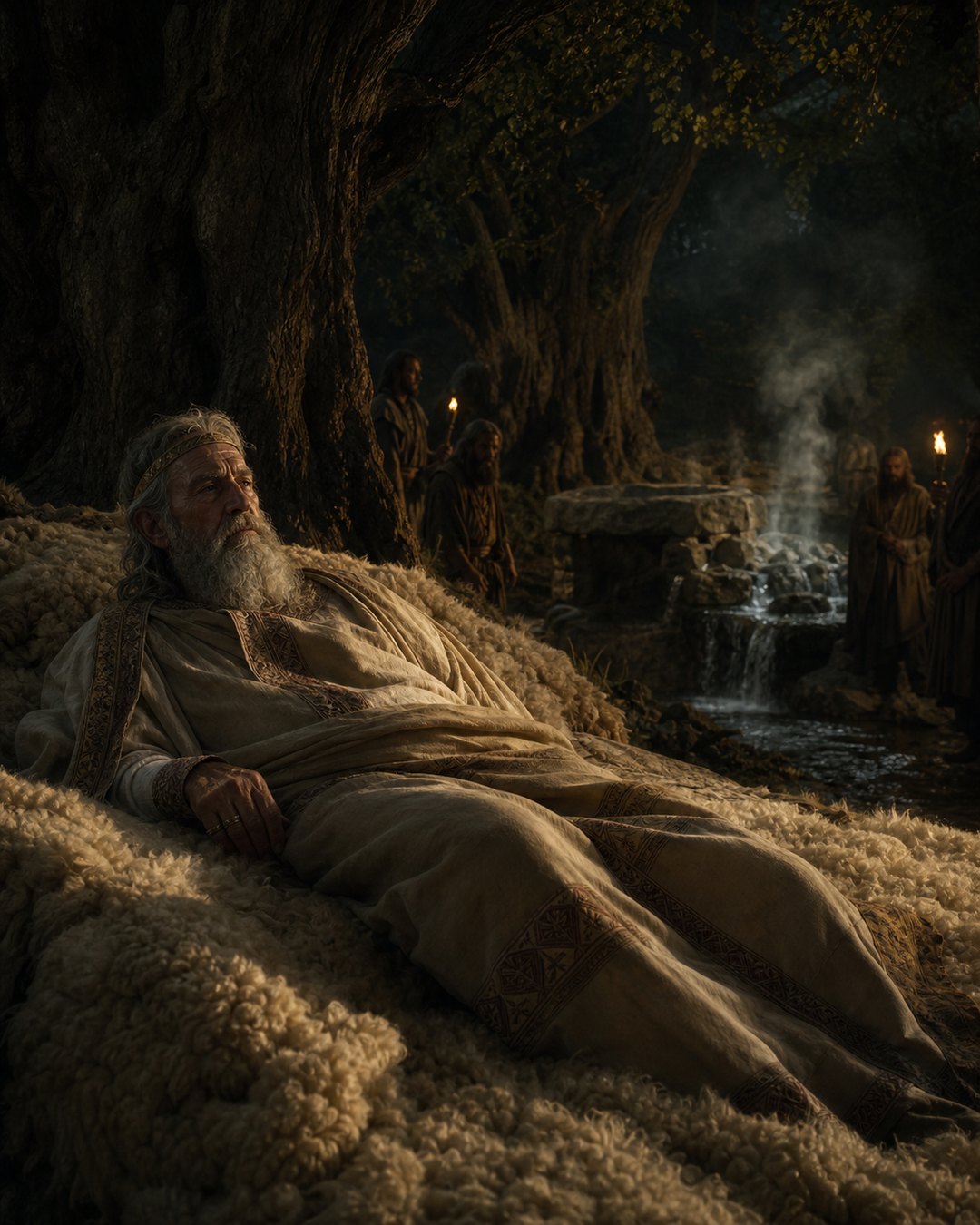
Latinus did not sit upright on a throne while an official read the future. In Virgil’s story, the king slaughtered one hundred woolly sheep, spread their skins beneath him and lay down in a sacred grove. The answer would come only after waking authority had yielded to ritual sleep.
Below high Albunea, a fountain echoed among the trees and dangerous vapour breathed from the darkness. This was the oracle of Faunus, Latinus’s divine father. People came from Italy and the Oenotrian lands with doubts they could not settle elsewhere.
The fleeces made the consultation physical. Sacrifice had a cost, the king’s body touched what the rite had produced, and night enclosed the place before a voice emerged from the deep wood. Virgil’s prophecy about Lavinia’s marriage therefore begins as a carefully staged surrender of ordinary control.
A family decision had already become a public danger
Latinus sought Faunus after signs gathered around Lavinia. The question looked domestic: whom should the king’s daughter marry? Yet a royal marriage could redirect alliances, succession and violence. A choice within the household had consequences far beyond it.
The poem had already made certainty difficult. Portents pointed toward greatness for Lavinia while also threatening war for her people. Latinus could not simply choose the reassuring half. The same signs attached brilliance and destruction to one future.
That tension sent him out of the palace. The oracle lay in a landscape with its own authority, among renowned groves and beside a sacred fountain. A pig and a prayer could open a Roman sacred grove for necessary work; Virgil’s Albunea instead enclosed a king until the grove itself spoke.
The move mattered. Court advisers could be suspected of interest, fear or flattery. A paternal divine voice from an established oracle could stand above competing human claims. Latinus needed more than advice. He needed an answer capable of bearing political weight.
The grove organized what sleep could reveal
Virgil pauses to explain the usual operation before describing the king’s night. An officiant brought offerings, lay on fleeces from sacrificed sheep and found sleep in the silence. In that state he saw many forms moving around him and heard different voices.
The sleeper could speak with gods and communicate with Acheron in the depths of Avernus. The oracle joined upper and lower worlds without making the visitor physically descend into either. Sleep changed what could be perceived while the grove controlled where that change occurred.
This was not an idle nap under convenient trees. Place, offering, bodily position and darkness formed a sequence. Remove the sacred location and the dream might be merely private. Remove the sacrifice and the fleeces would lose their ritual origin. Remove sleep and the voices would have no sanctioned opening.
Virgil’s language leaves the experience crowded rather than tidy. Ghostly shapes flit, voices multiply and the boundaries of ordinary conversation loosen. The rite did not promise a calm administrative interview. It brought the consulter into a condition where several kinds of presence could become perceptible.
One hundred sheep made the king a participant
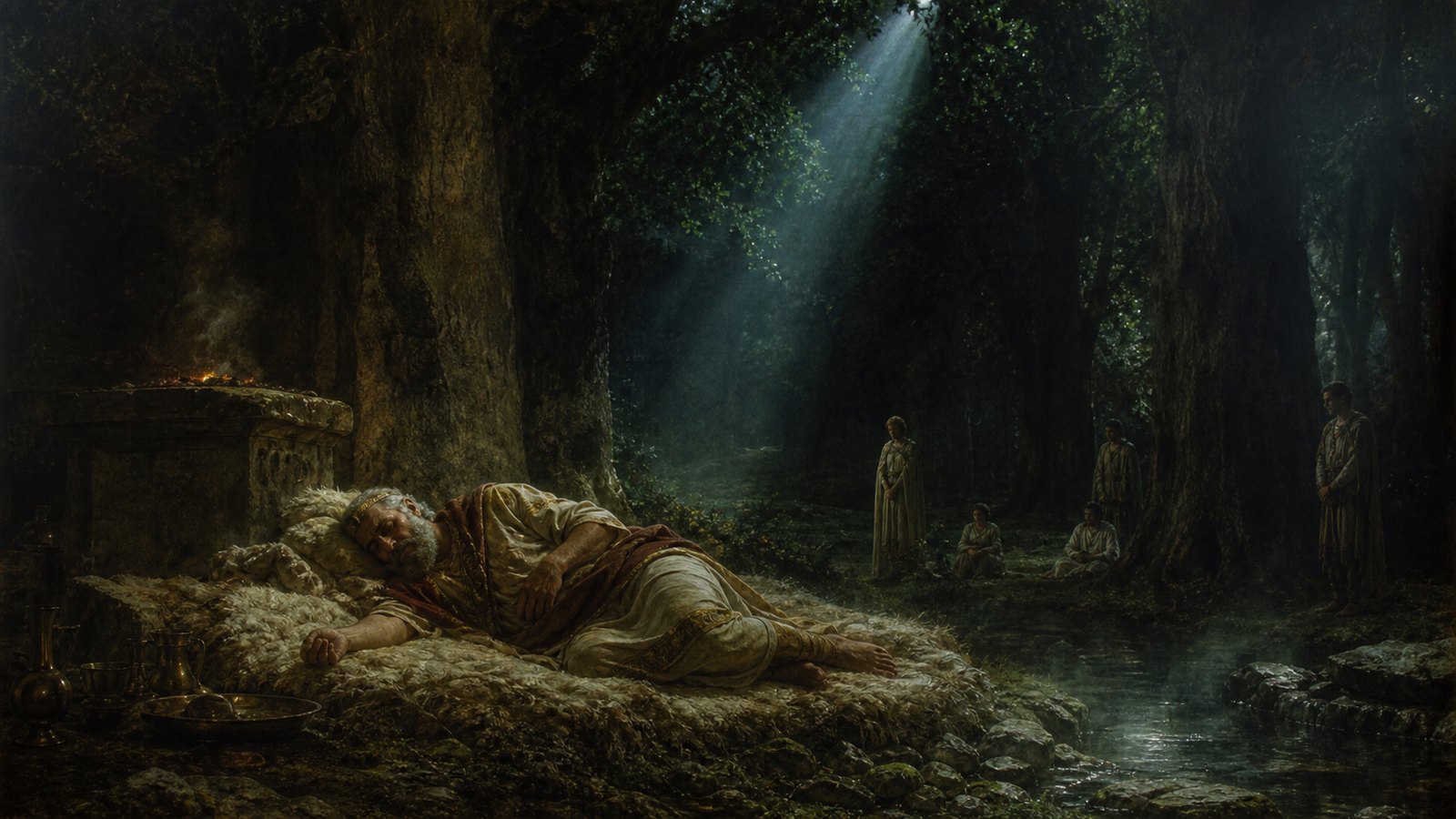
Latinus followed the pattern at royal scale. He sacrificed one hundred sheep according to the rite. The number made the act conspicuous, but Virgil does not let quantity replace bodily participation. The king himself lay on their skins and woolly fleeces.
The image is deliberately heavy. A hundred animals imply repeated offering and an expanse of wool, yet the desired result was a single sleeper waiting in stillness. Public resources and royal command prepared a condition in which Latinus could do nothing but receive.
The fleece also joined altar and bed. It was no neutral mattress brought from the palace. Its material had crossed through sacrifice before supporting the king. Contact placed his body inside the rite rather than allowing him to commission divination at a distance.
The ritual surface also fixed the order of events. The animals were not merely promised and the answer was not sought before the offering was complete. Their wool supported the phase that followed sacrifice. Latinus moved from acting king to recumbent listener on material produced by his own compliance with the rite. Virgil could have sent a priest to report Faunus’s words, but instead he placed the ruler where the voices were expected to arrive.
The number one hundred magnifies that transition without changing its logic. Greater expenditure did not buy a waking audience or let Latinus dictate the form of the reply. Once the fleeces were spread, royal scale ended in the same vulnerable act required of any consulter there: close the eyes, remain through the silent night and wait for speech whose timing belonged to the grove.
At Delphi, a laurel-garlanded embassy carried an answer back to Rome. Latinus’s consultation compressed envoy and ruler into one person. He traveled to the source, performed the offering and became the sleeping recipient who would later spread the words.
The answer came from no visible speaker
The voice arrived suddenly from the deep wood. Virgil does not place Faunus in front of Latinus as a visible figure delivering a speech. The absence of a body suited the mechanism: the grove, darkness and sleep had already made ordinary location uncertain.
Its command was direct. Latinus should not seek a Latin marriage for Lavinia or trust the intended wedding. Foreigners would come as kin, and their descendants would carry the Latin name to extraordinary reach.
The prophecy did not solve the story by making obedience easy. It created a line that existing expectations would resist. A local match was already imaginable; the foreign husband had not yet arrived at court. The oracle converted uncertainty about signs into a prohibition that would sharpen conflict when Trojans appeared.
Virgil writes with knowledge of Rome’s later power, so the prediction stretches from a night in a grove toward peoples beneath the circling sun. Within the scene, however, Latinus receives no map of the coming war. He gets one decisive rule about marriage and an immense promise attached to strangers.
A private night answer entered public circulation
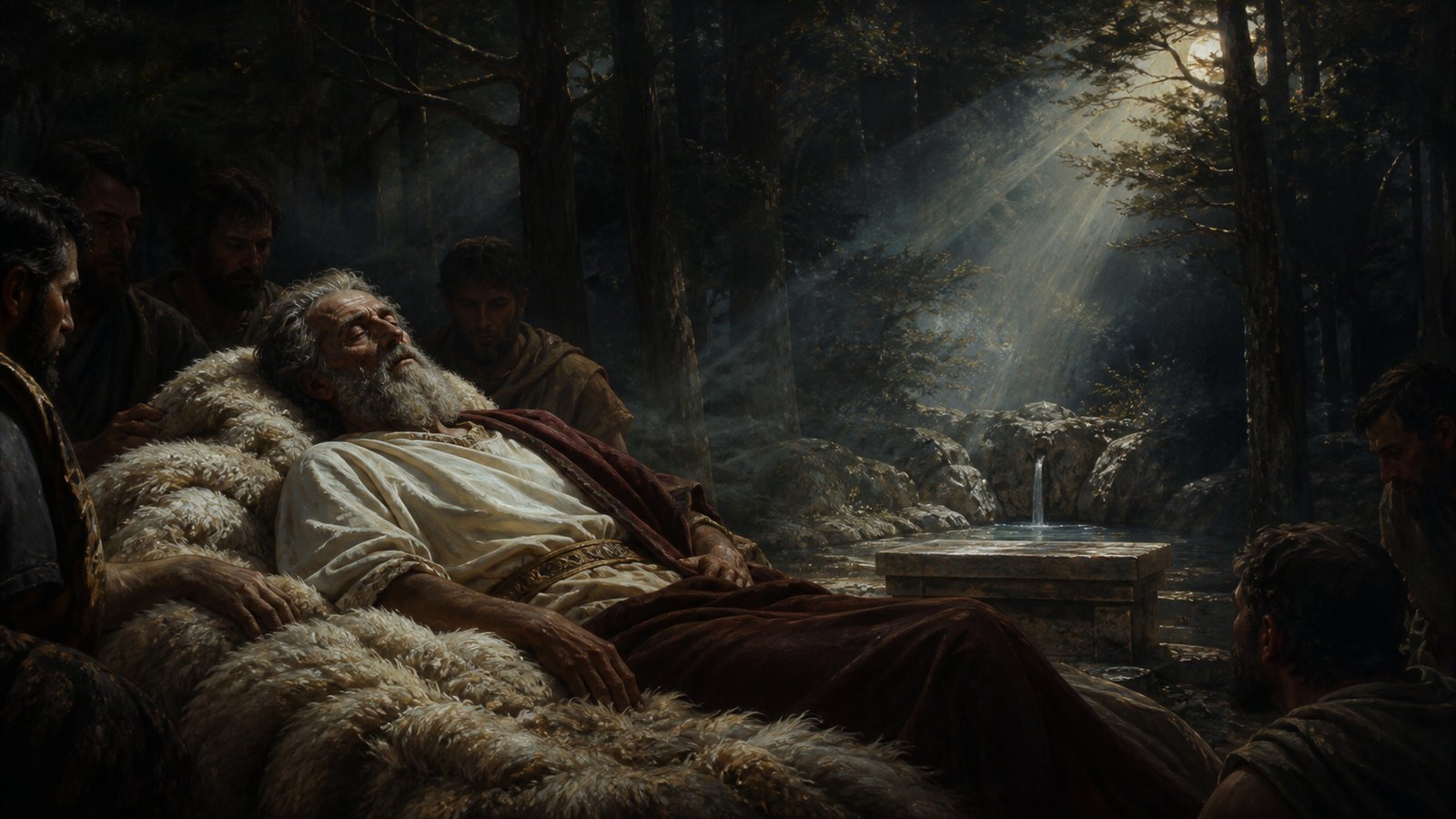
Latinus did not keep the response inside the grove. Virgil says he failed to conceal it, and Rumour carried the warning through the Ausonian cities. The message moved faster than the people whose arrival would appear to fulfil it.
This final step turned incubation into policy. A dream or voice known only to the sleeper could remain a personal experience. Repetition gave it civic life. Subjects, rivals and prospective sons-in-law could now measure the king’s choices against a publicly known command.
The circulation also limited Latinus. Once the answer was abroad, choosing a local marriage would look like resistance to Faunus rather than ordinary dynastic preference. The king had sought authority outside the palace and then allowed that authority to return with him.
Virgil’s hundred fleeces thus sit at the hinge of epic history. They materialize the sacrifice that opened sleep, support the body that heard the voice and anchor a claim that traveled beyond the trees. The oracle did not begin when words sounded from the wood. It began when Latinus turned a royal question into a ritual night and placed himself on the remains of the offering.
Sources
Virgil, Aeneid, 7.81–106.