
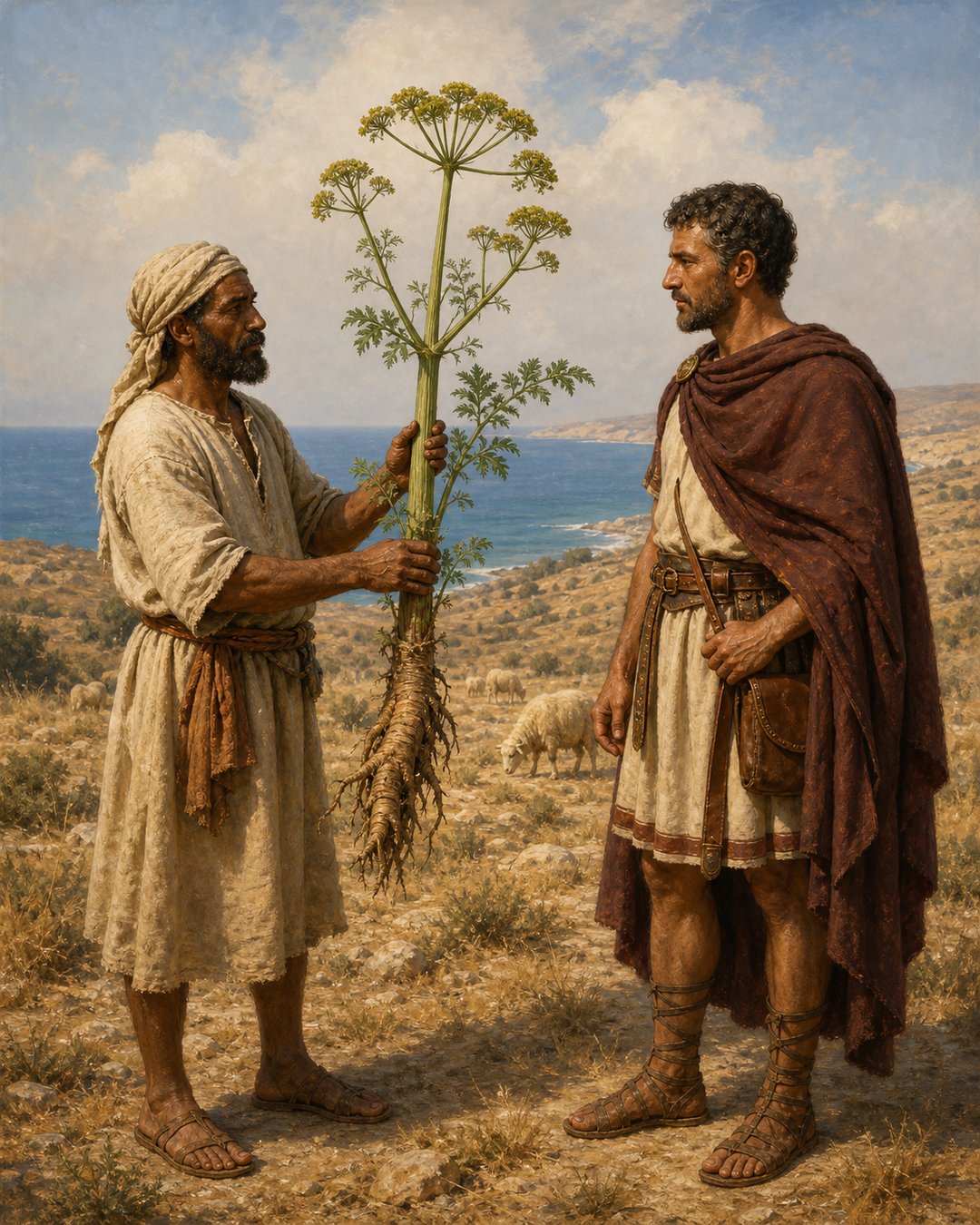
A single green stalk travelled from Cyrenaica toward Nero’s court. Pliny the Elder does not describe a ceremonial garden or a scientific expedition around it. He presents the plant as the last one found there within living memory, an object exceptional enough to be sent to the emperor.
The stalk was silphium, the North African source of a juice Romans called laser. Earlier generations had weighed that product in large public quantities. In 93 BCE the government imported thirty pounds. At the opening of the civil war, Julius Caesar drew 1,500 pounds from the treasury alongside gold and silver.
Those figures make the gift to Nero more unsettling. A commodity once stored by the state had become a botanical rarity. Pliny’s explanation does not begin with mysterious climate or an unknowable disease. It begins with pasture leases and a choice about which use of the land paid best.
Pasture Profit Ate the Cyrenaican Supply
Pliny locates silphium’s original range in Cyrenaica, on the North African coast. He calls it a remarkably important plant. Its juice belonged both to ordinary consumption and to medicine, and traders valued it highly enough to sell it against the weight of silver denarii.
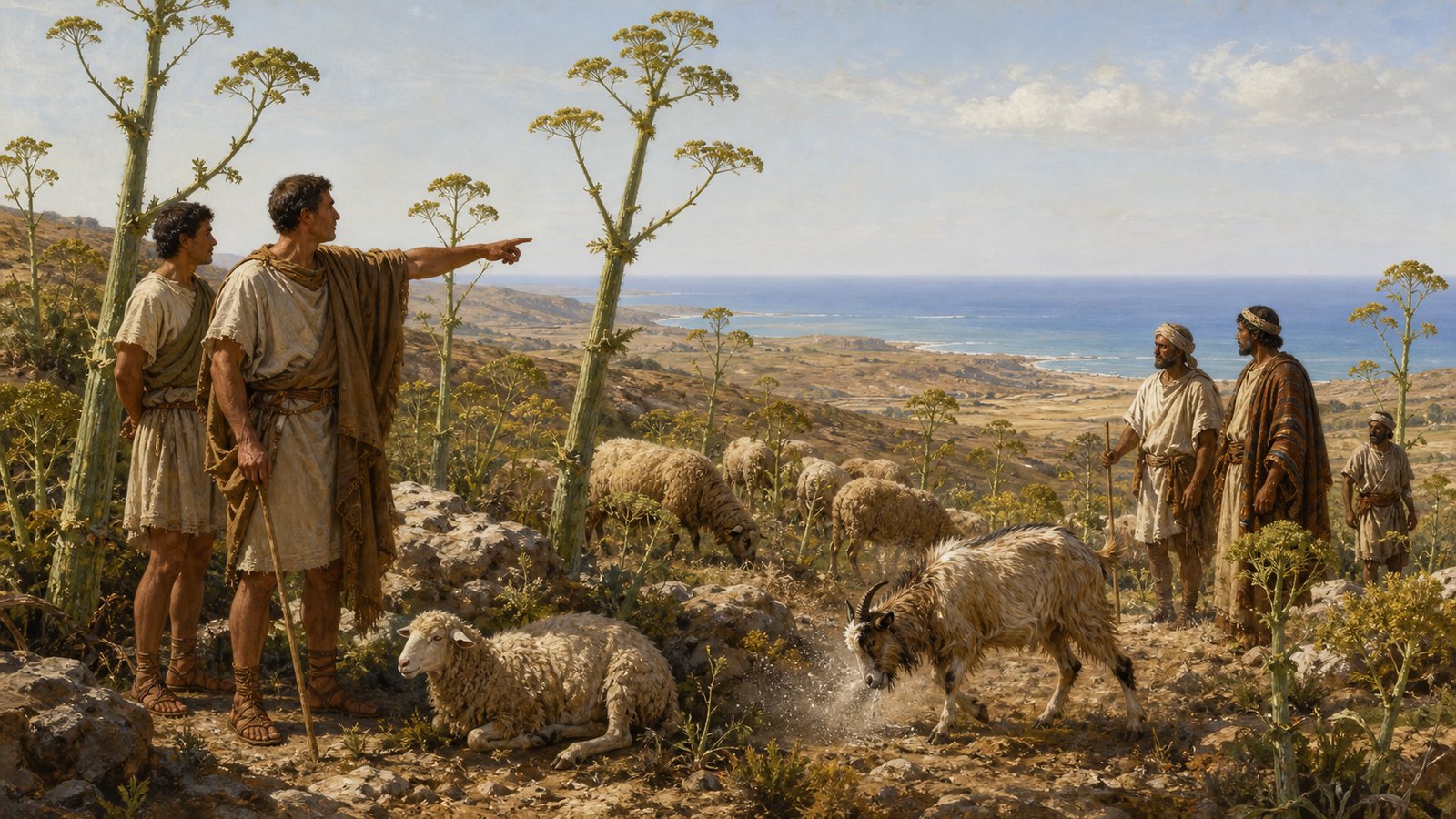
Yet value did not protect the plant. Pliny says the tax-farmers who leased grazing rights stripped the country of it by putting sheep onto the pasture. Their calculation was direct: the flock produced more immediate profit. The living source of laser competed with another revenue stream on the same ground and lost.
The description is not a modern ecological survey, and it cannot prove that every last specimen vanished forever. It does record a local commercial disappearance. By Pliny’s day, he says, silphium had not been found in Cyrenaica for years. Only one stalk had appeared within remembered time, and that was the stalk sent to Nero.
This was a different market failure from Palmyra’s attempt to carve transport charges into a public tariff. A tariff could make competing claims legible. Cyrene’s pasture choice converted the productive plant itself into short-term grazing income, leaving less to regulate or ship later.
Sheep and Goats Became Field Instruments
Pliny preserves an animal test for finding young growth. If a flock encountered a promising shoot, a sheep supposedly went to sleep after eating it and a goat began to sneeze. The reactions belong to ancient natural history rather than a controlled experiment, but they show how closely plant knowledge was tied to grazing behavior.
Silphium and livestock were not always enemies. Pliny says cattle had once been pastured on the plant deliberately. It first purged them, then made them grow fat and gave their meat a taste he considered extraordinarily agreeable. The same biological response that helped make the range valuable could encourage use intense enough to erase the source.
People ate parts of the plant too. After it shed its leaves, they cooked the stalk by boiling or roasting it. Pliny says this produced a purgative effect for the first six weeks. Silphium was therefore not one product but a cluster of uses: pasture, meat improvement, food, medicine and extracted juice.
That cluster matters because the familiar story of a treasured spice becoming rare can sound too simple. The pressure did not come from a single dining fashion. Different users wanted different returns from root, stalk, resin and grazing land. What disappeared was the system capable of supplying all of them from Cyrenaica.
Root and Stalk Produced Unequal Grades
Pliny describes a thick root with a dark rind, a stalk resembling fennel and leaves close to parsley. Its seed looked leaf-like, while the actual leaves fell in spring. These comparisons are useful without pretending they give a modern species diagnosis. They tell us what features an ancient observer used to organize the plant.
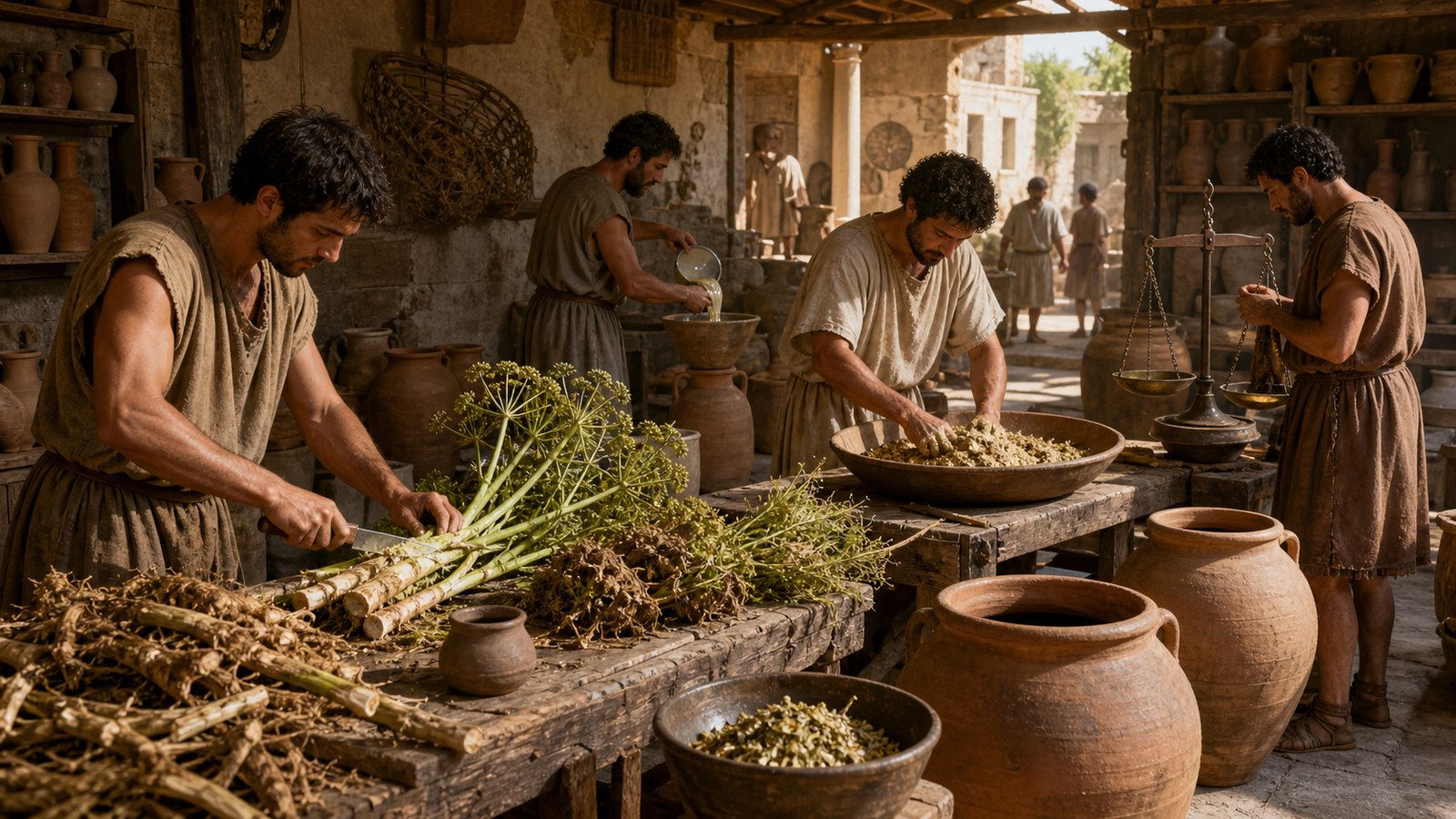
The valuable juice came from two places. Material drawn from the root was called rizias. Juice from the stalk was caulias, which Pliny regarded as inferior and more likely to spoil. Extraction already divided the harvest into grades before it reached any distant buyer.
Processors put the juice into vessels with bran and shook it until it reached the desired condition. Pliny’s discussion moves from the landscape to the container because a resin economy depended on transformation. A plant in the field had to become a stable, graded substance that could survive handling, pricing and travel.
The sequence resembles Cato’s effort to make one cultivated plant carry several household remedies, but silphium joined domestic use to long-distance trade. Knowledge of preparation did not remain beside the root. It had to travel with merchants, measures and judgments about quality.
Substitutes Kept the Name Moving East
Once Cyrenaican silphium disappeared from supply, the market did not stop asking for laser. Pliny says material came instead from Persia, Media and Armenia. It was abundant, but in his ranking it remained much inferior to the lost North African product.
Replacement created an opening for fraud. The eastern material could be mixed with gum, another plant product called sacopenium, or crushed beans. Buyers encountered a substance that still moved under the valuable name while its origin, grade and composition became harder to see.
Pliny therefore records ways to judge the resin, including its handling and response during preparation. The need for such tests grew as distance and substitution widened. Scarcity raised the value of authenticity at the same time that it made authenticity more difficult to establish.
This is where silphium belongs beside the contracts that financed pepper and ivory across long maritime routes. Both stories depend on commodities retaining an identity across distance. Silphium’s difference is that the best-known source had already dropped out, so the market carried comparison, memory and adulteration along with the resin.
Rome Remembered Abundance in Treasury Weights
Pliny fixes the earlier scale with two inventories. The first is the government import of thirty pounds in the consulship of Gaius Valerius and Marcus Herennius, dated to 93 BCE. The second is much larger: Caesar’s removal of 1,500 pounds from the public treasury at the start of civil war.
Placing laser beside gold and silver did not make it coin. It did show that Rome treated the stock as concentrated value worth counting in a crisis. Resin could sit in public storage until political violence turned inventories into resources.
Against those weights, the lone stalk sent to Nero is almost weightless. It does not refill a treasury or restore a trade. Its value lies in being the exception that proves how thoroughly normal supply had failed. The emperor received a specimen where Caesar’s generation had handled hundreds of times more finished material.
Pliny also reports a much older origin story from Greek authorities. A pitch-coloured rain supposedly soaked the ground seven years before Cyrene’s foundation, and silphium then spread across five hundred miles of Africa. He even calls it an obstinate weed that escaped cultivation into the desert. The contrast is deliberate even if the prodigy is not literal history: a plant remembered as explosively abundant had become nearly impossible to find in its famous home.
The account has often been flattened into a tale about Rome consuming a miracle plant to extinction. Pliny’s own mechanism is sharper and less flattering. Leaseholders did not need to hate silphium. They only needed a faster return from sheep. The resin’s high price could coexist with incentives that destroyed the range producing it.
That is why the story moves through so many scales. A goat sneezes over a shoot. A worker separates root juice from stalk juice. A merchant stretches a shipment with beans. A government weighs thirty pounds. Caesar opens a treasury containing 1,500. Nero receives one stalk.
Each scene measures the same reversal. Silphium passed from plant to food, drug, resin, traded grade and public asset, but the chain could not guarantee another plant would grow. By the time the imperial gift arrived, Rome still remembered the product’s value more clearly than Cyrenaica could reproduce its supply.
Sources
Pliny the Elder, Natural History 19.15.