
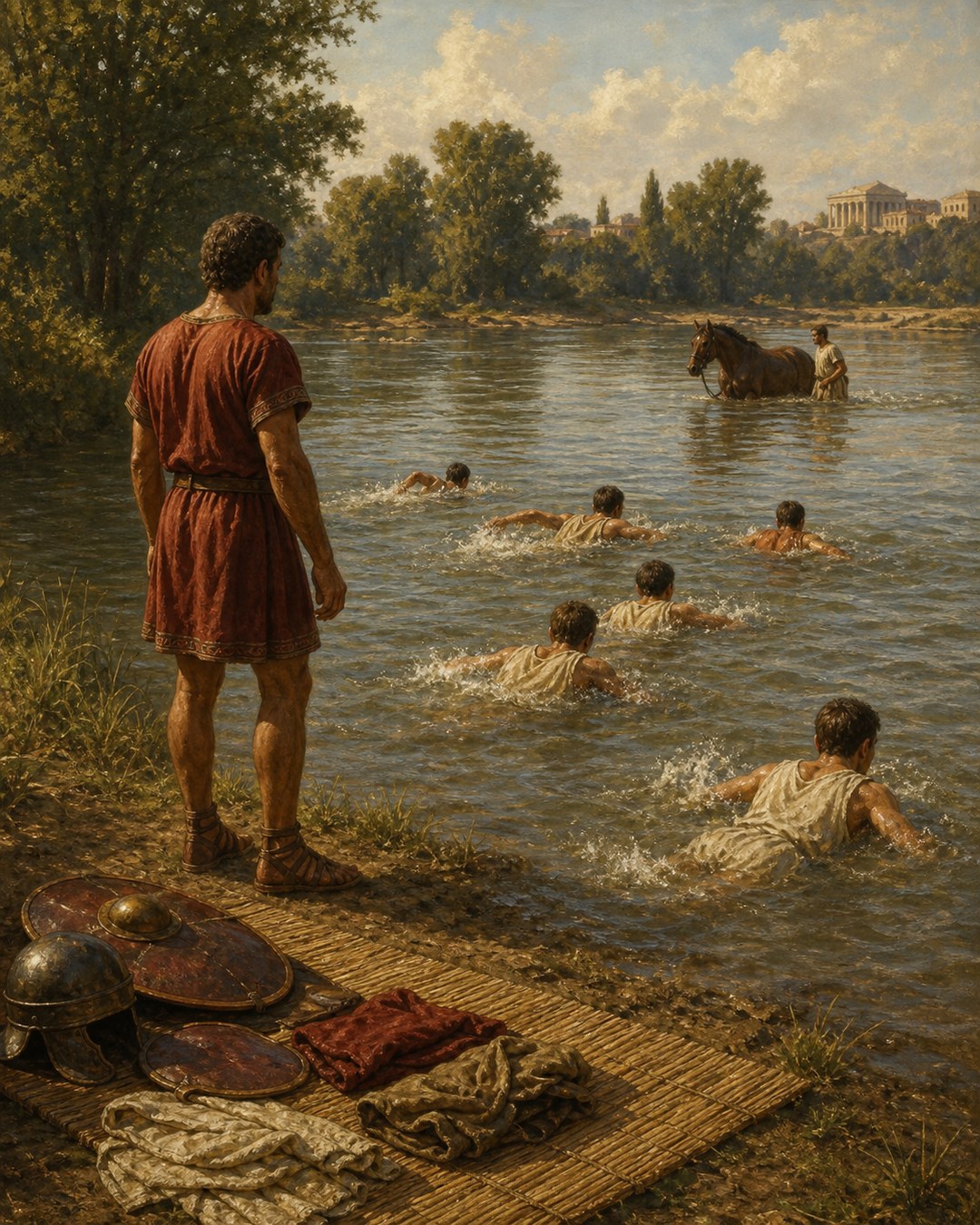
A Roman recruit could be strong on a road, steady behind a shield and still become helpless at the edge of a swollen river. Vegetius treated that weakness seriously enough to give swimming its own chapter. The old requirement, he wrote, applied to recruits without exception.
The reason was not athletic display. An army could not count on finding a bridge whenever pursuit or retreat brought it to water. Rain or melting snow could push a river beyond its ordinary banks. A soldier entering that current faced the force of the water while an enemy might still be near.
Rome’s answer joined a familiar drill ground to a real river. The Campus Martius lay beside the Tiber. After exercise on land, troops could wash away dust and sweat, recover from the heat and practice the skill that might later decide whether movement continued or stopped. The river was not scenery beside the training field. It was part of the curriculum.
A Missing Bridge Changed the Meaning of Readiness
Vegetius began with a blunt limit on infrastructure: troops could not always cross rivers by bridges. That sentence matters because Roman military power is often remembered through things it built. Roads shortened marches, camps imposed order at the end of the day, and bridges carried men and baggage over water. Yet a campaign unfolded beyond the guarantee that each useful structure already existed.
A bridge might stand too far from the route. It might be damaged, defended or simply absent. Vegetius did not need to list every cause. His point was operational. When a commander needed to follow an enemy or escape one, the river did not wait for engineers to make the convenient answer available.
This is a different problem from the one explored in the history of Roman bridges and controlled crossings. A bridge concentrated movement at a prepared place. Swimming training prepared a soldier for the moment when movement had to leave that place behind.
The skill did not make every current safe. Vegetius never turned water into a harmless surface. Training instead removed total unfamiliarity. A recruit who had felt drag against his limbs, learned to keep his head clear and practiced moving toward a bank possessed choices that a non-swimmer did not.
Floodwater Could Arrive Before the Army Was Ready
The chapter adds weather to the danger. Snow could melt suddenly; heavy rain could make a river overflow. A familiar crossing measured in one season might become a wider, faster obstacle in another. Banks disappeared under water, depth changed, and the easy approach no longer led where memory expected.
Vegetius framed the resulting danger as double. The current threatened the body while the enemy threatened the formation. A failed crossing was therefore more than an individual accident. Men could bunch on one bank, separate in the water or emerge without the order needed to respond. Delay gave an opponent time to close, while panic made the water harder to read.
The treatise does not provide a modern swimming manual. It gives no named stroke, measured distance or timed standard. That absence sets a useful limit on reconstruction. We know the purpose and the breadth of the obligation, not the exact lesson plan shouted from the bank.
What remains clear is the mechanism: exposure before emergency. The first experience of moving through deep water should happen during controlled training, not in a flooded channel during pursuit. Rome’s military system repeatedly tried to turn uncertain field conditions into habits practiced in advance.
The Campus Martius Joined Heat, Dust and Water
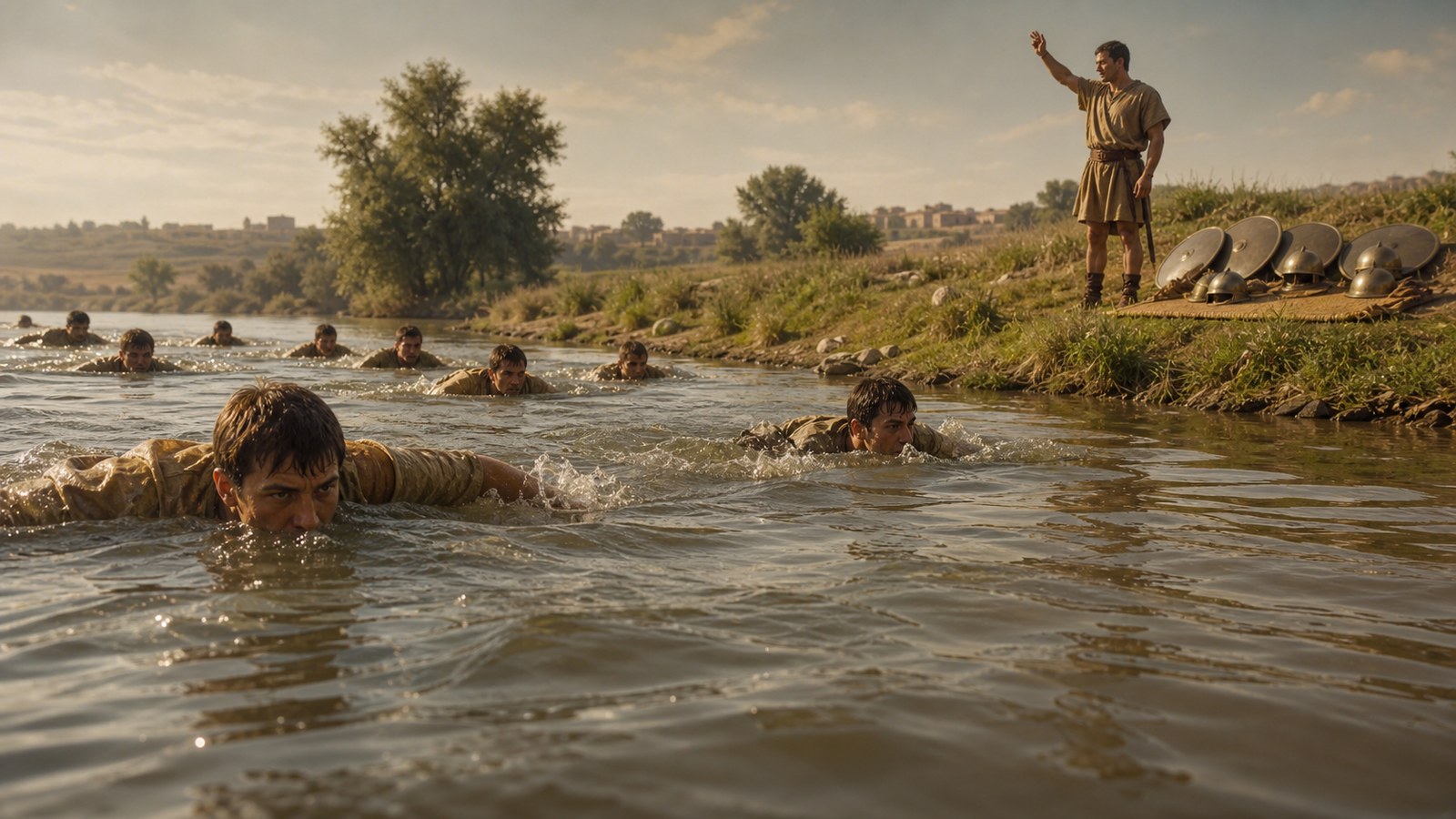
The geography of the exercise made the requirement practical. The Campus Martius touched the Tiber. Recruits already completing exertion on land did not need a separate expedition to find water. The river waited beside the field where running, weapon drill and other physical work left them hot and coated with dust.
Vegetius presented entering the Tiber as both relief and instruction. Water washed sweat and grime from the body. It refreshed men after exercise. At the same time, repeated entry built competence. Recovery and training occupied the same interval rather than competing for separate hours.
That economy distinguishes the swimming chapter from a tale of elite bravery. Caesar’s escape from Alexandria, remembered in the episode in which he kept papers dry while swimming, was a crisis attached to one famous commander. Vegetius described an ordinary expectation imposed before a recruit had any famous crisis to survive.
The Campus Martius also supplied repetition in a real medium. A ditch could imitate a gap, and a weighted march could test endurance, but water changed around the body with every movement. Practice taught through pressure, cold, poor footing and the moment when feet left the bottom. Those physical facts could not be learned from an order read aloud.
Horses and Followers Had to Reach the Other Bank Too
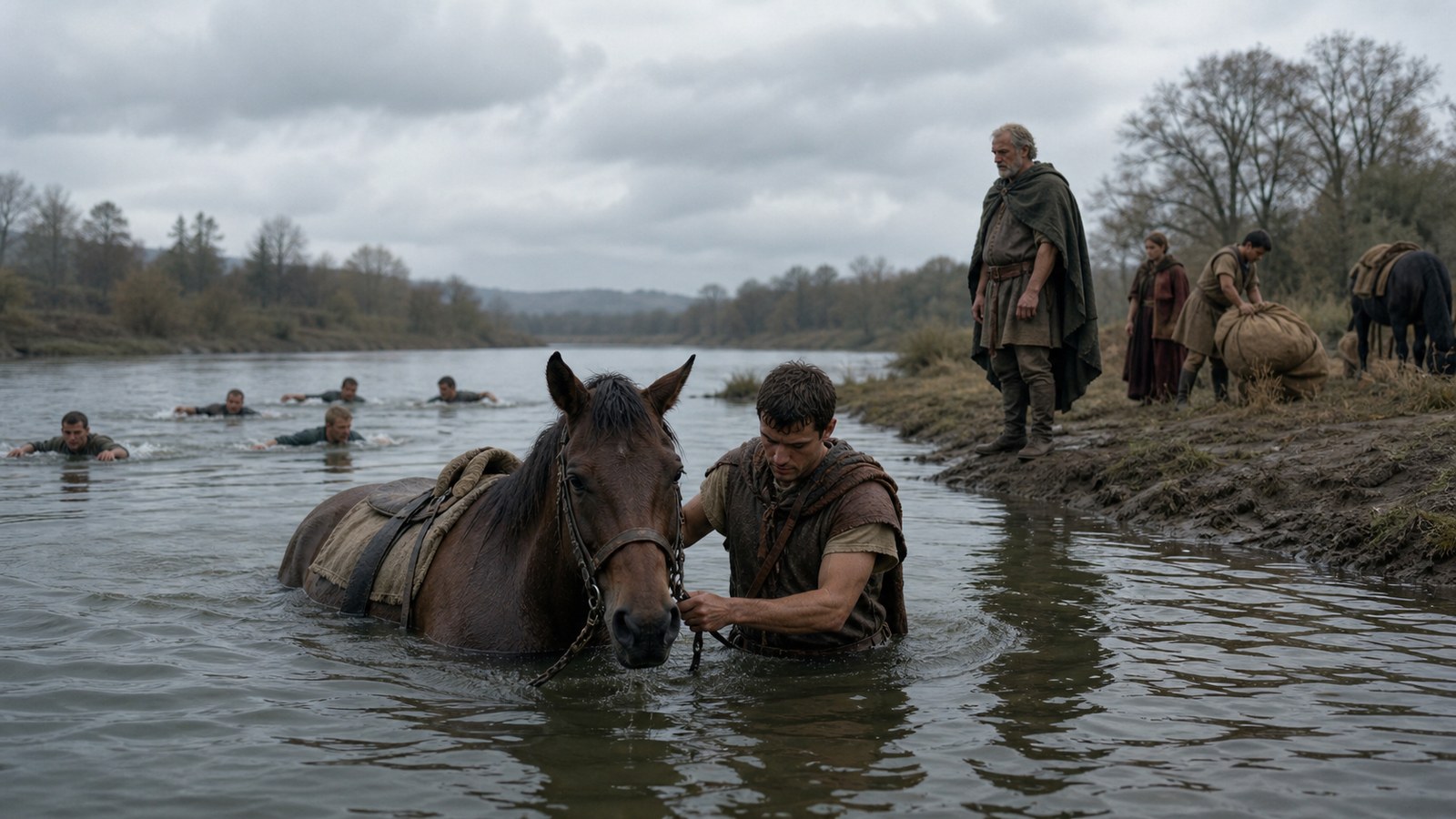
An army was not only a file of infantry. Vegetius extended river practice to cavalry, horses, servants and camp followers. That expansion reveals why an isolated group of excellent swimmers could not solve the whole crossing problem. The moving community had to preserve enough of itself to function after reaching the far side.
A horse introduced weight, fear, tack and a powerful body responding to current. A rider or handler needed to manage the animal without treating it like a piece of baggage. The chapter does not promise a neat parade through water. It recognizes that mounted troops required their own familiarity with the obstacle.
Followers mattered for the same reason. They carried out work on which the marching force depended. Leaving them unable to cross would divide the army’s fighting edge from the people and labor that sustained movement. Vegetius’s broad list turns swimming from a private accomplishment into a coordination problem.
The logic resembles the repeated construction of Roman marching camps. A camp was effective because many roles followed the same practiced sequence. A river crossing also demanded shared preparation. The slowest untrained part of the column could define the speed and vulnerability of everyone else.
Swimming Removed One Assumption from the March
Vegetius wrote about older practice from the vantage point of the later Roman world, so his chapter should not be read as a perfect timetable for every legion in every century. It is evidence for what a Roman military author considered a disciplined ideal and for the campaign problems that made that ideal intelligible.
Within that ideal, swimming belonged beside the more visible equipment of movement. The nailed soles discussed in the study of Roman marching footwear helped feet survive distance on land. Swimming knowledge addressed the point where a road, however good, ended at moving water.
The requirement did not abolish bridges or make engineering unnecessary. Nor did it justify plunging into every flood. It changed the starting assumption. A commander with trained swimmers, practiced horsemen and followers familiar with water could judge a crossing as a difficult option. Without them, the same river might be an absolute stop.
That distinction explains the insistence that no recruit be exempt. Select specialists could carry messages or scout a bank, but they could not move an entire formation through water by themselves. Broad competence reduced the number of bodies that became liabilities at the exact moment speed mattered most.
The image of dusty recruits entering the Tiber therefore holds more than a welcome wash at the end of drill. Heat and fatigue placed them in the river repeatedly, under conditions that could be supervised. Each practice took a little power away from the missing bridge. When rain raised the next river and the road vanished into it, Rome wanted the water to be dangerous—but not completely new.
Sources
Vegetius, Epitoma Rei Militaris 1.10.