
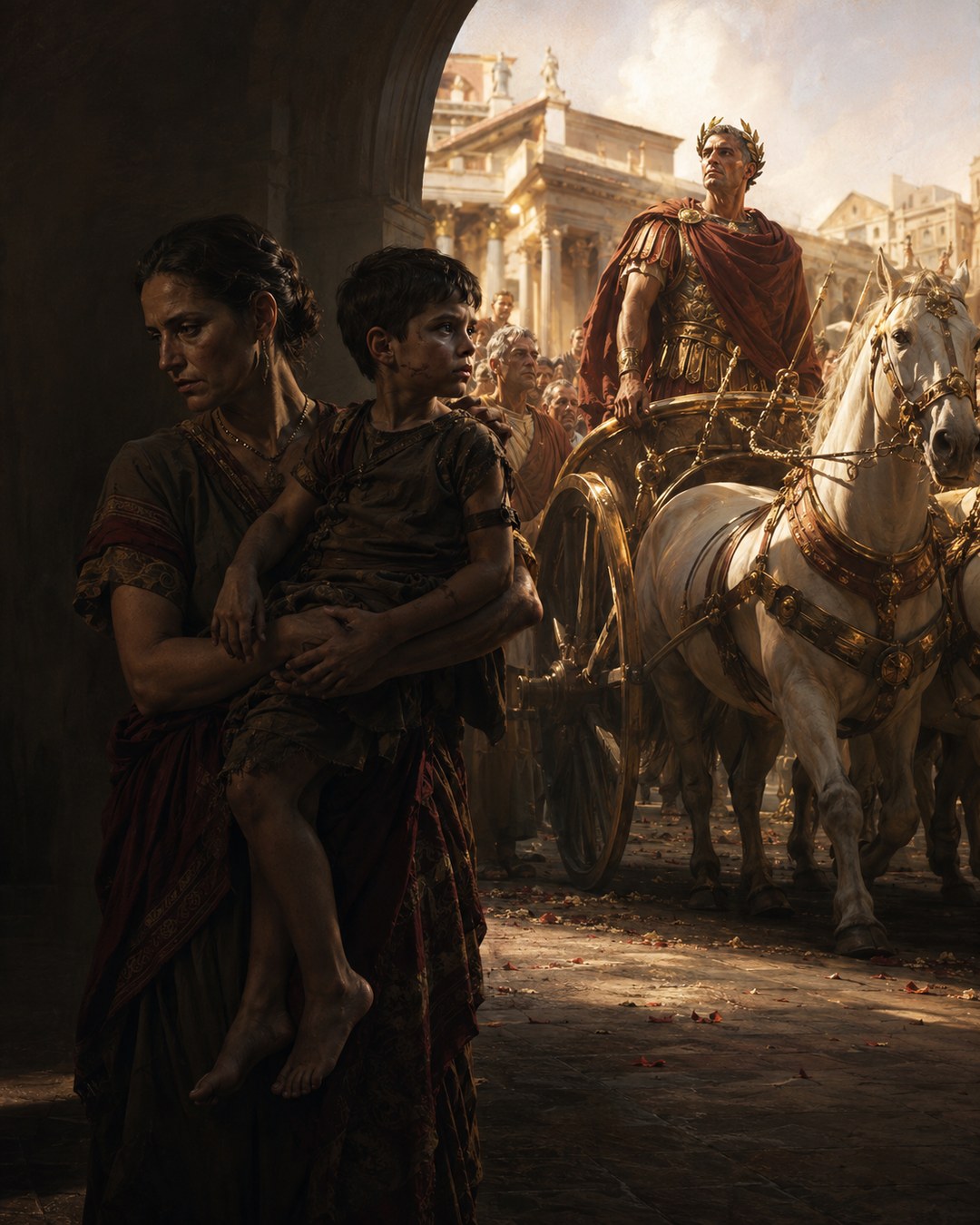
A small boy from Picenum entered Rome in his mother’s arms, not as a visitor but as part of a victory display. Pompeius Strabo had taken them captive during the Social War. When the general celebrated his triumph, mother and child moved before the chariot among the defeated.
Years later, that child crossed the ritual geography of victory from the opposite direction. Ventidius Bassus became a Roman consul and commander. After forces under his command defeated invading Parthians in three battles, he was celebrated as the first man to receive a triumph over them.
Aulus Gellius preserves the distance between those processions by refusing to smooth the middle of the story. Ventidius worked in transport, attached himself to Caesar through practical service, survived condemnation with Mark Antony and endured jokes about mules even at the summit of office. Rome raised him without forgetting where it thought he belonged.
A Child Appeared among the Captured People of Picenum
Gellius begins with low status and defeat. Ventidius was born in Picenum in humble circumstances. During the Social War, Pompeius Strabo subdued the people of Asculum and took Ventidius and his mother prisoner. The future commander was still young enough to be carried in her arms.
That detail gives the first triumph its physical scale. Ventidius did not walk beside political allies or soldiers. He passed before the victor’s chariot as a dependent child held by another captive. The ceremony arranged bodies into an argument about power: the general rode, while defeated communities supplied the people displayed below him.
Gellius does not tell us what happened immediately after the procession, nor does he offer the mother’s name. He turns instead to the adult livelihood Ventidius built. The silence prevents a complete childhood biography, but the remembered image remained potent because it made his later rank seem almost impossible.
Triumphs converted campaigning into a public hierarchy. Another article follows the staged submission that placed an Armenian king inside Nero’s triumphal story. Ventidius’s case exposes the view from below: before he could command Roman forces, he had been material in someone else’s claim to command.
Mules and Carriages Opened a Route into Government
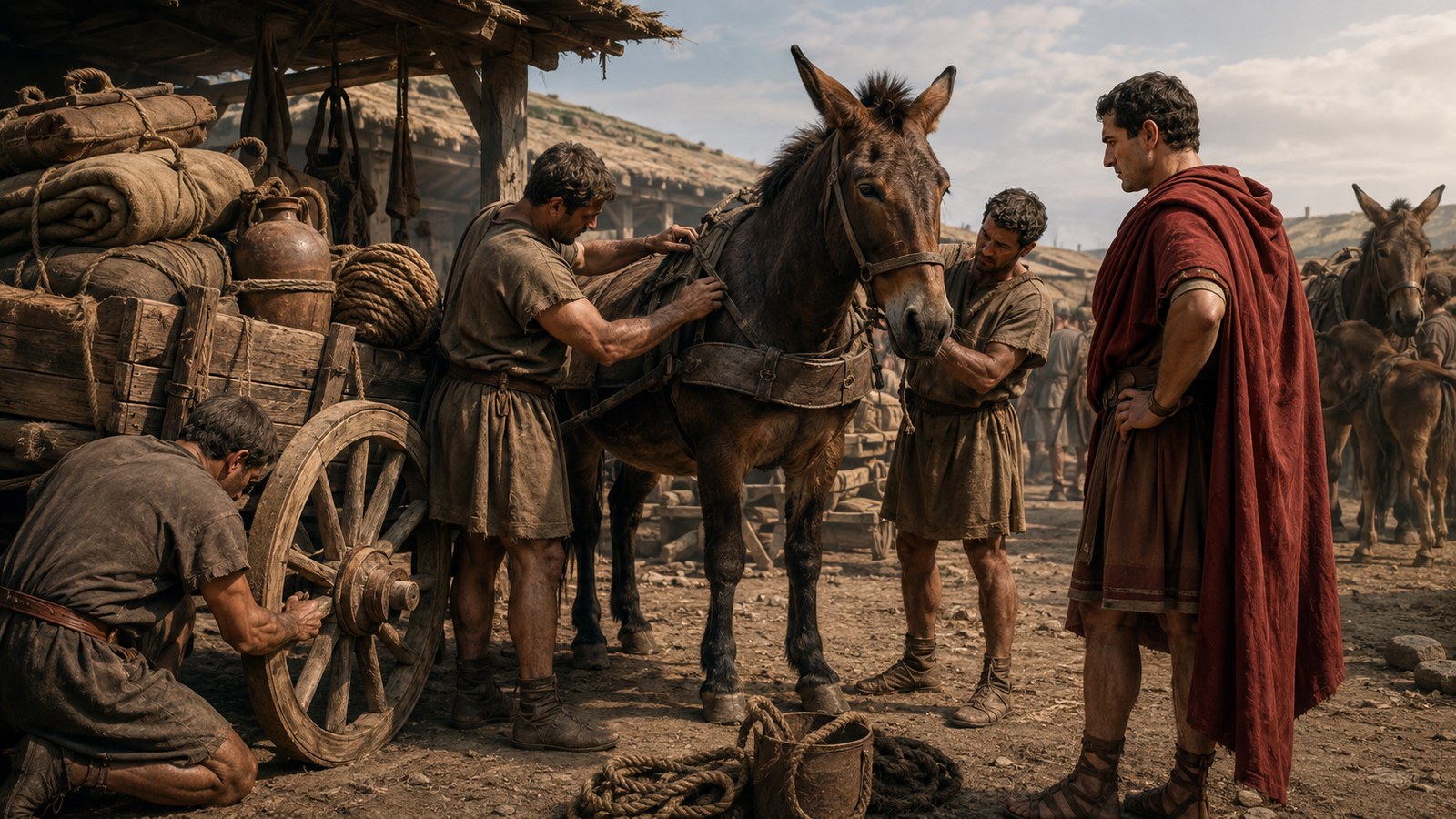
Adulthood did not carry Ventidius directly from captivity to the senate. Gellius says he worked hard for a livelihood in the humble calling of buying and supplying mules and carriages. He held a state contract to furnish that transport to magistrates assigned to provinces.
The occupation sat at the seam between commerce and administration. A provincial magistrate required animals, vehicles, harness and dependable delivery before authority could travel. Gellius gives no inventory or contract price, so we should not invent the scale of the business. He does make its political usefulness explicit: through this work Ventidius met Gaius Caesar and accompanied him into the Gallic provinces.
Transport was not a decorative service. Carts broke, animals tired, roads narrowed and deadlines attached themselves to every public commission. A contractor who solved those problems became visible to officeholders in a way that inherited dignity alone could not guarantee. Ventidius’s route upward began with the repeated proof that people and equipment arrived where they were required.
That practical world connects him to the army without making his story merely another campaign narrative. At Carrhae, a camel train kept Surena’s mounted archers supplied with arrows. Ventidius’s early expertise concerned Roman official movement rather than a Parthian ammunition train, but both stories reveal how animal transport could shape the choices available to celebrated commanders.
Prompt Service Became Political Capital
Gellius credits Ventidius with commendable energy in Gaul and with carrying out numerous commissions promptly and vigorously during the civil war. Those are the verbs of service rather than pedigree. They explain how a supplier known to Caesar became Caesar’s friend and rose into the highest ranks.
The sequence carried him through the tribunate of the commons and the praetorship. It also carried him into danger. The senate declared Ventidius a public enemy alongside Mark Antony. Gellius compresses the shifting alliances, so his chapter should not be mistaken for a complete political history. What matters to its design is the abrupt reversal: office did not make advancement secure.
When the opposing parties came together again, Ventidius recovered his former standing. He then gained a pontificate and the consulship. Each office altered the meaning of the captive child, yet elite memory kept dragging the mule yard into the Forum.
Verses appeared around Rome calling his consulship a portent. Their joke summoned soothsayers and augurs because the man who had groomed mules was now consul. The insult is useful evidence about rank. It does not show that Ventidius hid his work; it shows that observers weaponized useful labor when they wanted to mark him as socially out of place.
Three Eastern Victories Reversed the Procession
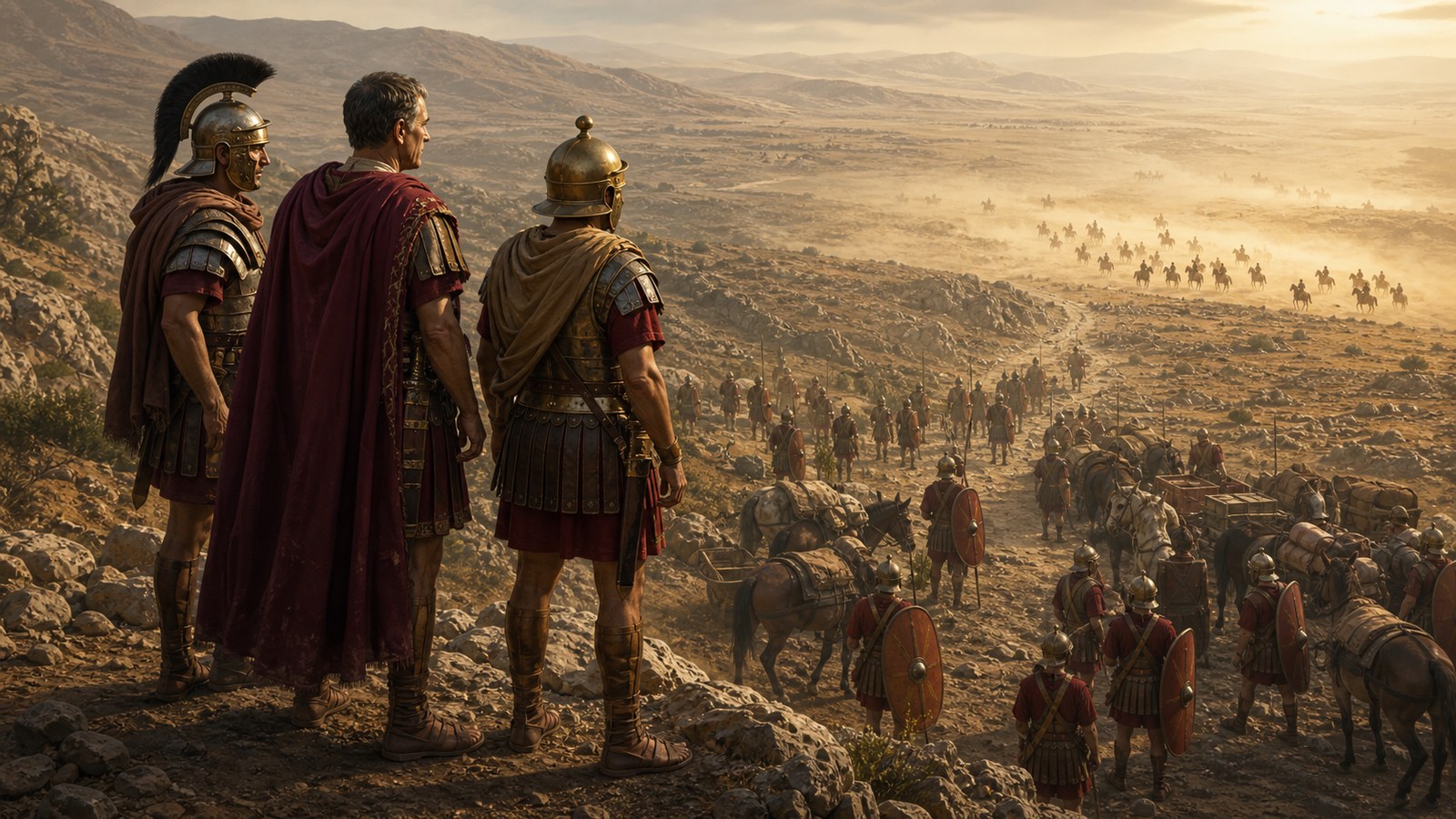
For the eastern command, Gellius explicitly cites Suetonius. Mark Antony placed Ventidius in charge of the eastern provinces. When Parthian forces invaded Syria, Ventidius routed them in three battles. That series led to the triumph that made the opening image turn around.
Gellius calls him the first of all men to celebrate a triumph over the Parthians. The claim belongs to the ancient source and should be read in that form rather than expanded into a claim that he permanently solved Rome’s eastern wars. Parthian power remained, and Roman conflict with it continued. His distinction was a particular ceremonial and military first.
The reversal was sharper because Roman readers could remember Carrhae. Parthian archery and mobility had destroyed Crassus’s army, leaving the eastern enemy attached to one of the Republic’s great disasters. Ventidius’s victories offered a different outcome under different command. The former transport contractor had learned enough about service, movement and delegated authority to receive an army and return with success.
Yet the two triumphs were never symmetrical. The child had no control over his first appearance, while the commander’s soldiers and decisions produced the second. One displayed his community’s defeat; the other displayed victories attributed to him. Rome’s ritual stayed recognizable as his assigned place within it changed completely.
Rome Honored the Man It Continued to Mock
Ventidius received a public funeral after his death. In Gellius’s compact biography, that final honor confirms that his rise was not a momentary curiosity. The state that had once displayed him among captives eventually took responsibility for commemorating him.
The street verses keep the ending from becoming a simple meritocratic fable. Ventidius advanced through skill, alliances and violent political turns, not through a neutral system that rewarded effort consistently. Caesar’s friendship mattered. Antony’s reunion with former enemies mattered. A command opportunity created by invasion mattered. Others with humble origins did not receive the same openings.
Nor did success erase contempt. The mule joke survived because Romans could admire extraordinary ascent while treating the labor behind it as disqualifying. Ventidius made provincial government move before he helped make armies win, but public memory ranked those achievements differently.
Gellius’s finest structural choice is therefore the double passage through triumph. A captive child crossed Rome beneath another man’s victory. A veteran commander later crossed it beneath his own laurel. Between those scenes stood the mules, contracts and commissions that elite mockery tried to turn into an embarrassment, even though they had been the road upward.
Sources
Aulus Gellius, Attic Nights 15.4.