
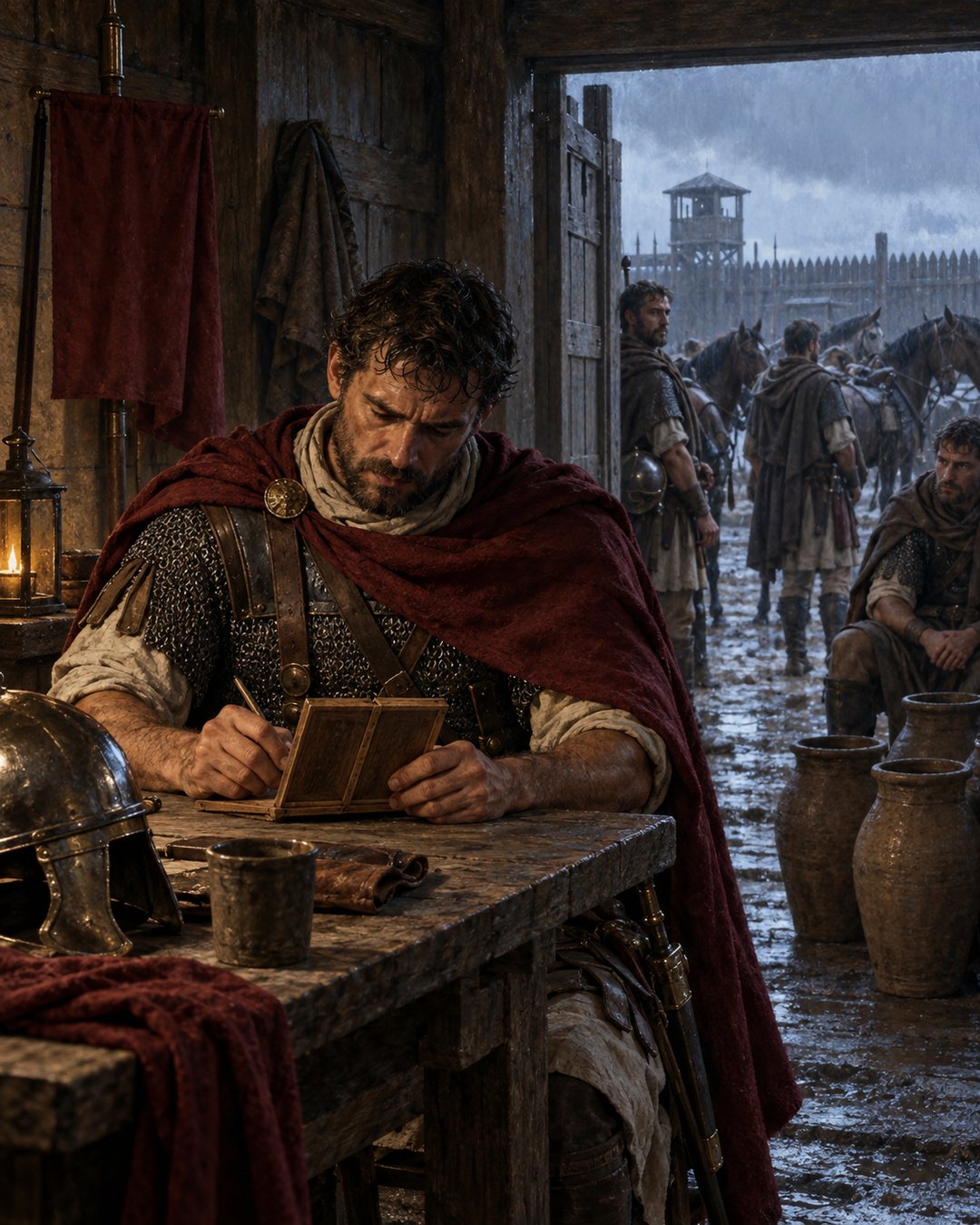
Masclus needed an answer before tomorrow. Should his men return with the standard all together, or should alternating groups make the movement? The surviving line may point toward a crossroads or a shrine there, but the editors keep that destination uncertain. The choice itself is unmistakable: one body or divided details.
After the greeting and farewell, Masclus adds another request. His fellow-soldiers have no beer. He asks Flavius Cerialis, the prefect, to order some sent. The postscript is famous because it sounds immediate across nineteen centuries, yet its force depends on the rest of the letter. The man who can settle tomorrow’s formation is also the man expected to unlock a missing supply.
Vindolanda Tablet 628 therefore joins movement and drink without treating either as background. Command travels through a small wooden object. Masclus reports uncertainty, frames alternatives and asks for an order. The beer shortage enters through exactly the same channel.
Tomorrow’s Return Had Two Possible Shapes
The letter begins with hierarchy softened by familiarity. Masclus greets Cerialis as “his king.” The editors do not take that as proof of royalty; they consider “patron” the likelier force and point to a comparable military letter. Masclus then calls him lord while asking for precise direction.
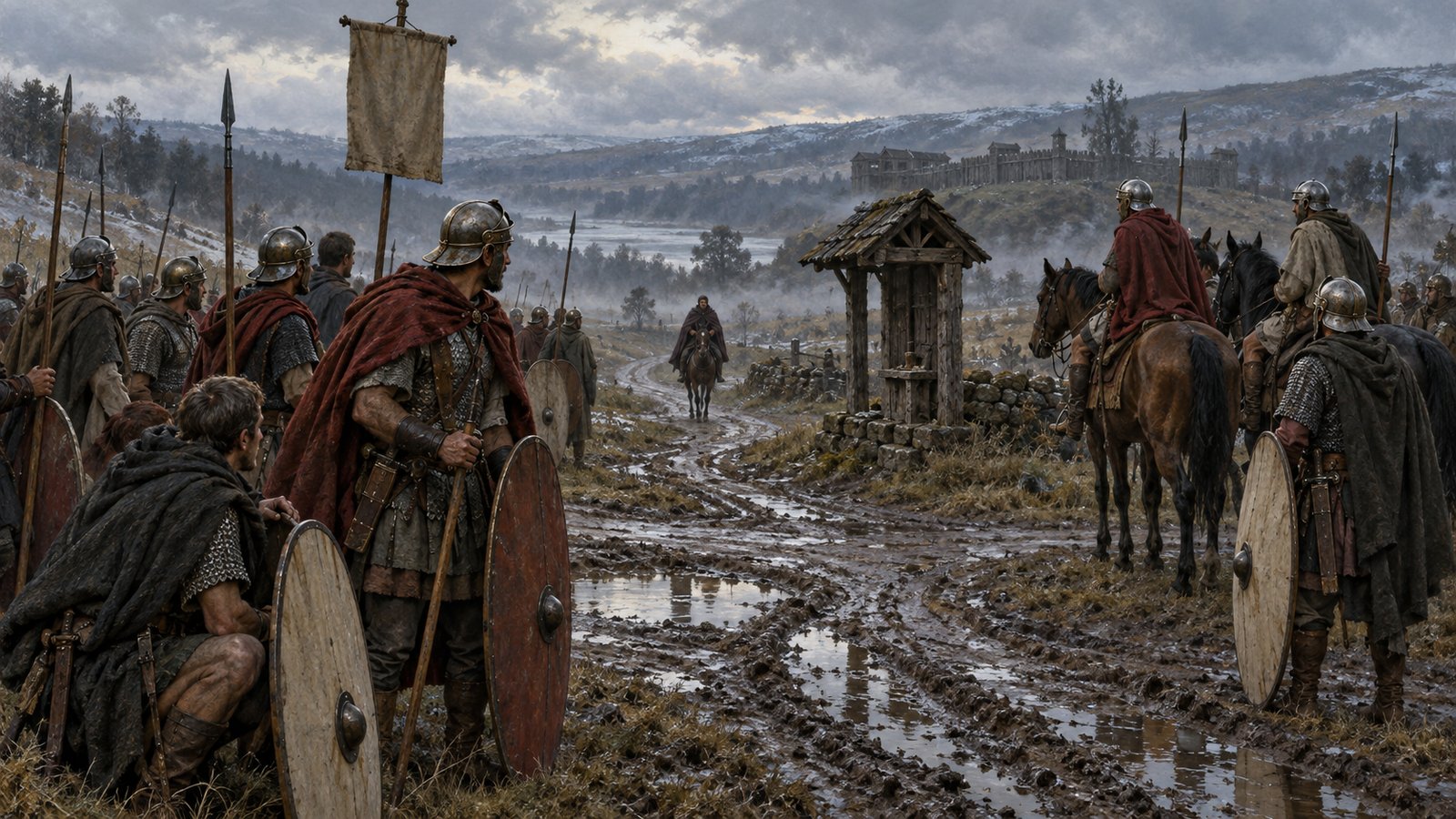
What should the men have done tomorrow? Should they return with the standard all at once, or should they alternate? The damaged passage resists a full reconstruction, but those alternatives reveal an outposted body awaiting coordination. A commander’s silence would not leave the men without any imaginable action; it would leave them with two incompatible ones.
The standard makes the return more than a loose walk back. It marks the detachment as an organized military group. Whether everyone moved with it or the men came in parts affected cohesion, timing and whatever duty remained at the outpost.
The archive has shown how wooden tablets carried a watchword through a Roman camp under witnesses. Tablet 628 uses the same broad material world for a different engine. No password circulates here. A subordinate sends a choice upward because only the prefect’s instruction can turn alternatives into tomorrow’s order.
A Crossroads Remains Visible Through Editorial Caution
One difficult word in the tablet is read as compitum. It can mean a place where roads meet and, by extension, a shrine erected at such a place. The translation accordingly prints a cautious suggestion: the men may be returning to “the shrine at?” the crossroads.
That question mark matters. The object is abraded, and ancient cursive handwriting does not surrender every stroke cleanly. The editors can defend a reading while refusing to pretend that the exact setting is certain. A responsible reconstruction preserves both levels: the crossroads word is strong enough to discuss, while the shrine remains a possibility.
Even at that limit, the road junction gives the order spatial weight. Detachments do not move inside diagrams. They occupy tracks, posts and meeting points. Returning together or by alternating detail would be visible on the ground, especially where routes converged.
This differs from the strength report showing that most of a Roman cohort could be elsewhere. That document counts absence across assignments. Masclus’s letter catches one such separated group before its next movement has been decided.
The Beer Line Belongs to Logistics, Not a Punchline
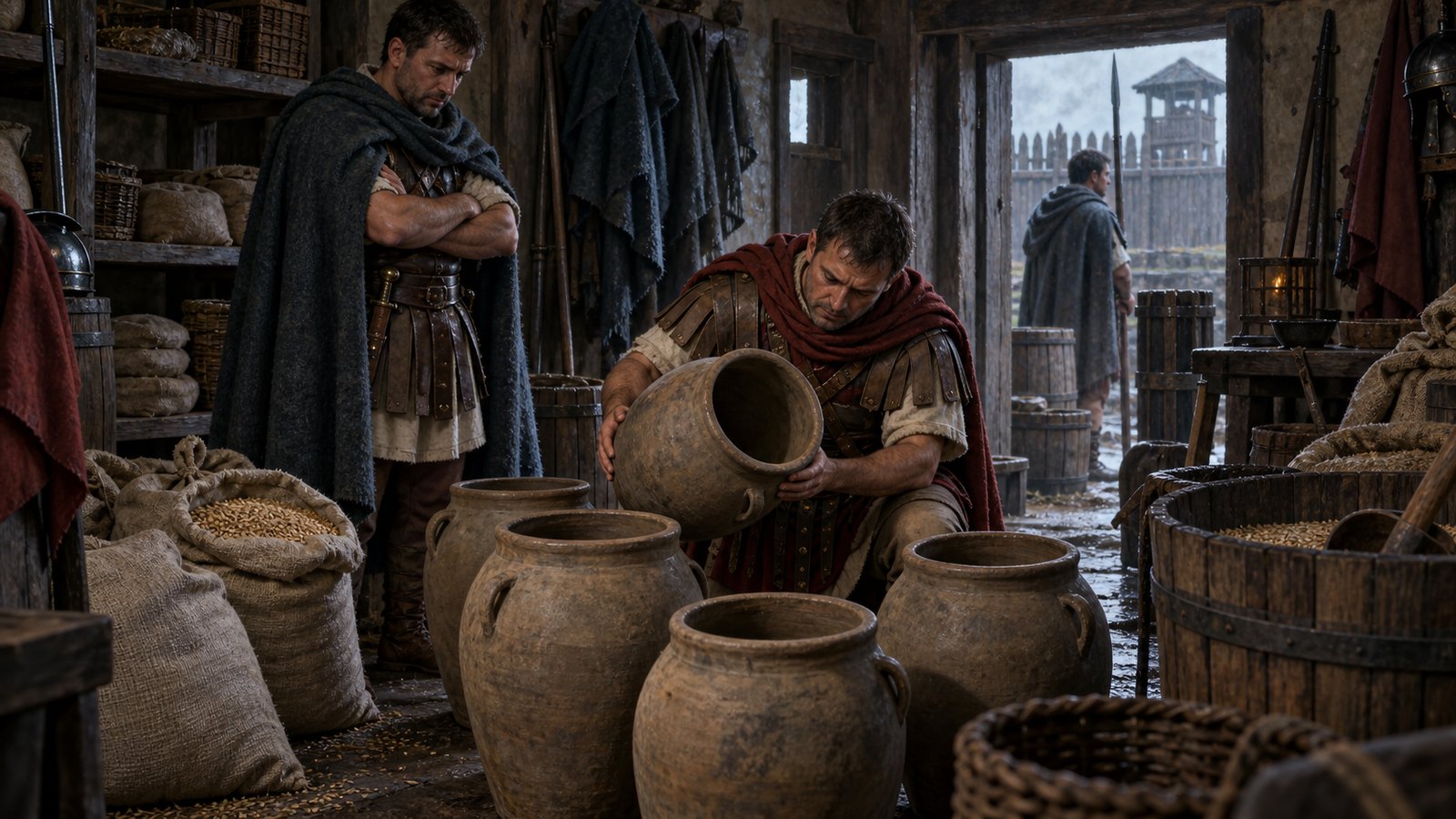
“My fellow-soldiers have no beer” arrives as a postscript. Its brevity makes it memorable, but brevity should not reduce it to a joke about thirsty troops. Masclus follows the report with an imperative request: Cerialis should order beer to be sent.
The wording shows the shortage crossing a chain of authority. Masclus can identify what is missing. Cerialis can issue the instruction that sets replenishment in motion. The same relationship governs the tactical question above and the supply question below.
The editors identify the beer term as Gallic, or more broadly Celtic. Their commentary links the drink to a wheat called bracis or braces, with spelt proposed as one identification. That linguistic survival fits a Batavian unit stationed in northern Britain better than a generic picture of every Roman soldier drinking only wine.
Beer also required a material sequence that the tablet does not spell out: grain, processing, brewing, vessels and delivery. We should not invent quantities, rations or brewing arrangements absent from the text. The document proves the shortage and the request. Its silence about the rest is precisely why an order to “send some” carried practical work beyond the tablet.
The Small Diptych Preserved a Part-Mounted Cohort
The letter is more than its translation. It is a wooden ink-writing tablet measuring 175 by 78 millimetres, mostly complete but badly abraded. Tie-holes and notches survive. Its fine script slopes to the right, uses little ligature and preserves punctuation and vowel-length marks that the editors examine stroke by stroke.
Masclus identifies himself on the back as a decurion. The title normally belongs to a cavalry officer, and the editors call this tablet conclusive evidence that the Ninth Cohort of Batavians was equitata, a unit containing mounted as well as infantry elements. One line of address therefore changes the institutional evidence around the cohort.
The hand may also connect different parts of the object. The editors think the body, closing greeting and address were probably written by the same person, though they do not present certainty where the traces do not allow it. That careful distinction mirrors their treatment of the crossroads.
Several marks survive at the level of individual letters. The script is fine and right-sloping, with little use of ligature; the edition notes interpuncts and several apex marks. These are not decorative curiosities. They are part of the editors’ basis for separating what can be read confidently from traces that remain doubtful. The beer request feels conversational in translation because years of examination turned difficult ink strokes back into a short postscript.
Another Vindolanda letter preserves Claudia Severa’s personal hand within a birthday invitation. Tablet 628 makes a different kind of voice tangible. Masclus is not inviting a friend. He compresses tomorrow’s duty and an empty supply into a note small enough to tie shut and dispatch.
Its archaeological route adds another boundary to interpretation. The tablet came from Vindolanda’s period 3 bonfire-site context and is dated to AD 97–105; it is now held by the British Museum. A discarded or burned-context object became an institutional document only because wood, ink and fragments survived well enough to be recovered. Those facts establish date, place and material. They do not tell us whether the requested beer arrived, which men moved first, or what answer Cerialis sent.
The result is a frontier scene without invented drama. A detachment waits. A standard must move. One route may end at a road junction or shrine. The prefect’s answer has not yet arrived. Meanwhile, the comrades lack beer. Every fact is modest; together they show why Roman command depended on correspondence that could accommodate both formation and thirst.
Sources
Roman Inscriptions of Britain, Vindolanda Tablet 628.