
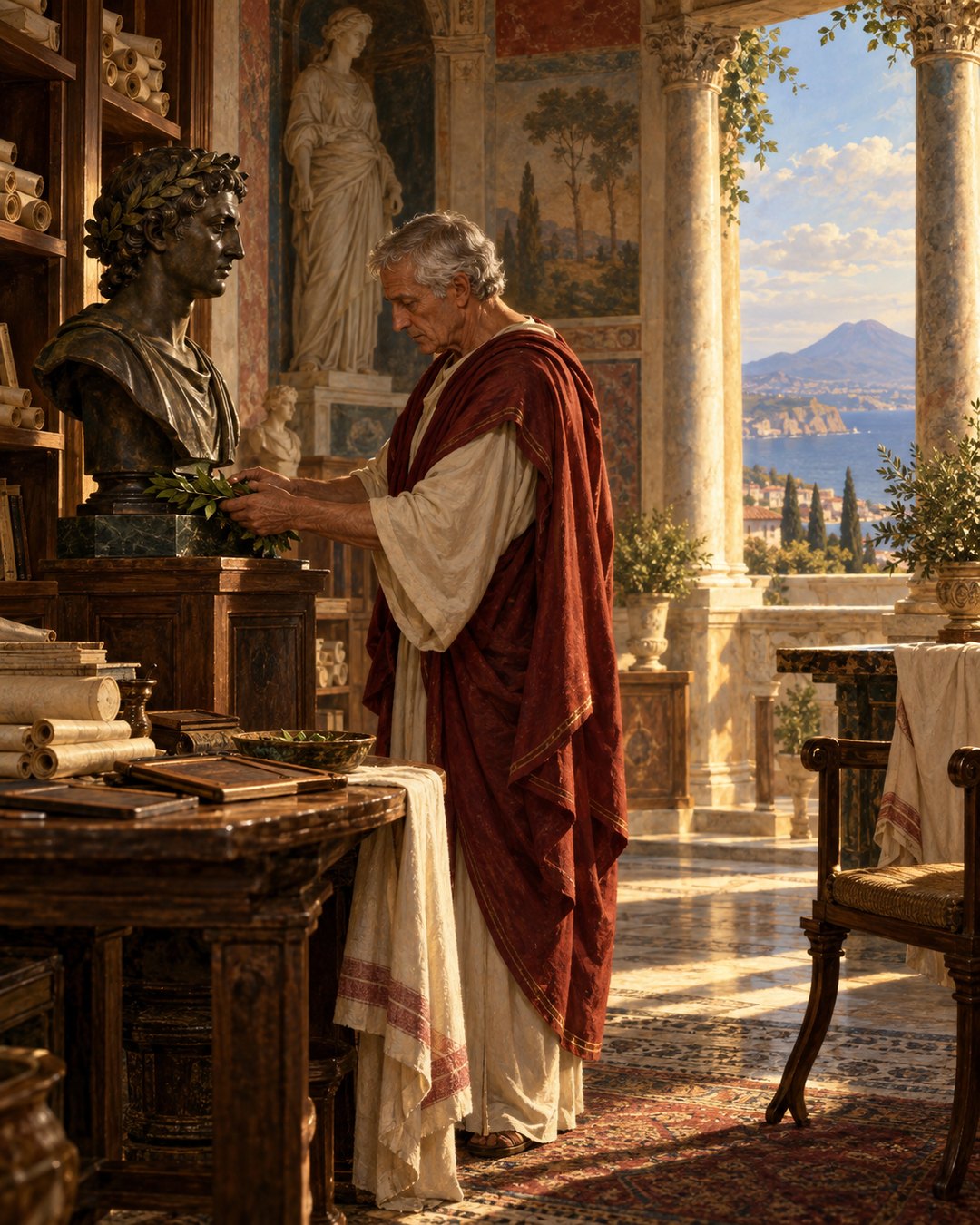
Silius Italicus kept another poet’s birthday more carefully than his own. Near Naples, Pliny says, he approached Virgil’s monument as though it were a temple. The practice belonged to a retirement crowded with books, statues, busts, new villas and learned visitors.
Pliny reports these habits after announcing that Silius has starved himself to death at a villa near Neapolis. An incurable tumour had made him weary of life. He reached seventy-five, then met death with a determination Pliny calls unshakable.
The letter does not stay with illness. It moves through damaged reputation, restored standing, literary labor, collecting and reverence for Virgil before arriving at a stark chronological fact: Silius had been the last surviving consul appointed by Nero. One man’s death closed a living line back to that emperor. Virgil’s birthday, by contrast, still organized a later poet’s calendar.
A Death Notice Opened into an Audit of Reputation
Pliny writes to Caninius Rufus as news has just arrived. He names the place and means of death immediately. Silius was at his villa near Neapolis, and ill health supplied the reason for refusing food. The tumour, Pliny says, could not be cured.
He also places loss inside what otherwise looked like a prosperous old age. Silius had lost the younger of two children. The elder survived him, prospered and reached consular rank. The family detail prevents the opening from becoming a simple portrait of comfort abandoned because of pain.
Public memory was equally mixed. Under Nero, Silius had damaged his name because people believed he volunteered as an informer. Pliny does not present that suspicion as a judicial finding, nor does he erase it. He sets it beside later conduct: prudence and courtesy among the friends of Vitellius, an honorable return from governing Asia and an admirable use of retirement.
The structure matters. Silius’s reputation is neither permanently fixed by youth nor washed clean by one flattering sentence. Pliny shows stain and repair as successive layers. Retirement becomes morally productive because it offers time in which later conduct can alter how earlier conduct is remembered.
A Crowded Room Replaced Formal Office
Silius remained among the leading men of the state while holding no official position. Pliny notes that he inspired no envy. People still paid respects and sought his company, so the room where he spent much of his time on a couch was full of visitors who were not merely passing callers.
That room formed an institution without a title. Conversation was learned and scholarly. When Silius was not talking, he was composing. Public function had given way to an audience organized by interest, reputation and repeated presence.
Pliny’s praise has an edge. He says Silius’s verses displayed abundant care rather than genius. The judgment is not cruel enough to cancel the labor, but it denies the easy equation between persistence and brilliance. Silius sometimes exposed the work to general criticism through public readings, putting effort before listeners rather than protecting it inside the villa.
That pattern echoes Calpurnia listening to Pliny’s public reception from behind a curtain, although the social positions differ. Both letters make literary life depend on rooms, listeners and reports. Text is not solitary once a gathering hears it and carries its reputation outward.
New Villas Kept Reordering the Collection
Great age finally drew Silius away from the city to Campania. Pliny says he did not stir even when a new emperor succeeded. He praises both sides of that decision: the ruler for permitting a prominent subject such liberty and Silius for daring to use it.
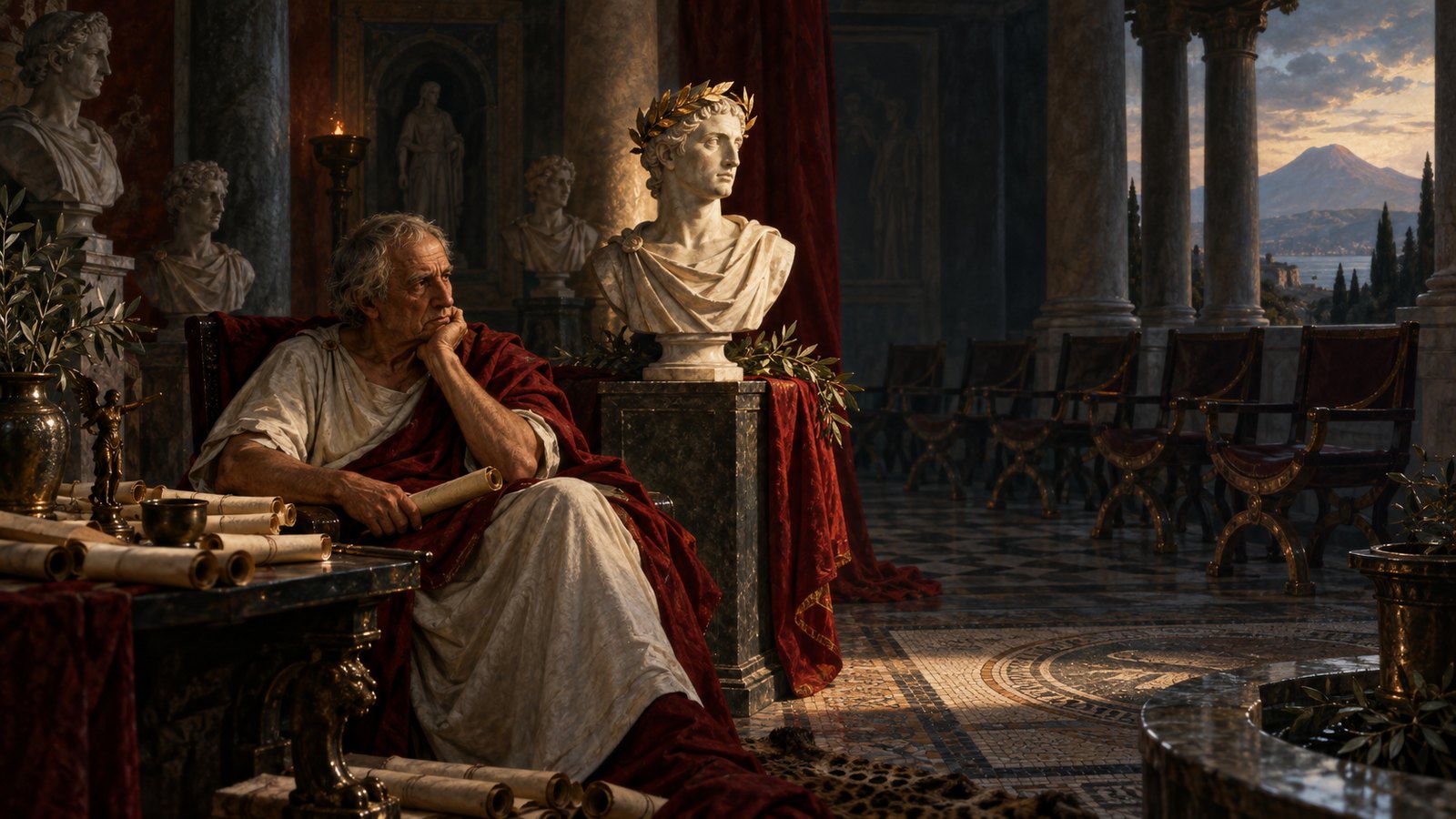
Retirement was not withdrawal into one spare house. Silius owned several villas in the same region and had a reputation for itching to buy beautiful things. A recent acquisition could make him neglect an older property. The collecting instinct therefore reshaped the map of his attention as well as the contents of his rooms.
Each villa contained quantities of books, statues and busts. Pliny says Silius did more than keep them nearby; he treated them with a kind of veneration. Possession became repeated regard. The objects supplied a physical company of authors, subjects and admired predecessors even when public office no longer structured the day.
The letter does not inventory titles, sculptors or prices. Adding such details would turn a character sketch into an invented catalogue. What Pliny gives is enough to reveal motion: purchase, enthusiasm, movement toward the newest villa, and rooms already populated by collected culture.
Virgil’s Birthday Turned Admiration into a Calendar
Virgil stood above the rest. Silius kept the earlier poet’s birthday more scrupulously than his own. The comparison makes devotion measurable. Birthdays recur, so the preference had to be enacted again rather than declared once.
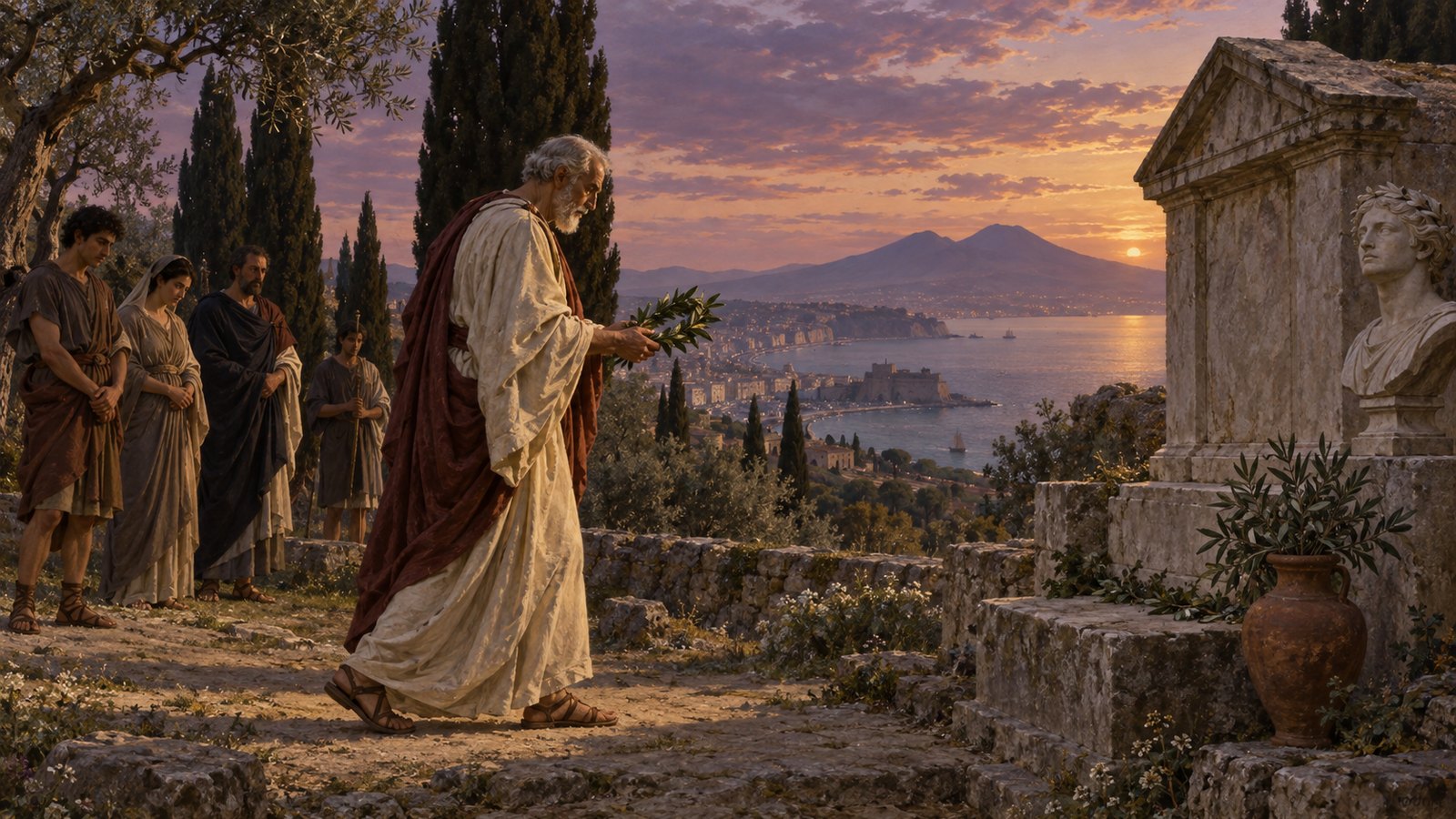
Near Naples, Silius approached Virgil’s monument as though it were a temple. Pliny’s phrase does not say that the tomb legally became a sanctuary. It describes the visitor’s manner. A literary predecessor received the bodily deference and careful approach associated with sacred space.
The villa’s busts and the monument work at different scales. A bust can bring an admired face into the room. A tomb requires Silius to go to a fixed place. The birthday adds a fixed time. Image, journey and calendar turn reading into a durable practice of remembrance.
Silius’s own epic labor sits quietly behind that devotion. Pliny does not analyze the Punica here or claim equality between the poets. Indeed, his comment about effort rather than genius preserves distance. That makes the birthday observance more revealing, not less. Silius could revere an achievement he did not pretend simply to duplicate.
The scene also contrasts with Verginius Rufus rehearsing the speech that led to his fatal injury. Verginius’s last public performance linked reputation to civic address and a deliberately plain tomb. Silius cultivated literary memory through private observance, collections and repeated visits to another poet’s monument.
The Last Neronian Consul Made a Generation Disappear
Pliny then counts time through office. Silius was the last consul appointed by Nero and the last of that emperor’s consuls still alive. Nero himself died during Silius’s term. With Silius gone, no living holder of a Neronian consulship remained.
The calculation compresses imperial history into one lifespan. Nero can feel recent to Pliny, yet an entire group once visible in the highest office has vanished. He adds the memory of Lucius Piso, who said that he no longer saw in the senate anyone he had called upon to speak during his own consulship. A crowded chamber can turn over until the presiding voice survives only in recollection.
From there, Pliny invokes the story of Xerxes weeping over the mortality of his enormous army. The point is not that Silius’s seventy-five years were unusually brief. It is that even a long individual life and a mighty public cohort occupy narrow limits when viewed from the next generation.
This is where Virgil’s birthday returns without being named again. Silius had organized part of his life around a poet already dead for generations. Political cohorts disappeared, villas changed owners and Silius himself became news carried to a correspondent. Yet words and monuments could continue to summon attention on appointed days.
Pliny turns that contrast into advice. Fleeting moments should be applied, if not to great achievements, then at least to study. Since long life is denied, a person should leave some memorial of having lived. The exhortation is aimed at Caninius, but Pliny admits that friends sharpen one another’s desire for an enduring name.
The obituary therefore performs the work it recommends. It preserves Silius’s death, compromises, visitors, purchases and devotion while using them to urge another writer forward. Silius honored Virgil’s survival in memory. Pliny makes Silius’s own end into material for a letter designed to survive him.
His most revealing possession was not the newest villa or the fullest room. It was a recurring date attached to someone else’s life. Keeping Virgil’s birthday more carefully than his own allowed Silius to practice the kind of continuity Pliny knew office could not provide.
Sources
Pliny the Younger, Letters 3.7.