
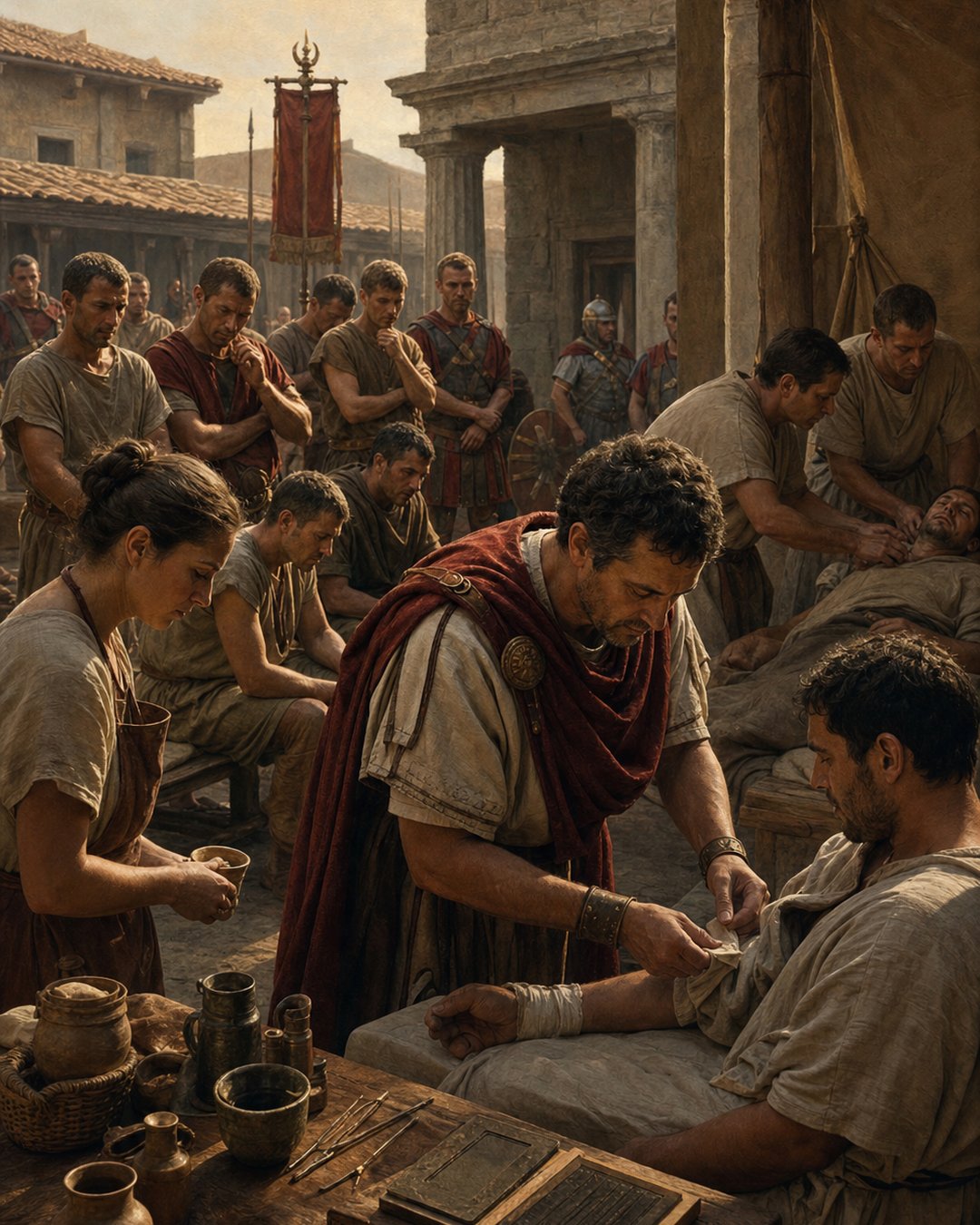
The Antonine Plague did not arrive in a weak empire waiting to fall over. That is what makes it unsettling. It struck during the reign of Marcus Aurelius, when Roman power still stretched from Britain to the Euphrates and armies still fought on enormous frontiers. The shock was not simply that people died. The shock was that Rome’s normal confidence in movement, manpower, taxation, military response, and public order suddenly looked vulnerable to something no legion could arrest at a border.
Ancient observers did not possess modern epidemiology, and modern scholars still debate the disease’s exact identity. Galen witnessed a severe epidemic and described symptoms including fever and skin eruptions. Many modern discussions connect the Antonine Plague with smallpox, but the safer point is broader: from the 160s AD, the Roman world faced a recurring epidemic during a period of heavy military and administrative demand. A system built on circulation discovered that circulation could carry fear as well as orders.
The disease moved through the empire’s own strengths
Rome was powerful because it moved people, soldiers, grain, messages, taxes, and goods over long distances. Roads, ports, camps, markets, baths, and crowded neighborhoods made imperial life possible. Those same connections could make an epidemic feel imperial in scale. A sickness did not need to defeat a frontier army if it could follow the routes that supplied one.
The empire’s density mattered. Families lived close together. Buyers and sellers crowded markets. Soldiers slept, marched, and waited in formations that turned individual illness into a unit problem. A fever in one body could become a question for clerks, commanders, priests, physicians, household heads, and tax collectors. The disease transformed Roman order into daily triage.
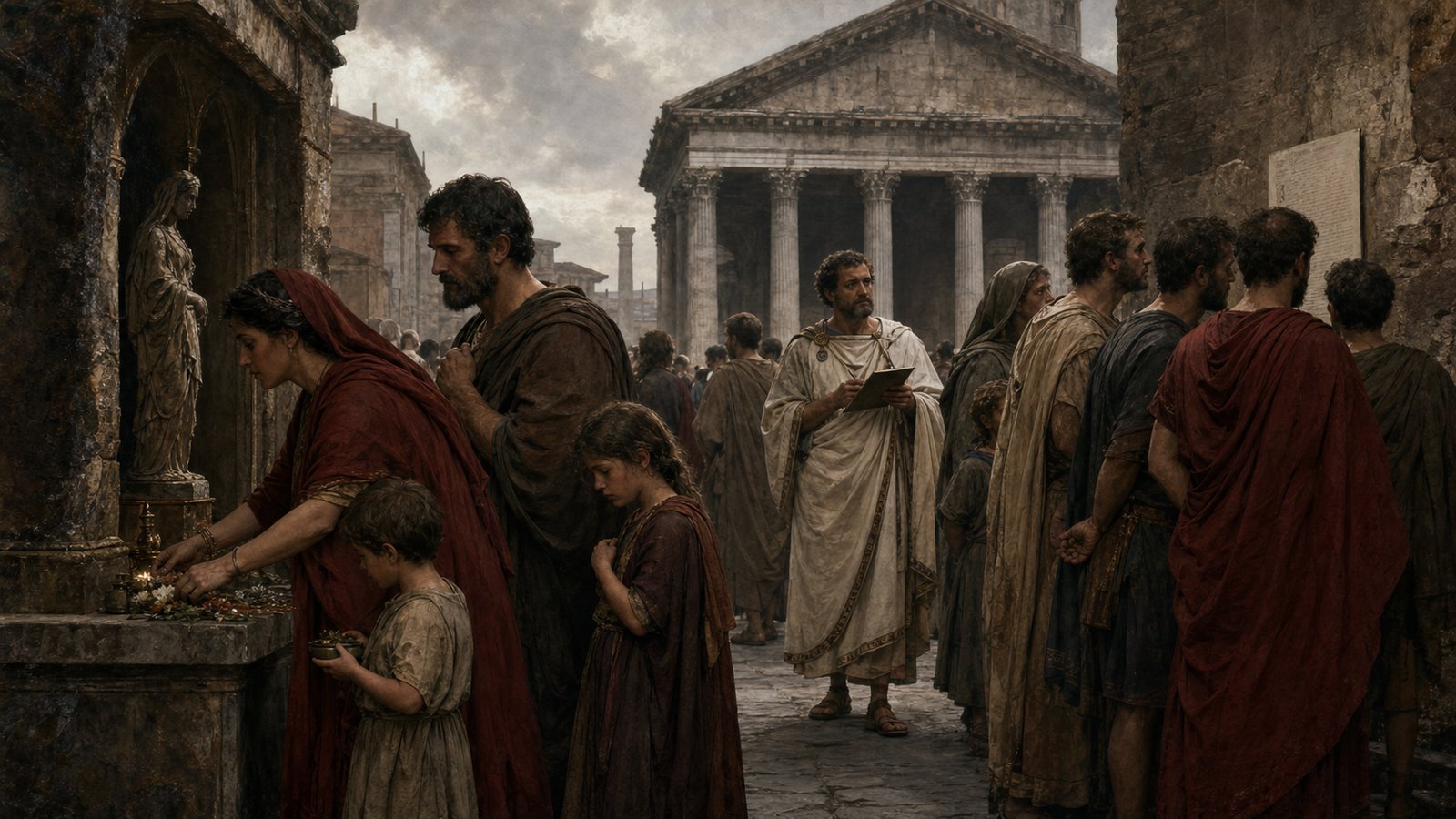
Galen gives the plague a human surface
Galen’s medical witness is valuable because it brings the event down from imperial scale to observed bodies. He was not counting the empire from a map. He was describing illness as a physician saw it: fever, eruptions, and the practical problem of treating people whose symptoms arrived in frightening patterns. That kind of detail keeps the plague from becoming an abstract “decline” label.
It also reminds us that ancient medicine operated inside limits. Roman physicians could observe, classify, advise diet, manage symptoms, and rely on experience, but they could not identify viruses or stop transmission with modern tools. The public did not need a laboratory diagnosis to understand danger. They saw households disrupted, neighbors missing, and officials trying to keep ordinary rhythms alive.
Marcus Aurelius faced two emergencies at once
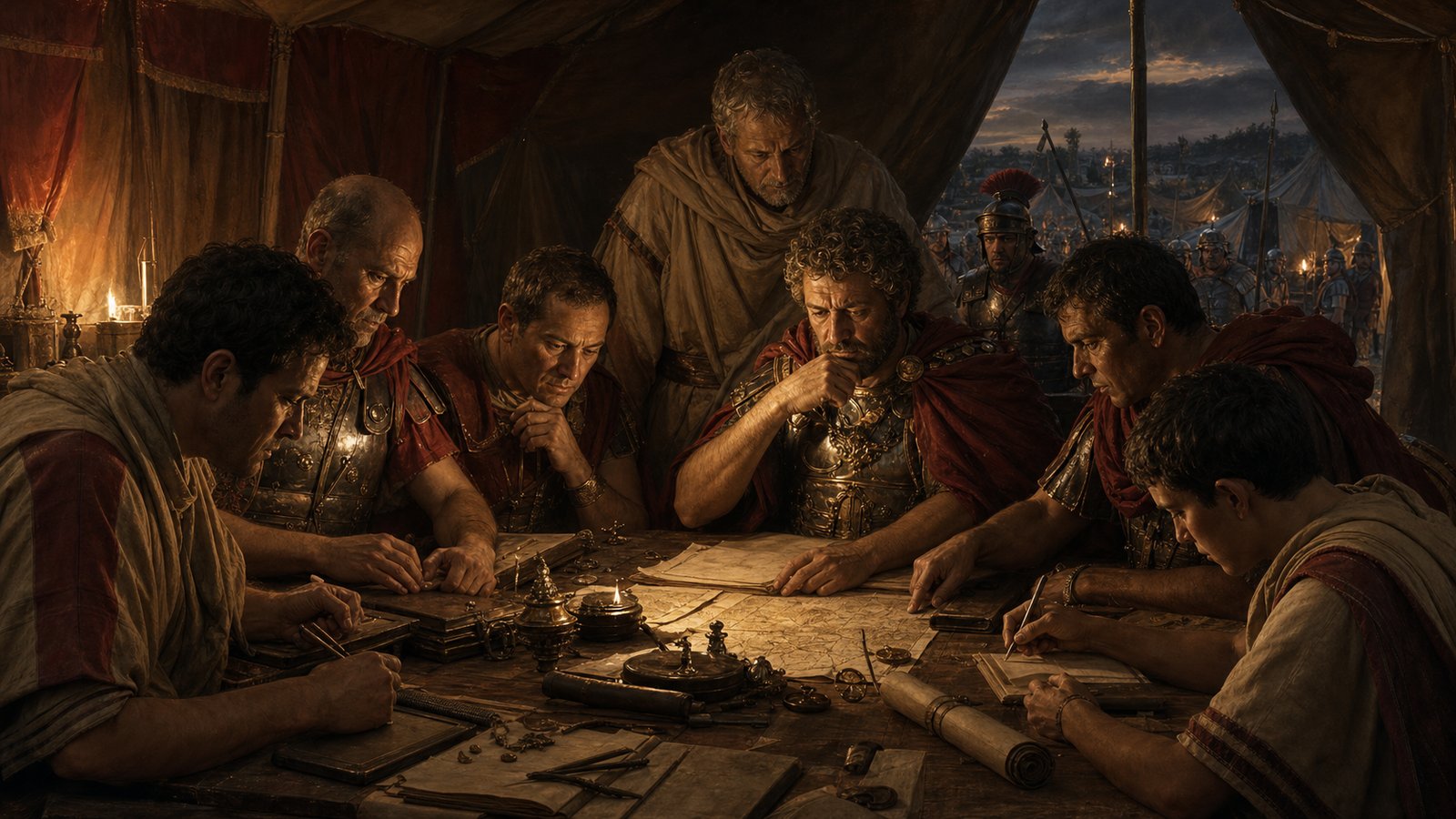
Marcus Aurelius is often remembered as the philosopher-emperor, but the plague made philosophy share space with logistics. His reign was marked by conflict, including major pressure along the Danube. Armies needed men, money, animals, supplies, and confidence. An epidemic attacked each of those quietly. It could thin recruits, interrupt labor, strain treasuries, and make commanders plan around absence.
This is why the plague changed confidence rather than merely mood. Roman power depended on the assumption that problems could be answered by administration and force. The emperor could move troops, issue orders, raise funds, and punish enemies. Disease did not obey that script. It could move faster than blame and leave no negotiable opponent.
Cassius Dio preserves the memory of scale
Cassius Dio later wrote of devastating pestilence in the age of Marcus, even describing deaths in Rome in numbers that convey terror whether or not every figure can be treated as statistical precision. Ancient numbers often carry moral force as well as arithmetic. In this case, the force is clear. The epidemic was remembered as something large enough to mark an age.
That memory matters because Rome was skilled at absorbing disaster into victory stories. Battles could be avenged. Rebels could be punished. A bad emperor could be condemned. Plague was harder to narrate. It left grief without a triumphal procession. It made the empire look less like a machine of command and more like a living body subject to weakness.
The plague was not a single-cause collapse
It is tempting to turn the Antonine Plague into a neat explanation for everything that followed. That is too simple. Rome did not collapse in AD 165. Marcus Aurelius continued to rule, campaigns continued, and the imperial system endured for generations. Disease contributed to strain; it did not by itself write the ending of Roman history.
The better lesson is structural. An empire can survive a shock and still be changed by it. Fewer workers, frightened communities, interrupted taxes, and military losses do not need to destroy a state in one year to alter its margins. The plague made resilience more expensive. It forced Rome to spend strength on survival that might otherwise have gone into expansion, ceremony, or confidence.
Rome learned that scale could become exposure
The Antonine Plague is frightening because it turns Roman greatness inside out. The roads, camps, cities, and chains of command that made imperial reach possible also made the empire exposed. The same connections that carried orders from the emperor could carry news of sickness, rumors, and absence. That did not make Rome weak in a simple sense. It made Rome human.
Marcus Aurelius’ world still had discipline, armies, law, and wealth. But after the plague, those things looked less invulnerable. The empire had not lost its map. It had lost some of the confidence that the map could protect it from every kind of danger. That is why the Antonine Plague belongs in Roman political history as well as medical history. It showed that the strongest system in the Mediterranean could be shaken by something too small to see.
There is another reason the plague deserves attention: it forced Roman leaders to make decisions without clean information. A commander could see an enemy camp; he could not see the route by which sickness had entered a barracks. A governor could count tax arrears; he could not easily count fear. That uncertainty made the epidemic politically corrosive. It weakened the habit of assuming that every disturbance had a visible source and a familiar remedy.
The human cost also reached beyond those who died. A household that lost a father lost labor, legal representation, memory, and protection. A unit that lost veterans lost skill. A workshop that lost trained hands lost more than numbers. Roman society was full of relationships that depended on continuity. The plague broke continuity in thousands of small places, which is why its effect cannot be measured only by dramatic death figures.
Seen this way, the Antonine Plague was not a pause between normal events. It became part of the setting in which war, succession, taxation, and confidence had to operate. Rome survived, but survival required improvisation under pressure. The crisis made the empire’s usual strengths feel conditional, dependent on enough healthy people remaining in the right places at the right time.
Sources & Further Reading
- World History Encyclopedia, Antonine Plague
- Galen, Method of Medicine, 5.12
- NCBI, The Antonine Plague and the decline of the Roman Empire
- Britannica, Marcus Aurelius
- Cassius Dio, Roman History, 72.14
- Britannica, ancient Rome – city life
- Cambridge Core, Epidemics and the Roman Empire