
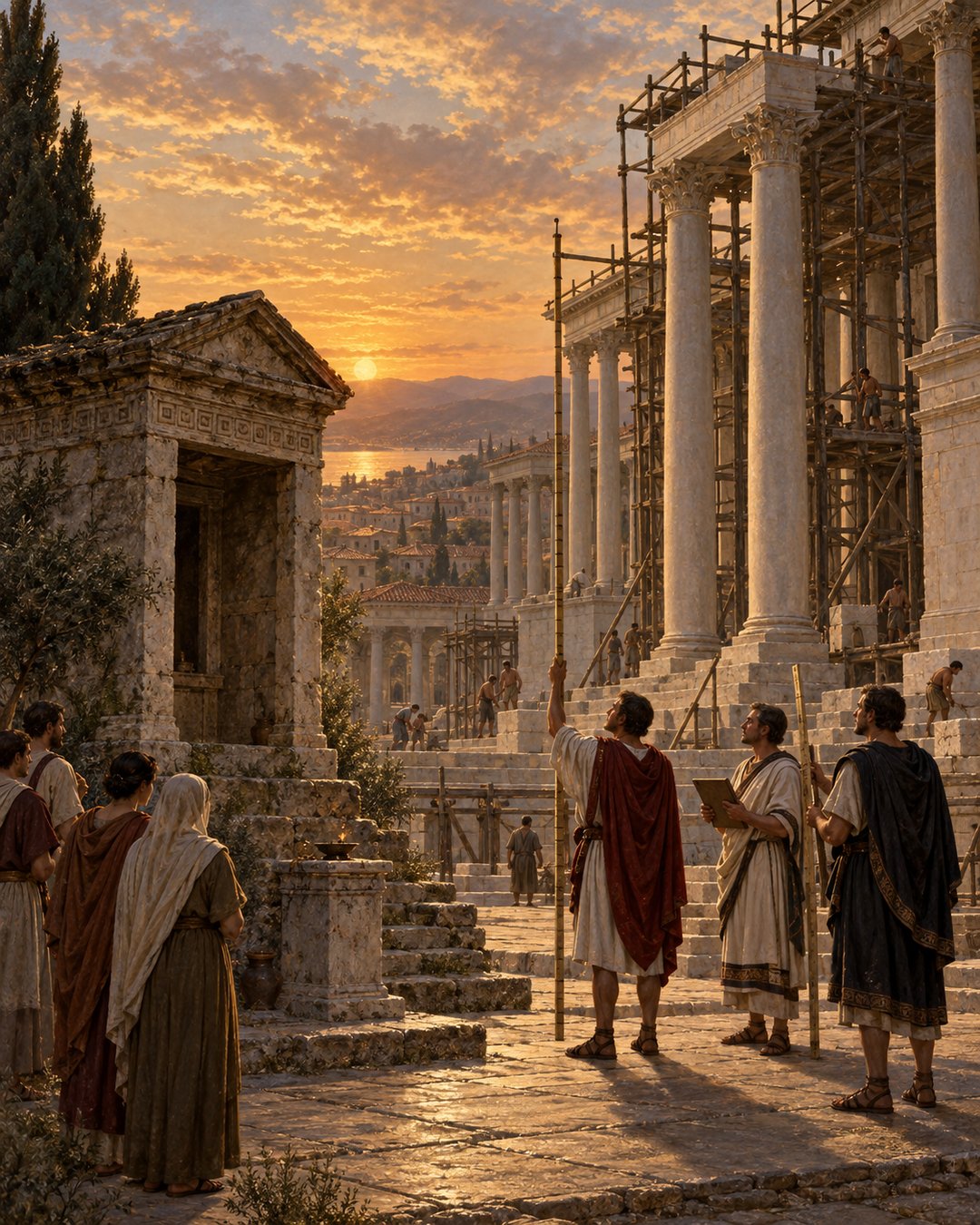
Nicomedia was rebuilding around something it could not casually erase. In one corner of the old forum stood a very ancient shrine of the Great Mother. Around it, new buildings were climbing to a height that made the older sanctuary look markedly low.
Pliny the Younger reduced the physical problem to two options: restore the shrine or move it. Then he stopped. Before stoneworkers could act, he needed to know whether relocation would desecrate a legally protected sacred site.
Trajan’s permission rested on an unexpected limit. The shrine had not been consecrated according to the legal form used at Rome, and the soil of a foreign city might not be capable of receiving that Roman consecration. The emperor did not declare the goddess irrelevant. He ruled that Rome’s own sacred property law did not automatically bind Nicomedia’s ground.
New Walls Turned Antiquity into a Design Problem
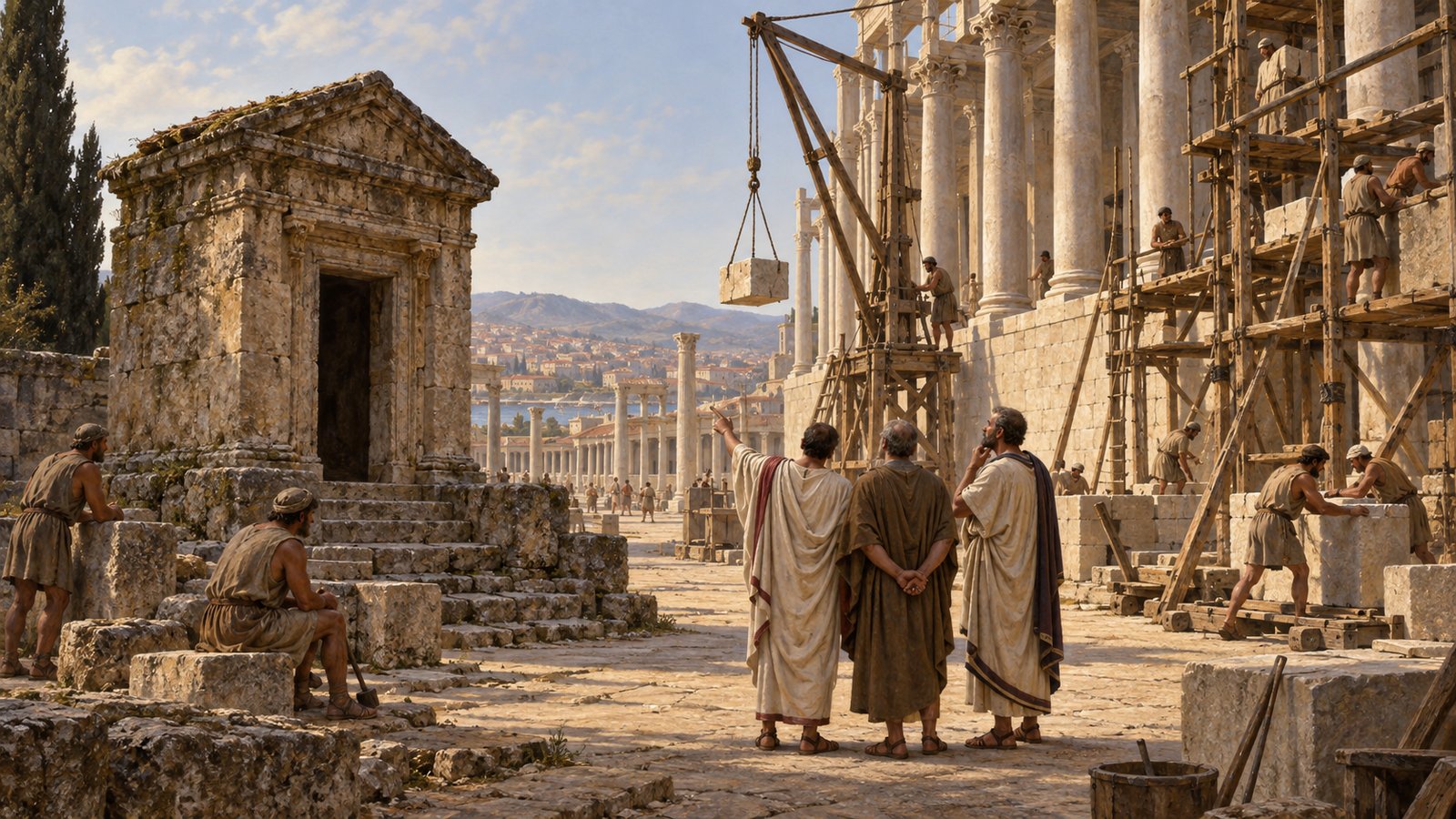
Pliny says the people of Nicomedia had begun additions to their old forum before he arrived. The phrasing places him inside an inherited project. He was not choosing whether the city should build from nothing; he was confronting a mismatch the construction had exposed.
The shrine occupied one corner. Its age mattered enough for Pliny to call it very ancient, but age did not settle what should happen next. The new structures were being run up high, while the sanctuary remained much less lofty. A sacred building that had once fitted its setting now sat inside a changed architectural scale.
Pliny offers no measurements, façade description or construction budget. He does not identify damage to the shrine. His concern is relational: old height against new height, one corner against the larger forum, restoration against movement.
That makes the case different from the arrival of the Black Stone of Magna Mater while Hannibal still threatened Italy. That story follows a cult object into Rome during crisis. Nicomedia’s problem begins after long residence, when civic improvement puts a settled sanctuary out of proportion with its surroundings.
The phrase “great convenience” shows that practical pressure was real. Relocation would help the forum project. Yet convenience could not authorize itself. Pliny first had to determine whether the proposed remedy crossed a sacred legal boundary.
Restoration and relocation therefore were not equivalent choices. Restoration would answer the shrine’s low profile where it already stood. Relocation would alter the forum’s arrangement and raise the harder question about the ground left behind. Pliny’s letter spends its legal attention on that second option.
Pliny Looked for Law before He Looked for Labor
The governor investigated whether any enactments protected the temple. This step changes the scene from an aesthetic complaint to a legal inquiry. A low building could be rebuilt; a consecrated site might impose obligations on everyone who touched it.
What Pliny found was not the absence of ceremony. He found a difference in form. Dedication in Nicomedia did not operate as dedication did at Rome. His letter carefully preserves that distinction instead of translating local practice into a Roman category without proof.
He then asks whether the temple can be removed without desecration when there has been no legal consecration of the site. The question joins ritual danger to property status. Moving walls is easy to describe. Deciding what remains sacred in the ground requires a rule.
The surviving exchange does not list the local rites, name priests or describe an image of the goddess. It therefore cannot support a reconstruction of the ceremony. What it does support is the administrative discovery that two cities used different legal forms around a sanctuary.
Pliny’s caution preserves the difference rather than treating it as a defect. He reports that dedication “here” is unlike dedication “with us” at Rome. The contrast is geographical and legal, and it becomes the premise on which Trajan can answer without inventing a missing Roman ceremony.
Foreign Soil Set the Boundary of Roman Consecration
Trajan answers with permission. If the site seems to require a change, Pliny may move the temple of the Mother of the Gods to a more suitable spot. He adds that Pliny need feel no religious scruple.
The reason is not that the shrine is new, abandoned or falsely dedicated. Trajan focuses on the land. The soil of a foreign city, he says, may not be suitable for the consecration required by Roman laws. The phrase limits the reach of a specifically Roman sacred status.
That boundary matters. If Nicomedia’s soil could not receive Roman legal consecration in the prescribed way, the missing Roman record did not trap the governor. A requirement built for Rome could not be used to manufacture an immovable obstacle in a provincial city where the underlying legal condition did not fit.
The ruling is practical, but it is not a claim that all sacred places were portable. Trajan answers this temple, this site and this difference of legal form. He gives Pliny room to move the sanctuary because the Roman consecration problem does not attach as Pliny feared.
Permission Protected the Move from Becoming Desecration
Trajan’s letter does not order demolition. It allows relocation to a more suitable place if the site requires change. The conditional leaves the local judgment with Pliny while resolving the religious obstacle that had frozen action.
The distinction between temple and site is crucial. Pliny asks about moving the temple when the ground lacks Roman legal consecration. Trajan treats the sanctuary as transferable rather than disposable. The answer makes continuity possible even as the forum’s physical arrangement changes.
This logic places respect inside procedure. Investigation comes first, then imperial interpretation, then potential movement. The city’s convenience is acknowledged without allowing builders to decide sacred law with their tools.
The story of one hundred matrons choosing Sulpicia for the Great Mother turns ritual honor into a contest over moral reputation. Nicomedia’s exchange turns devotion into a question about jurisdiction. The same goddess could produce very different public mechanisms in different places.
The Old Shrine Survived as a Legal Distinction
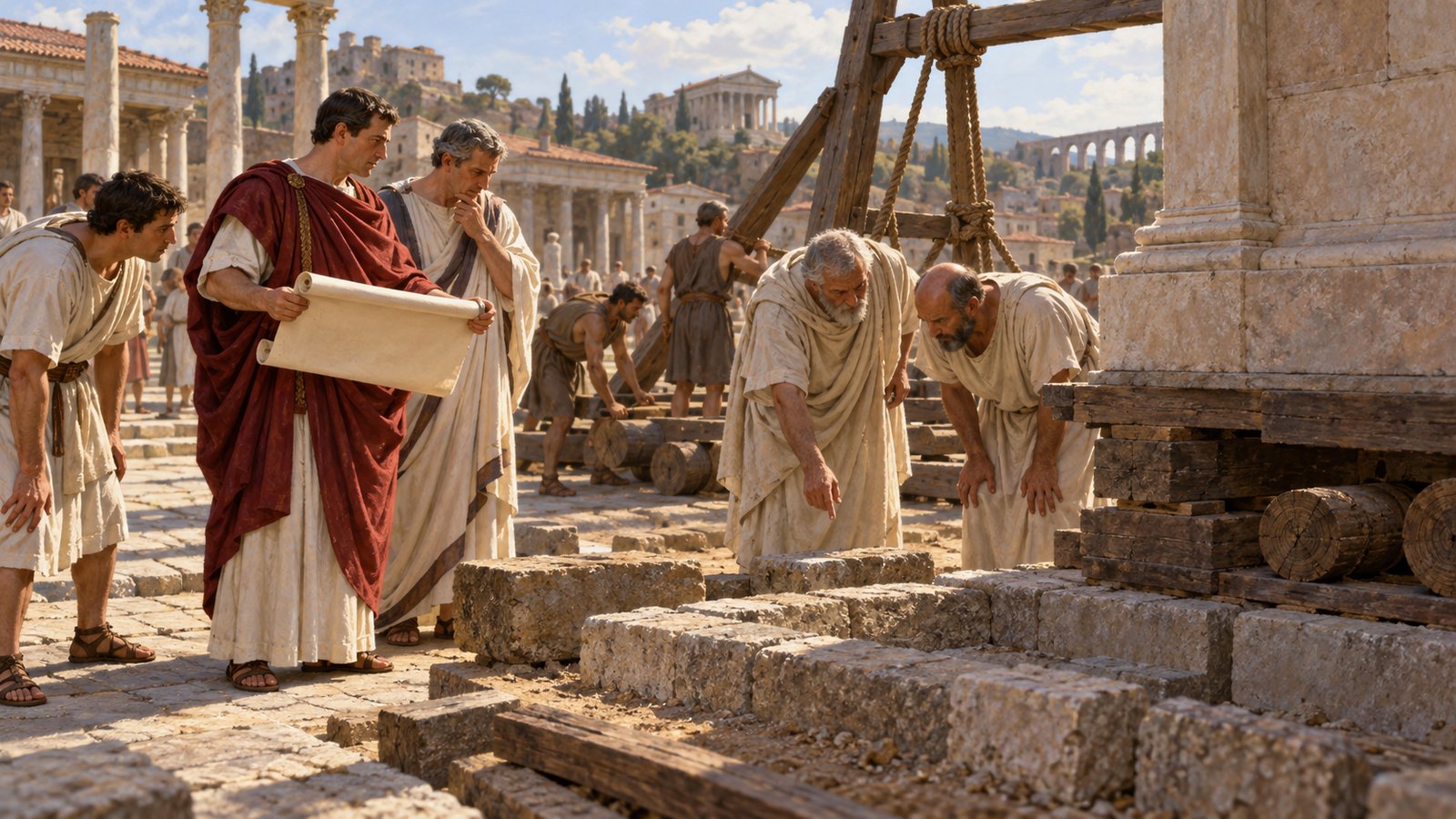
Pliny does not tell us whether the temple was ultimately moved, how the replacement site was chosen or what the completed forum looked like. A reader should resist finishing the building project beyond the letters. The preserved outcome is permission, not an archaeological report.
Still, the exchange reveals how Roman provincial government could handle difference. Pliny did not assume that local dedication was meaningless because it was unlike Rome’s. Nor did he assume that Roman sacred law followed Roman officials onto every patch of provincial earth.
Trajan answered by drawing a jurisdictional edge. The foreign city’s soil could not necessarily sustain the consecration Roman law prescribed. That limitation released the project from one legal scruple while leaving the sanctuary worthy of a more suitable place.
Nicomedia’s taller buildings made the shrine look physically diminished. The correspondence did the opposite intellectually. It made the small old structure the point at which architecture, local ritual, Roman law and imperial authority had to negotiate with one another.
The forum could change only after Pliny asked what kind of sacred ground he was standing on. Trajan’s answer did not flatten Nicomedia into Rome. It permitted movement precisely because the two places were not legally the same.
Sources
Pliny the Younger, Letters 10.49–50.