
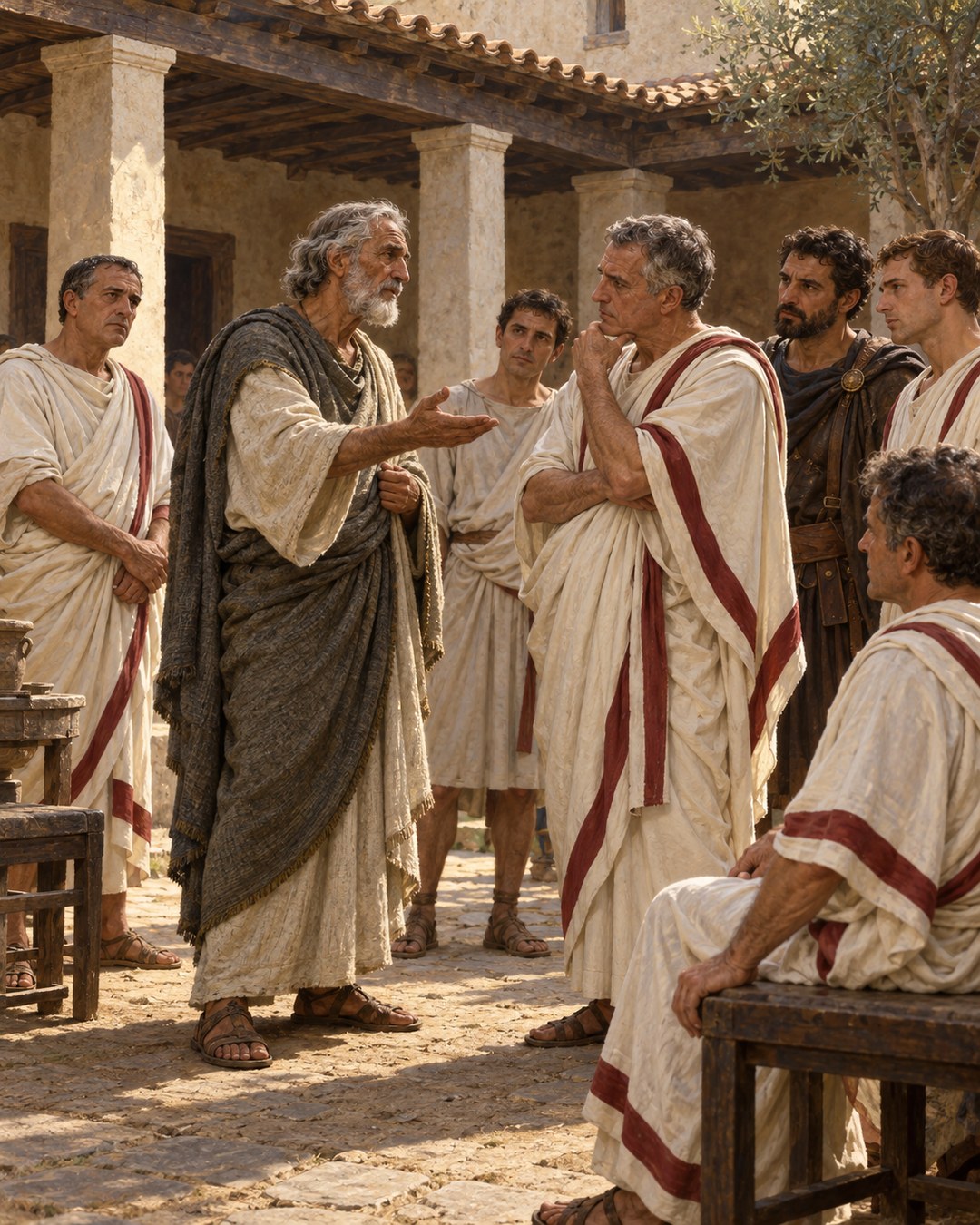
Cineas arrived in Rome as the representative of King Pyrrhus, entering a political community crowded with unfamiliar faces, inherited names and visible ranks. By the day after his arrival, Pliny says, the ambassador knew by name every member of the Senate and the equestrian order.
The claim is only one sentence in the Natural History, but its timetable gives it force. Cineas did not spend a season settling into Roman society. One night separates arrival from command of the names belonging to the city’s two leading political and social bodies.
Memory here was not a party trick. An envoy had come to persuade, test and report. Recognizing each man individually changed the texture of every approach. A stranger could greet Rome as though Rome were already known to him.
Pliny places Cineas among rulers, commanders and celebrated intellectuals, then abruptly reminds readers how easily memory can collapse. That contrast makes the envoy’s feat more than a marvel of storage. It shows personal knowledge being acquired at diplomatic speed and deployed in a city where names carried ancestry, alliance and expectation.
One Day Converted an Arrival into Recognition
Pliny identifies Cineas by office: he was the ambassador of Pyrrhus. The description points to a mission, not a permanent resident slowly learning his neighbours. Cineas had crossed into the civic centre of another power with work to do.
The next-day marker sets the scale of that work. He needed to distinguish individuals within groups that mattered to Roman decision-making. The Senate was not simply a crowd in similar dress, and the equestrian order was not an anonymous extension behind it. Pliny’s wording insists on names.
A name permits direct address. It also proves attention. Calling someone correctly separates him from rank alone and signals that the speaker has already begun mapping relationships inside the room. For an ambassador, that knowledge could guide where to look, whom to approach and whose reaction deserved notice.
The episode belongs to the wider encounter between Pyrrhus and Rome, but it uses none of the usual battlefield machinery. In the story of Fabricius warning Pyrrhus about a treacherous physician, diplomatic character is tested through a dangerous message. Cineas’s memory operates earlier and more quietly, making the messenger socially effective before the argument begins.
Pliny does not explain whether introductions, attendants, written lists or deliberate mnemonic techniques helped him. Claims about method should therefore stop short. The surviving detail is outcome and speed: arrival, one day, and recognition across both orders.
Senators and Equestrians Formed a Political Map
Why pair the Senate with the equestrian order? The two labels enlarged the accomplishment beyond memorizing one formal assembly. Cineas had learned names across adjacent but distinct zones of Roman prominence.
Senators carried public careers, family histories and immediate influence over deliberation. Equestrians represented wealth and standing outside senatorial membership and could matter in networks of business, service and political support. To distinguish both groups was to move through Rome with a much denser social map.
The feat should not be turned into a modern count, because Pliny supplies no head total in this passage. Its concreteness lies elsewhere: two named orders and a deadline measured by the next day. The scope is comprehensive in the author’s phrasing even though the arithmetic remains unstated.
That precision differs from the hidden flute that regulated Gaius Gracchus’s public voice. The flute shaped one speaker’s delivery before a crowd. Cineas’s memory moved in the opposite direction, turning the many listeners and power brokers into individually recoverable people.
Recognition could also alter the balance between host and visitor. Rome knew who the ambassador was because his office announced him. Cineas’s feat meant he could return the gaze. The foreigner was less isolated once the city’s leading faces came with names.
Pliny Measured Memory Through Communities
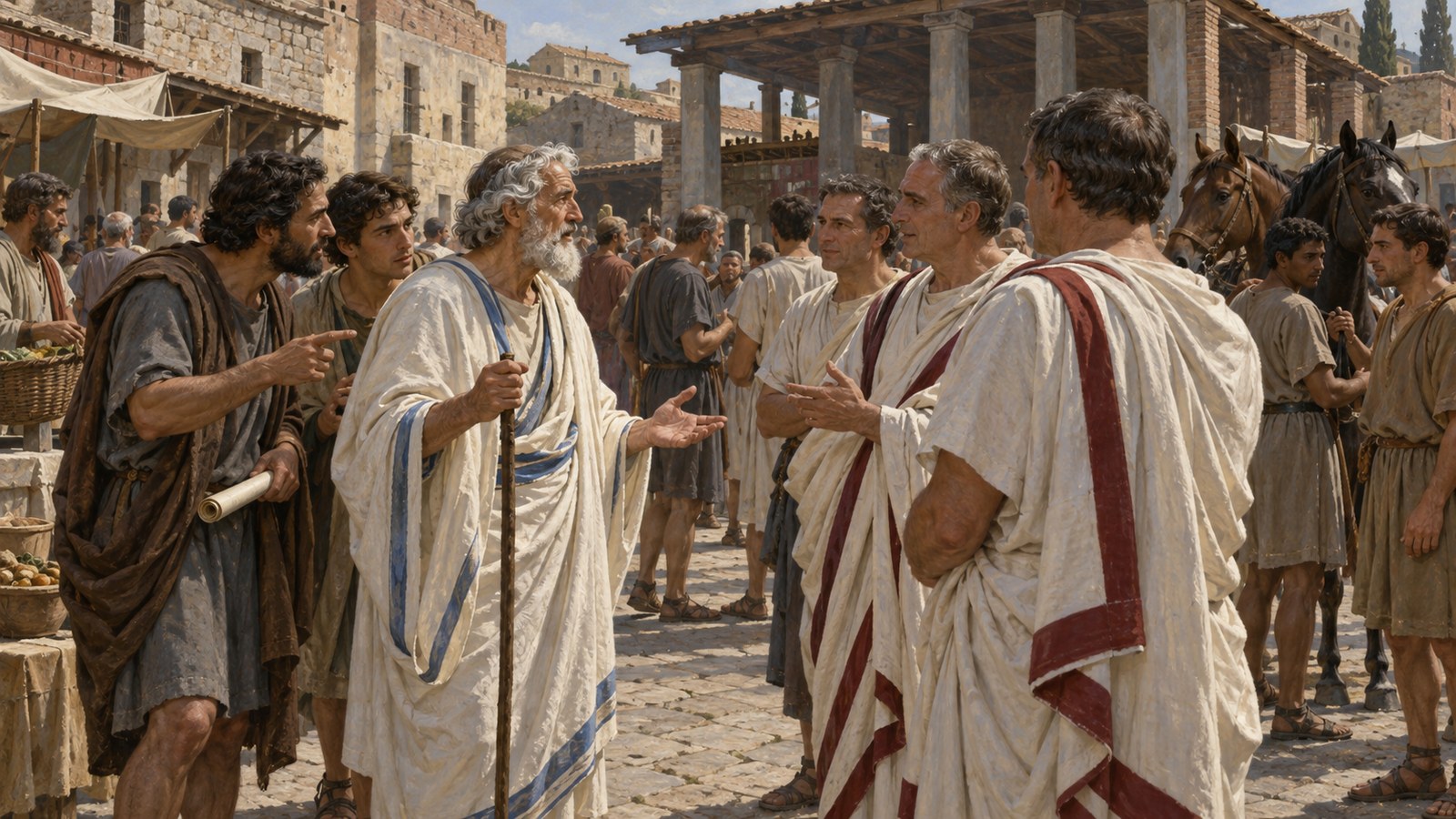
Cineas appears inside a compact catalogue of extraordinary recall. Pliny begins with King Cyrus, who supposedly knew every soldier in his army by name. He then credits Lucius Scipio with knowing the names of all the Roman people.
These examples measure memory socially. The achievement is not retaining a long string of detached syllables. A ruler or commander carries a community in his head. The more people he can identify, the more completely his mind seems to encompass the body he leads or addresses.
Mithridates extends the measure from names to languages. Pliny says the king governed twenty-two nations in as many tongues and could harangue each without an interpreter. The marvel combines recall with direct rule: language removes a human intermediary between sovereign and subject.
Cineas belongs in that sequence because diplomacy also depends on access without constant mediation. An attendant can whisper a senator’s identity, just as an interpreter can relay a speech, but immediate recall changes timing. The envoy can connect face and name while the encounter is happening.
Pliny’s list celebrates breadth, yet each example has its own political shape. Cyrus remembers an army, Scipio a citizen body, Mithridates a multilingual collection of nations, and Cineas the leading orders of a foreign republic. Memory becomes a different instrument according to the community it contains.
A Library and a Heard Speech Supplied Another Model
The chapter then leaves rulers and envoys for intellectual performance. Charmadas, a Greek renowned for memory, could supposedly repeat any book requested from a library as though reading it. Here the mind stands in for shelves and pages.
Pliny also says memory had been made into an art. He credits the lyric poet Simonides with its invention and Metrodorus of Scepsis with further perfection, allowing a person to repeat exactly, word for word, what had been heard.
Those claims show that ancient readers could imagine both natural prodigy and trained technique. Cineas is not explicitly assigned to either category. Pliny does not tell us that he used the art associated with Simonides or Metrodorus. It is enough that the examples share a chapter and invite comparison.
Books themselves mattered to recall in less miraculous ways. Gellius’s two nights with inexpensive books at Brundisium show reading turned into selected notes rather than total verbatim possession. Charmadas represents the fantasy of carrying the whole library; Gellius preserves what he judged worth copying; Cineas rapidly stores people needed for an encounter.
These are different economies of attention. One prizes completeness, another selection, and the diplomatic example usable recognition. Pliny’s brief catalogue holds them together under the broad wonder of memory without erasing their separate purposes.
Fragility Made the Achievement More Human
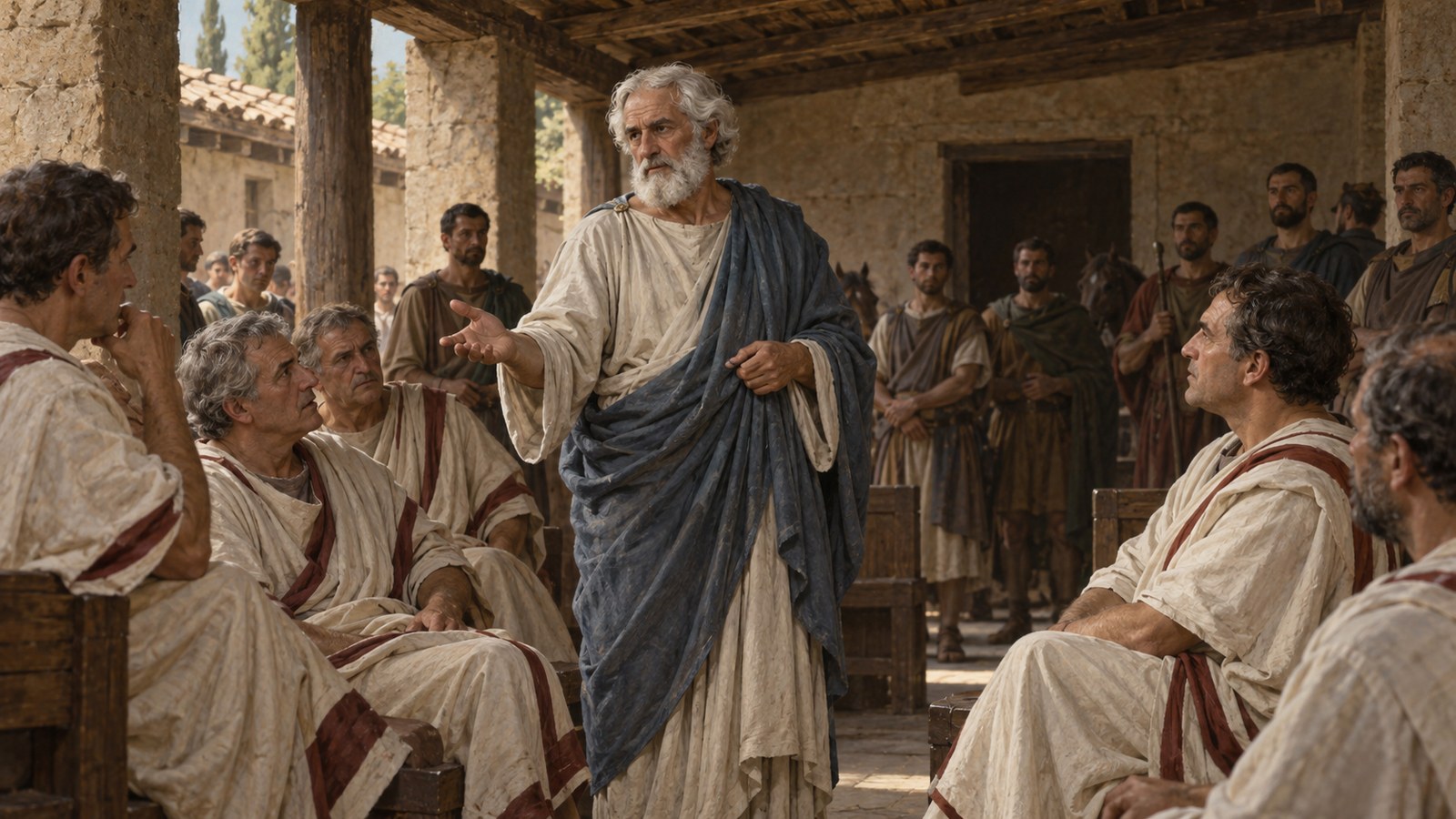
After building his list of prodigious minds, Pliny reverses direction. Nothing in a person, he says, is as fragile as memory. Disease, injuries and fright can damage it partly or entirely.
His examples are sharply selective. One man struck by a stone forgot only the names of letters. Another, after falling from a high roof, could not recognize his mother, relatives or neighbours. A sick man forgot his own servants. The orator Messala Corvinus lost recollection of his own name.
Whether every anecdote would survive modern medical scrutiny is not the point Pliny can establish. Their arrangement reveals an ancient observer noticing that memory is not always lost as one undivided store. Letters, relations, servants and self-name can fail in different stories.
That ending changes how Cineas’s triumph reads. The same faculty that seems large enough to hold Rome’s leading orders can be broken by a stone, a fall, illness or fear. Extraordinary reach does not make memory permanent.
Cineas’s next morning in Rome therefore remains vivid because it joins speed to usefulness and usefulness to risk. For the length of an embassy, a foreign diplomat carried a working map of the people before him. Pliny preserved the feat in one sentence; its political intelligence lies in every correct greeting that sentence implies.
Sources
Pliny the Elder, Natural History 7.24.