
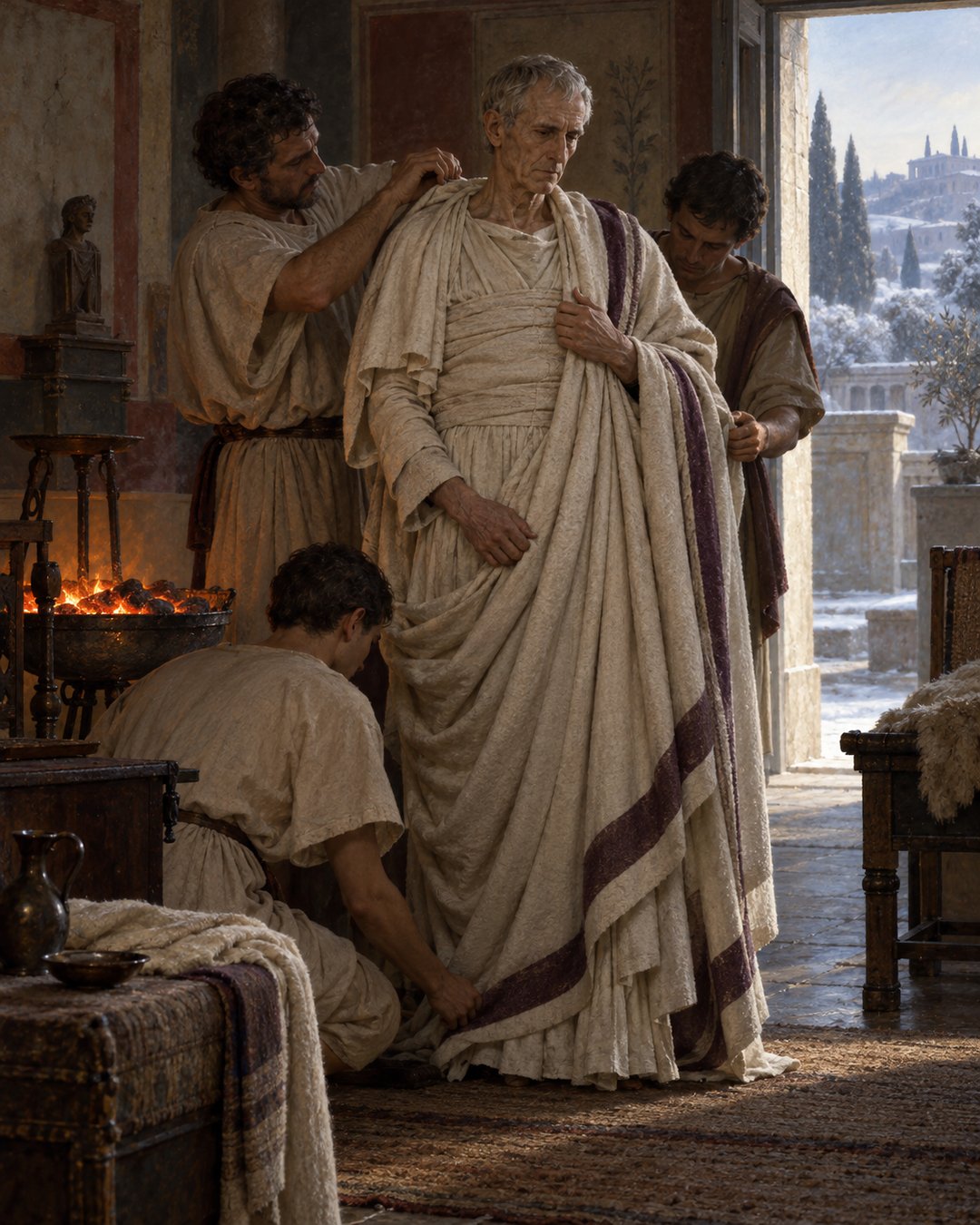
Four tunics stood between Augustus and a Roman winter.
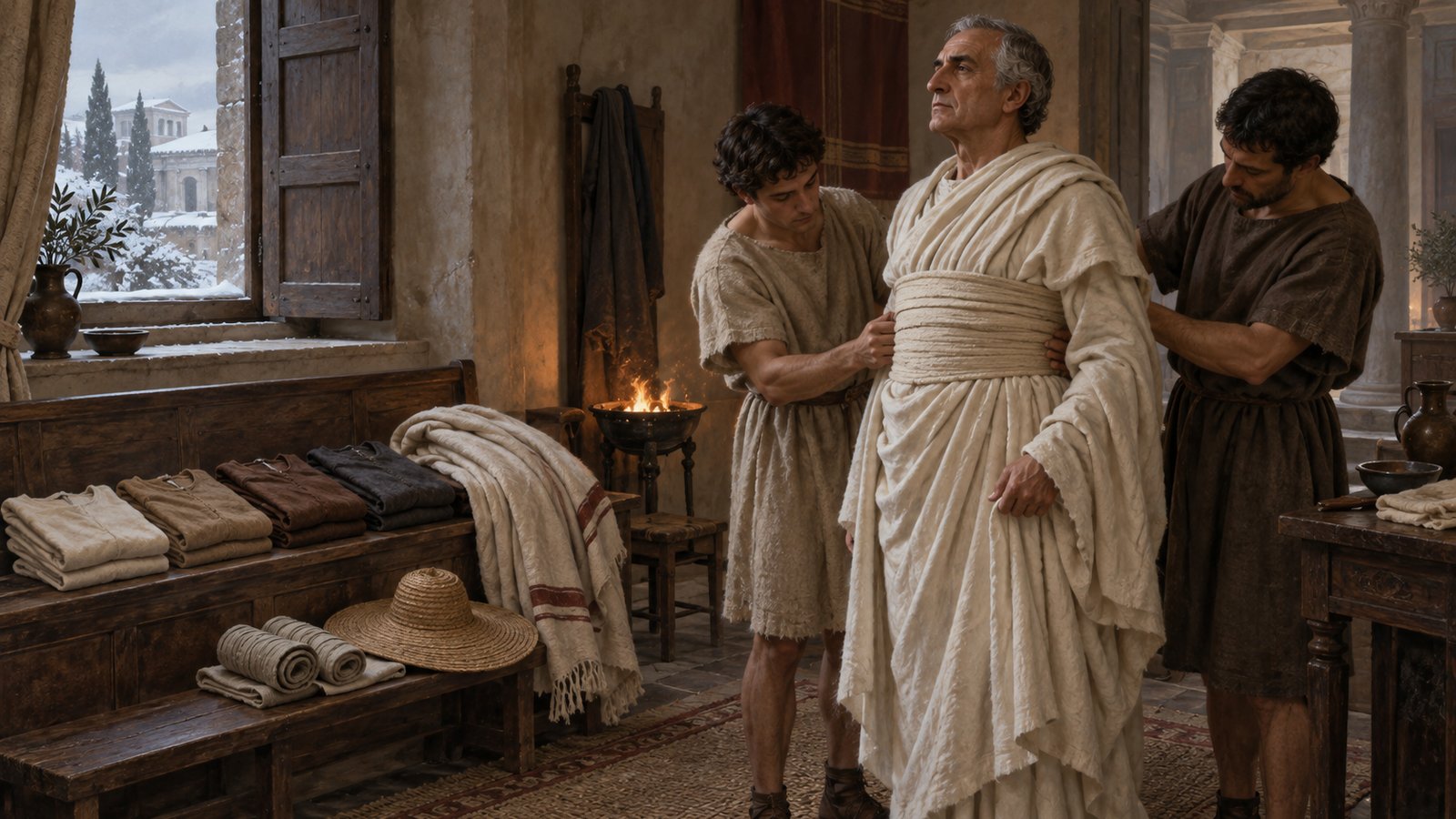
Suetonius adds a heavy toga, a woollen undershirt, a chest-protector, drawers and coverings for the legs. This was not the ceremonial wardrobe of a ruler displaying rank. It was a practical barrier assembled around a man who, his biographer says, could not easily endure cold or heat.
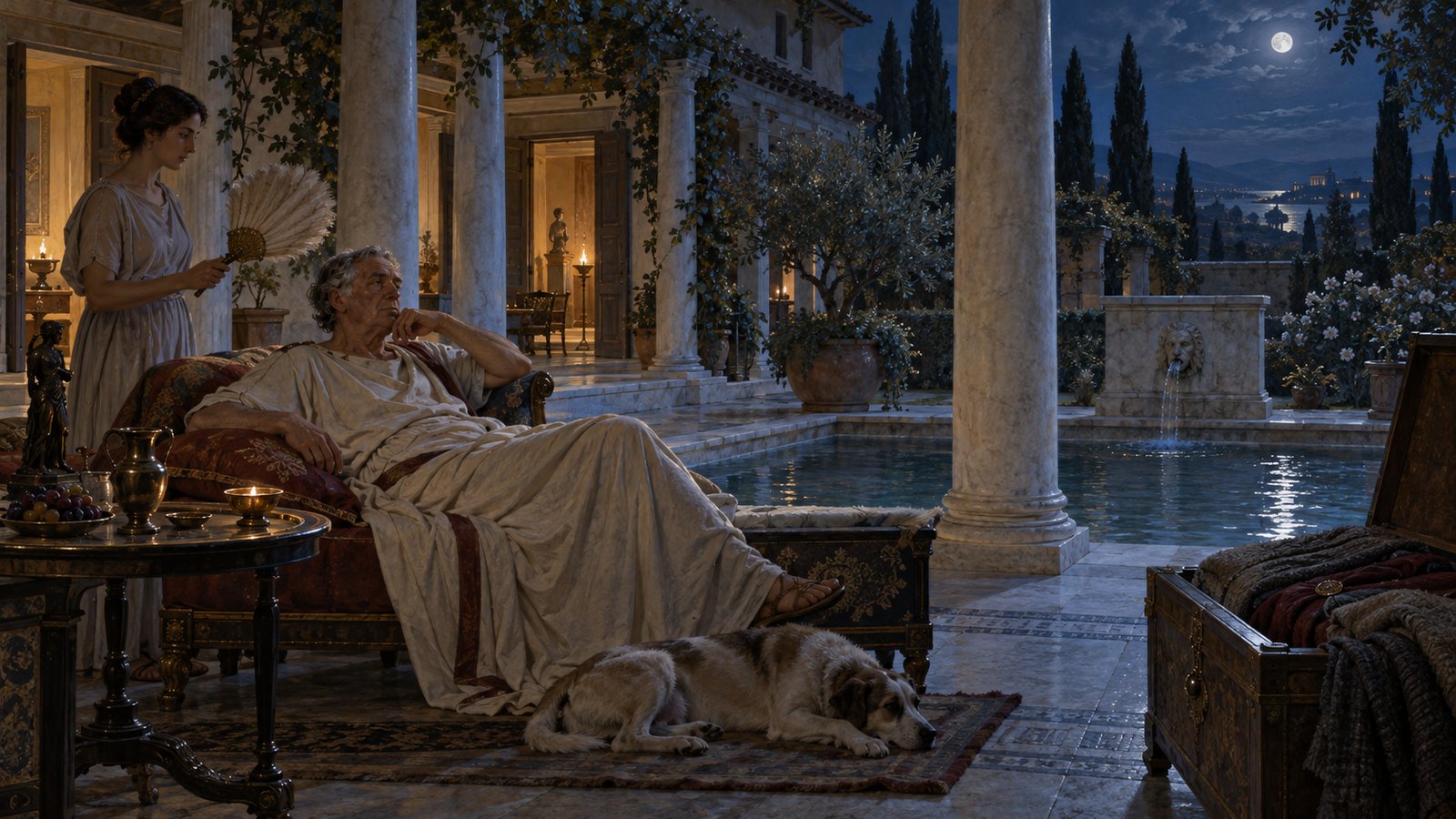
The same chapter follows him into summer. Doors opened, a couch moved into a peristyle near a fountain, and an attendant supplied a fan. Even winter sunlight could be unwelcome; on daytime journeys Augustus used a broad-brimmed hat.
Imperial biography often turns on wars, laws and succession. Here it turns on wool, shade, warm water and the timing of illness. Rome’s first princeps governed an enormous territory while managing weather one layer and one routine at a time.
Suetonius Made the Emperor’s Body Part of the Record
Suetonius does not present Augustus as permanently sick, but neither does he smooth away physical weakness. He lists serious illnesses at different periods and recurring trouble in the hip, thigh, leg and a finger of the right hand. The details interrupt any simple image of an untouchable ruler.
Some complaints seemed tied to the calendar. The biographer places attacks near Augustus’s birthday and in early spring. However imprecise the ancient diagnosis, repetition gave the household something it could anticipate. A dangerous transition in weather was not an abstract season; it was a known interval when routines might need to change.
One severe illness also changed treatment. Suetonius names the physician Antonius Musa and says a different regimen replaced earlier reliance on heat. The passage does not let us reconstruct a modern case history, but it shows medical advice altering the ruler’s habits after experience made the old approach inadequate.
The calendar detail gives the household a practical problem beyond diagnosis. A recurring spring attack or a difficult anniversary season could intersect with petitions, travel and public appearances. Preparation meant arranging warmth, rest and treatment before discomfort forced a sudden interruption. Suetonius does not list a formal medical schedule, but the repetition he records explains why ordinary precautions could become stable parts of palace routine rather than improvised responses to a single crisis.
This attention to the body belongs beside the account of readers whose voices helped Augustus return to sleep. Rest, temperature and treatment entered the practical machinery of rule because the person at its center still had nerves, joints and vulnerable seasons.
Four Tunics Worked as Portable Architecture
A tunic was ordinarily the basic garment beneath the toga. Four worn together converted that familiar layer into insulation. Each trapped air and separated skin from the outer cold. The heavy toga added another broad mass of wool around the torso.
Suetonius then names pieces that targeted particular areas: a woollen undershirt, protection over the chest, drawers and leg coverings. The list moves from total number to bodily map. Cold was not answered by one prestigious garment but by stacked and localized materials.
The effect was architectural on a small scale. Walls, shutters and braziers could warm a room; clothing carried a warmer enclosure through corridors, audiences and journeys. Attendants could add, fasten or remove pieces as conditions changed.
Separate pieces also made adjustment possible without discarding the whole arrangement. Leg coverings answered exposure below the tunic; the chest layer protected the area Suetonius names; the toga enclosed the stack when Augustus entered a civic setting. The list reads like accumulation, but it also shows selection. Each element had a place, and the household could reproduce the combination because the materials were familiar rather than experimental.
That portability mattered to a ruler whose day crossed domestic and public spaces. A palace chamber, litter, road and meeting room did not hold the same temperature. Layering made the body’s immediate environment less dependent on every building being comfortable.
The four tunics also complicate visual assumptions about power. Observers saw the outer toga and its civic meaning. Beneath it sat a private system of protection, thicker than the public silhouette revealed.
Summer Reversed the Household’s Environmental Work
Cold demanded enclosure; heat demanded movement of air. Suetonius says Augustus slept with his doors open during summer. He could rest in a peristyle beside a fountain while someone fanned him.
Every element altered the immediate atmosphere. An open doorway released trapped warmth. A colonnaded court offered night air and shade. Water added a cooler sensory zone. The fan created motion when the air did not provide enough of its own.
The attendant’s presence is easy to miss, but it turns comfort into labor. Augustus did not simply find a naturally cool corner. Someone maintained the airflow beside a sleeping body. Imperial resources appeared not only as marble and wealth but as another person’s repeated arm movement through the night.
The seasonal contrast was therefore organized. Winter placed fabric close to the skin; summer opened the room and moved air across it. Both strategies managed the boundary between body and climate without pretending that rank could erase temperature.
Suetonius’s domestic picture also suggests why habits mattered more than isolated emergencies. The solutions were repeatable: the same garments could be laid out, the same courtyard used, the same fan carried. Vulnerability became governable when the household converted it into procedure.
Sunlight Remained a Risk Even in the Cold
The most revealing precaution crosses the seasons. Augustus avoided the sun even in winter, and on daytime journeys at home he wore a broad-brimmed hat. Cold air did not make direct light harmless in his personal calculus.
This was not the headgear of a triumphal portrait. It was shade that moved with him. The brim created a small roof for face and eyes when walls or awnings were unavailable.
The choice joins clothing to scheduling. Travel by day exposed the ruler to conditions he avoided indoors. A hat made the journey possible without requiring every movement to wait for evening. As with the tunics, a modest object kept the public timetable compatible with bodily limits.
Augustus’s political identity travelled through carefully chosen images, including three different designs on his official seals. The broad hat belonged to a different kind of representation. It answered light rather than audience, yet anyone nearby could see the precaution.
Such visibility did not necessarily weaken authority. Roman elites knew that bodies aged and suffered. The stronger claim was continuity: business, travel and audiences could proceed because protection had been arranged.
Heat, Water and Friction Replaced a Single Bathing Habit
Suetonius says Augustus rarely used the bath in the ordinary way. He more often relied on rubbing, sweating before a fire, and washing with warm water or warmed seawater. These details belong to the same logic as the clothes.
Rubbing applied heat and pressure directly. Sitting near a fire induced sweat without the sequence of a large bath establishment. Warm water allowed temperature to be controlled more narrowly. The biography records alternatives selected around the person rather than the person adapting to one standard routine.
We should not turn the list into a modern prescription. Suetonius reports practices and an ancient understanding of health, not controlled evidence of effectiveness. What the passage securely shows is variation. The household had several ways to respond when ordinary bathing or weather felt unsuitable.
Warm seawater is especially revealing because it joined two controllable features: substance and temperature. The treatment did not require Augustus to accept the changing heat of a large public bathing sequence. Water could be brought or prepared around his tolerance, just as garments could be layered around his body. Rubbing and sweating near a fire likewise concentrated effort close to the patient instead of asking him to move through a fixed architectural routine.
That flexibility connected physician, attendant, wardrobe and room. No single object kept Augustus functioning. Protection emerged from a chain of observations: a season approached, symptoms had returned before, layers were prepared, shade arranged, water warmed and rest defended.
The result is an imperial portrait with no need for a throne. Four tunics, a fan and a hat reveal how power accommodated a body instead of transforming it. Augustus could reorganize institutions across the Roman world. Winter still required wool.
Sources
Suetonius, Life of Augustus 81–82.