
The profit began by making a migratory bird forget the view outside.
Varro reports an extraordinary Sabine sale: five thousand fieldfares at three denarii apiece, producing sixty thousand sesterces from one aviary in one year. He immediately warns that such money needed the appetite of a banquet, triumph or dining club.
Demand could spike. Birds could die. A profitable villa therefore required more than a high price. Its building had to hold thousands of restless animals, keep water clean, exclude vermin, prepare bodies for sale and remove losses from the owner’s account.
The aviary was a machine for timing appetite. Its profit depended on keeping a wild season alive indoors until Rome wanted to eat it.
A Windfall Needed Rome to Be Hungry
The revenue appears during a debate about villa husbandry. One estate was said to earn heavily from geese, chickens, pigeons, cranes, peafowl, dormice, fish and boars. Varro then offered a sharper example from his aunt’s Sabine property along the Via Salaria.
Its aviary sold five thousand fieldfares for three denarii each. Varro states the annual return as sixty thousand sesterces, twice the income attributed in the conversation to a much larger farm at Reate. The listener’s repeated disbelief is part of the scene.
Varro did not present that sum as a steady law of nature. To “reach such a haul,” he says, the breeder needed a public banquet, a triumph or the many club dinners that pushed food prices upward. Luxury husbandry joined the countryside to concentrated moments of urban consumption.
This made timing as important as production. A flock ready during ordinary demand might sell modestly. The same stock offered when an organizer needed thousands of delicacies for a public spectacle could command a different market.
The story of beehives moved upriver toward new blossoms follows producers chasing seasonal abundance. Fieldfare husbandry reversed the movement: migrating abundance was captured, held and released toward Rome when buyers became abundant.
The quoted unit price makes the scale concrete. A single bird was not the fortune. The windfall emerged when thousands could be held in saleable condition and transferred into one unusually deep market. Volume multiplied luxury pricing, while mortality or a missed feast could erode the same calculation from both ends.
The Building Hid the World the Birds Wanted
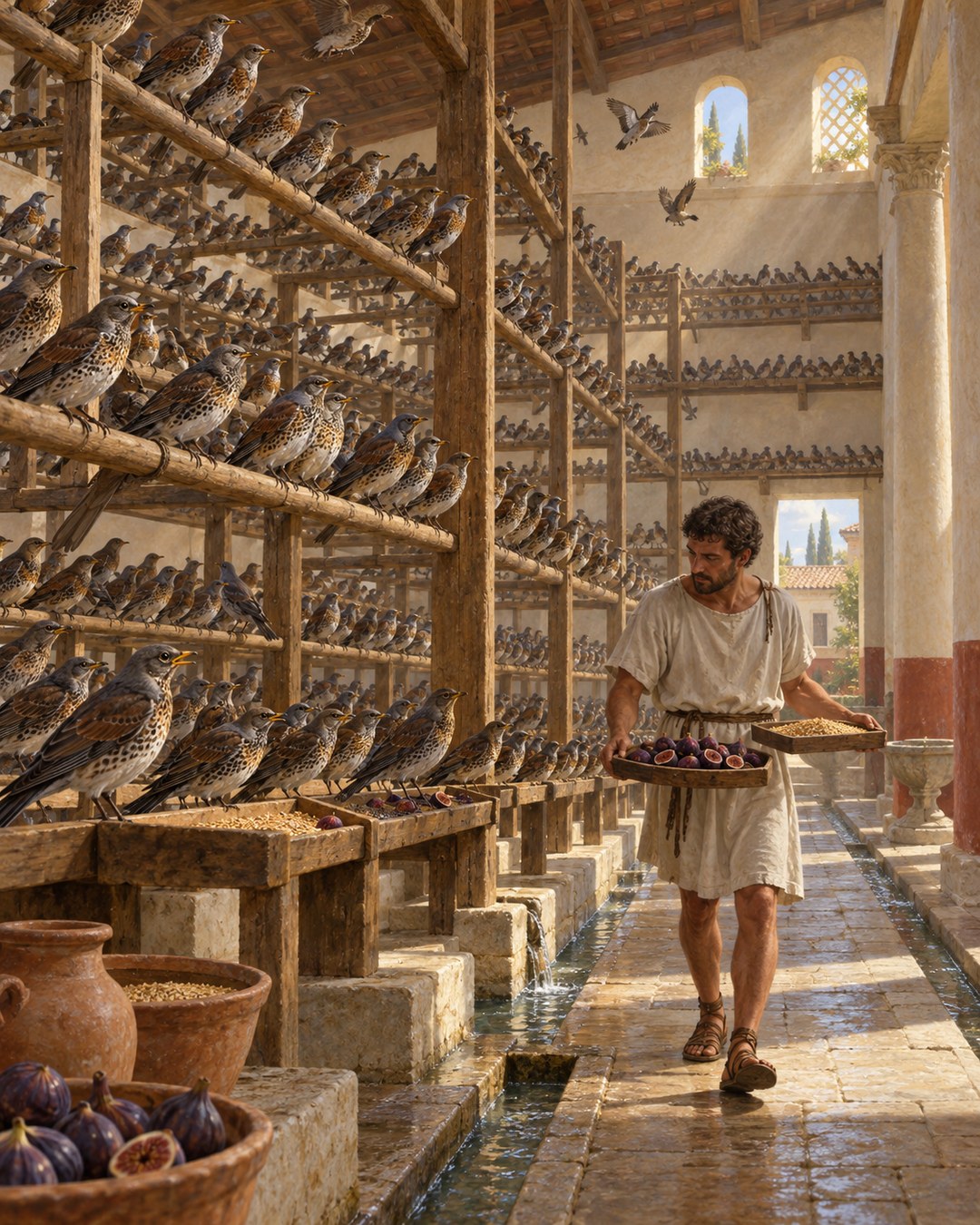
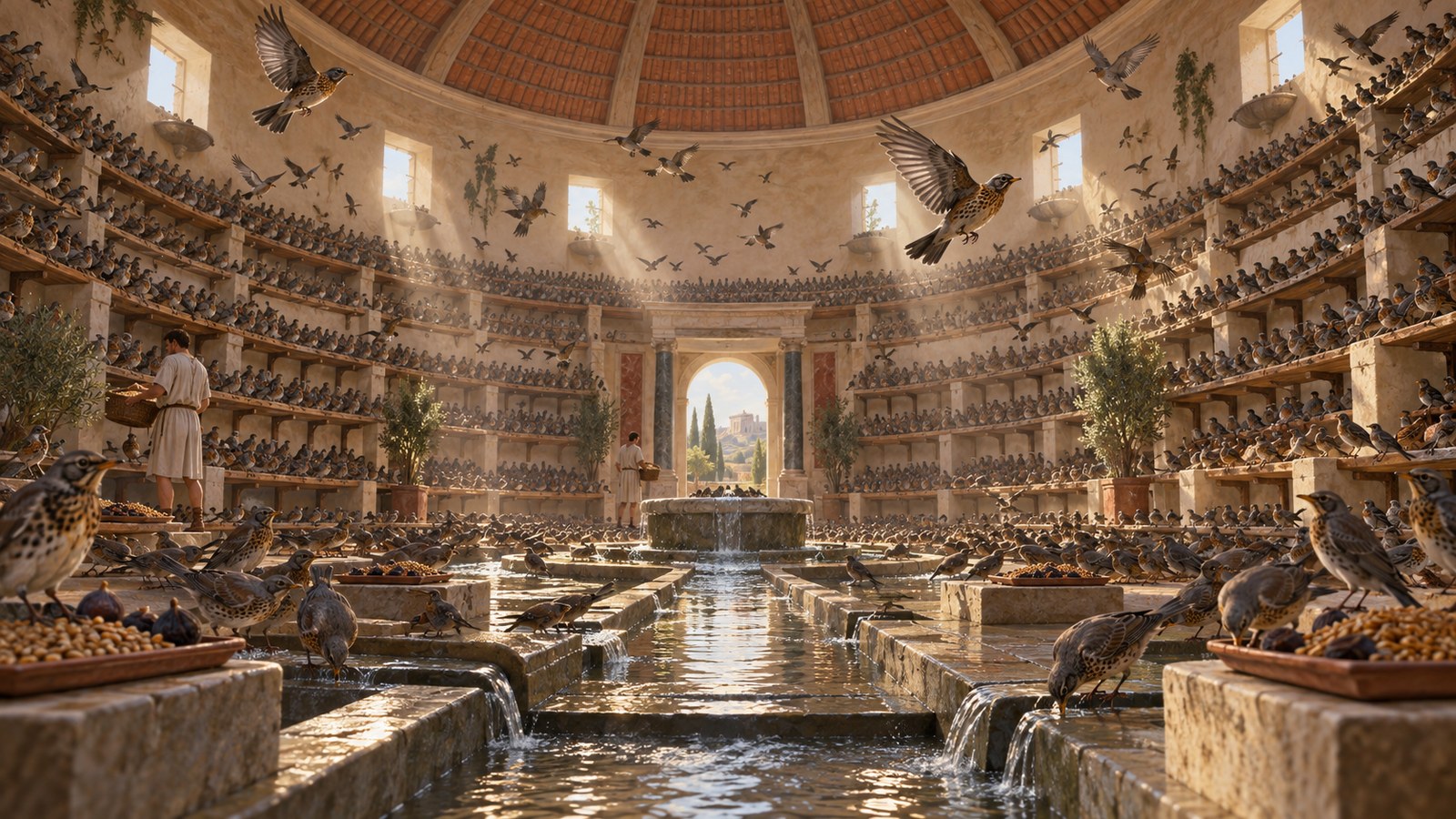
Varro’s profitable aviary was a large domed structure or a peristyle covered with tile or netting. It could confine several thousand fieldfares and blackbirds, with ortolans and quails added when fattened birds fetched a worthwhile price.
Its windows were deliberately few. They admitted enough light for birds to find water, feed and perches, but they were positioned so the captives could not see outside trees or free birds. Varro believed that such sights stirred longing and made imprisoned birds grow thin.
Architecture thus managed attention as well as movement. Walls did not merely prevent escape. They removed visual reminders that could work against fattening.
The door was low and narrow, preferably a spiral type compared with entrances used around animal arenas. Smooth plaster surrounded doors and windows so mice and other vermin could not find holds or gaps. A breeder defending expensive stock had to control tiny intruders as carefully as the flock.
Inside, poles lined the walls. Sloping rods crossed by horizontal steps rose like the seating of a theatre or arena. The comparison explains density without imagining birds piled together: many levels offered distinct perching surfaces inside one enclosed volume.
Light was rationed rather than eliminated. The birds still needed to identify perch, drink and feed. Too much outward visibility, in Varro’s account, damaged condition; too little interior visibility would make the room unusable. The breeder was manipulating a narrow band between orientation and longing.
Water, Figs and Spelt Turned Confinement into Condition
Thousands of birds could foul standing water quickly. Varro recommended bringing water through narrow channels that were easy to clean. Excess flow left through a pipe, preventing pools from becoming muddy and unfit to drink.
The detail separates a commercial aviary from a decorative collection. Sanitation had to be repeatable by workers. Narrow channels guided both water and cleaning; drainage removed what the birds did not consume.
Feed took the form of cakes kneaded from figs and spelt. The recipe supplied concentrated food that could be distributed at floor level beneath the perches. It was not the final stage, however.
Twenty days before the intended removal, the breeder increased the ration and switched to more finely ground spelt. The flock entered a finishing period timed backward from sale. Market condition was produced through a short, deliberate change rather than left to the birds’ ordinary diet.
The system resembles the smooth Roman tower built for five thousand pigeons in its concern with scale and protected surfaces. The fieldfare room added another variable: these birds were temporary migrants whose highest value arrived after confinement and fattening.
Every Death Had to Appear in the Account
Varro includes a detail that removes any romantic haze. Recesses with shelves stood opposite the perches, and the caretaker kept birds that had died there so he could account for them to the owner.
A missing bird might represent natural loss, poor care, theft or private consumption. Retaining the body turned absence into evidence. The owner could compare the stock that entered, the birds sold and the mortality displayed by the worker.
This accounting burden followed from value. When thousands of small animals formed one inventory, no proprietor could identify each bird individually. Control depended on totals and explainable subtraction.
Varro’s description also acknowledges that death inside the room was routine enough to require a procedure. Clean channels, vermin barriers and measured feed reduced risk; they did not make a crowded aviary harmless.
The caretaker stood between living flock and written expectation. He fed, cleaned, selected and preserved proof of failure. The spectacular profit quoted earlier rested on this repetitive and unpleasant labor.
Those shelves also made daily care auditable after the owner left. A worker could not restore a lost bird, but he could preserve an explanation for the missing unit. The procedure translated fragile animal life into the arithmetic of estate management without pretending that every loss was preventable.
A Separate Room Protected the Remaining Stock
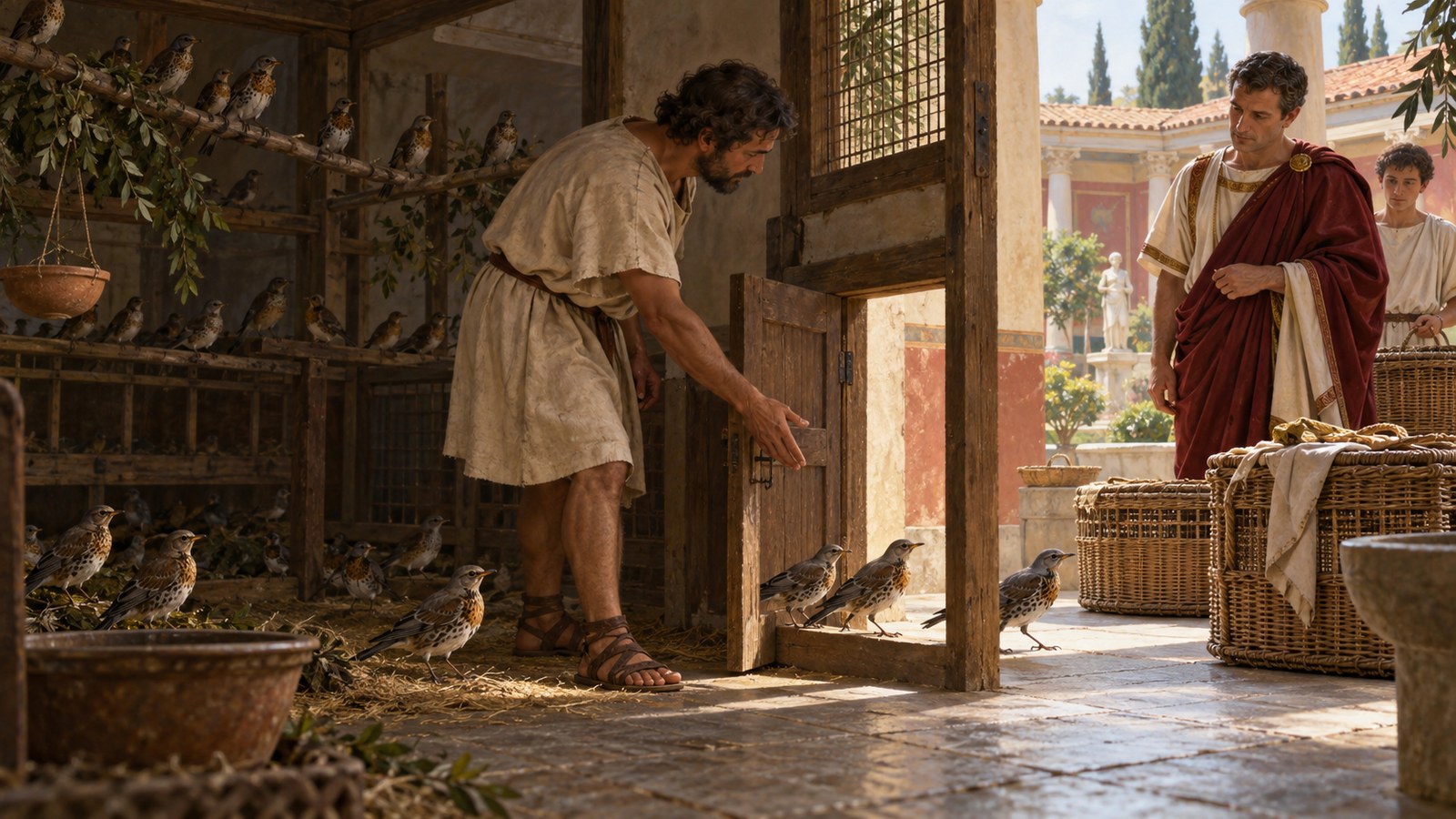
Birds ready for market were not killed in the main aviary. Workers guided them through a connecting door into a smaller, brighter enclosure called the seclusorium.
Once the desired number had been isolated, they were dispatched there. Varro’s reason is behavioral and financial. If the other birds saw the killing, they might pine and die at a time that did not suit the seller.
The separate room therefore controlled information. Hidden windows had already kept the flock from seeing freedom. The seclusorium kept it from seeing the fate of selected birds. Both measures protected weight and survival by limiting what the animals perceived.
Seasonality framed the whole enterprise. Varro says fieldfares crossed into Italy around the autumn equinox and departed around the spring equinox, resting on nearby islands during migration. The villa captured a moving population and converted part of its journey into stock.
Sixty thousand sesterces was the memorable result, but the mechanism was quieter: a darkened view, plaster without footholds, water that did not stagnate, figs mixed with spelt, a richer final ration, bodies retained for audit and a door into a second room.
The urban buyer saw a luxury bird on a banquet table. The villa owner saw a seasonal ledger whose value survived only if architecture, labor and appetite reached the same date.
Sources
Marcus Terentius Varro, On Agriculture 3.2 and 3.5.