
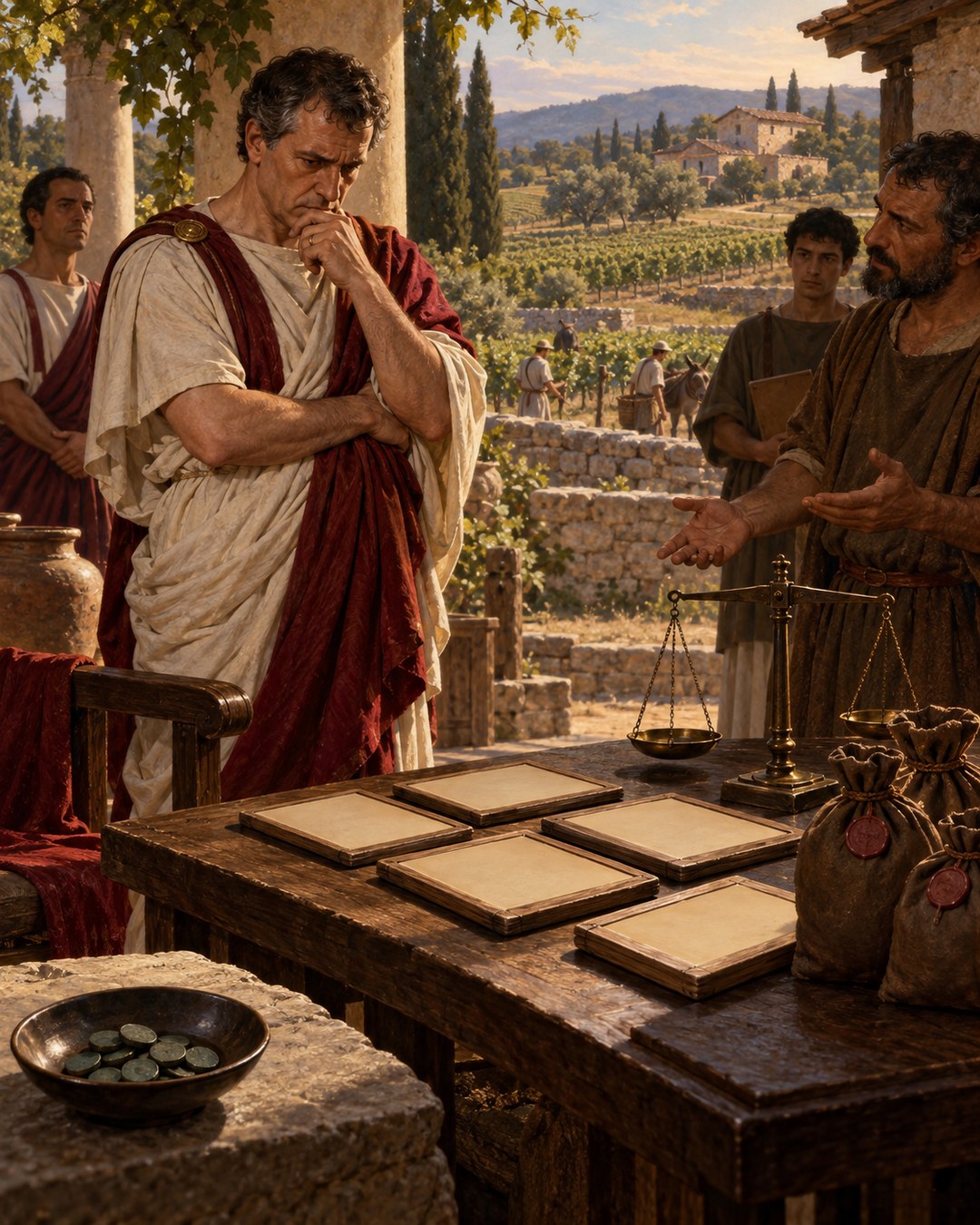
Italian land did not become more fertile overnight. No newly opened road shortened the journey to Rome, and no harvest suddenly doubled.
Yet Pliny the Younger wrote that prices had jumped, especially around the capital. Candidates for office were running about to buy whatever estates they heard were available.
The cause was a rule that made one-third of a candidate’s fortune answer a political question: where did his wealth actually belong?
The Senate Tried to Remove Three Forms of Election Spending
Pliny’s letter begins with a market fact and then moves backward to the election that produced it. The price of land had risen sharply enough for people to debate the cause. His explanation lay in a senatorial attempt to restrain campaigning.
The Senate resolved that candidates should not provide public entertainments, send presents or deposit money. Pliny distinguishes how openly those practices operated. Entertainments and gifts had proceeded in public and had passed every reasonable limit. Deposits were secret, but only in the thin sense that everyone knew about them without seeing them acknowledged.
The three prohibitions describe an election economy rather than a single bribe. A candidate might purchase visibility through spectacle, convert relationships into obligation through presents, or place money where it could influence support less visibly. Closing one route would not matter if the other two remained available.
Homullus used the Senate’s unanimity. Instead of making another speech, he asked the consuls to acquaint the emperor with the wishes of the whole body and to request a remedy. Pliny presents this as a coordinated sequence: senatorial agreement, consular transmission and imperial action.
The emperor responded through what Pliny calls a corrupt-practices measure. It restricted the shameful expenses candidates had incurred. That part addressed money flowing out of a campaign.
The second part went further. It told candidates where a fixed share of the wealth behind the campaign had to be held.
This was not the first time Roman office and private resources met. The property test behind an equestrian’s public horse also made wealth visible in status. Pliny’s case is different because the required asset was not merely a quantity. Its location mattered.
One-Third of a Patrimony Became a Qualification for Candidacy
The emperor ordered candidates to invest one-third of their patrimony in land. Pliny’s explanation makes clear that the land had to bind them to Rome and Italy, not merely satisfy a preference for real estate anywhere in the empire.
A patrimony included the inherited and accumulated property by which an elite household sustained itself. Requiring a third was therefore not a token purchase. A candidate whose wealth lay mostly in provincial estates, loans or commerce had to rebalance a substantial portfolio before office remained practical.
The fraction converted loyalty into something administrators and rivals could inspect. Affection for Italy could be claimed in a speech. Ownership left deeds, boundaries, sellers and prices. A candidate either moved enough wealth into Italian soil or failed the financial expectation attached to his ambition.
Pliny reports the emperor’s moral reasoning. It was disgraceful for people seeking Roman office to treat Rome and Italy not as their mother country but as an inn or lodging where travelers happened to stay. The metaphor targets temporary occupancy. Candidates could not use the political center while keeping nearly all durable wealth elsewhere.
The remedy did not require candidates to abandon provincial interests. Two-thirds could remain outside the required Italian land share, and Pliny never says every other asset became forbidden. The rule instead established a floor beneath the connection between office and Italian property.
That floor carried unequal consequences. Someone already rich in nearby farms might need little adjustment. Someone whose family fortune rested in provincial acreage had to sell, borrow or redirect liquid wealth. The same fraction produced different levels of disruption depending on what each patrimony contained before the order.
The mechanism resembles the way the Palmyrene tariff turned commerce into listed obligations. A broad political purpose became operational only after it was tied to a measurable asset or charge.
Compulsory Buyers Changed the Italian Land Market at Once
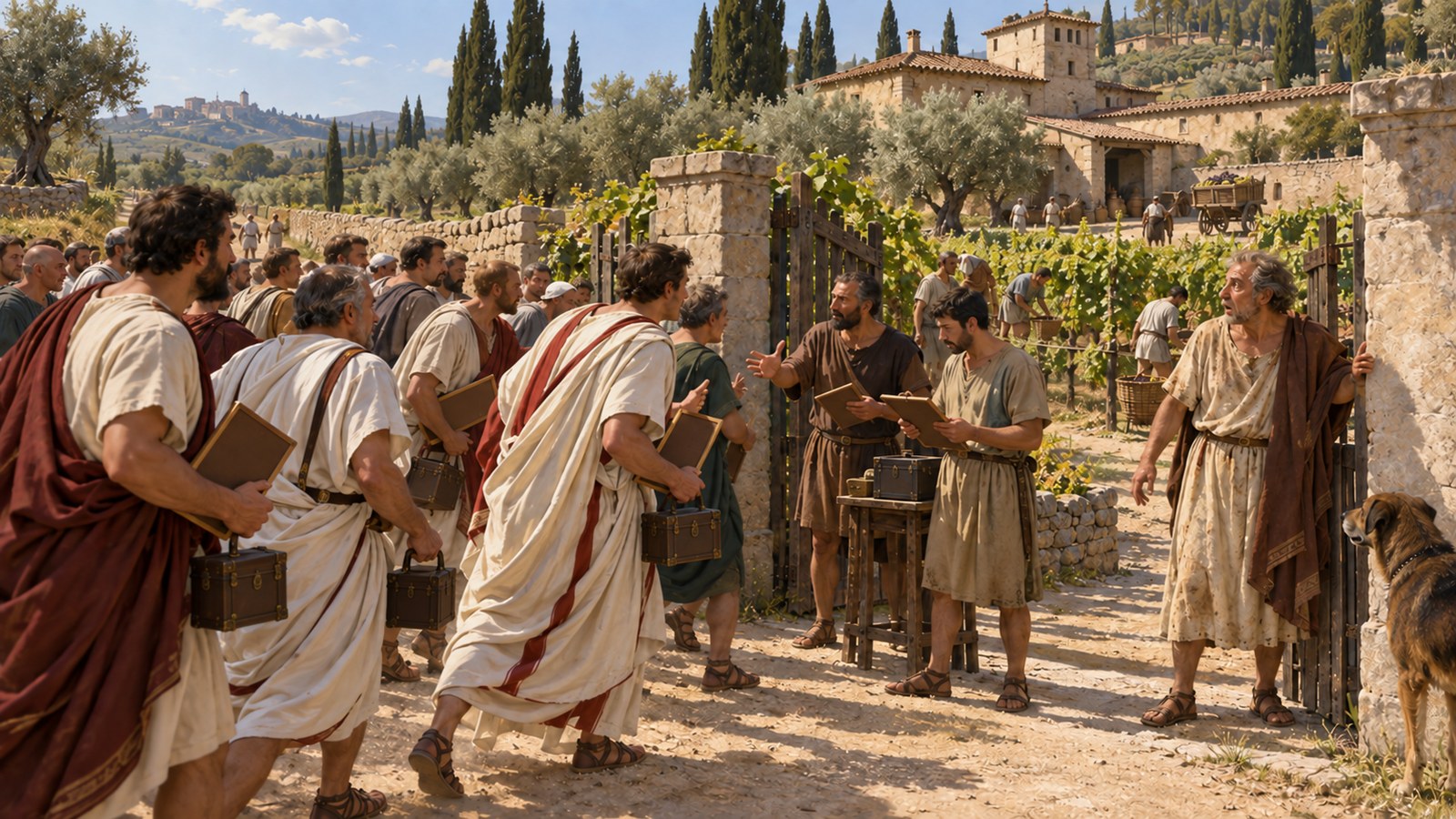
Once the rule existed, candidates became buyers under pressure. Pliny says they ran about purchasing whatever they heard was for sale. That phrase captures urgency better than a formal statement about demand.
They were not browsing because Italian farms had suddenly offered superior returns. Their deadline was political. Elections and candidacies moved on a timetable, so waiting indefinitely for the perfect vineyard or suburban estate risked losing more than a bargain.
Sellers could see the pressure. A landowner no longer faced only buyers judging expected rents, harvests and maintenance. He also faced office-seekers who needed qualifying property. A parcel’s usefulness now included its ability to satisfy a candidacy requirement.
Pliny adds that candidates were forcing numerous estates onto the market. The apparent paradox makes sense when the whole portfolio is considered. To acquire qualifying Italian land, a candidate might need to liquidate property elsewhere. His demand in one region created supply in another.
The rush also helps explain why the rise was particularly sharp in the suburbs of Rome. Nearby estates joined agricultural value to proximity. They made the owner’s Italian commitment visible around the city where office was sought and political relationships were maintained.
Nothing in the letter says every seller received the same premium or that every provincial estate lost value. Pliny gives the direction of the pressure, not a complete price series. His evidence is observational: suddenly dearer land, hurried candidates and properties moving because the rule required transactions.
That limitation is useful. The letter does not need invented percentages to show a market shock. One mandated third was enough to change who had to buy, how quickly they had to act and which assets they might sell to obtain the money.
Pliny Turned Public Policy into Private Trading Advice
Pliny does not end by applauding the moral purpose of the decree. He gives practical advice to the recipient.
If his correspondent had grown tired of Italian estates, this was the moment to sell. Candidates supplied eager demand. The recommendation treats the policy as a temporary opening rather than a permanent guarantee that every Italian property would always command a premium.
Pliny then pairs the sale with a purchase in the provinces. Candidates had to dispose of provincial properties to finance the Italian acquisitions. That meant provincial assets could appear at the same time that Italian assets became dear.
The two sides of the trade belonged to one legal cause. Sell into the part of the market filled with compulsory buyers; buy in the part filled with compulsory sellers. The advice is concise because Pliny assumes his reader can follow capital as it crosses the empire.
He does not claim indifference to Italy. Nor does he advise a candidate to evade the rule. The correspondent is treated as an owner who can respond to prices created by other men’s political obligations.
This is why the letter preserves more than an election reform. It shows how quickly an elite observer could translate public law into relative value. A decree announced in Rome reached a provincial estate through a candidate’s need for cash.
The market effect also complicates the policy’s moral language. Requiring rootedness could encourage ownership, but it could not manufacture attachment. A hurried purchase made under electoral pressure satisfied the asset test even if the buyer had never walked the boundary before bargaining for it.
The Rule Bound Office to Soil without Ending Speculation
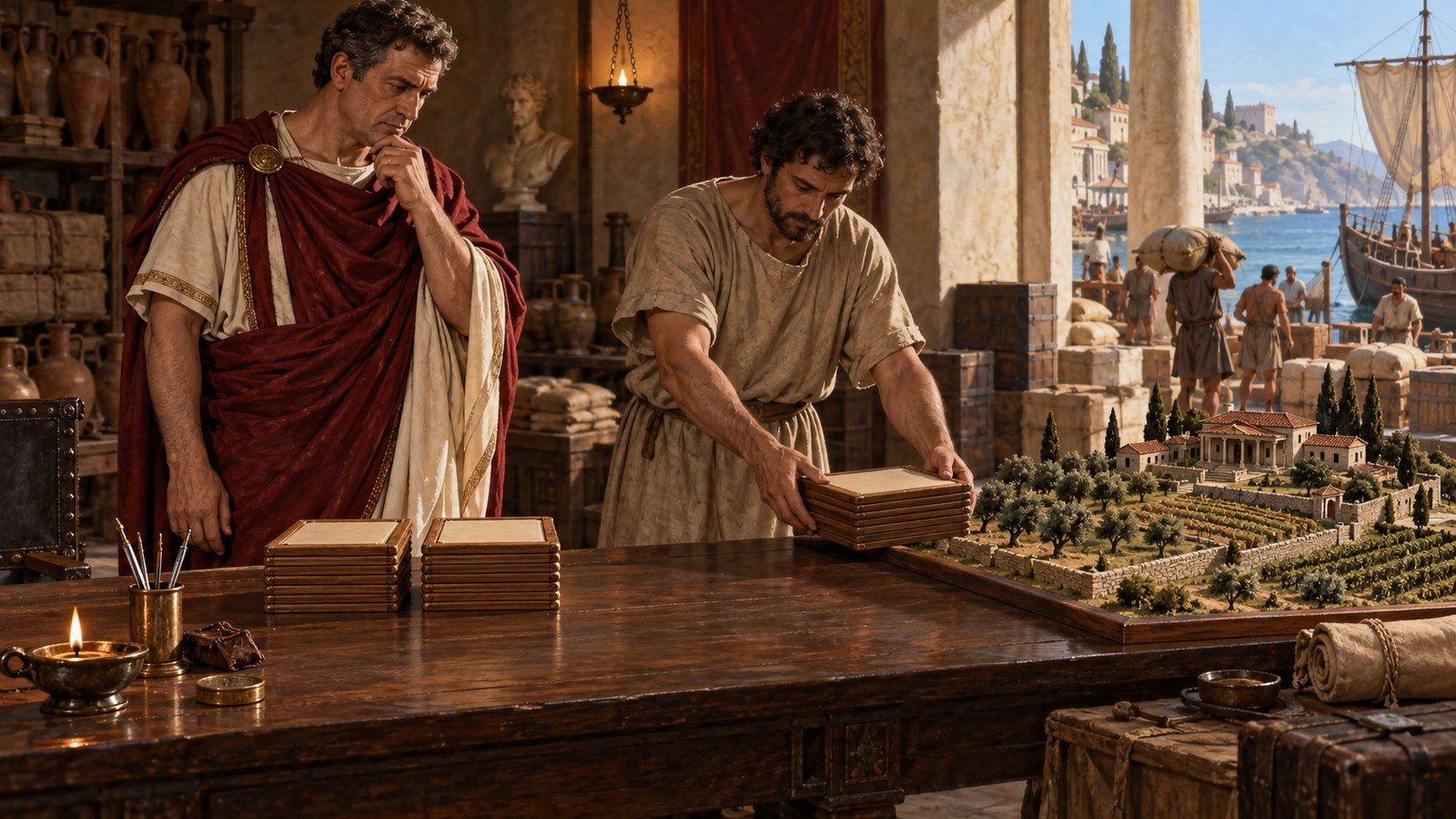
The emperor’s order sought durability. A candidate should not pass through Italy like a traveler sleeping at an inn. One-third of his patrimony had to remain in land connected to the political center.
Yet the method used a market, and markets rearranged themselves around it. Existing owners gained bargaining power. Candidates searched urgently. Provincial holdings became saleable sources of funds. Observers such as Pliny looked for the advantageous side of both movements.
The result was neither a simple triumph over corruption nor proof that the policy failed. The spending restrictions and property order did different jobs. One narrowed campaign expenditure. The other required a durable stake from those seeking authority.
Pliny’s letter catches the interval when adjustment was visible. Prices had already risen, but candidates were still chasing notices of sale. The new equilibrium had not settled.
Its most revealing phrase is not the emperor’s moral rebuke but Pliny’s report of movement. Candidates were running about. Law had turned a third of private wealth into a deadline, and the land market began moving before the rhetoric about mother country had cooled.
Sources
Pliny the Younger, Letters, book 6, letter 19.