
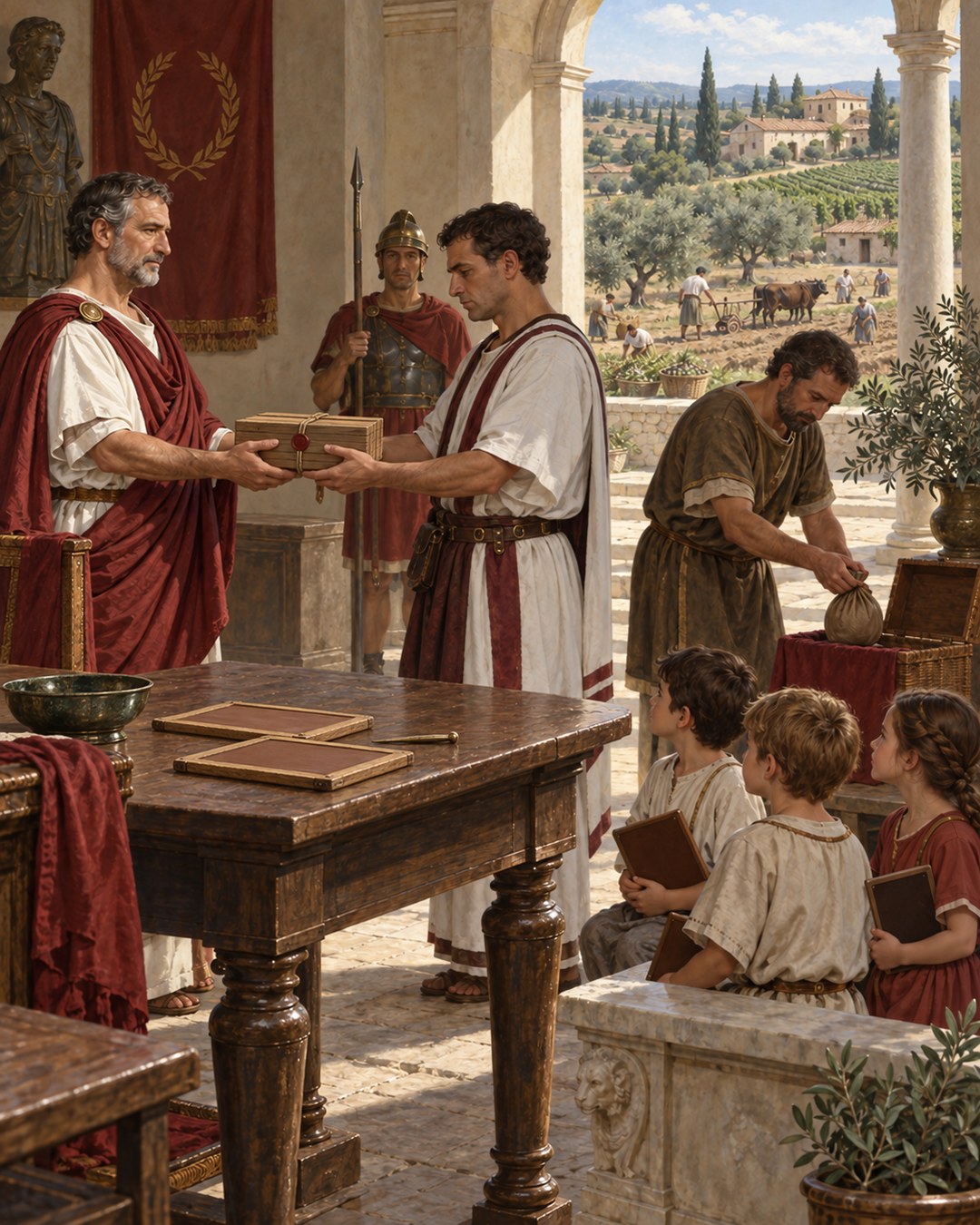
Caninius wanted an annual feast to continue after nobody could ask him what he intended.
Cash could disappear. Public land could decay. A generous promise therefore needed more than a large sum and a grateful town.
Pliny’s answer was to give property away, receive it back and make himself owe rent forever.
A Permanent Gift Had to Survive Its Donor
The question in Pliny’s letter is not how to stage one feast. Caninius had already given money to his fellow townsmen for an annual celebration. He wanted the provision secured after his death.
That final phrase changes the problem. During a donor’s life, personal influence can correct neglect. He can remind officials, replace managers or add funds. After death, the institution must operate without his voice.
Pliny says the question is proper but difficult. The obstacle was not a lack of Roman legal forms. It was that every form placed control, maintenance and temptation in different hands.
A feast is consumed each year. Its foundation must therefore produce recurring value. If the principal itself is spent on celebration, the most splendid first years can destroy the later ones.
Pliny approached the question from his own educational endowment. He had promised support for free-born boys and girls in his community. The beneficiaries would change as children grew, but the obligation was meant to continue.
The archive’s story of Pliny helping Comum recruit a teacher shows him using money to alter local education. Letter 7.18 explains the financial architecture required when such local benefit was expected to outlive him.
Cash and Public Land Failed in Opposite Ways
Pliny first considers handing over a lump sum. Cash is flexible, divisible and easy to apply to annual expenses. Those strengths also make it easy to redirect.
His warning is blunt: the community might squander it. He does not need to allege one corrupt official. Over decades, many decisions could consume principal while each appeared tolerable in isolation.
Land seems safer because it cannot vanish from a chest. Give the town a field and its crops or rent might fund the feast year after year.
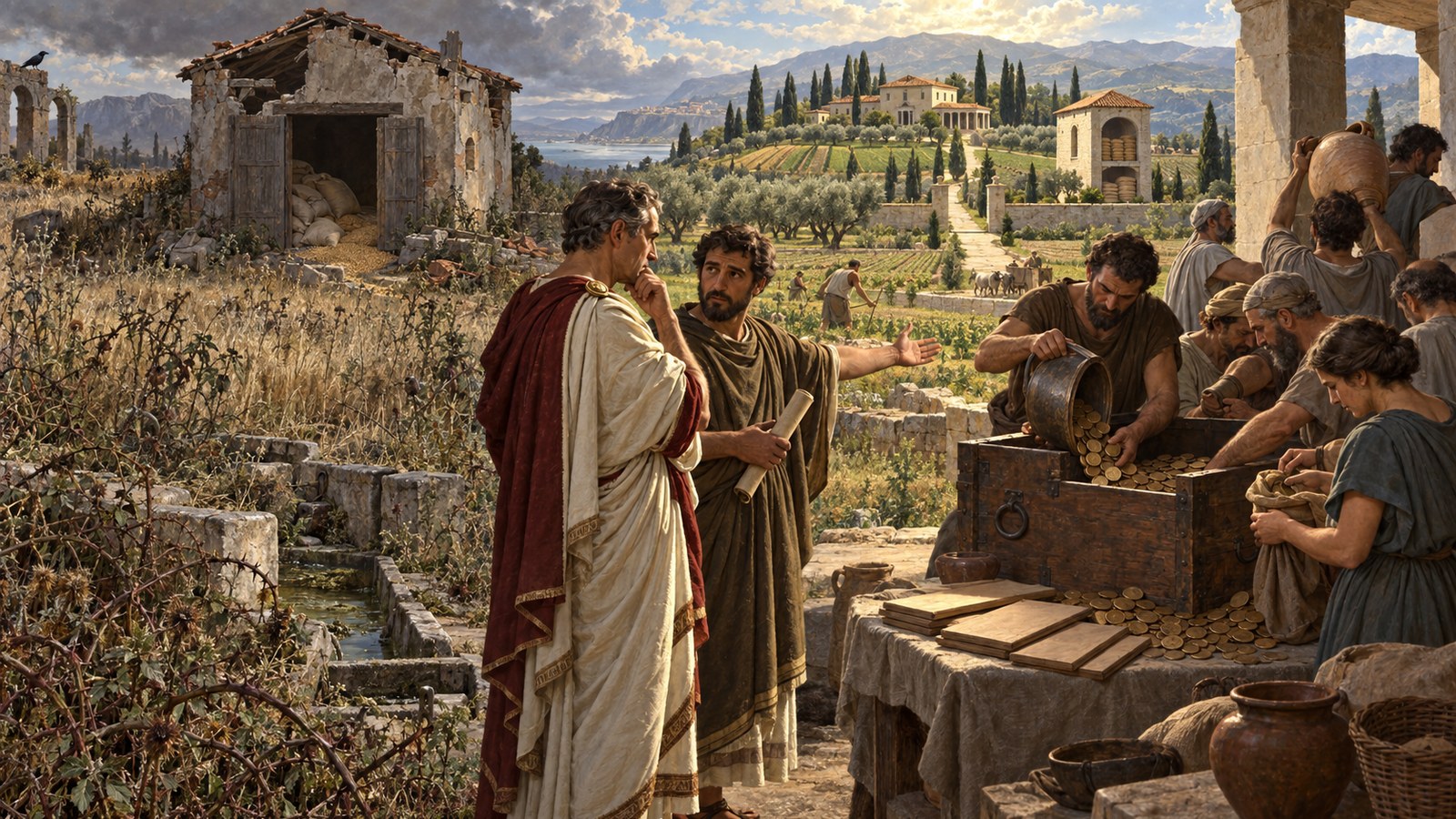
Pliny immediately identifies the opposite failure. Public lands were neglected. A community that owned the asset did not necessarily contain one person with enough private interest to drain, prune, repair, lease and supervise it well.
The two risks mirror each other. Cash invites excessive use because it is liquid. Public land invites insufficient care because responsibility is diffuse.
A durable endowment needed the security of land without the maintenance problem of land treated as everyone’s property and therefore no particular person’s urgent concern.
This was not suspicion of all public action. Pliny wanted the community to hold the protected interest. His doubt concerned who would perform the daily work required to preserve the asset behind it.
A Transfer and Lease Separated Ownership from Use
Pliny’s own promise was 500,000 sesterces for the education of free-born boys and girls. Instead of paying the money into a civic fund, he transferred a piece of land to the state agent.
The land was worth considerably more than the announced gift. That margin was central. A thin asset barely matching the obligation could fail when harvests weakened or repairs accumulated.
After the transfer, Pliny received the property back. The agent fixed an annual rent of 30,000 sesterces. Municipal ownership and private possession now occupied different sides of the same arrangement.
The community held the principal in the land. Pliny’s household retained use of a productive estate but carried a recurring payment. The promised public benefit no longer depended on officials deciding each year how much of a cash pile to preserve.
Nor did it depend on the municipality farming the land itself. Whoever retained the valuable use had a reason to keep the fields productive, buildings sound and tenants supervised.
The arrangement resembles neither an outright private gift nor an ordinary market lease. It was deliberately burdened property. The annual charge followed from a transfer designed to protect a public purpose.
The figures show why the structure could work. A 30,000-sesterce annual payment represented six percent of the publicly stated 500,000-sesterce promise, while the underlying land was worth more than that promise. Pliny did not present this percentage as a guaranteed modern yield. He supplied enough numbers to show a substantial asset carrying a recurring but supportable charge.
Roman law often made status visible through property. The one-third Italian land rule for candidates used ownership to anchor political office. Pliny’s endowment used divided interests in land to anchor future payments.
The Rent Made Maintenance Someone’s Private Problem
Pliny thought the land would always find a tenant because it was worth much more than the rent imposed on it. The gap between productive value and annual obligation created the incentive.
If the property could yield substantially more than 30,000 sesterces, careful management still left something for the possessor. Neglect would threaten that surplus before it threatened an abstract civic ideal.
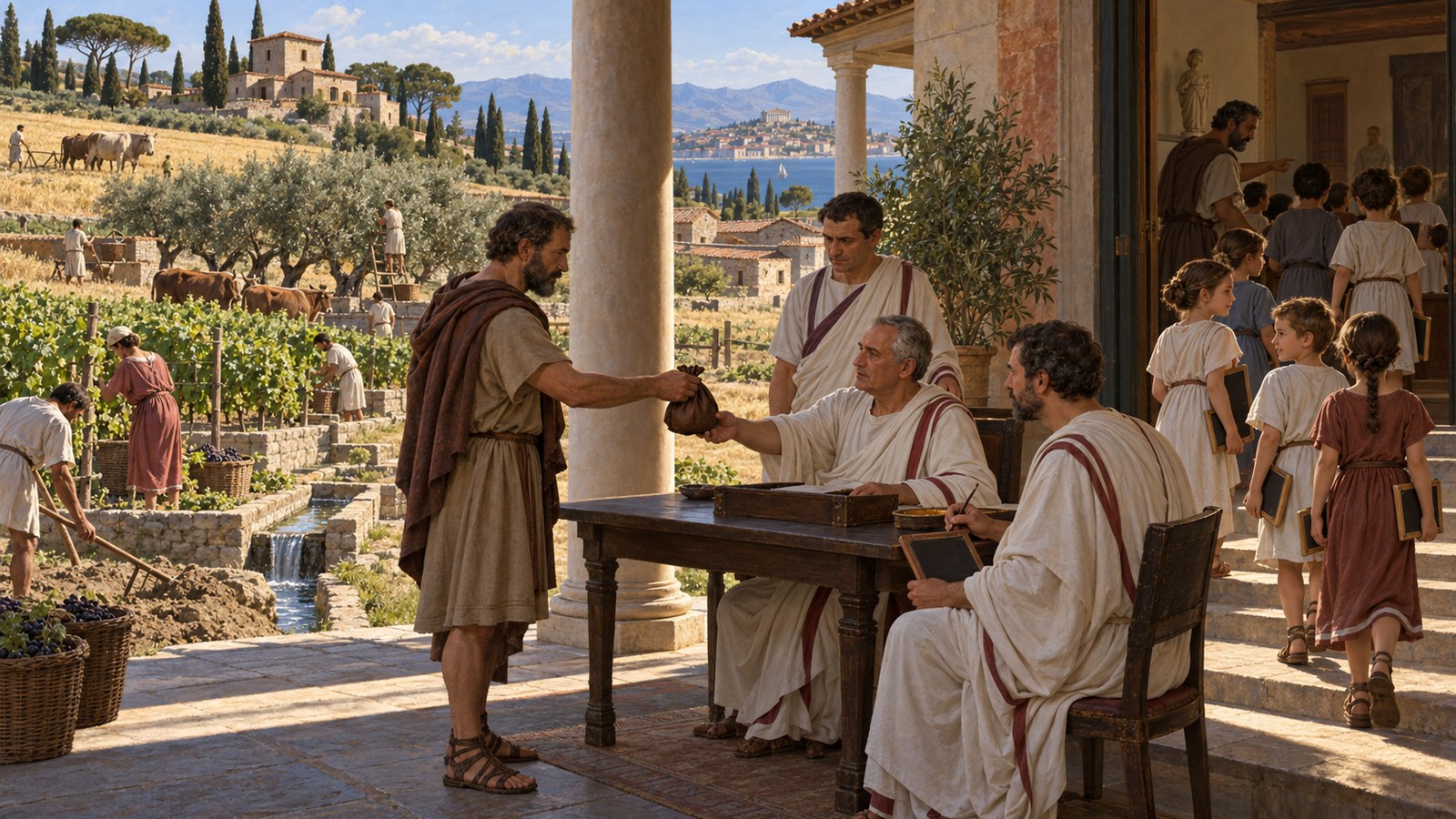
The public claim therefore rode on private self-interest. A steward maintained ditches because crops mattered to the estate. A future holder repaired roofs because losing the property’s use would cost more than paying the reserved rent.
This did not make the endowment riskless. Harvests could fail, disputes could arise and institutions could ignore their own rights. Pliny describes a structure, not an automatic machine immune to history.
But the structure avoided asking one institution to perform every role. The municipality did not need to become an expert farmer. The private holder did not control whether the annual benefit remained merely optional.
The fixed rent also made performance visible. A missing annual payment could be identified as a breach of an obligation. Slow deterioration of a public field is harder to measure and easier to excuse.
Visibility helped successors on both sides. Municipal officers could look for one recurring sum. Heirs or later possessors could value the estate knowing that its use came with a fixed burden. The arrangement reduced the need for every generation to rediscover the donor’s preferred balance between schooling, land management and civic discretion.
Caninius’s feast needed exactly that kind of recurring clarity. The meal would be annual, so the supporting revenue had to arrive on a schedule rather than depend on renewed generosity.
The Encumbrance Was Part of the Gift
Pliny knew that observers might value his benefaction at the advertised 500,000 sesterces. He insisted that it had cost him more.
The land itself was worth considerably more, and the reserved rent reduced its selling price. A buyer would not pay the unburdened value for property carrying an annual civic charge.
That lost market value was not an accidental fee. It was the mechanism by which future beneficiaries gained security. Pliny’s estate became less freely valuable because the community’s claim became more durable.
His closing moral is therefore attached to balance-sheet reality. Public interests should come before private ones, and interests meant to continue forever deserve more careful thought than wealth that dies with its owner.
The letter also exposes the difference between visible donation and institutional design. A chest of coins makes an immediate spectacle. A rent obligation tied to land is quieter and more complicated.
Yet complexity served memory. Future officials did not need to reconstruct the donor’s mood. They could point to property, title and annual rent.
Pliny’s answer to Caninius was not simply “give more.” It was “arrange the interests.” Let the community own what must endure. Let a private holder keep enough value to maintain it. Make the yearly benefit a charge rather than a favor.
The gift survived because someone still had something to lose.
Sources
Pliny the Younger, Letters, book 7, letter 18.