
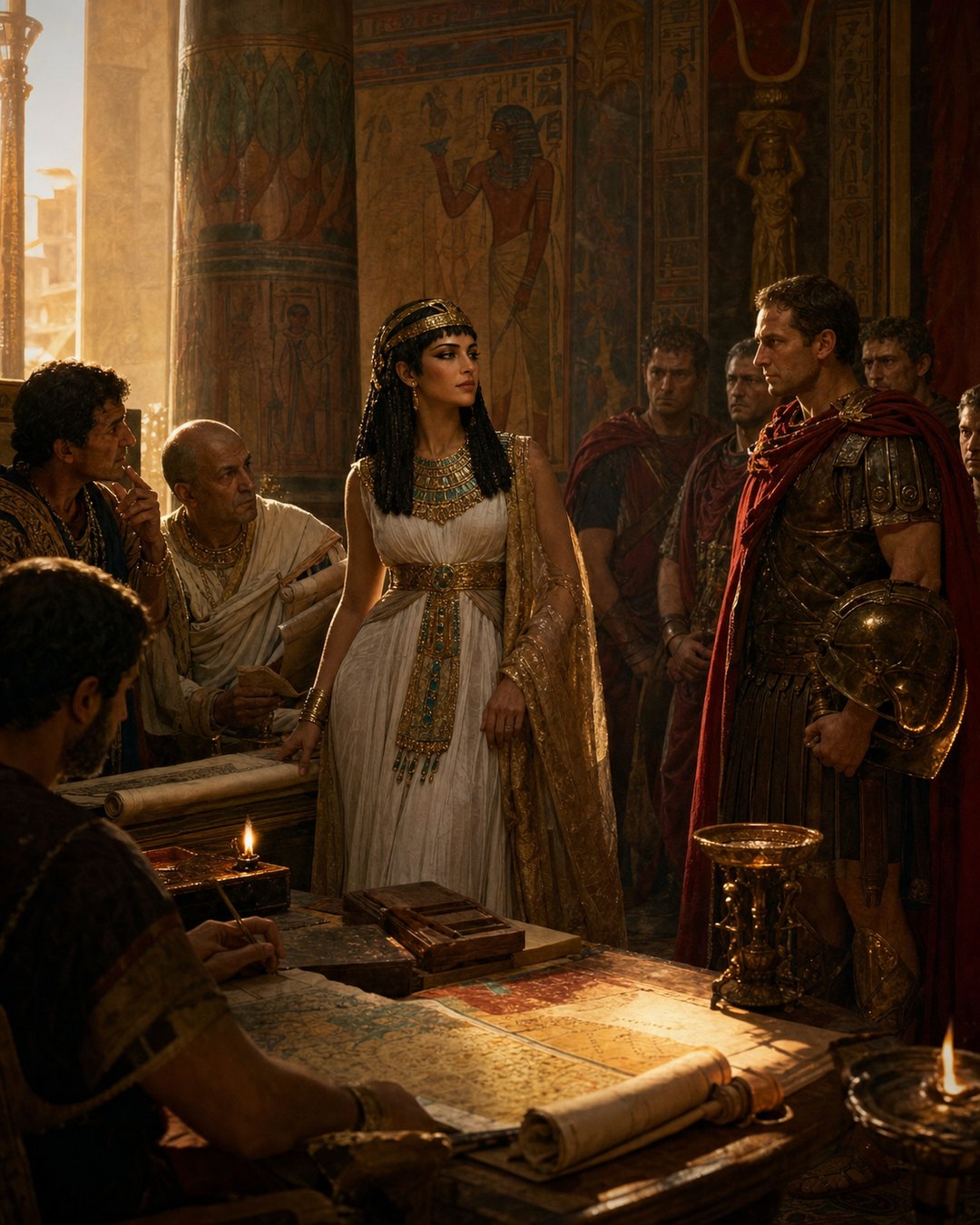
Rome preferred Cleopatra as a temptation because temptation is easier to explain than civil war. A seductive queen corrupting a Roman general makes a cleaner story than Romans admitting that their own political system had collapsed into rival strongmen, armies, money, and propaganda.
Cleopatra VII was not dangerous to Octavian because she was exotic. She was dangerous because she made Antony’s alternative Roman future look possible. Egypt brought wealth, ships, grain, dynastic prestige, and an eastern court where Antony could appear as more than Octavian’s failed partner. That was a political problem, not a bedroom scandal.
Octavian needed the war to look foreign
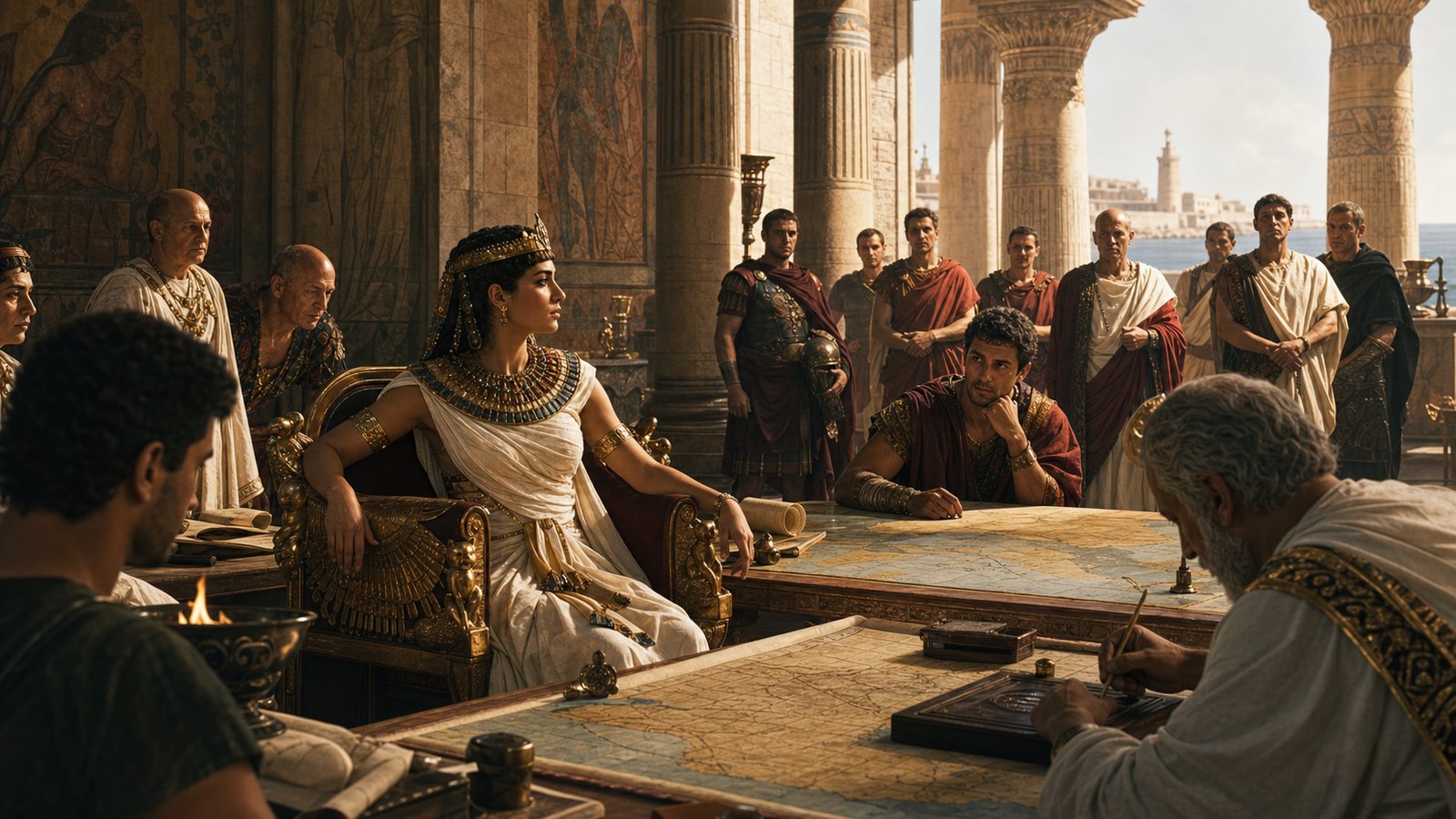
The final struggle was, in practical terms, a Roman fight. Antony was Roman. His supporters were Roman. The prize was Roman supremacy. But Octavian had a problem: another open civil war was ugly. Rome had already bled through decades of internal conflict. A war against Cleopatra could be sold differently.
By placing Cleopatra at the center, Octavian’s side could frame the conflict as Rome defending itself against eastern monarchy and queenly corruption. Antony became less a Roman rival and more a man captured by foreign luxury. That story made Octavian look like a restorer instead of another warlord.
The seductress image hides competence
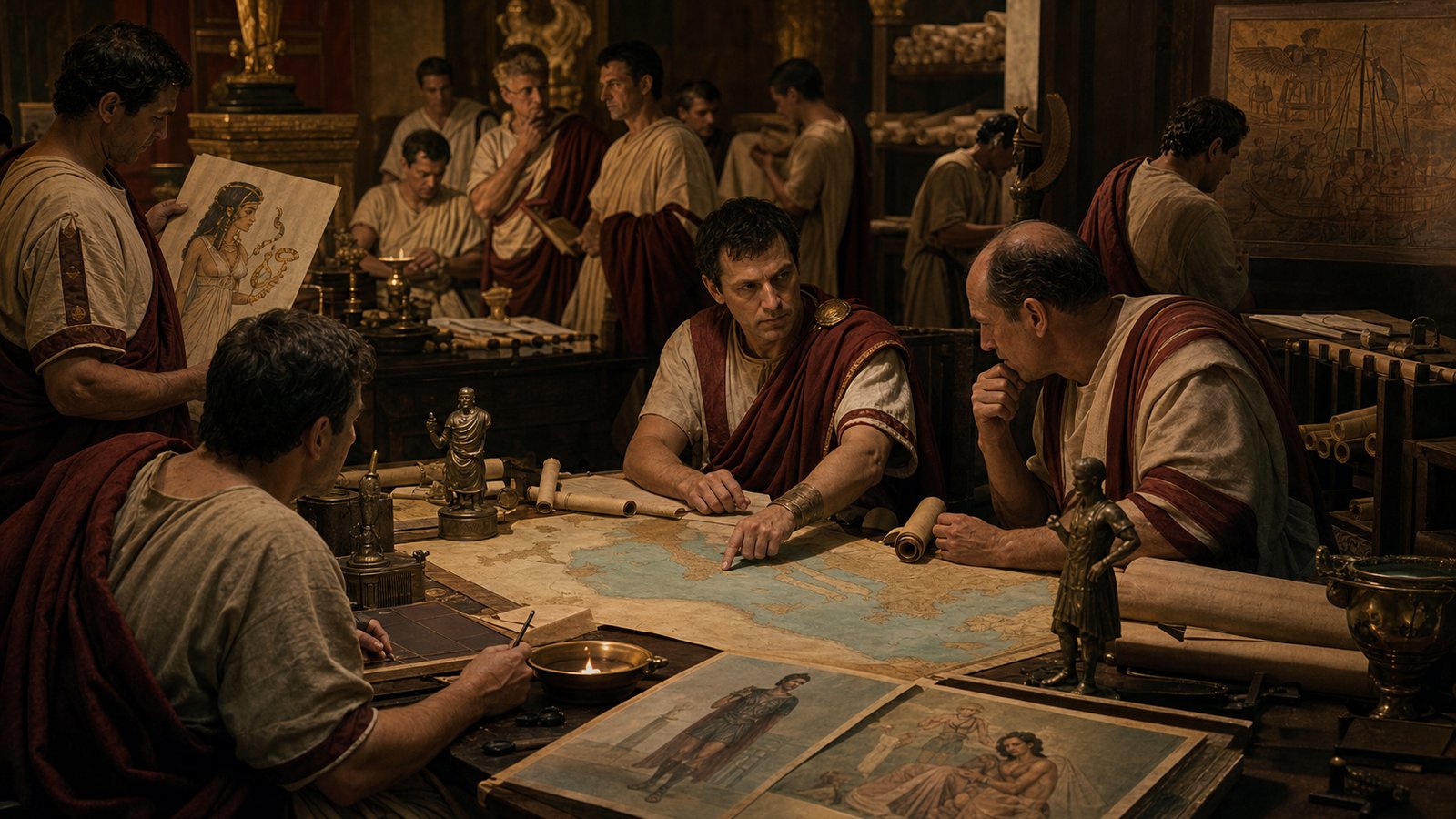
Plutarch and Cassius Dio preserve a world in which personality, performance, wealth, and power all mix together. Cleopatra certainly knew how to stage authority. So did every successful ruler. Reducing her to seduction turns political skill into a moral warning, which is exactly why the image lasted.
She negotiated with Julius Caesar, ruled a difficult kingdom, managed elite display, and fought to preserve Egypt’s independence inside a Mediterranean dominated by Roman violence. None of that requires turning her into a modern heroine. It only requires taking her seriously as a ruler.
Why Rome feared queens
Roman political culture had a long allergy to kingship, and queens could be made to look even more threatening: monarchy with perfume, luxury, and foreign gods attached. Cleopatra gave Roman propaganda a perfect surface. She could carry fears that were really about Antony, empire, and the death of the Republic.
That is why the story after Actium mattered as much as the battle. Octavian’s victory needed moral architecture. Cleopatra became the warning sign: what Rome had almost become if Octavian had not saved it.
What survives when propaganda wins
The seductress version survived because it is dramatic, repeatable, and flattering to Rome. It lets Roman men remain the main actors while making a foreign woman responsible for Roman choices. But the more interesting Cleopatra is the one the propaganda tries to shrink: a monarch caught between survival and a superpower.
Rome did not need Cleopatra to be foolish. It needed her to be blameable. That difference is the whole story.
What Cleopatra’s image did for Augustus
The useful Cleopatra of Roman propaganda was not a full person. She was a political device. Through her, Augustus could turn a war against Antony into a rescue of Rome from eastern monarchy, luxury, and disorder. That framing mattered because Augustus’ own power also looked monarchical if described too plainly.
By making Cleopatra the dangerous queen, Augustus could appear as the defender of Roman tradition rather than the last victor in a civil war. The story helped cleanse his victory. It moved attention away from Roman-on-Roman violence and toward a foreign enemy whose defeat could feel like moral restoration.
The person behind Rome’s convenient monster
The harder Cleopatra is the political survivor, not the cartoon queen. She inherited a fragile dynasty, ruled a wealthy but vulnerable kingdom, navigated Roman intervention, and tried to keep Egypt from becoming merely another prize in Roman competition. Her relationships with Caesar and Antony belonged to that struggle for survival.
Rome’s version made her too powerful in one way and too small in another. It exaggerated her as enchantress while shrinking her as stateswoman. That combination was perfect propaganda: frightening enough to justify war, unserious enough to deny respect.
Actium needed a moral ending
The Battle of Actium settled power, but power still needed a story. Augustus’ later settlement depended on making his victory feel like the end of disorder rather than the success of the last armed faction. Cleopatra helped supply that ending. Her defeat allowed Rome to imagine that the danger had been foreign, luxurious, and queenly — safely outside the Roman self Augustus wanted to rebuild.
Sources & Further Reading
- Plutarch, Life of Antony
- Cassius Dio, Roman History 50
- For Octavian’s wider political style, see why Augustus pretended he was not Rome’s first king.