
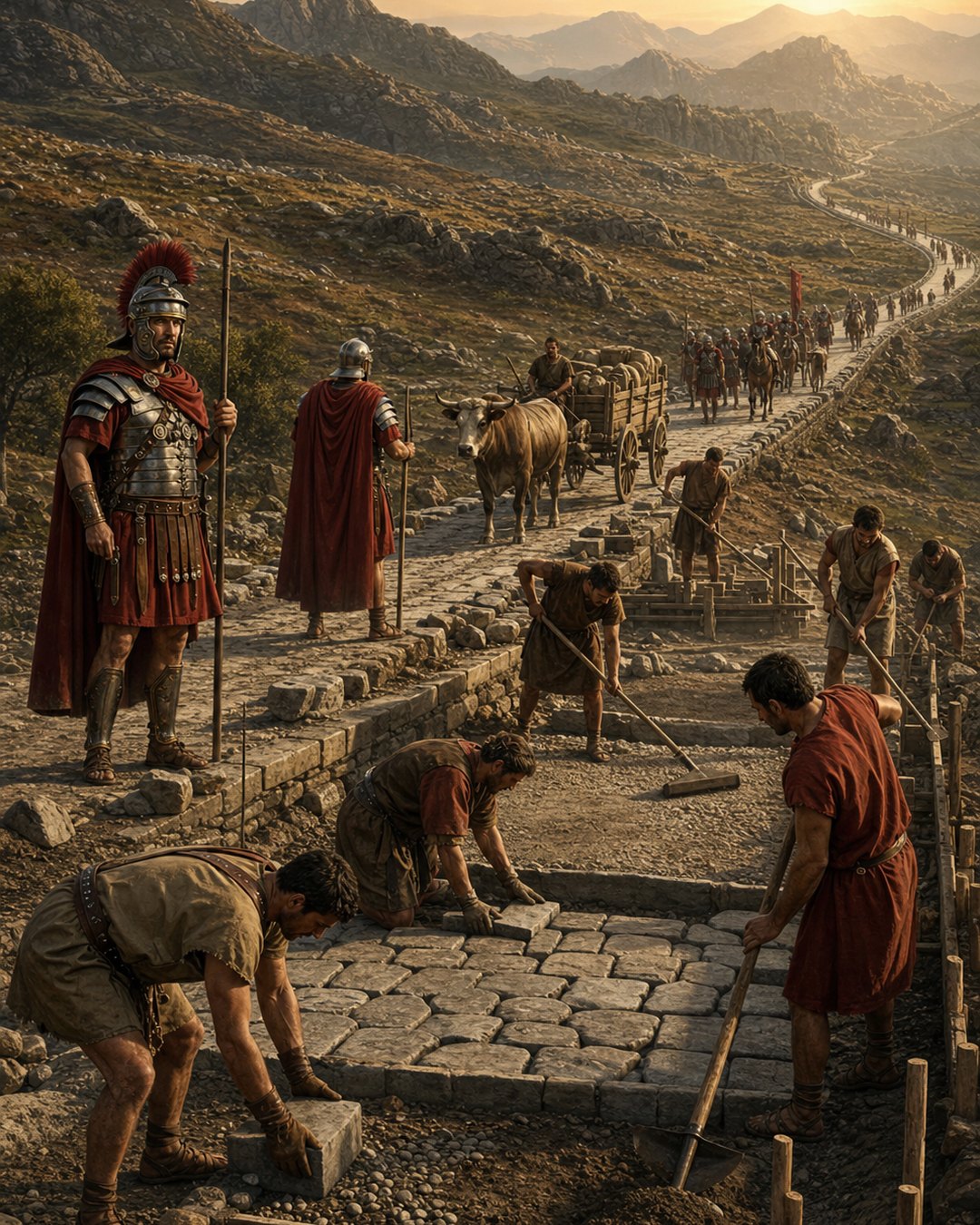
Roman roads were convenient, but convenience was not the point that made them imperial. A road is a promise that movement can be organized. For Rome, that meant soldiers, messengers, officials, taxes, supplies, and orders could travel with less dependence on local permission.
Modern admiration often begins with engineering: straight lines, layered construction, milestones, bridges, drainage, endurance. That admiration is deserved. But the more Roman question is not “How did they build so well?” It is “What did the road allow power to do?”
The army came before the tourist
Roads helped merchants, travelers, pilgrims, and local economies. But many of the most important roads began as strategic arteries. A legion that can arrive faster changes the behavior of everyone along the route before it even appears. Speed becomes a form of authority.
A province connected by roads was easier to reinforce, inspect, tax, and punish. Forts and towns were not isolated dots; they became points in a system. The empire did not need to be everywhere at once if its roads made people believe it could arrive.
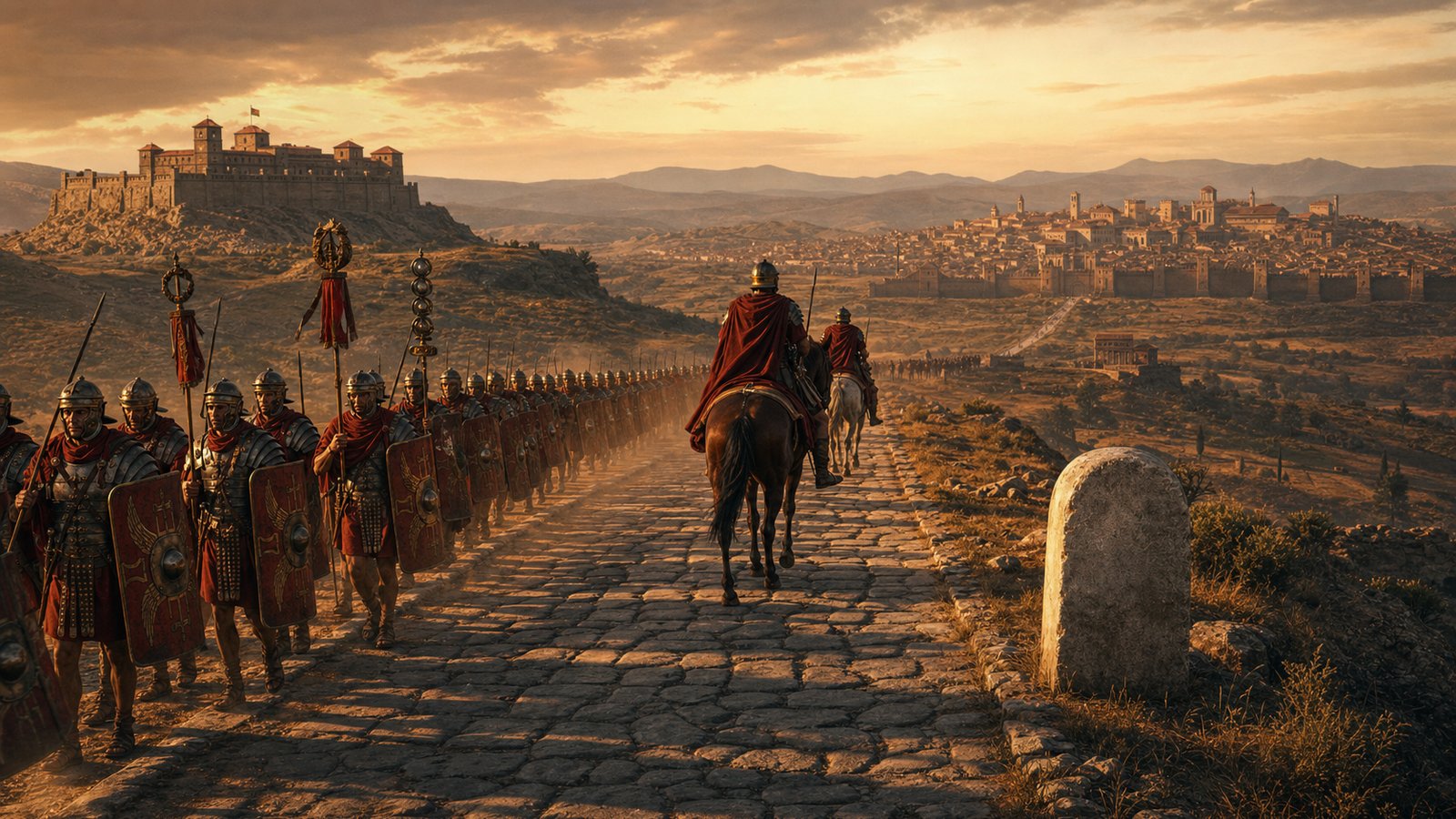
Milestones were messages
Roman roads also spoke. Milestones named emperors and distances. They turned geography into an imperial text: this place is measured, connected, and known. Even the act of counting miles from a Roman center implied order imposed on landscape.
That is why infrastructure should not be imagined as neutral. A paved road might carry olive oil one day and troops the next. The same surface that made trade easier also made rebellion more dangerous.
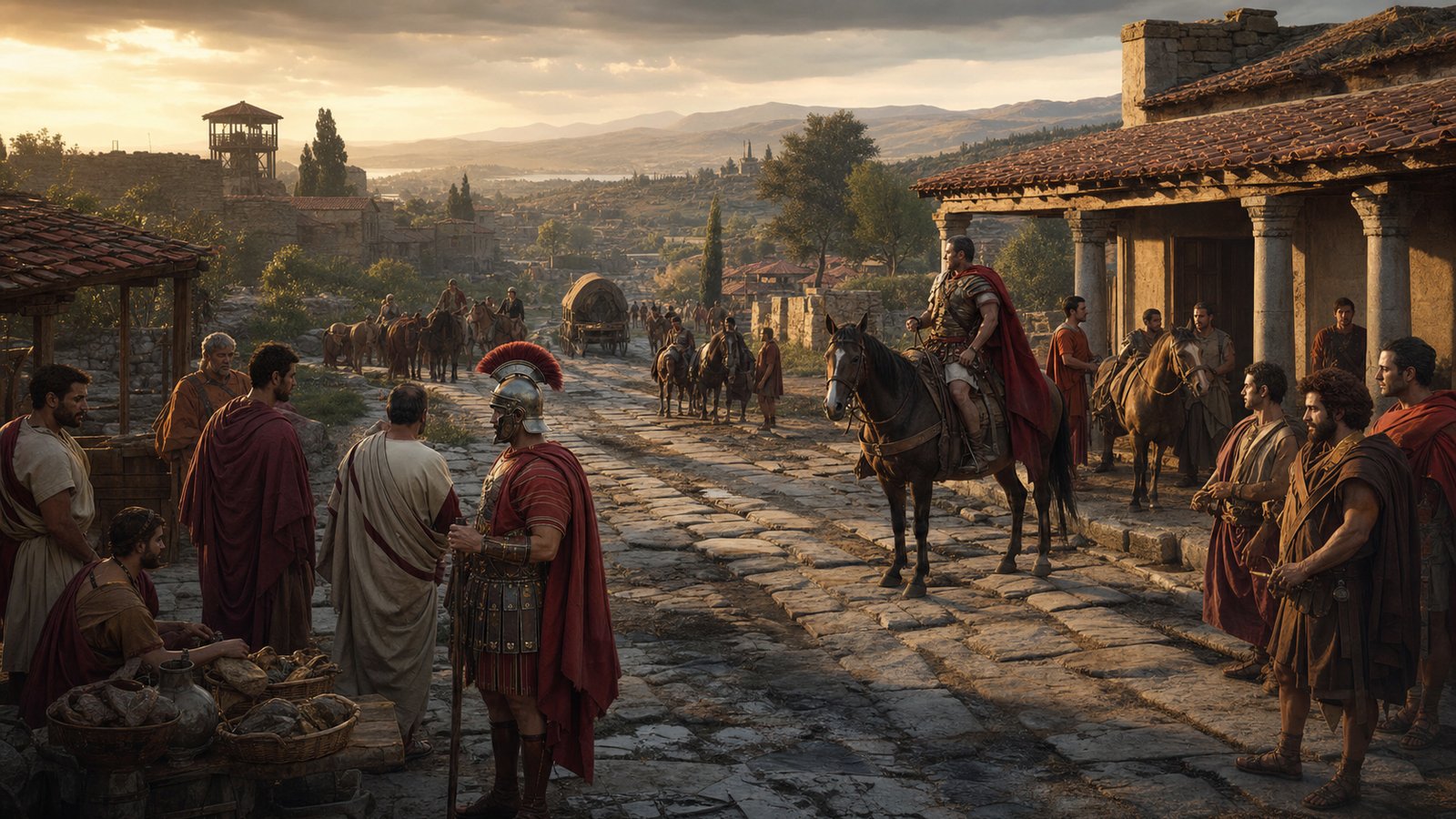
Local life changed around imperial lines
Roads did not erase local worlds, but they rearranged them. Markets shifted toward routes. Settlements grew near crossings and stations. Officials moved with paperwork, soldiers with requisitions, couriers with news. The empire became harder to ignore because it had a physical path into ordinary life.
Convenience followed control because control created the conditions for convenience. Peaceful travel is easier when violence has already been organized by the state.
Why the ruins still impress us
A surviving Roman road feels noble because stone outlasts the politics that placed it there. We see endurance and imagine civilization. Romans would not have separated those ideas so neatly. Endurance itself was a political claim: Rome builds things that remain.
The road was therefore both tool and symbol. It made empire practical and made imperial permanence believable. That is why a strip of stone could be as Roman as an eagle standard.
A road made the distant emperor feel nearby
Most provincials would never meet the emperor. They might, however, see his name on a milestone, his troops on a road, his tax demands carried by officials, or his orders arriving through the courier system. Roads turned distant authority into repeated local encounters.
That is the political genius of infrastructure. It does not need to shout. It changes what is possible every day. A town on a Roman road was connected to markets, yes, but also to inspection and intervention. The same stones that carried opportunity carried the reminder that the empire had a route to your door.
The road outlived the command that built it
One reason Roman roads impress us is that their physical survival seems to separate them from coercion. A road can become picturesque after the soldiers are gone. Villages grow, tourists walk, farmers reuse stone, and the original strategic purpose fades into heritage.
But for understanding Rome, the first meaning matters. The road was an imperial technology of presence. It shortened distance for anyone allowed to move, but especially for the state. That is why the stones still feel Roman: they were built to make power durable in the landscape.
Infrastructure made obedience cheaper
Without roads, every order had to fight distance. With roads, distance became less protective. Governors could be reached, forts supplied, taxes moved, and news carried before a local crisis grew too large. That efficiency is easy to admire, but it also made obedience cheaper for the empire to demand. Roads lowered the cost of command.
So when we praise Roman roads, we should praise them with clear eyes. They were brilliant works of engineering, but their brilliance served a state that wanted reliable reach. The smoother the road, the less distance could protect anyone from Rome’s attention.
The practical beauty of the system was that it worked quietly. A road did not need to announce conquest each morning. It simply made Roman movement easier than resistance expected.
Sources & Further Reading
- World History Encyclopedia, “Roman Roads”
- Livius.org, “Roman roads”
- For symbols of military reach, see the Teutoburg eagle article.