
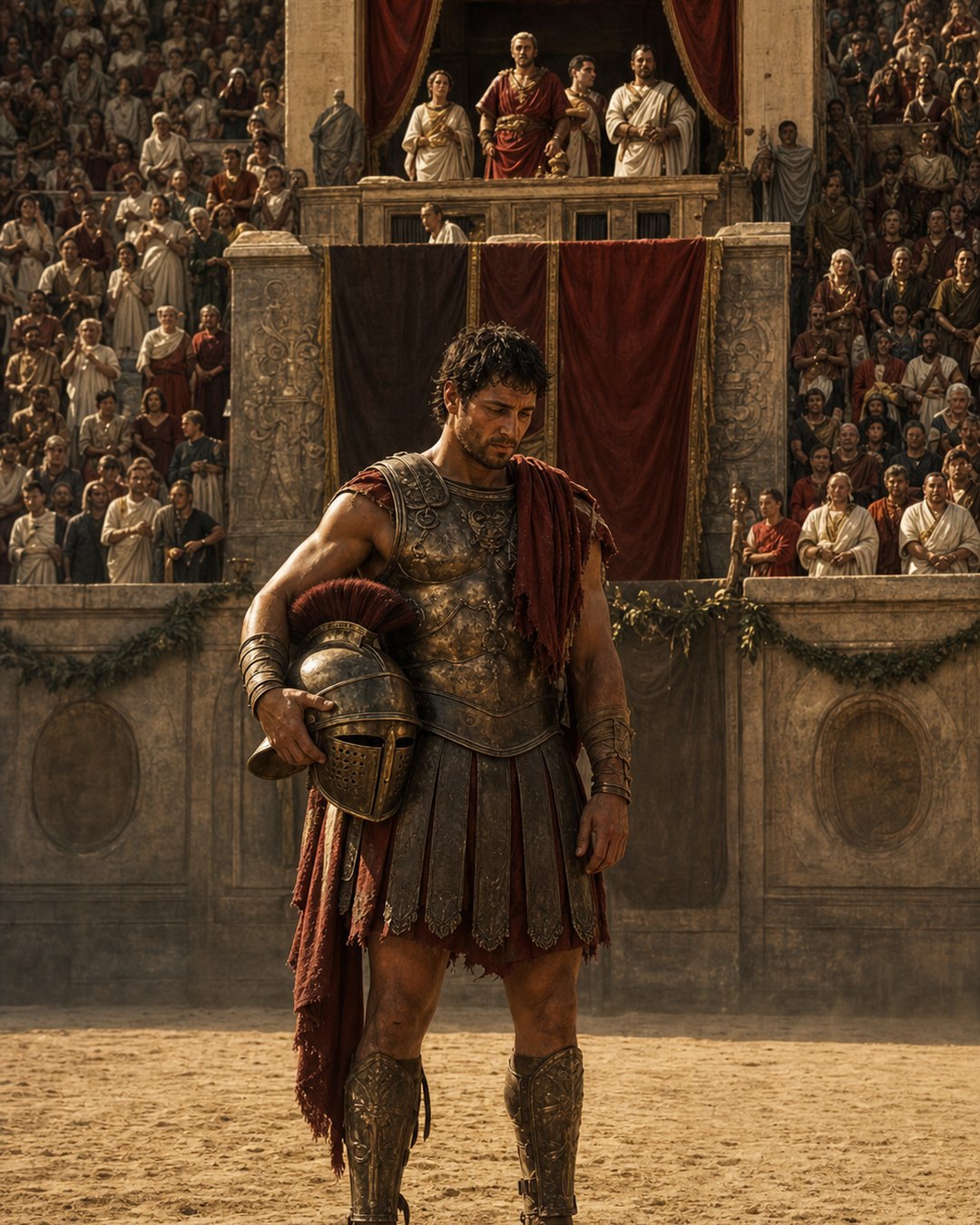
Gladiators entertained Rome, but entertainment is too small a word for what happened in the arena. A gladiatorial show gathered violence, status, discipline, mercy, punishment, courage, and imperial generosity into one public lesson. Romans did not simply watch men fight. They watched Roman order explain itself with bodies.
Seneca’s disgust in Epistles 7 is useful because he describes not only violence but the moral pressure of watching it with others. The crowd mattered. The arena was not private cruelty; it was communal judgment.
The arena turned hierarchy into theater
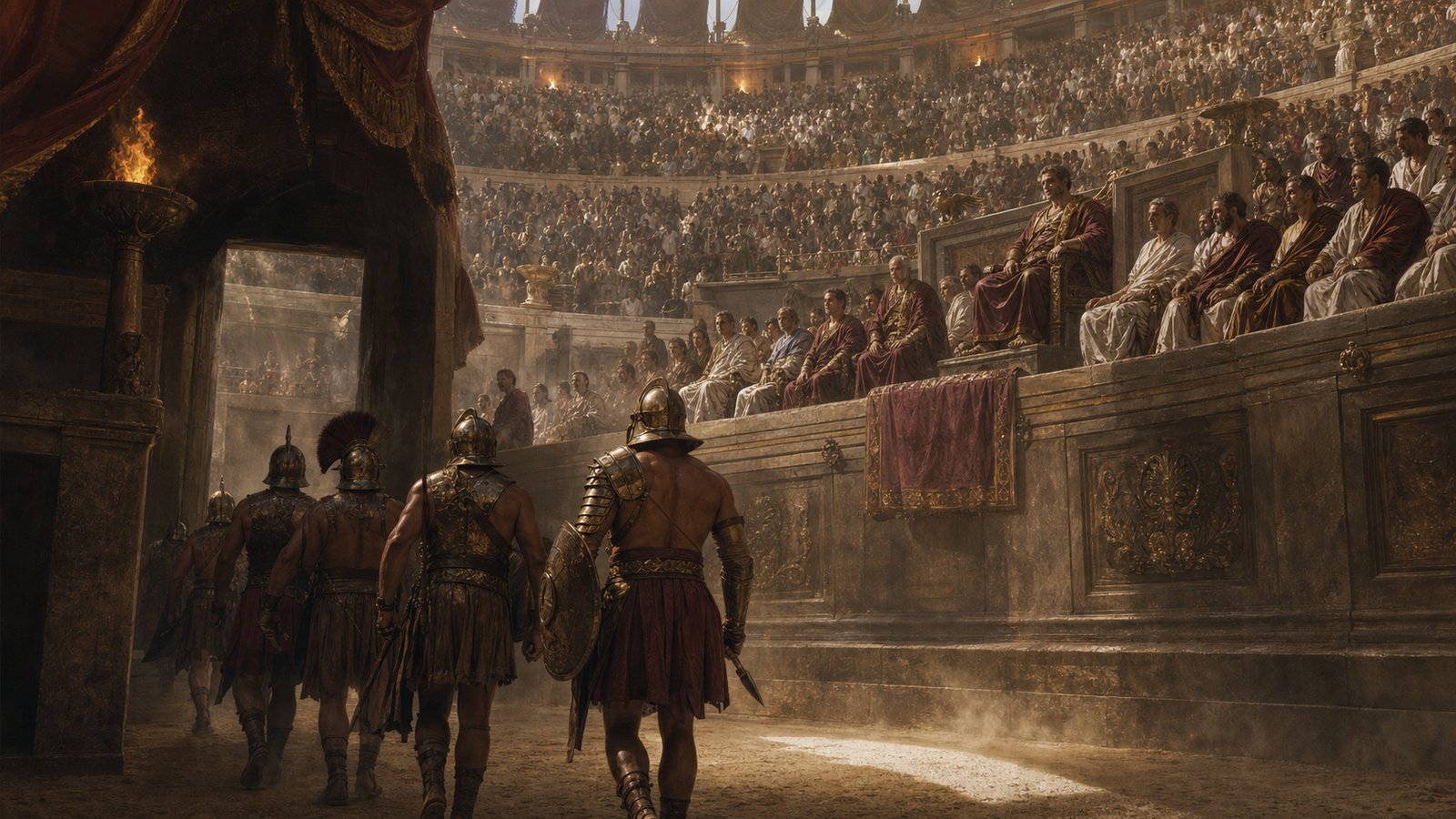
Everyone in the amphitheater knew where they sat. Seating reflected status. The editor of the games displayed wealth and favor. The emperor, when present, occupied the highest role of giver and judge. Even before combat began, Rome had arranged itself into a visible social map.
Then the fighters entered. Some were enslaved, condemned, or socially degraded; others could become famous. That tension made gladiators fascinating. They were low-status bodies asked to display high-status virtues: courage, discipline, endurance, contempt for death.
Mercy was political
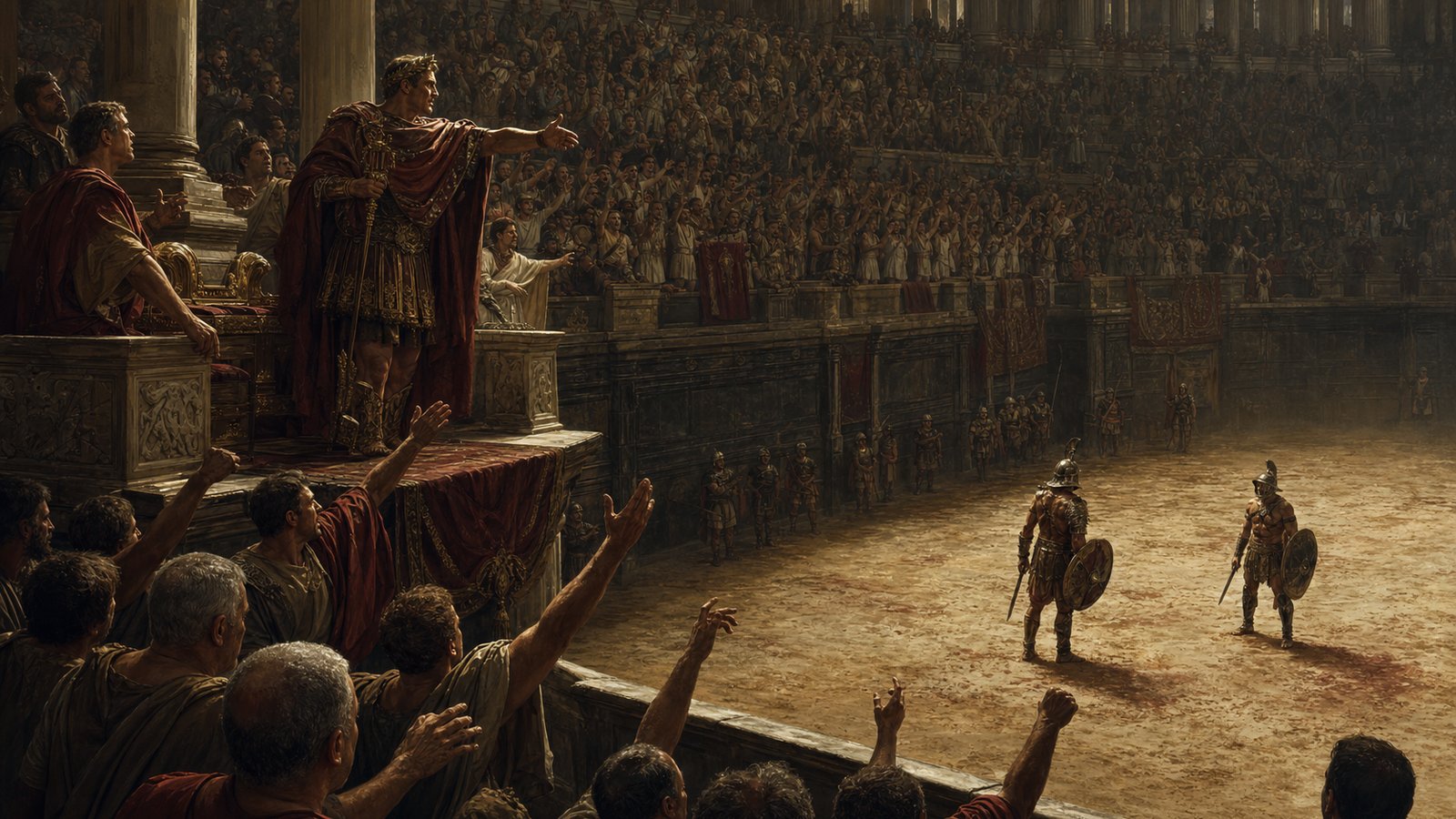
The decision to spare or kill was never only about the two fighters. It staged authority. The crowd might shout, gesture, plead, or demand. The presiding power could listen, refuse, or perform generosity. Mercy became public because power wanted credit for granting it.
That is why gladiatorial combat cannot be reduced to bloodlust. Blood was there, obviously. But the deeper drama was control: who had it, who lacked it, and how beautifully or terribly a person behaved under it.
Punishment became spectacle
Roman games could include executions and hunts as well as gladiatorial bouts. The boundary between justice and entertainment could become horrifyingly thin. The state made suffering legible by staging it before an audience: crime, defeat, discipline, consequence.
To modern eyes, that looks like cruelty pretending to be order. To many Romans, it could look like order proving itself through cruelty. That difference is uncomfortable, and it is exactly why the arena is historically important.
Why gladiators still hold us
The arena survives in imagination because it concentrates contradictions. Rome admired courage in people it degraded. It made celebrities out of the expendable. It asked spectators to feel excitement, judgment, pity, and superiority at once.
Gladiators were not just entertainment because Rome was not just entertaining itself. It was rehearsing hierarchy, danger, and the power to decide what a life was worth.
The crowd learned what to admire
The arena trained spectators in a strange moral code. A gladiator could be socially degraded and still admired for courage. A defeated fighter could earn pity by meeting death well. A powerful sponsor could gain honor by granting mercy. Violence became a classroom in Roman values, however brutal those values appear to us.
That is what makes the games more unsettling than simple savagery. They were meaningful. Romans could watch suffering and see discipline, hierarchy, punishment, generosity, and bravery. The arena did not suspend Roman society. It concentrated it until the rules became impossible to miss.
Why the arena was hard to look away from
The arena offered Romans a controlled encounter with fear. Death, skill, pain, bravery, and judgment appeared in a space where society knew where to sit and how to react. That control made the violence feel meaningful rather than random.
This is the uncomfortable reason gladiators became so memorable. They made Roman power emotionally legible. The crowd could admire courage while accepting domination, pity a fighter while demanding a death, and leave believing the world had been arranged in the proper order. Entertainment was the doorway. The lesson was deeper.
Fame did not erase degradation
Some gladiators became admired, desired, and remembered. That fame can mislead modern readers into imagining freedom where there was often coercion. Roman spectators could celebrate a fighter’s skill while accepting the social system that made him available for danger. The contradiction was not accidental. It was part of the show’s power.
That tension explains why the arena could be both admired and condemned even in antiquity. It was never only a pastime. It was a place where Rome displayed the cost of its order and invited the crowd to call that cost meaningful.
Once seen that way, the gladiator is not a footnote to Roman leisure. He is one of the sharpest symbols of Roman society itself.
And that is why the subject still unsettles us today.
Sources & Further Reading
- Seneca, Epistles 7
- Suetonius, Augustus and Nero
- For crowds as political force, see why emperors needed crowds as much as armies.