
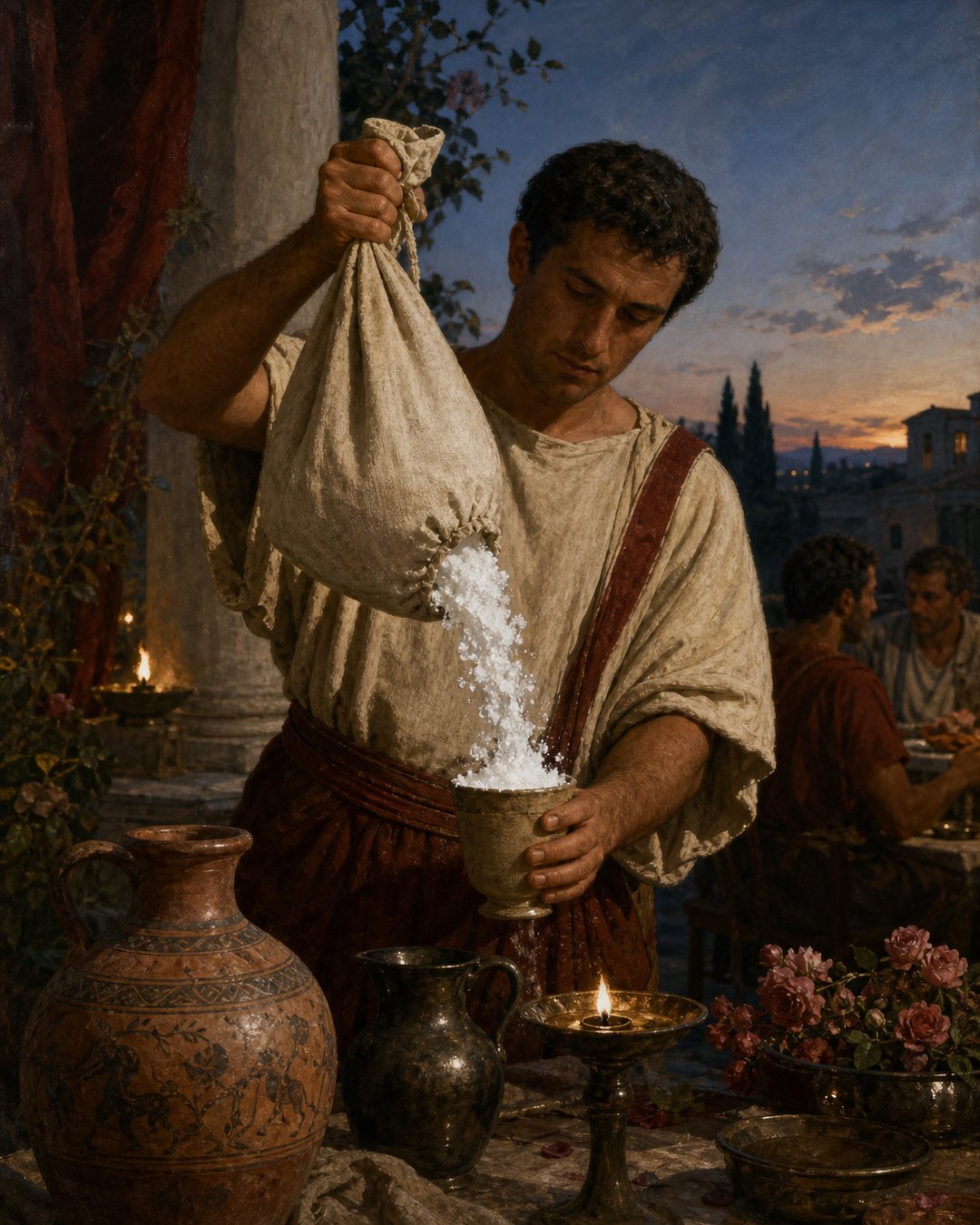
A servant lifted a coarse linen bag above a cup. Inside it sat snow, an object that belonged naturally to winter but had arrived at a Roman table in another season. Meltwater passed through the cloth. The wine below became cold. Then the bag began to boast.
That voice comes from Martial’s Epigrams, where objects speak in two-line labels for gifts. His snow bag claims that it can clarify snow-water and that a finer strainer cannot make the result any colder. Around it in Book 14 stand a specialist snow-strainer, a decanter for snow-water and two sharp jokes about iced drinks. Read together, these tiny poems reveal a complete table ritual: cold had to be handled, filtered, served and judged.
A strainer put winter above the cup
Martial calls Book 14 a set of presents made to guests at feasts. He tells the reader that each subject is finished in a couple of lines. That format matters. These are not technical instructions or a merchant’s inventory. They are miniature performances in which a gift announces what it is, who should use it and what sort of recipient deserves it.
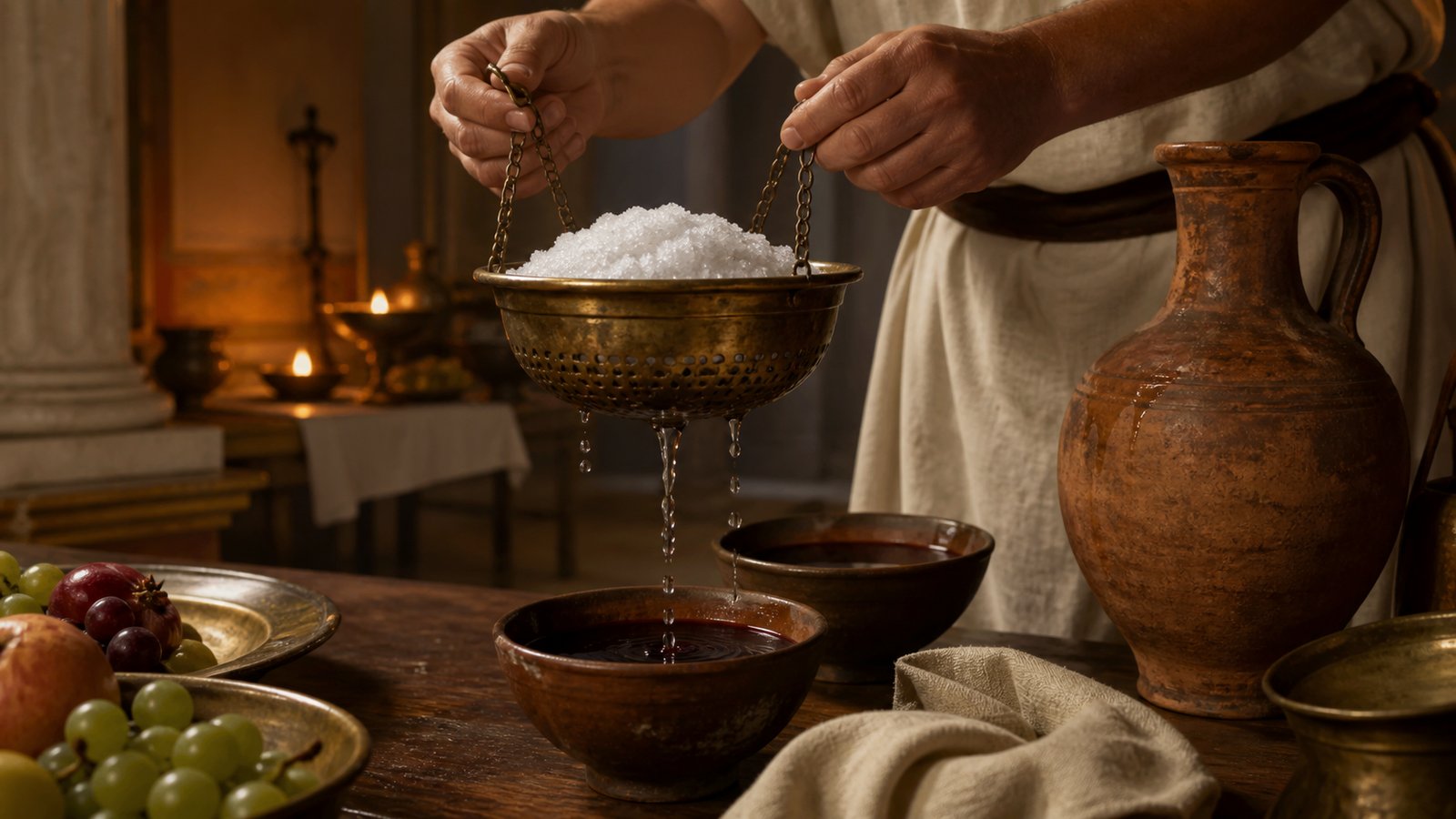
Epigram 14.103 gives the stage to a snow-strainer. The object advises its owner to temper cups of Setine wine by placing snow in it. The arrangement implied by the line is more controlled than simply dropping a dirty lump of snow into the drink. The cold material sits in a device; liquid reaches the cup through or around that barrier. The vessel makes cooling into service.
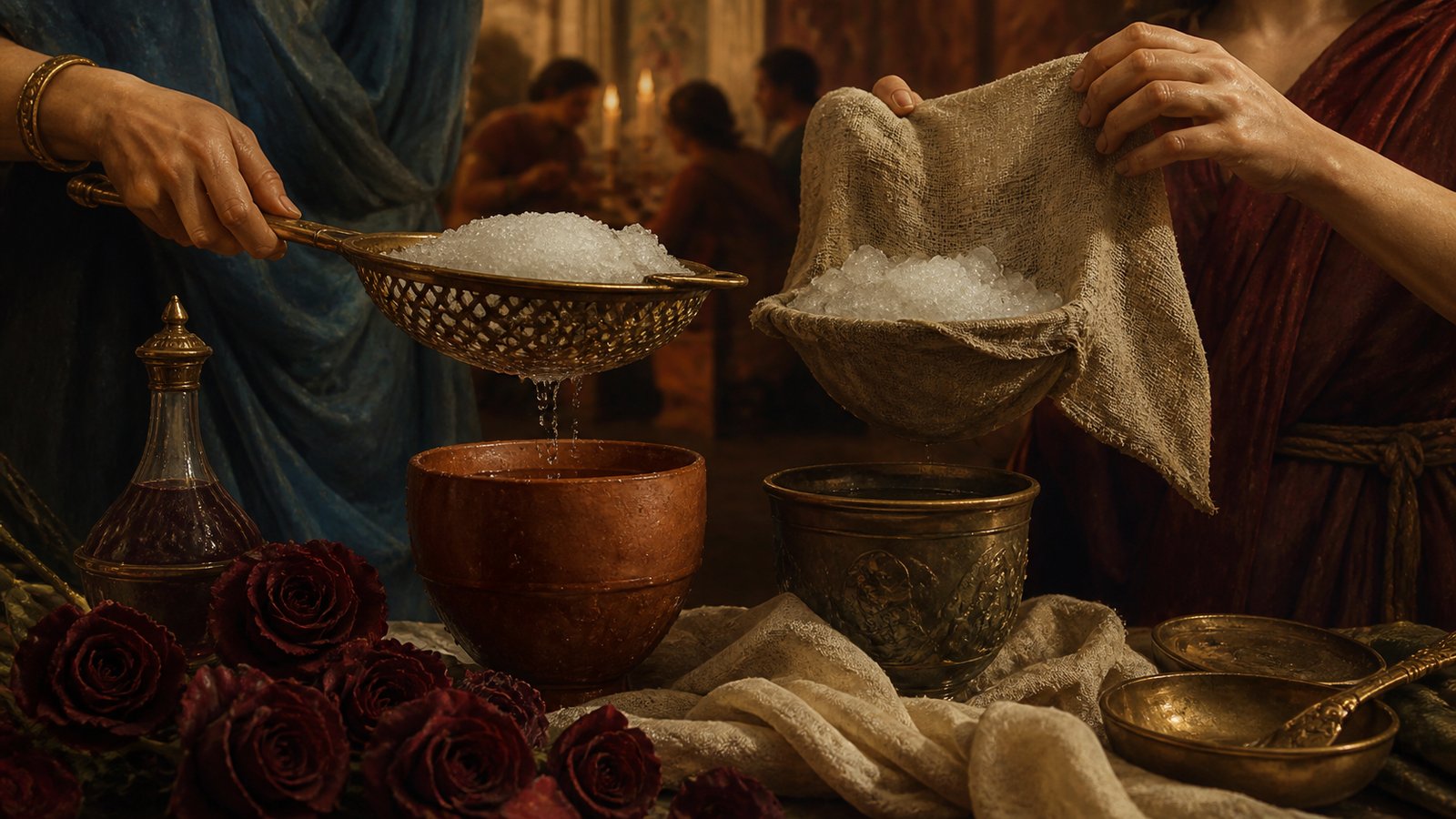
The poem immediately adds a social edge. Linen strainers, it says, may be used for inferior wines. The cold is not enough by itself. The tool holding the snow can be matched to the status of what lies below it. A finer wine receives the more distinguished implement, while ordinary cloth is pushed toward an ordinary vintage. Martial turns table equipment into hierarchy in a single contrast.
That hierarchy belonged in the same dining world as the room that ranked guests through its couches and places. Seating made position visible before anyone spoke. A snow-strainer could do something similar on a smaller scale. It told observant diners that the host knew which wine was being served and had chosen an apparatus appropriate to it.
Coarse linen answered expensive taste
The next object refuses to accept the insult. Martial labels Epigram 14.104 a snow-bag and identifies its material as coarse linen. The bag says that it, too, clarifies snow-water. Then it makes the decisive claim: water does not come out any colder from the fine strainer.
The joke depends on separating performance from result. Fine workmanship may look better beside the wine, and its ownership may advertise wealth, but temperature does not respect the ranking. Coarse cloth can hold snow. Water can pass through it. The drink can become cold. Luxury has improved the visible apparatus without necessarily intensifying the sensation.
Martial does not describe the weave, knot or suspension of the bag, so those details should not be invented. His words do establish its coarse linen, its association with snow-water and its claim to clarify. The physical contrast is enough: rough fibres against melting snow, a damp bag above a waiting vessel, and a host choosing whether the occasion requires plain cloth or a finer object.
The bag’s boast also shows how closely diners could attend to service. A cup did not simply appear at the elbow. Someone had obtained the snow, kept it available, placed it in a device and handled the meltwater. Someone chose the wine and the cup. The labour remains mostly outside the couplet, but the specialized gift makes that labour impossible to ignore.
Iced water could outrank the wine
Later in Book 14, Martial returns to the same cold table from another angle. A decanter for snow-water addresses a drinker of Spoletine wine or wine stored in Marsian cellars. Its question is cruelly simple: what use is the noble luxury of iced water with such wine? The cooling medium has become more prestigious than the liquid it serves.
Epigram 14.117 sharpens the distinction between snow and cold. Ingenious thirst, Martial says, drinks not snow itself but water iced with snow. That phrase identifies a preference for indirect cooling. Snow is the means rather than necessarily the final drink. The pleasure lies in extracting cold while controlling what reaches the mouth.
The next epigram puts a price on the absurdity. A slave is warned not to mix smoky Marseilles wine with iced water, lest the water cost more than the wine. Martial supplies no account book, transport tariff or storage design. He does something more useful for understanding value: he assumes his audience will understand that prepared cold water can be expensive enough to make a poor wine look ridiculous.
This is not evidence that every Roman regularly drank summer snow. It points instead to a recognizable luxury practice, familiar enough to support a joke. Like the changing optical effects of a Roman cup whose colour shifted with the light, the cold drink offered an experience produced by material, skill and setting. The sensation lasted only while the cup remained chilled, which made its expense especially conspicuous.
Summer snow completed a scene about time
Martial’s Book 5 supplies the fullest miniature scene. He tells Callistus to fill double cups with Falernian wine and Alcimus to dissolve summer snow into it. Around that command gather nard dripping from the poet’s hair, wreaths of roses and the Mausoleums nearby. The tombs urge the drinkers to live because even rulers treated as gods can die.
Cold intensifies the poem’s argument. Summer snow is season made temporarily disobedient. Falernian, perfume and roses are pleasures held against the visible reminder of death. The drink cannot remain cold, the flowers cannot remain fresh and the diners cannot remain alive. The host therefore orders the service now.
The named attendants also keep the scene physical. Callistus handles the wine; Alcimus handles the snow. Elite pleasure reaches the drinker through another person’s work. Martial does not let the luxury become an abstract adjective. It arrives through commands, vessels and hands.
Even the order of service carries information. Wine is poured into double cups; snow is then dissolved into it; scent and wreaths frame the drinking. Elsewhere, snow-water occupies its own decanter and the snow itself sits in a filter. These are not interchangeable snapshots. They show several ways of bringing cold to a cup, and Martial can make a separate joke from each arrangement. One host tempers Setine through a distinguished strainer. Another risks dignifying Spoletine with an iced-water vessel. A third ruins the calculation by pairing costly cold with smoky Marseilles wine.
The poems also keep quality under dispute. The fine strainer claims the better vintage, but the rough bag attacks that privilege through performance. The decanter calls its contents noble, but the wine can be unworthy. Summer snow looks magnificent beside Falernian, yet its force ends as it melts. Every object advertises taste while giving Martial a chance to expose taste as judgement, expense and theatre.
Across these short poems, no single object explains a Roman cold chain from mountain to dining room. The evidence begins at the table, and responsible reconstruction must stop where the text stops. Yet the table end is already rich. Snow exists as a summer ingredient, as a means of icing water, as material held in a strainer, as something processed through coarse linen and as a costly companion to wine.
The rough bag’s final boast is therefore more than a cheap laugh. It exposes the fragile logic of display. Wealth can buy a finer strainer and reserve it for Setine wine. It cannot make cold colder merely by dressing the snow in better equipment. For one wet moment above the cup, coarse linen and luxury produce the same answer.
Sources
Martial, Epigrams, 5.64; 14.1, 14.103–104, 14.116–118