
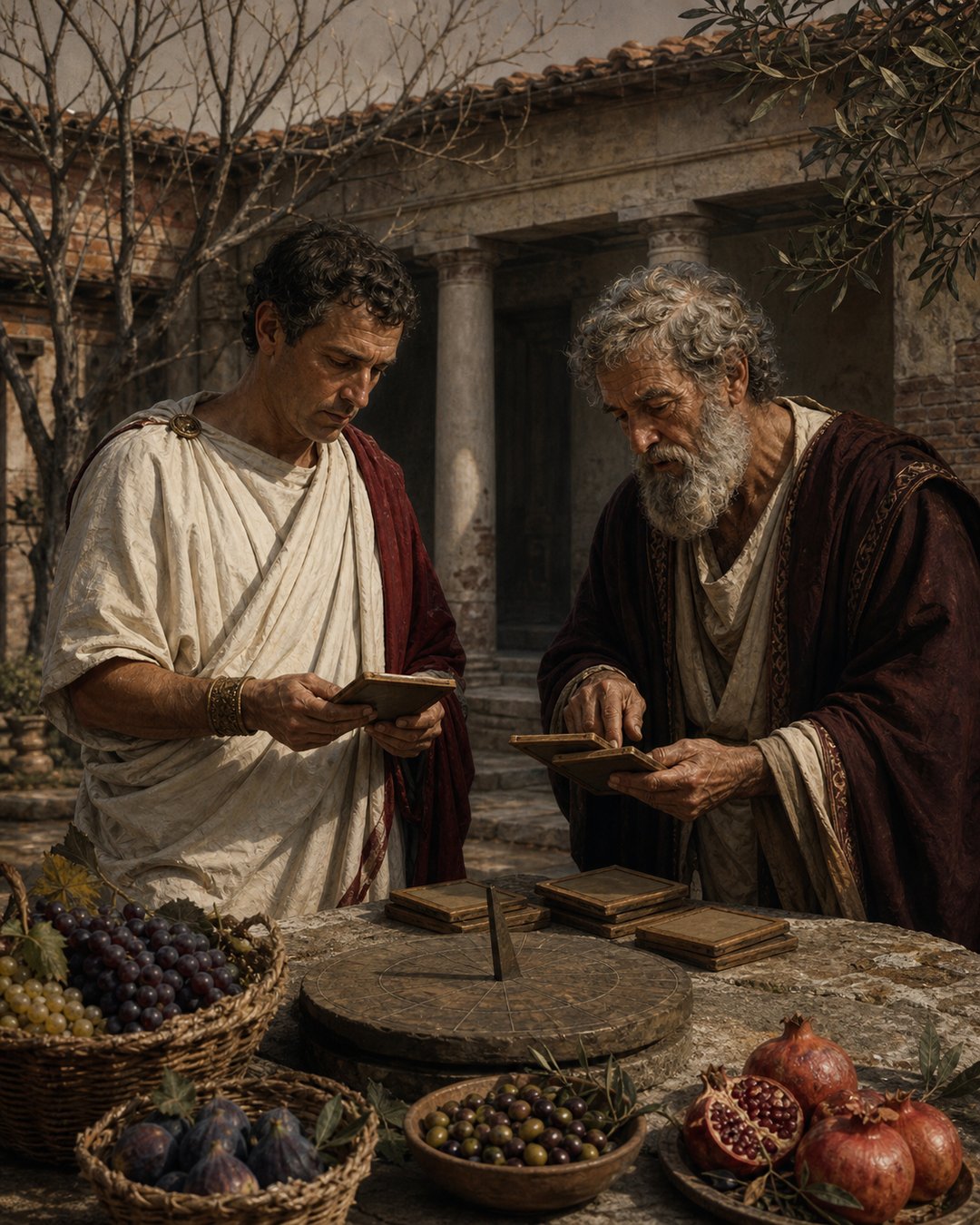
Rome entered 46 BC with a problem that could not be solved by declaring the next festival a little earlier. The civic calendar had slipped so badly against the solar year that dates no longer reliably named the seasons they were supposed to govern. Magistrates, courts, contracts, religious observances and military commands all depended on that unstable public clock.
Julius Caesar’s answer made one year absorb the accumulated error. Ancient accounts differ in how they describe the inserted months, but the result is famous: 46 BC lasted 445 days. It became the longest official year in Roman history so that the years after it could become more predictable.
The spectacle lies in the number. The mechanism lies in what Rome was trying to repair. A state that dated authority by annual offices needed January to remain January in more than name. Caesar first forced the calendar back toward the seasons, then gave it a rule designed to prevent the same drift from returning.
The Republic Had Put Time in Priestly Hands
The old Roman civic year was not simply a short solar calendar waiting for an extra day every fourth February. Its months and intercalations had grown through a long religious and political history. The pontifices supervised the adjustments needed to keep the official sequence from wandering too far.
That responsibility made intercalation an act of government. The date on a document could determine when a magistrate entered office, when a lease expired, when a debt came due or when a commander’s legal authority ended. Adding time did not merely correct astronomy; it prolonged some arrangements and delayed others.
Ancient critics consequently associated the late Republican calendar with neglect and manipulation. Suetonius says the priests had abused their power of inserting days or months for advantage, so that festivals and harvest seasons no longer agreed. Plutarch likewise describes confusion that required an extraordinary correction.
The charge should be handled carefully. Not every mismatch proves a conspiracy, and the surviving accounts were written with hindsight after Caesar’s system had become normal. Yet their common complaint identifies a real structural weakness: correction depended on decisions that could be delayed, disputed or politically useful.
Rome already knew that dates carried ritual force. The city opened the mundus on three marked dates, while other calendars distinguished lawful public business from days reserved for gods. If the civic year drifted, the problem touched both administration and the sacred map of time.
Seasonal Drift Became a Problem for Public Power
A calendar can remain internally consistent while becoming seasonally wrong. Officials may agree that a date is the Kalends of a named month even as the sun and harvest move farther from the position implied by tradition. Repeated failure to intercalate produces exactly that kind of cumulative displacement.
For farmers, the seasons were physical facts rather than labels. Rain, heat, ripening grain and the rising or setting of familiar stars did not wait for a late civic calendar. Writers on agriculture could organize work by weather and celestial signs, but government still required agreed dates for assemblies, terms and observances.
The gap also harmed historical memory. Roman years were named through magistrates, and events were placed inside civic sequences. When months no longer sat where readers expected them in the natural year, comparing campaigns, festivals and seasonal work became harder.
Caesar approached the issue with unusual authority. He was both dictator and pontifex maximus, joining coercive political power to the chief priesthood associated with the calendar. Reform could therefore be presented as restoration of order rather than the private proposal of an astronomer.
Suetonius credits Caesar with arranging the year according to the sun. Later tradition connects the technical advice with Sosigenes of Alexandria. The exact working committee is less visible than the principle: regular arithmetic would replace ad hoc rescue.
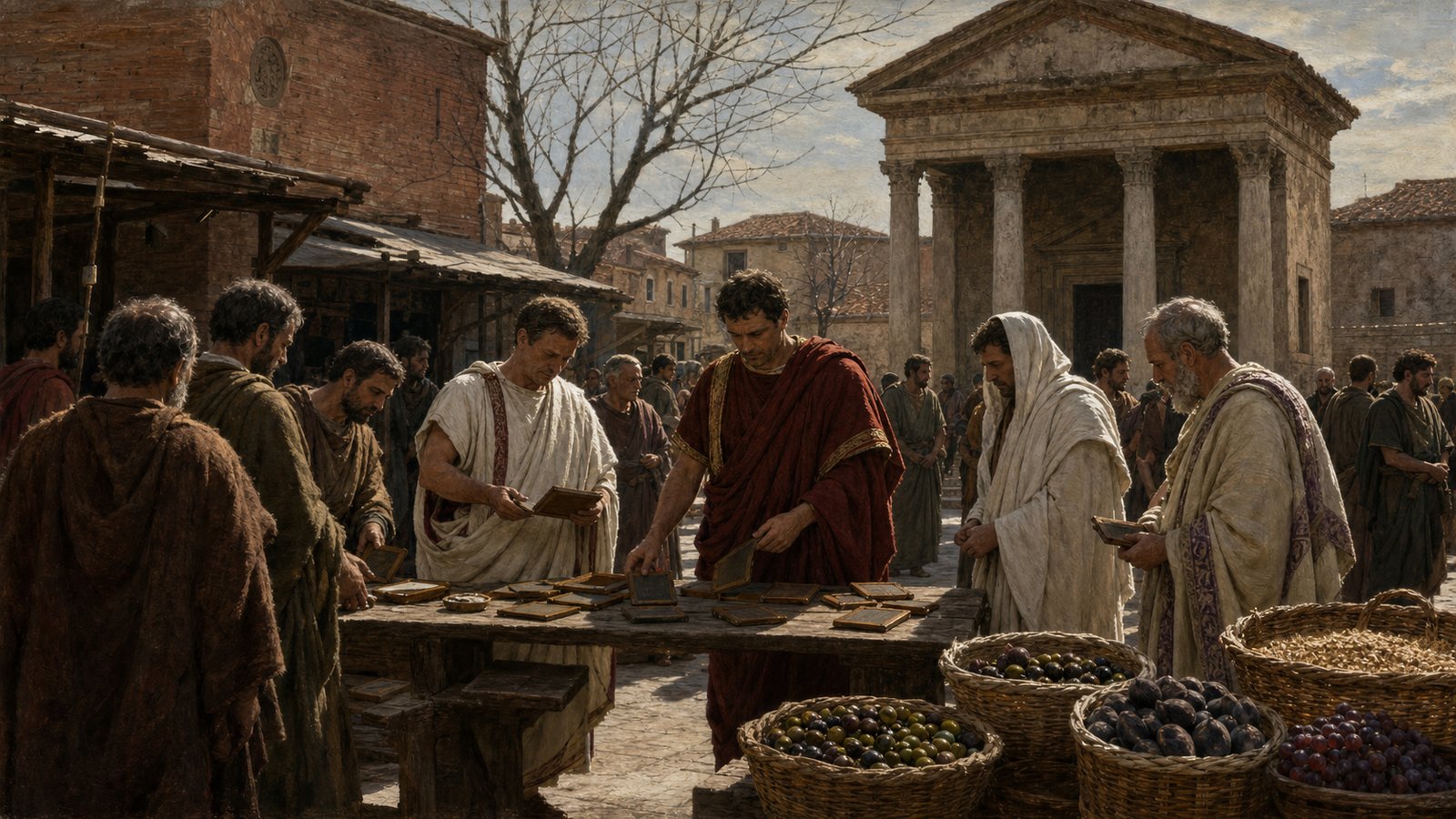
Two Extra Months Paid Rome’s Calendar Debt
Before the new system could begin cleanly, the accumulated mismatch had to be removed. Caesar did not pretend that a revised rule could repair earlier drift by itself. The transition year had to carry additional time.
Suetonius says Caesar inserted two months between November and December in addition to the intercalary month already placed after February. Plutarch gives a broader narrative of additions made to bring the months back into agreement with the sun. Later summaries identify the completed year as 445 days.
For anyone living through it, the correction was not an abstract table. A year of office, accounts or household planning suddenly contained far more days than its familiar name suggested. Annual rhythms stretched while the state waited for the sun and its official dates to meet again.
The phrase “year of confusion” captures that experience, but it can mislead if it makes the reform itself sound confused. The old alignment was the disorder. The long year was the deliberate clearing operation.
Roman government sometimes made one highly visible act carry the cost of restoring a rule. The annual nail later remembered at Jupiter’s temple could bind plague, chronology and emergency command into a physical mark. Caesar’s inserted months were time made just as tangible: citizens had to live through the correction before regularity could resume.
A Solar Rule Replaced Repeated Improvisation
Once the seasons had been realigned, the reformed calendar used a year of 365 days with an additional day inserted on a regular cycle. Roman leap-year language did not originally number February exactly as modern calendars do; the added day was associated with repeating the sixth day before the Kalends of March.
The design aimed at predictability. Officials no longer needed a politically timed extra month whenever drift became intolerable. Citizens could anticipate the shape of future years, and the state could preserve a closer relation between month names and seasons.
Regularity did not prevent an early implementation error. Ancient sources report that the leap adjustment was initially applied too often because inclusive Roman counting was misunderstood. Augustus later suspended intercalations long enough to repair the excess.
That mistake is revealing rather than fatal to Caesar’s project. A rule can be clearer than discretion and still be executed incorrectly. The correction under Augustus depended on the same advantage the reform had created: an error in a known cycle could be measured and reversed.
The system was also political because it outlived its author. Caesar was killed in 44 BC, but the calendar did not collapse with his dictatorship. The month Quintilis was renamed July in his honor, linking the durable public instrument to the ruler who had imposed it.
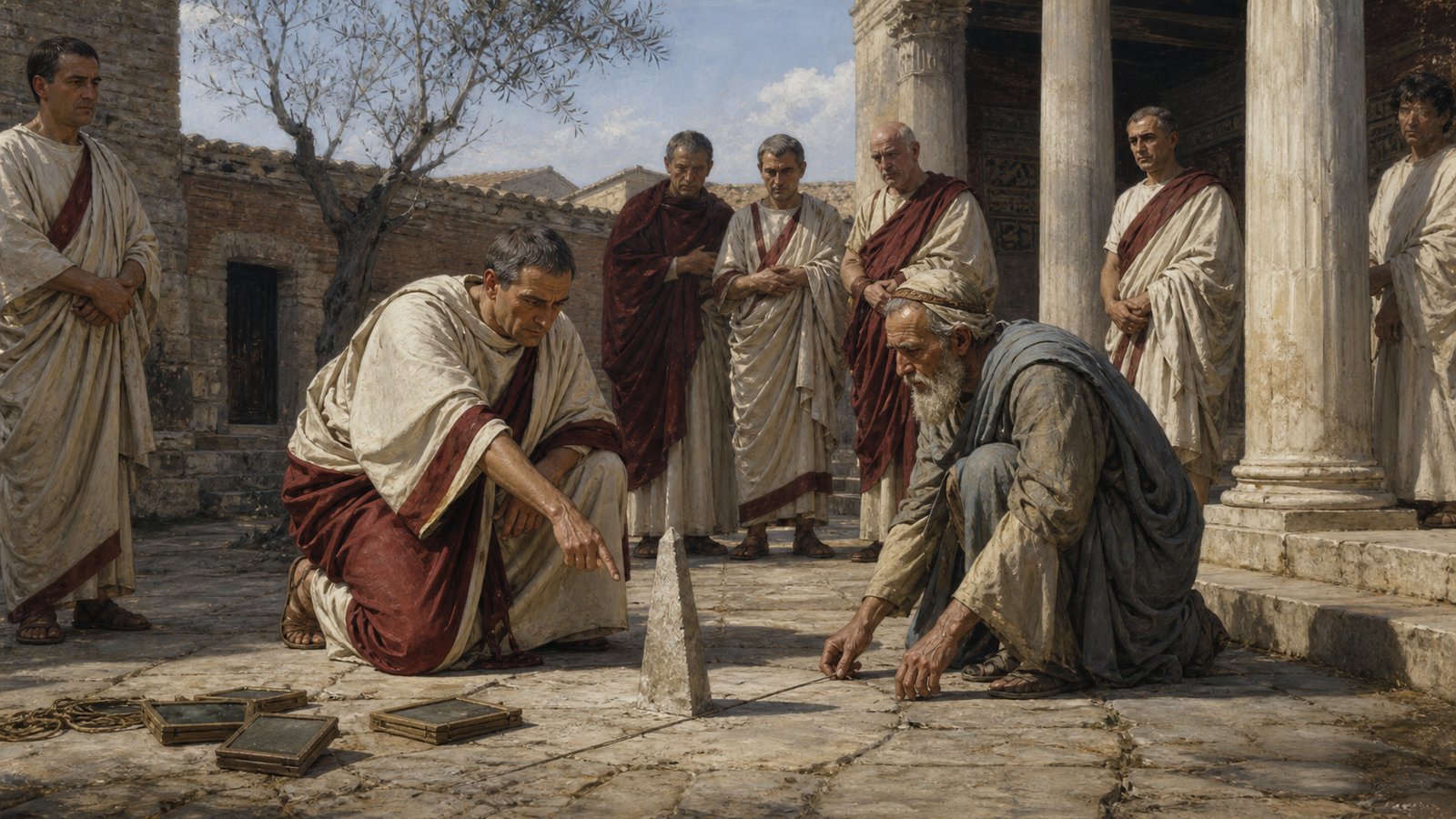
The Longest Year Bought Centuries of Ordinary Dates
The Julian calendar was not perfectly identical to the solar year. Its average was slightly too long, and the small annual difference accumulated over many centuries. The Gregorian reform would eventually change the leap rule and remove accumulated days.
That later correction should not shrink the Roman achievement. Caesar’s calendar supplied a stable framework across the empire and far beyond its political end. It turned an irregular civic vulnerability into a system that could drift only slowly and visibly.
The reform also changed what counted as normal. A 365-day year with periodic leap adjustment now feels like neutral time, but Romans had to manufacture that neutrality through authority, astronomy and one astonishing transition.
Forty-six BC was therefore both an anomaly and a piece of infrastructure. Its 445 days carried neglected corrections so that later dates would demand less political negotiation. The year was made enormous in order to make the calendar disappear into daily habit.
Caesar did not create the seasons, and Rome never gained power over the sun. What the reform achieved was more practical: it made the state’s names for time correspond more closely to the world in which harvests, voyages, offices and festivals actually occurred.
The longest year was the visible price of that agreement. Rome endured extra months once so that generations could treat the calendar as a rule rather than a recurring crisis.
Sources
Suetonius, Julius Caesar 40. Plutarch, Caesar 59. Macrobius, Saturnalia 1.14.