
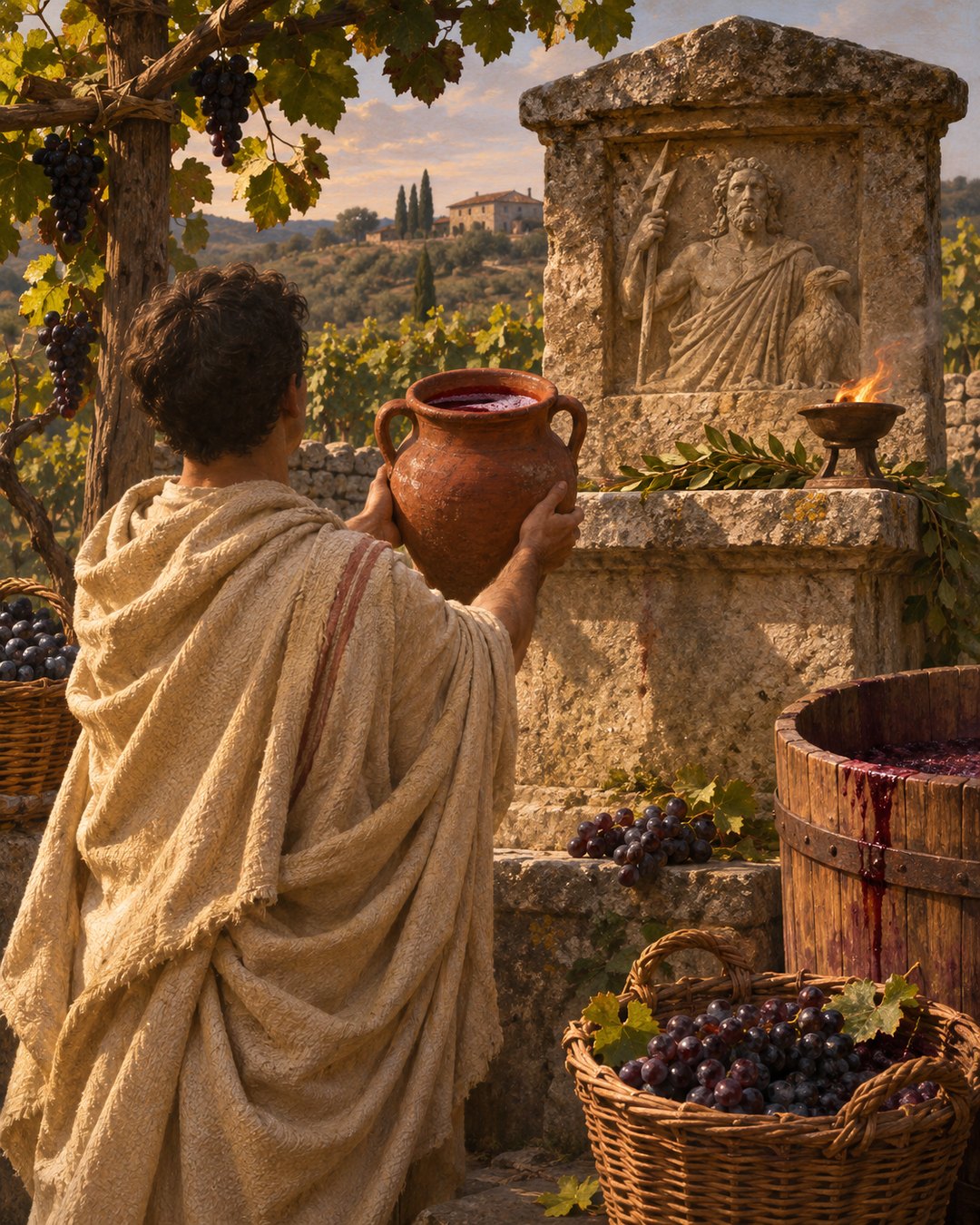
On April 23, a Roman could meet two very different stories in the same festival. Myrtle, mint, rushes and roses belonged to Venus. New wine belonged to Jupiter. Ovid does not smooth away that awkward division. He stops over it, asks why the Vinalia carries the presence of one deity but the claim of another, and answers with a bargain made during a legendary war.
The bargain was blunt. Mezentius, an Etruscan ruler asked to support Turnus, named his price: the next wine drawn from the Rutulians’ vats. Aeneas answered by promising the new wine of Latium to Jupiter instead. In Ovid’s telling, the better vow won. Mezentius fell, autumn arrived, grapes were trodden, and Jupiter received what had been pledged.
This is not simply a charming origin tale for a date on the calendar. It makes the first wine of a vintage look like contested property. Before it could become a drink, it could be a military payment, a divine offering, or evidence that one promise had defeated another. The Vinalia placed that contest beside the ordinary work of vineyards and vats.
An April Feast with Two Divine Owners
Ovid introduces the Vinalia immediately after his account of the Parilia. One day separates the two observances. That precision matters because his Fasti moves through the Roman year date by date, turning the calendar into a sequence of questions. On April 23, the question is not whether the Vinalia exists. It is who owns its meaning.
Venus is impossible to miss. Ovid addresses women engaged in sex work and directs them to celebrate her divinity. Their prayers concern beauty, popularity, charm and wit. The offerings are small, fragrant and tactile: the goddess’s myrtle, the mint she loves, bands of rushes hidden among clustered roses. Worshippers are directed toward her temple near the Colline Gate.
Ovid also gives the cult a journey. He connects the Roman Venus of this observance with Eryx in Sicily, captured in war, and says that the goddess was transferred to Rome in obedience to a Sibylline oracle. The setting is therefore urban and public, even though the objects named in the rite could be held in the hand.
Then Ovid interrupts himself. If Venus is receiving prayers and offerings, why is the day called the Vinalia? More sharply, why does it belong to Jupiter? The poem refuses to let a reader assume that wine naturally points to Venus. Its explanation leaves the temple and returns to the legendary struggle surrounding Aeneas’s arrival in Italy.
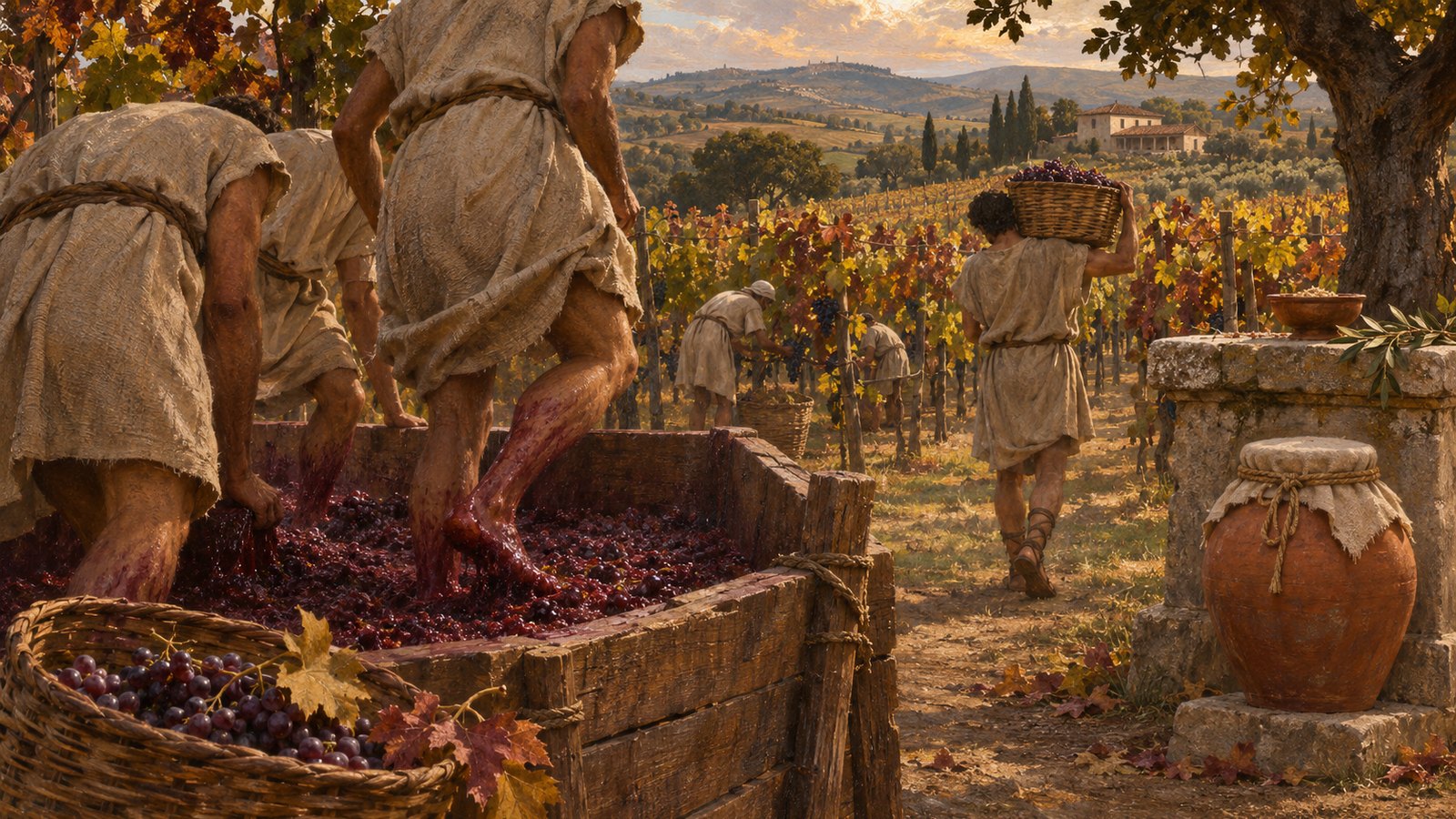
Mezentius Put a Vintage into a War Contract
The conflict turns on the marriage of Latinus’s daughter. Turnus and Aeneas are rivals, and Turnus seeks Etruscan help. Mezentius enters Ovid’s story as a formidable fighter, strong on horseback and stronger still on foot. He is not asked for a symbolic endorsement. He is being recruited for force.
Mezentius makes that force expensive. He points to his wounds and bloodied weapons, then asks the Rutulians to divide with him the next new wine from their vats. The demand is concrete enough to picture without inventing a number. It reaches past the immediate battle toward the work of a later season. If he fights now, he expects the vintage afterward.
That turns wine into deferred payment. The grapes have not yet been trodden, but their future liquid is already being assigned. The promised share is neither a cup passed around a feast nor an old jar taken from storage. It is the next new wine, a product that will exist only if vines, labour and time carry the community into autumn.
Roman wine was often wealth held in large containers as well as drink. The physical side of that storage is visible in the great vessels discussed in our account of Roman dolia. Ovid’s story adds a different layer. Before wine entered a vessel, a political promise could already claim it.
Aeneas Redirected the First Pour to Jupiter
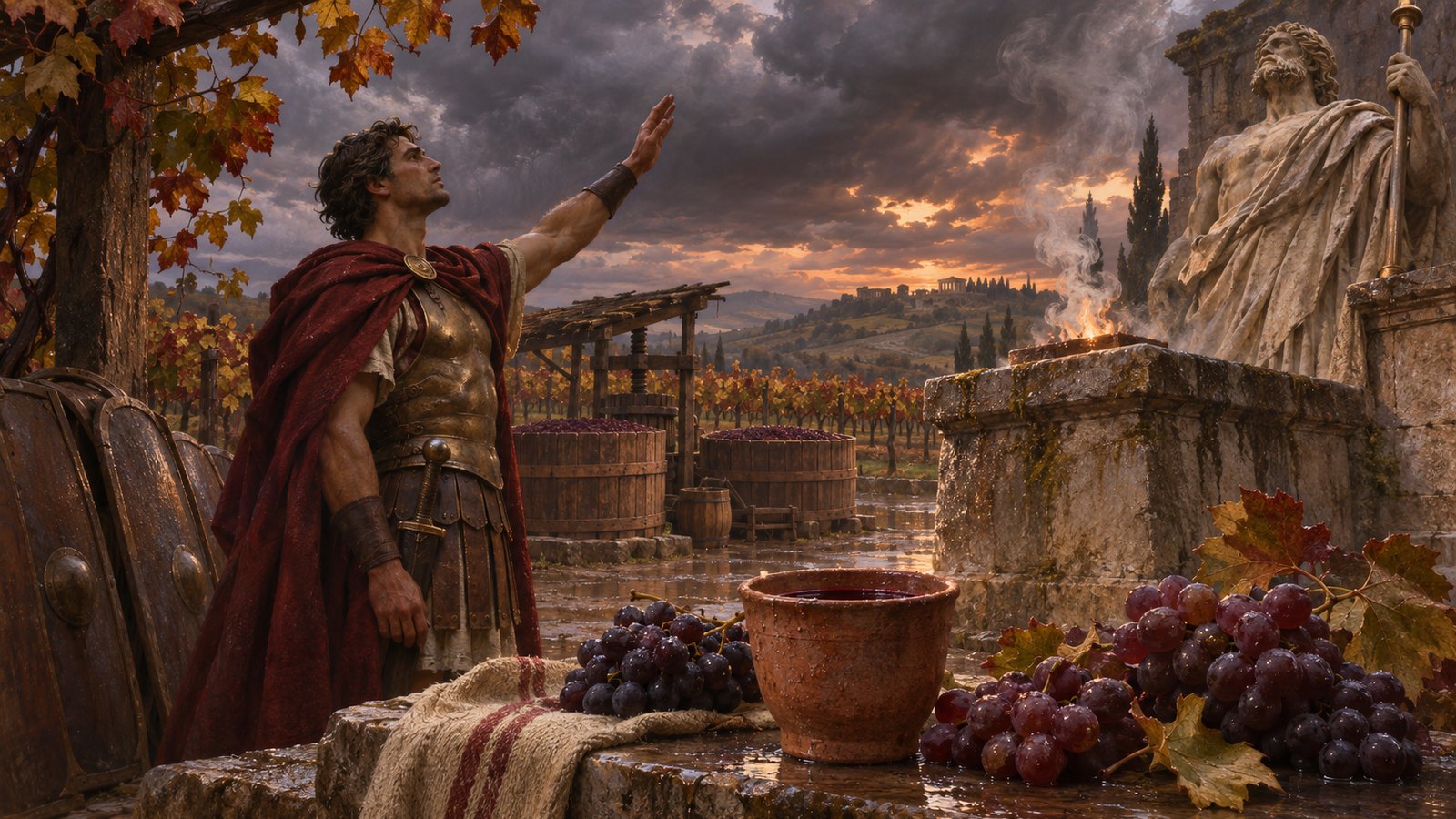
Aeneas answers with a counter-vow. The enemy, he says, has pledged the vintage to the Etruscan king; he will give the new wine from the Latin vines to Jupiter. The opposition is exact. Mezentius wants the wine as his price. Jupiter is offered the wine as a god. The same future harvest cannot satisfy both claims in the same way.
Ovid compresses the outcome. The better vows prevail and Mezentius falls, striking the ground with his body. The poem then jumps from battle to season. Autumn returns, marked by trodden grapes, and the wine owed under Aeneas’s promise is paid to Jupiter.
The sequence gives the vintage a memory. A person looking at the first wine need not see only fermentation or taste. In the festival’s explanatory story, that wine recalls a choice between a ruler who demanded produce for military service and a founder who placed the produce under divine obligation. Victory is completed only when the later harvest honours the vow.
This does not mean every Roman approached April 23 with one tidy interpretation. Ovid himself has just shown Venus receiving attention on the same day. It means that his explanation preserves a powerful claim about precedence. Jupiter does not merely receive some wine. The new wine of the Latin vines is his because it was promised before victory and paid after it.
Why the First Wine Was More than a Drink
The force of the story lies in timing. New wine sits at the threshold between agricultural work and social use. Its arrival can be anticipated, but it cannot be hurried into existence by a speech. Mezentius and Aeneas both reach forward to that threshold. Each makes the coming vintage answer for the outcome he wants.
Ovid’s tale also helps separate the Vinalia from a generic “wine festival.” The material at stake is not an endless abundance. It is a particular vintage from particular vines and vats. The ancient explanation is interested in who receives it first and under what authority. Jupiter’s feast marks an obligation discharged, not simply an excuse to drink.
Wine also had legal and commercial edges in Roman life. Quality could be disputed, and time could decide whether a sale remained sound, as another case shows in the three-day test attached to a Roman wine sale. The Vinalia story belongs to a different register, but it shares the insistence that wine moves inside rules. A vintage can be sold, stored, promised or offered; the container alone does not explain the claim.
The physical details keep the legend from floating away. Vats wait for new wine. Autumn is stained by trodden grapes. A future crop becomes the price of an armed alliance, then the object of a vow, then a payment to a god. Ovid builds the festival’s logic from those changes in possession.
Venus Did Not Disappear when Jupiter Claimed the Day
The easiest retelling would choose one deity and discard the other. Ovid does the opposite. Venus remains present in the worshippers, the scented plants and the temple near the Colline Gate. Jupiter remains present in the name and ownership of the feast. The day holds both sets of actions without pretending they are identical.
That overlap is historically useful because Roman festivals were not always single-purpose labels. A date could gather cult, story, place and social practice that had not begun at the same moment. Ovid’s poem exposes the seam rather than concealing it. He asks the question a puzzled observer might ask and offers a legendary answer for Jupiter’s wine claim while leaving Venus’s worship intact.
The result is a festival built around a transfer. Mezentius tries to reserve the next vintage as compensation. Aeneas redirects it upward through a vow. Autumn turns the spoken promise into wine that can actually be paid. On April 23, Ovid lets Rome remember the moment before the first drink, when the vintage still belonged to whoever had the strongest claim.
That is the Vinalia’s sharpest image: not a banquet, but a future harvest spoken for twice. One claim is the price of a warrior. The other is a debt to Jupiter. The god’s feast begins when the second claim survives the battle and reaches the vat.
Sources
Ovid, Fasti, 4.863–900.