The Hidden Tension That Kept a Roman Wheel Together
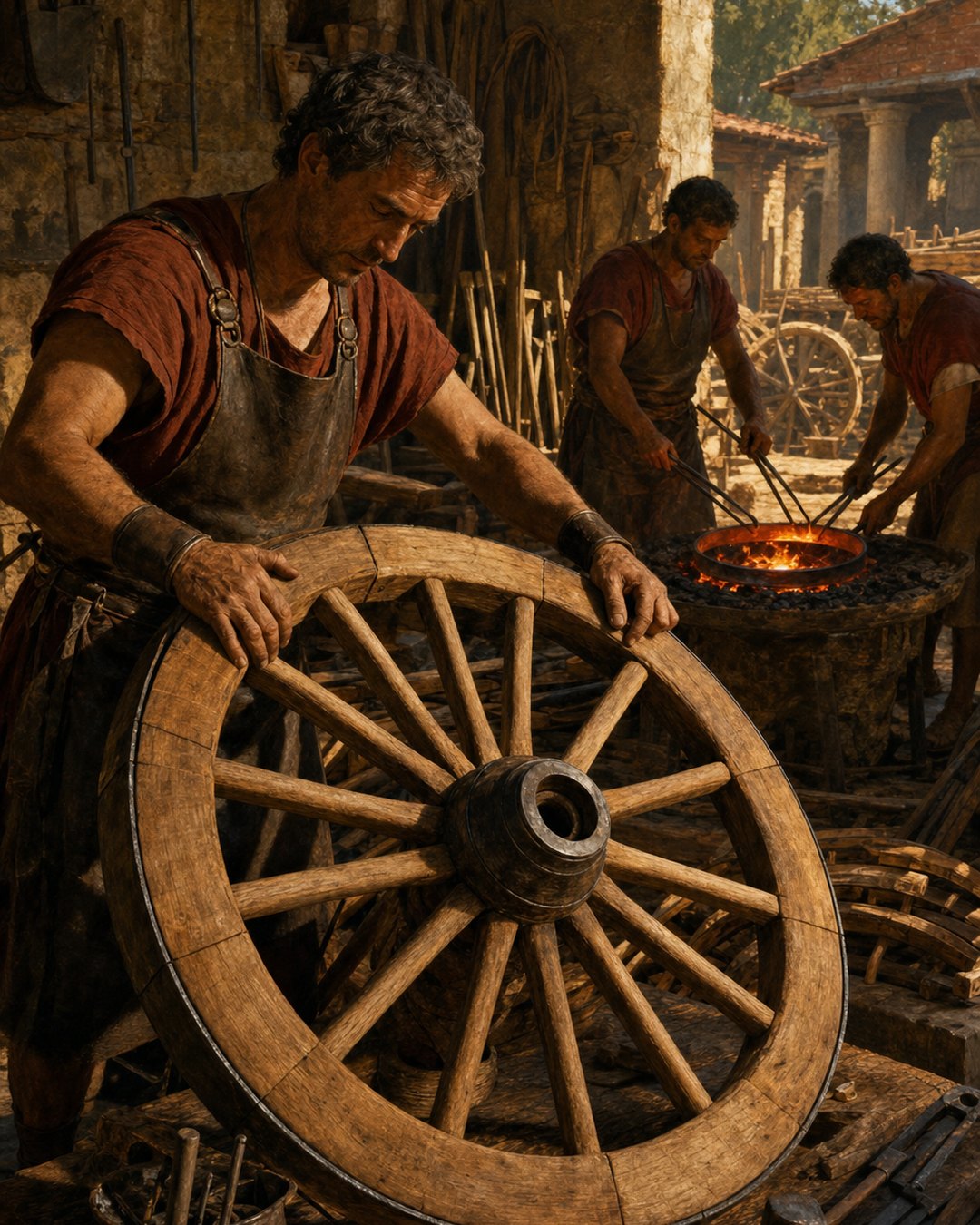
A wheel beside a Roman road looked simple only after the wheelwright had hidden every disagreement inside it. The hub wanted to split around its axle hole. Spokes wanted to loosen when timber dried. Felloe segments wanted to become a polygon instead of a circle. An iron tire had to fit tightly enough to bind … Read more
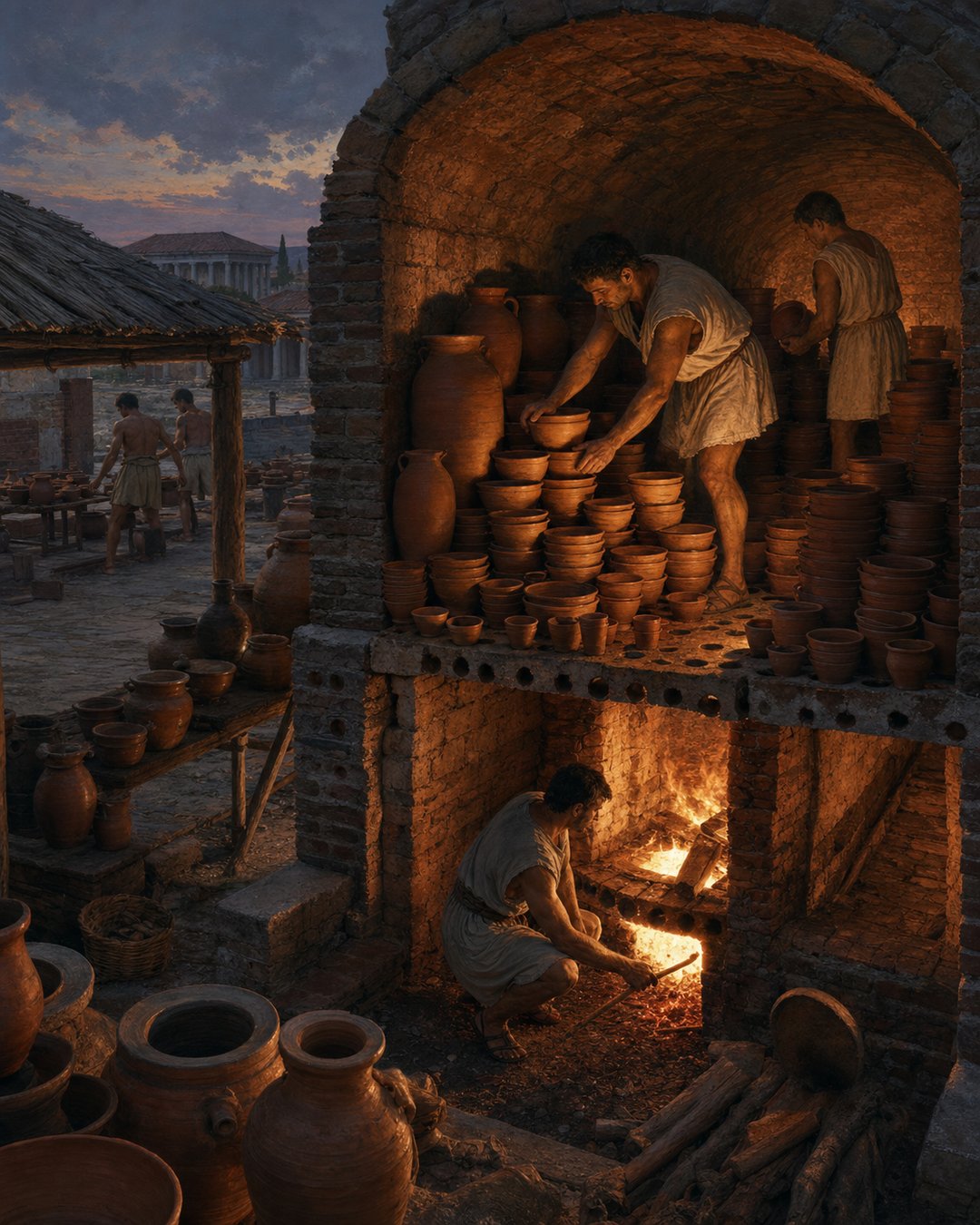
Why the Fire Never Touched the Pots in a Roman Kiln

A Roman pot could survive shaping, trimming and days of drying, then fail in the last few hours. Trapped moisture burst walls. A vessel placed too near a hot channel warped. Smoke altered a surface. One rushed opening cracked a load that had endured the full fire. The kiln made this risk manageable by separating … Read more

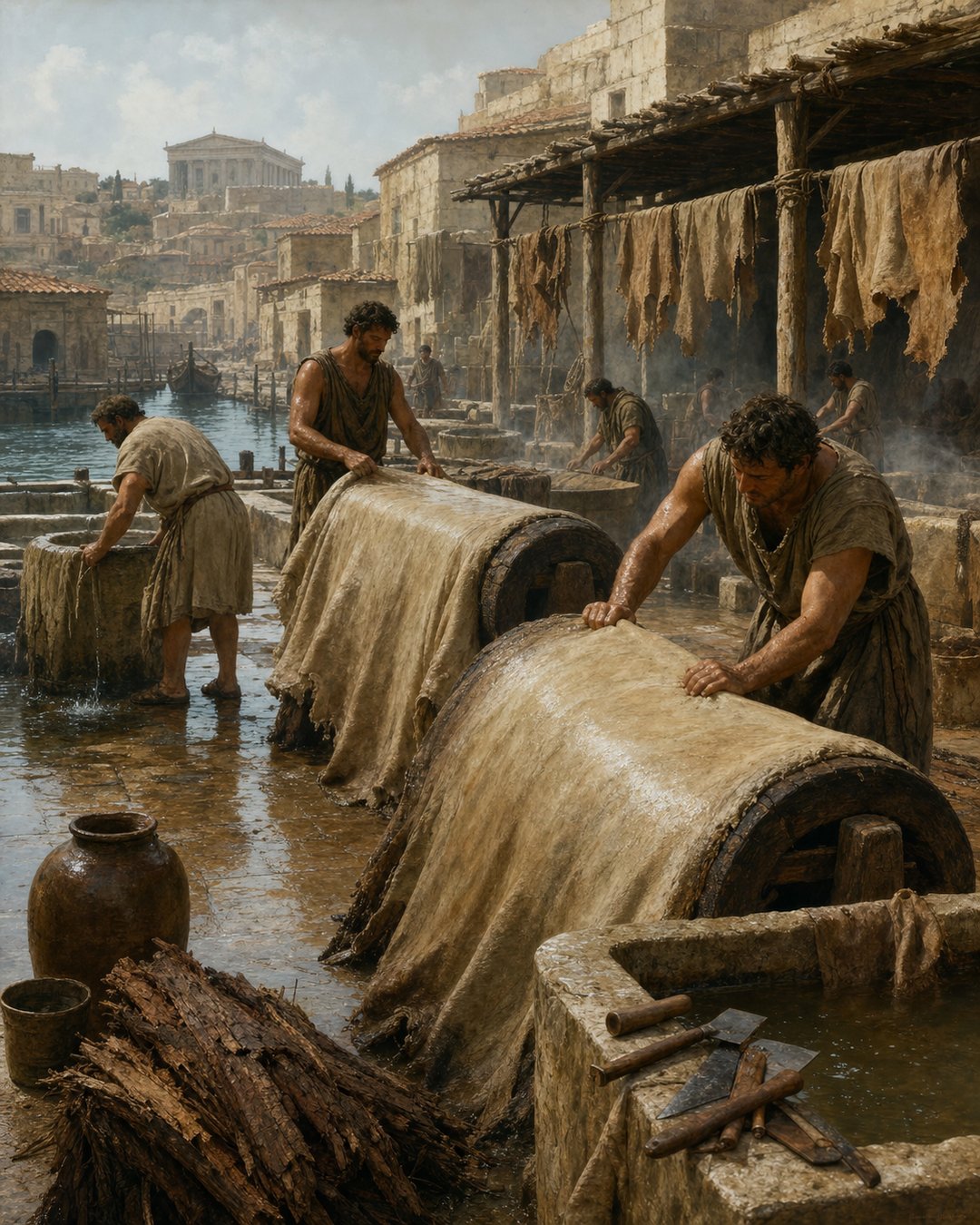
The Long Fight Against Rot in a Roman Tannery

A fresh hide carried the shape of an animal and the certainty of decay. Left wet, it putrefied. Dried too quickly, it hardened into a board. Roman tanners had to keep the useful collagen layer while removing hair, flesh, fat and the conditions that allowed rot to begin. The solution was not one bath. Hides … Read more

Soot, Gum and the Ink Behind Roman Writing

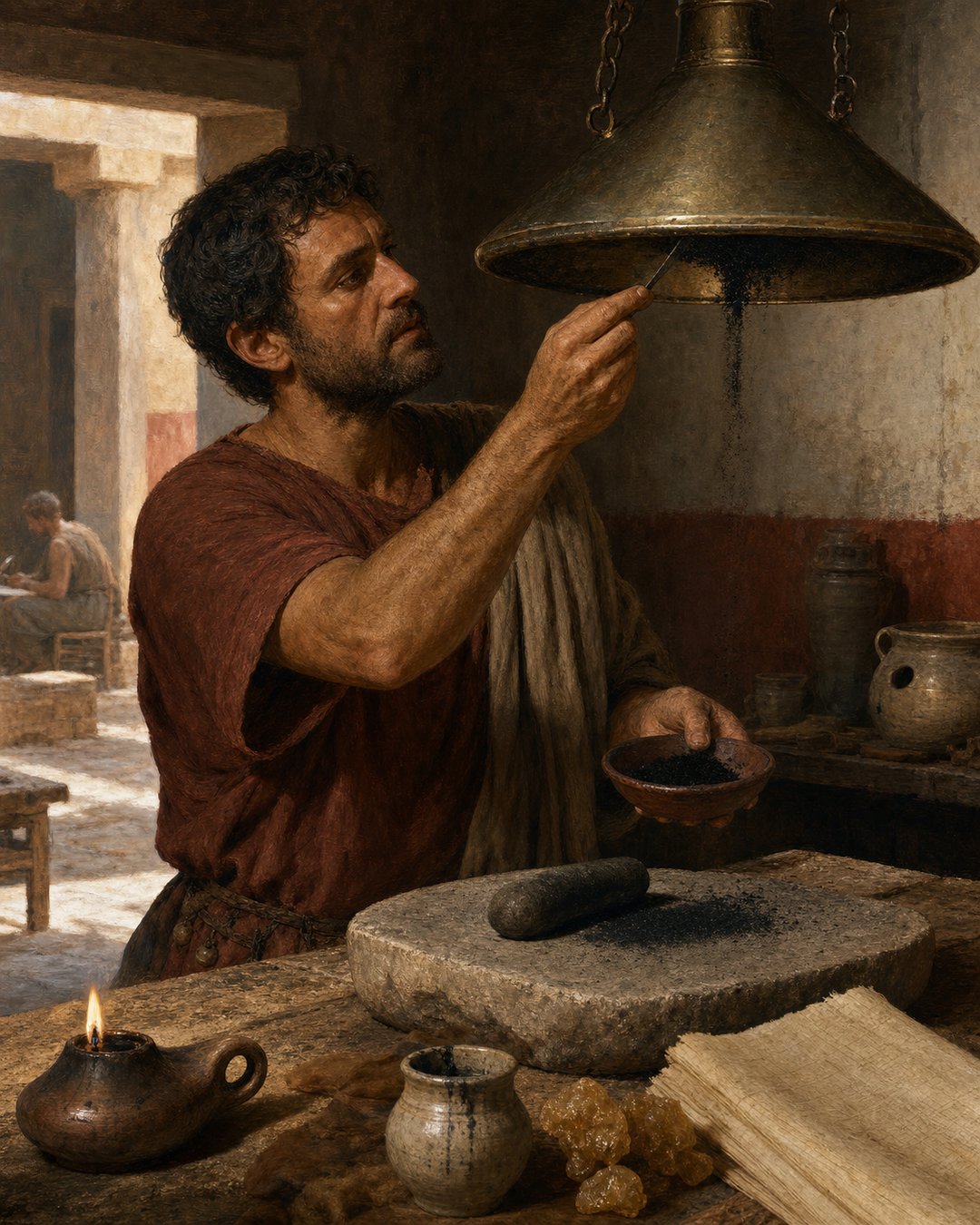
A Roman scribe could turn a blank sheet into an order, account, petition or poem only if thousands of black particles behaved. The darkest ingredient in common writing ink was often carbon: soot so fine that a breath could scatter it. Carbon would not dissolve in water. It had to be gathered, ground, bound and … Read more

How Papyrus Became a Page in the Roman World

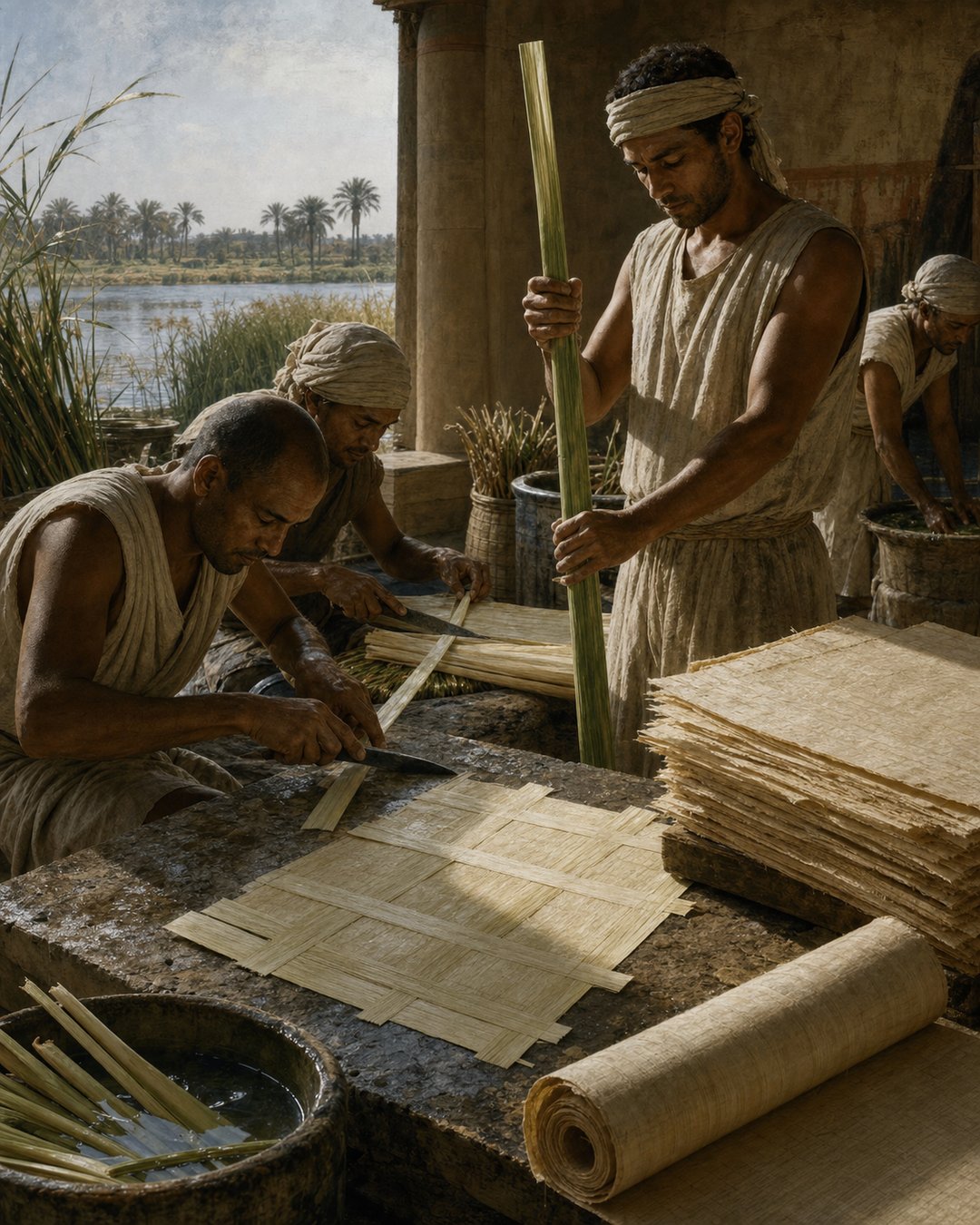
Before a Roman letter could travel, someone in Egypt had to split a wet green stalk. The triangular stem of papyrus concealed a pale pith that could be cut into long strips. Placed side by side, crossed with another layer and pressed as it dried, those fragile ribbons became a sheet strong enough to carry … Read more

Inside the Salt Pans That Fed the Roman Economy

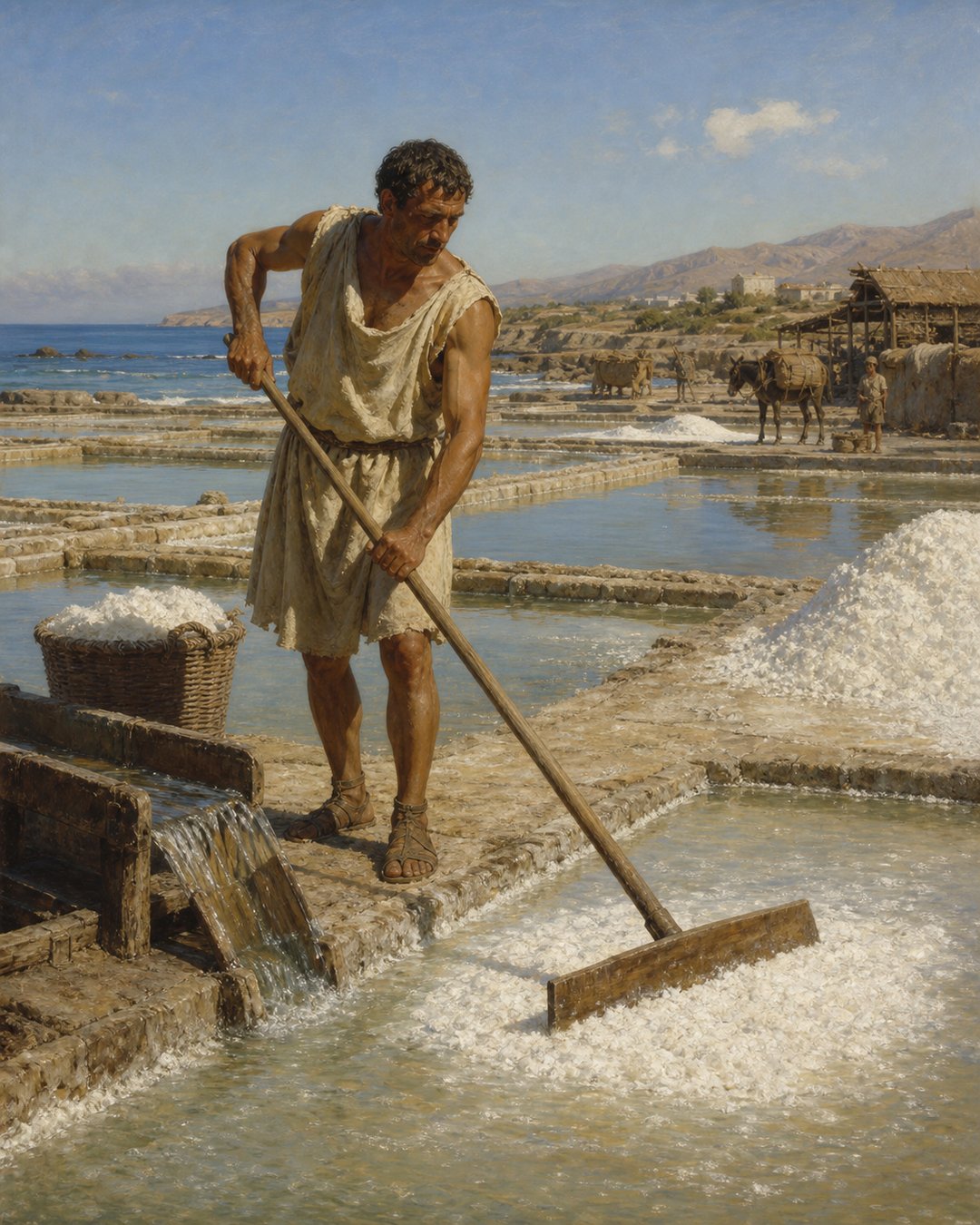
The sea could cover a Roman salt pan in the morning and leave a white mineral crust weeks later. Nothing had been added. Workers had moved water, controlled depth and waited while sun and wind carried most of the liquid away. The harvest looked simple only after an entire coastal landscape had been organized to … Read more

Why Roman Shipwrights Joined the Hull Before Raising the Frames

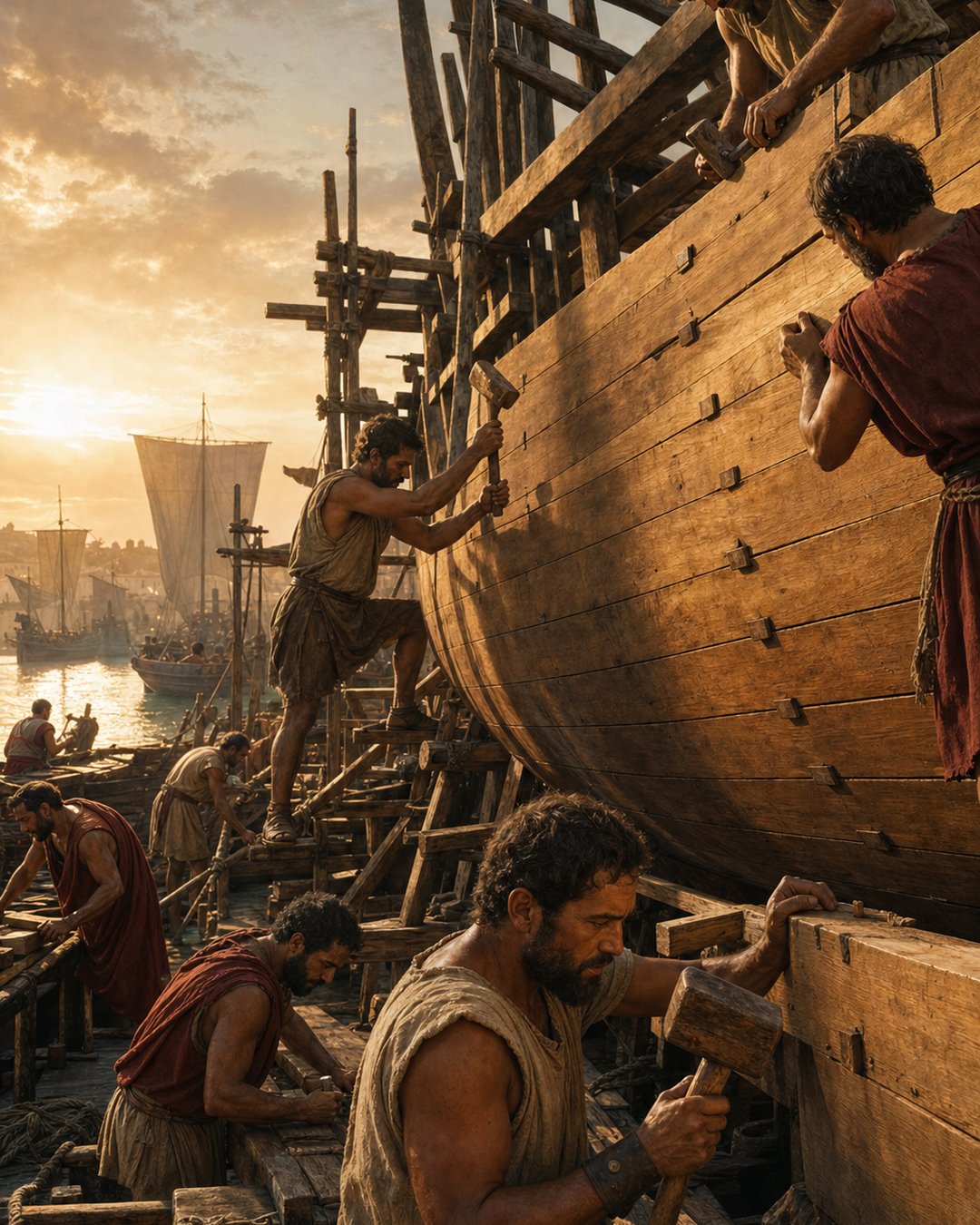
A Roman merchant hull could become a boat before it possessed the skeleton a modern observer expects. On a Mediterranean building shore, shipwrights set a keel, shaped heavy planks to its curve and locked each new strake to the one below. The fastenings disappeared as the shell rose, leaving a smooth wooden surface where the … Read more

The Low, Smokeless Fires Behind Roman Charcoal

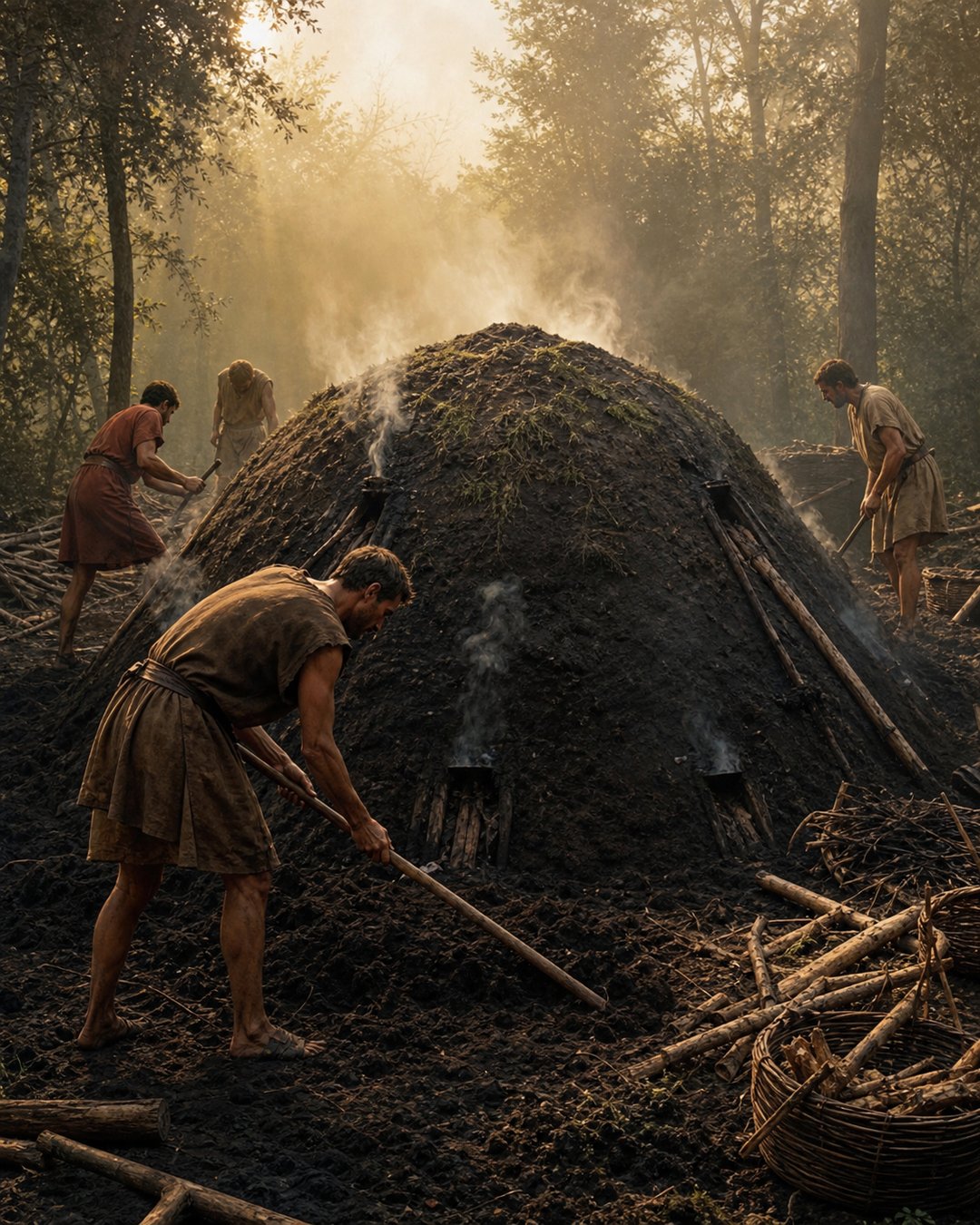
A Roman charcoal burner could spend days guarding a mound that looked almost asleep. Smoke leaked through a skin of leaves and earth. Beneath it, stacked wood heated in restricted air. If the mound went cold, the batch remained wood. If a hole admitted too much oxygen, months of gathered fuel could become ash before … Read more

One Hammer Blow, Thousands of Imperial Coins

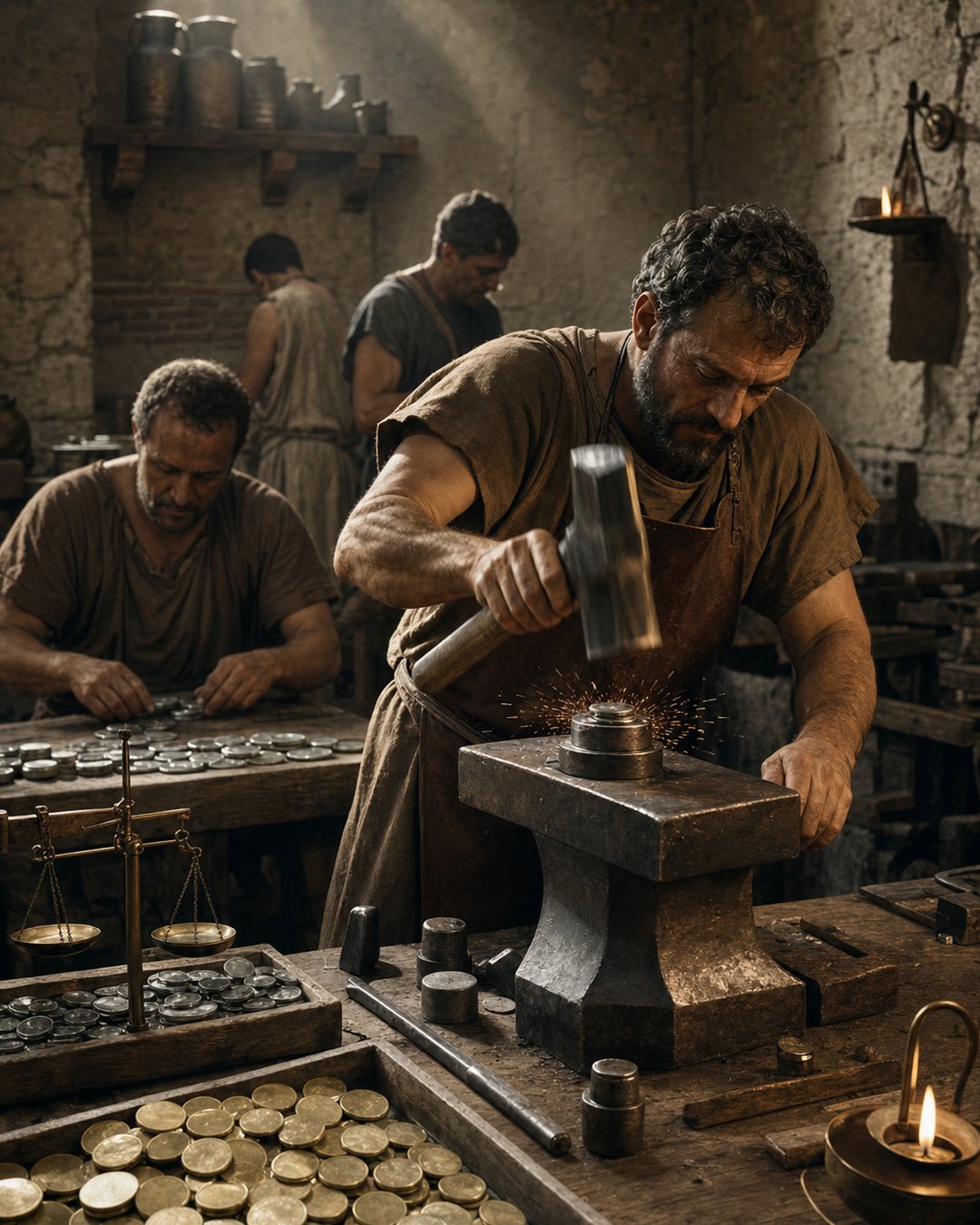
A Roman coin began as an awkward little piece of metal. It might have the right alloy and roughly the right weight, but it had no face, legend or claim to authority. In the mint, a worker placed that blank on an engraved die, positioned a second die above it and trusted a hammer blow … Read more

How Lime Kilns Turned Stone into Roman Mortar

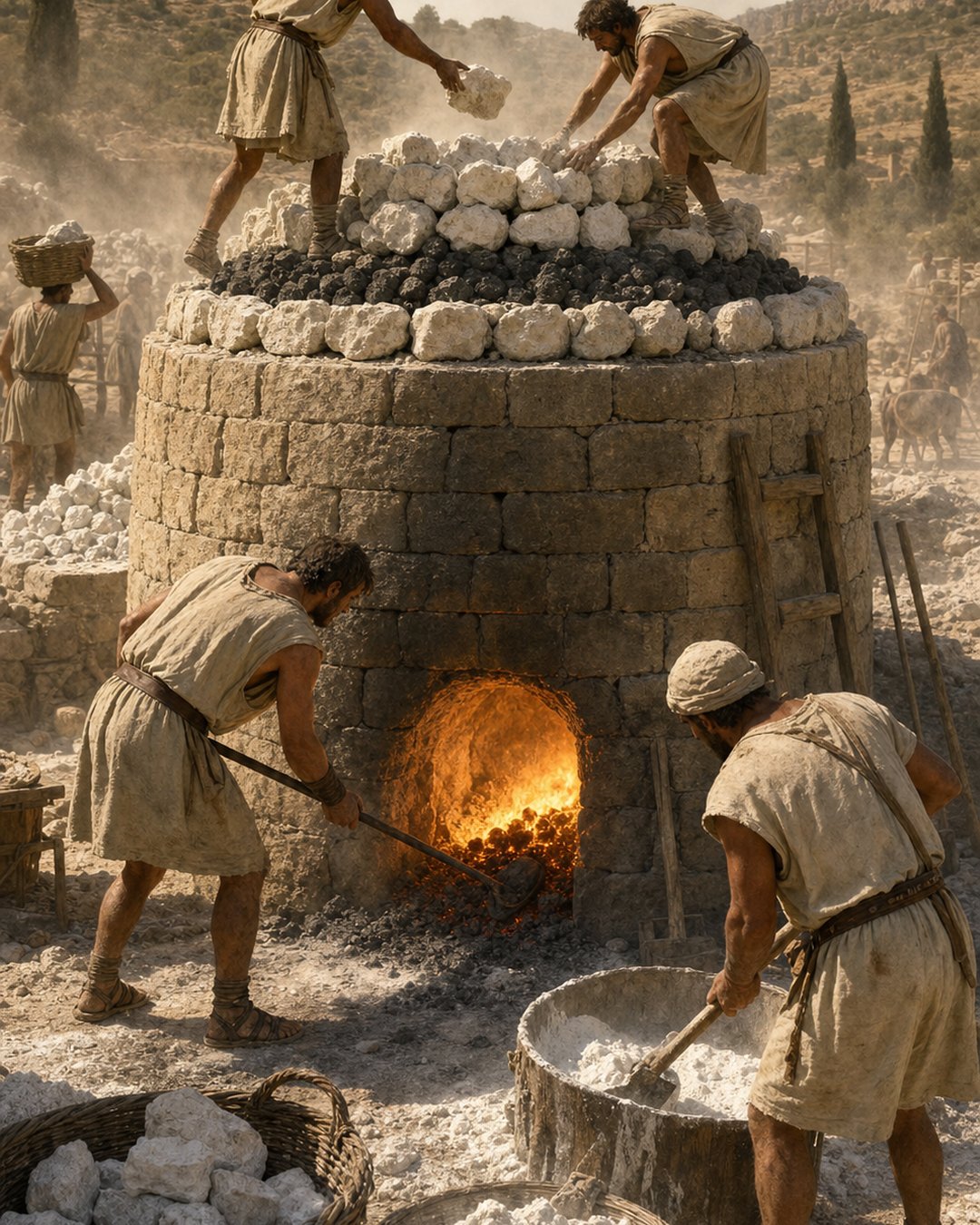
A Roman wall could begin with a material that seemed to contradict itself. Hard limestone entered a kiln. After prolonged heat, the pieces emerged lighter, pale and chemically hungry. When workers added water, the burned stone cracked, steamed and collapsed into a soft mass. Only after that violent change could it help bind another wall … Read more