
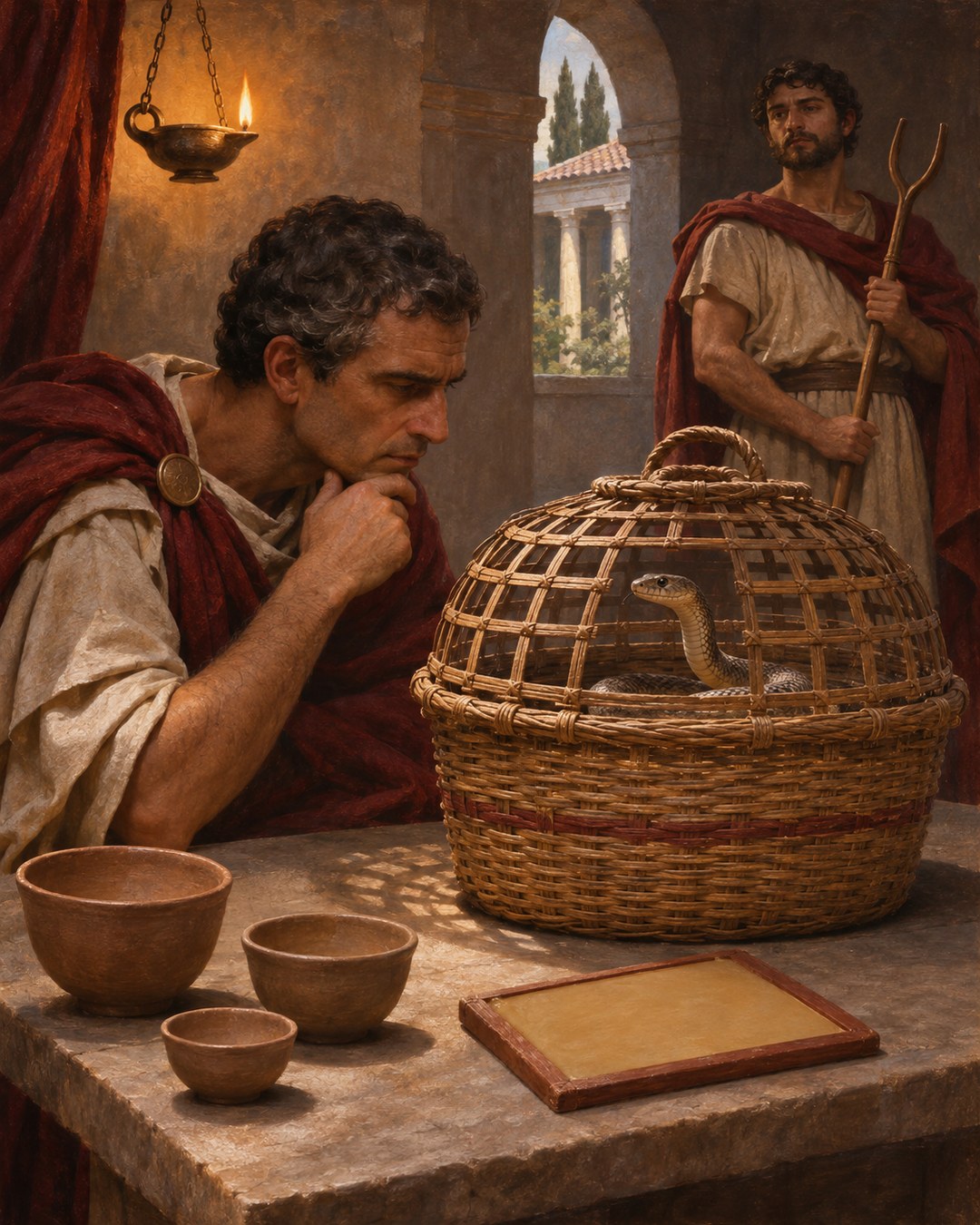
Pliny the Elder separated one danger into two routes. An asp’s venom, he wrote, could kill when it reached blood through a fresh wound, yet it was not harmful when taken internally. The distinction sounds startling because “poison” is an easy word and routes into the body are not. Pliny’s short chapter instead asks where a substance goes.
His account belongs to Roman natural history, not a modern clinical manual. Some details are plainly hazardous, and no one should turn them into treatment advice. But the structure of his observation matters: the mouth, an old sore and a fresh wound were not interchangeable openings. Pliny was trying to rank them.
Asp Venom Entered Pliny’s Book Through Symptoms
Pliny begins with what an asp bite appeared to do. He names torpor and drowsiness, effects that made the victim’s fading strength part of the diagnosis. The animal’s danger was read through the body before it was explained through anatomy.
He then calls asp injuries the most incurable among serpent wounds. That is a comparative claim, not a neutral description. It places the asp at the hard end of a whole category of bites and helps explain why the chapter moves quickly from symptoms to different kinds of contact.
The sequence is important. Pliny did not merely label the animal deadly and stop. He divided contact by the surface it met. Venom touching blood or a recent wound received his strongest warning: he said death followed immediately.
A Fresh Wound and an Old Sore Were Different Gates
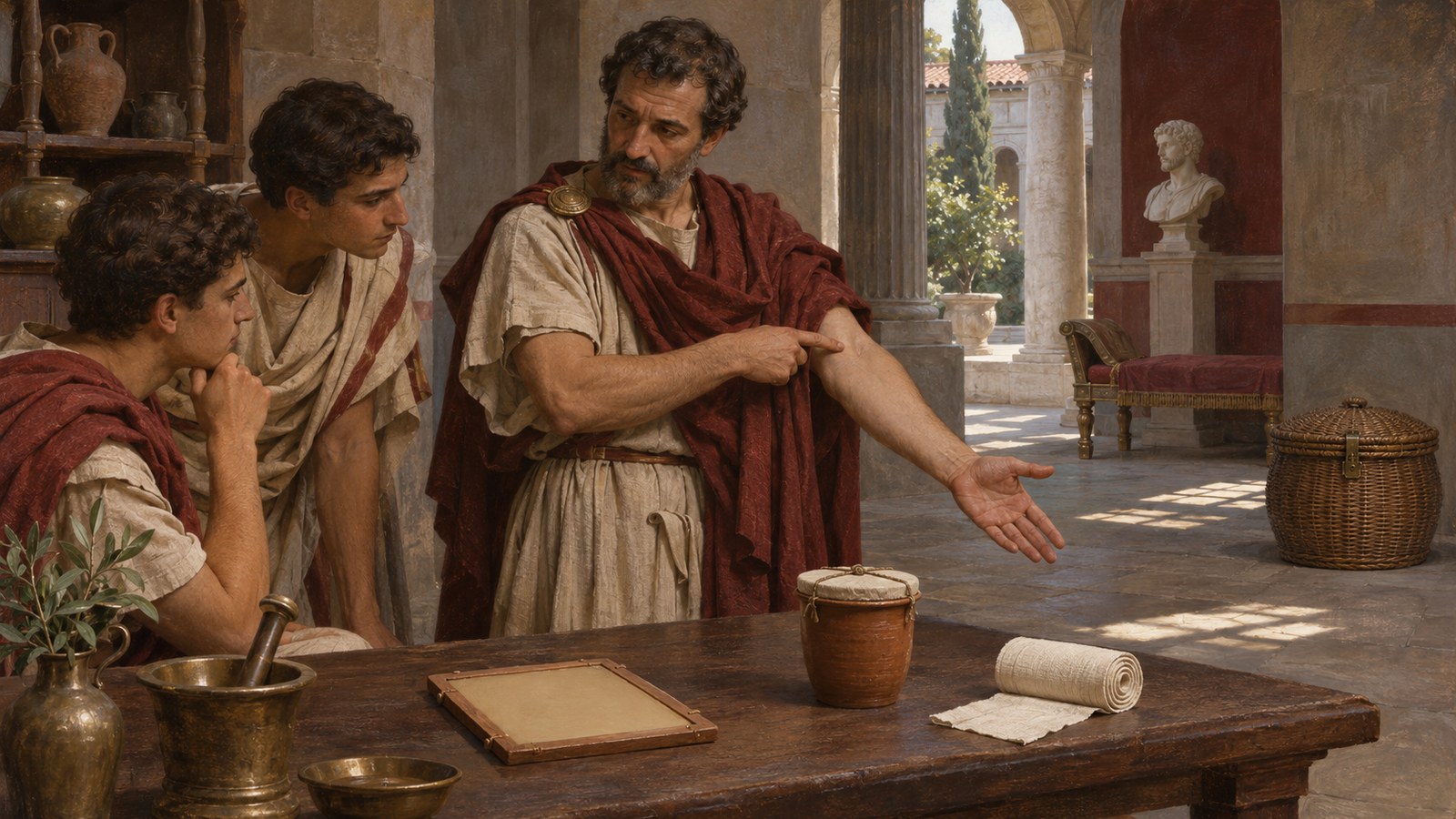
Next comes a finer distinction. If the venom touched an old sore, Pliny said, its fatal effect was not so immediate. He still treated the contact as dangerous, but the timing changed. The age and condition of the opening mattered.
That detail makes the passage more than a catalogue of frightening animals. It shows an observer sorting exposure by the state of tissue. Fresh damage, older damage and an unbroken internal route became three different cases. Pliny had no modern vocabulary of circulation or enzymes, but he could still compare boundaries.
A Roman reader did not need a laboratory to notice that the same material behaved differently after a bite, on damaged skin or in food. What Pliny supplied was a compact rule for remembering the contrast. The rule may be too absolute, yet its form is recognizably practical.
The distinction also sharpens a broader point about ancient medicine. A substance was not defined only by what it was. Its effect could depend on how it met the body. That same attention to contact and tissue appears in the care demanded by a Roman surgical hook working inside a wound, where position mattered as much as the tool itself.
Eating the Venom Reversed the Expected Result
Pliny’s most memorable claim concerns swallowing. Taken internally, even in a large quantity, he says the venom was not injurious because it lacked corrosive properties. The logic is explicit: something that does not burn or eat tissue on the way down could pass through without producing the effect of a bite.
Modern readers should keep the claim inside its historical frame. Swallowing venom is unsafe, especially when the mouth or digestive tract is damaged, and Pliny’s “however large” phrasing is not a usable guarantee. What deserves attention is the route comparison, not an invitation to test it.
Pliny immediately gives the observation a consequence. He says the flesh of animals killed by an asp could be eaten with impunity. A bite that made the animal’s body dangerous in one sense did not, in his account, turn every part of that animal into lethal food.
Imagine the practical question behind that sentence. A hunted or domestic animal lies dead with a suspected snake wound. The carcass represents food, labour and value, but also uncertainty. Throwing it away avoids one risk and creates another loss. Pliny’s route rule offered a reason to separate contaminated blood at the bite from meat passing through a diner’s stomach.
That answer is more revealing than a generic statement that Romans feared snakes. It shows natural history entering a decision about waste. The chapter moves from the drowsiness of a victim to the possible safety of a meal in only a few lines.
An Eighty-Three-Year-Old Authority Made the Remedy Printable
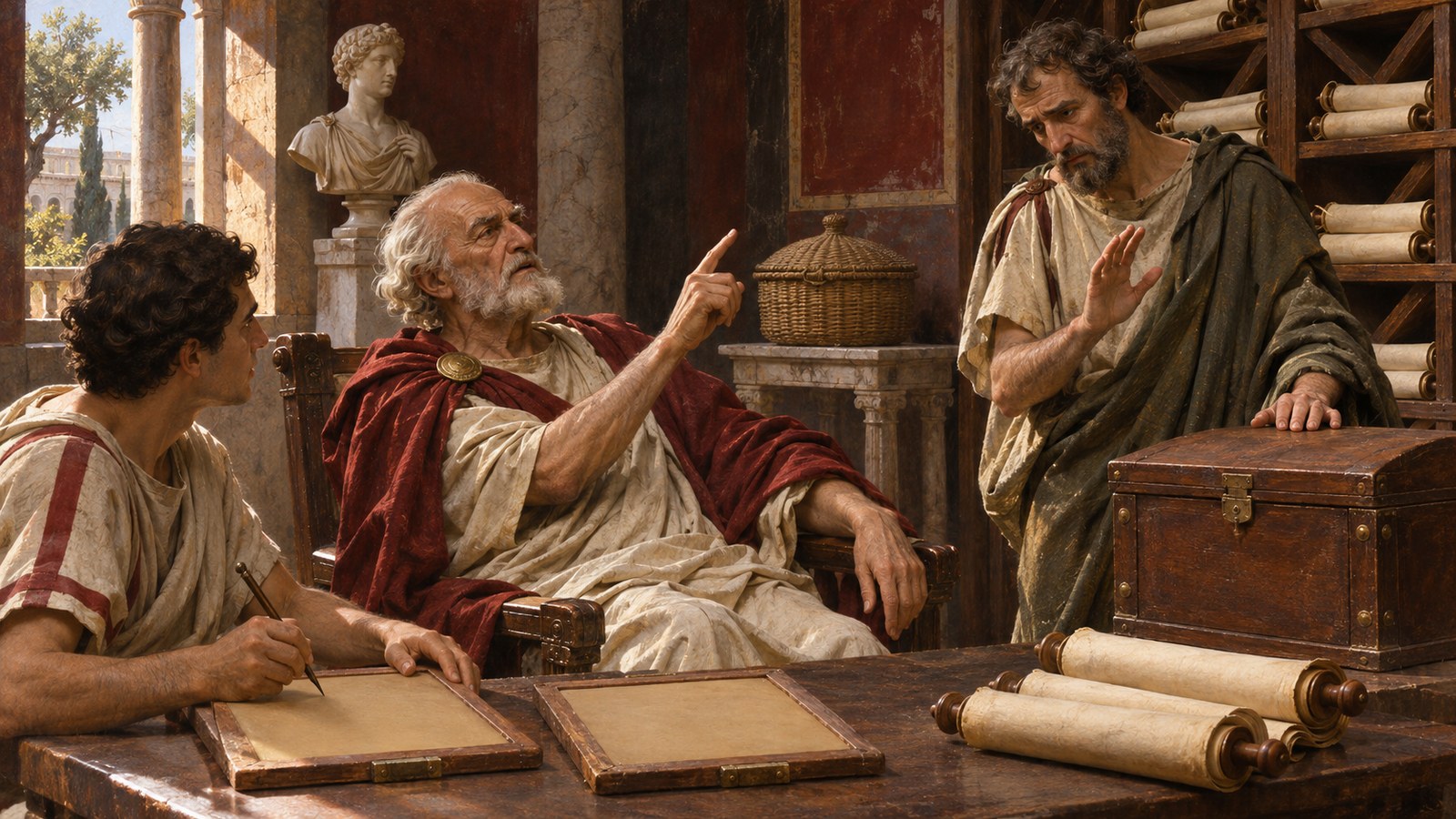
Pliny then changes tone. He says he would hesitate to circulate a remedy for asp wounds if Marcus Varro had not left it in writing. Varro’s name and age carried the burden: Pliny specifies that the scholar was in his eighty-third year.
The proposed remedy was for the bitten person to drink his own urine. It is not credible medical advice, and Pliny’s appeal to an elderly authority does not make it effective. The revealing part is his hesitation. He knew that putting a prescription into a book gave it reach.
Varro’s age worked as a credential in the passage. Eighty-three years suggested experience, survival and accumulated judgment. Pliny used that biographical number as a reason to transmit a claim he otherwise says he might suppress.
This is an early glimpse of an editorial problem that has not vanished: when does attribution become a substitute for evidence? Pliny names his source, records his own reluctance and then prints the remedy. The warning and the publication arrive together.
His method contrasts with the more procedural caution associated with Celsus’s warning about mistaking a skull suture for a fracture. Celsus limits what an instrument can prove; Pliny lets a respected name carry an implausible treatment into the record.
The Useful Observation Survived Beside a Dangerous Prescription
The chapter is valuable precisely because it is mixed. Its route-of-exposure comparison points toward a real biological principle: venom delivered into tissue is not equivalent to venom encountered by an intact digestive system. Its treatment advice, by contrast, belongs to an unreliable therapeutic tradition.
Flattening both into “ancient superstition” would miss the observation. Accepting both because Pliny wrote them would miss the danger. The responsible reading keeps the parts separate, just as Pliny separated fresh wounds, old sores and swallowing.
The scene also explains why Roman natural history can feel so close and so distant. The questions are concrete. What symptoms follow? Does the age of a wound change the speed? Can meat be eaten? Which authority deserves quotation? Yet the tools for testing those answers were uneven.
Pliny’s chapter therefore preserves two kinds of evidence at once. One is reported behaviour in bodies and food. The other is the social machinery of credibility: a famous writer, an advanced age and an author’s declared hesitation.
Even the chapter’s short list of surfaces has practical force. Blood names the route Pliny feared most; a recent wound names the vulnerable opening; an old sore changes the speed; the stomach changes the verdict. The categories are crude, but they prevent one alarming noun—venom—from doing all the explanatory work.
The carcass claim also reveals the scale at which a naturalist’s sentence could matter. It did not concern only the bitten individual. If accepted, it decided whether an animal killed by an asp remained food for a household. Observation, appetite and economic loss met in the same conclusion, which is why the distinction was worth recording even when the proposed cure was not.
Pliny’s own hesitation deserves equal weight. He did not hide the chain of authority behind the urine prescription. He exposed it: Varro had written the remedy, Varro had reached eighty-three, and those facts moved Pliny from doubt to publication. The reader can therefore see not only the remedy but the reasoning that admitted it.
The asp did not enter the book as a symbol alone. It entered through a wound, a sore, a stomach, a carcass and a citation. Each route changed the claim. The durable lesson is not that an ancient remedy should be followed, but that danger cannot be understood without asking how it crosses a boundary.
Sources
- Pliny the Elder, Natural History, Book 29, chapter 18
- Perseus Digital Library, Bostock and Riley translation of Pliny