
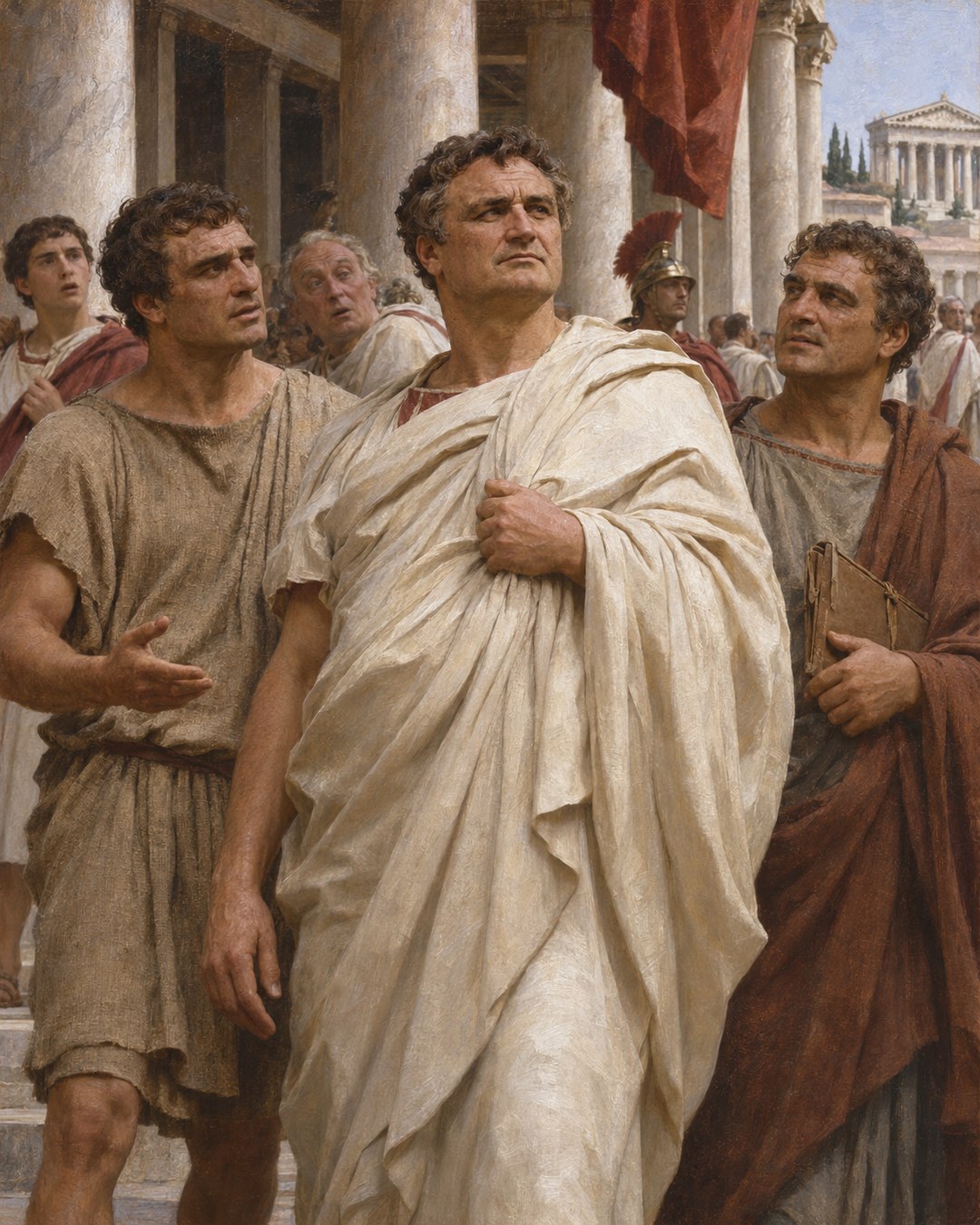
Pompey the Great’s face did not remain safely attached to Pompey’s rank. Pliny the Elder says two other men looked almost indistinguishable from him: a plebeian named Vibius and Publieius, a man who had been freed from slavery. They reproduced what Pliny calls Pompey’s noble countenance and even the dignity of his magnificent brow.
The anecdote is not a tale of disguise. Pliny never says either man put on a general’s cloak, entered a political meeting or tricked a crowd. Chance had simply repeated an elite face on bodies that Roman society placed much lower.
That was enough to make the resemblance worth recording. Pompey’s authority depended on armies, alliances, office and reputation, but his appearance could escape all of those things. A brow that seemed to carry dignity on the commander also appeared on a plebeian and a freedman.
Pliny Treated Faces as Repeatable Forms
The story belongs to Pliny’s wider discussion of resemblance. He observes that human beings can look uncannily like one another even when they do not share the same household or position. Pompey’s doubles provide his most politically charged example because the original was one of the most recognizable men of the late Republic.
Pliny’s language does more than say that the three had similar noses or hair. He says Vibius and Publieius reproduced Pompey’s noble countenance and the dignity of his brow. Physical likeness appears to carry an impression normally associated with character and station.
That impression creates the tension. If dignity can be visible in a forehead, what happens when the same forehead belongs to someone without a noble name? Pliny does not resolve the question philosophically. He lets the social identities of the doubles make the point.
Roman portraiture trained viewers to notice faces as carriers of memory and status. Pompey himself could be turned into precious display, as in the pearl portrait carried in his triumph. The doubles reverse that process. No artist assembled them. Living flesh produced the likeness without permission.
One Double Was Plebeian and One Had Been Enslaved
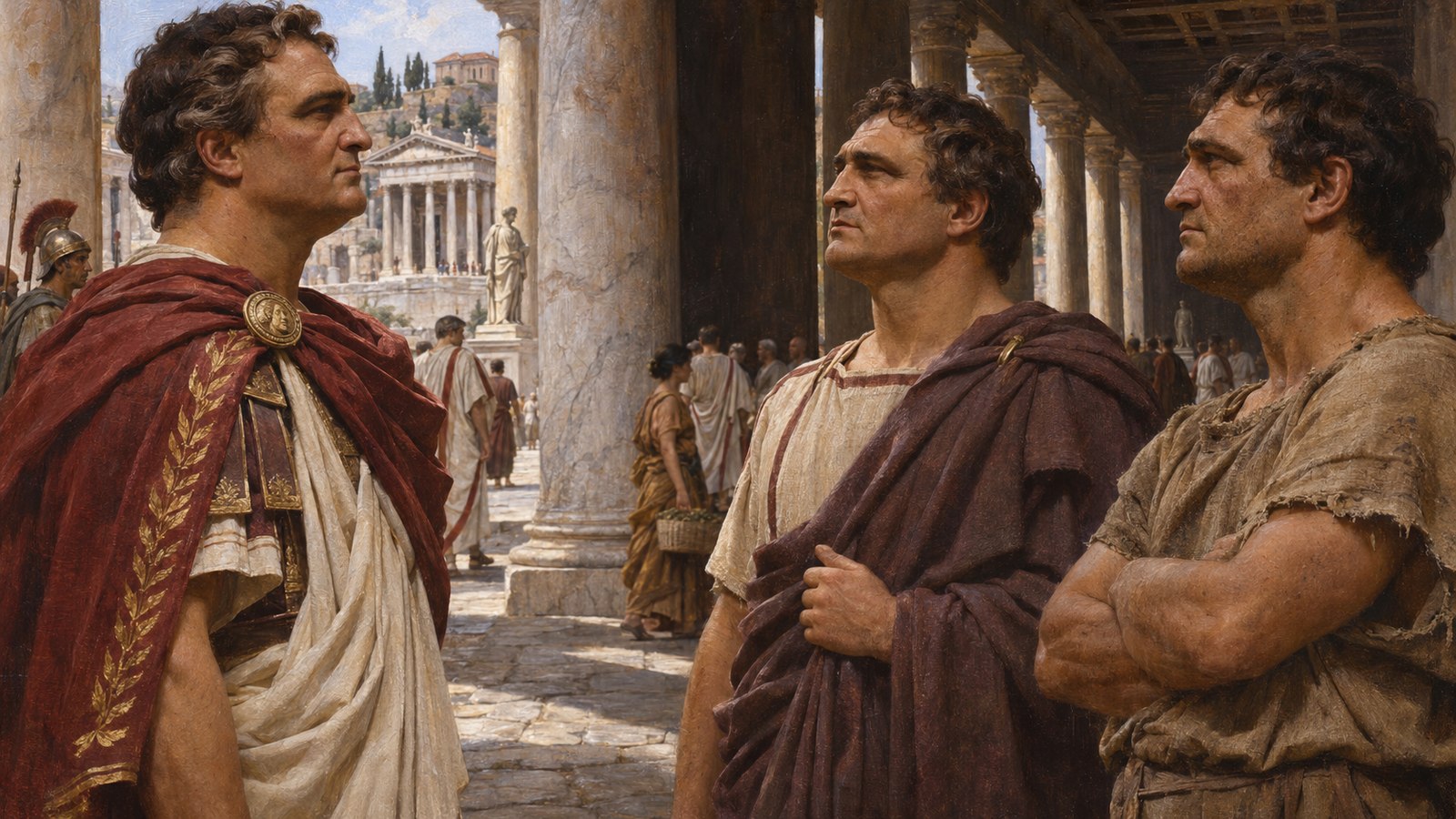
Pliny names the men rather than leaving them as anonymous curiosities. Vibius was a plebeian. Publieius was a liberated slave, the older translation’s phrase for a freedman. Their status is not incidental decoration; it is what makes the likeness socially surprising.
A resemblance confined to Pompey’s relatives could have been explained as family inheritance. A resemblance in another senator might still have stayed within the visual world of the elite. Vibius and Publieius break those expectations. The face crosses rank.
We should not make the two men into political radicals on that basis. The source says nothing about their opinions, occupations or relationship with Pompey. It does not tell us that they resented him, admired him or used the resemblance to gain access. Their recorded role is simply to look like him.
That limit protects the anecdote from turning into fiction. It also leaves its central irony intact. Roman society could regulate legal status in painstaking categories, yet nature ignored the categories when distributing features. A freedman could possess the same “dignity” in his brow that admirers saw in a conqueror.
Resemblance Could Travel into a Name
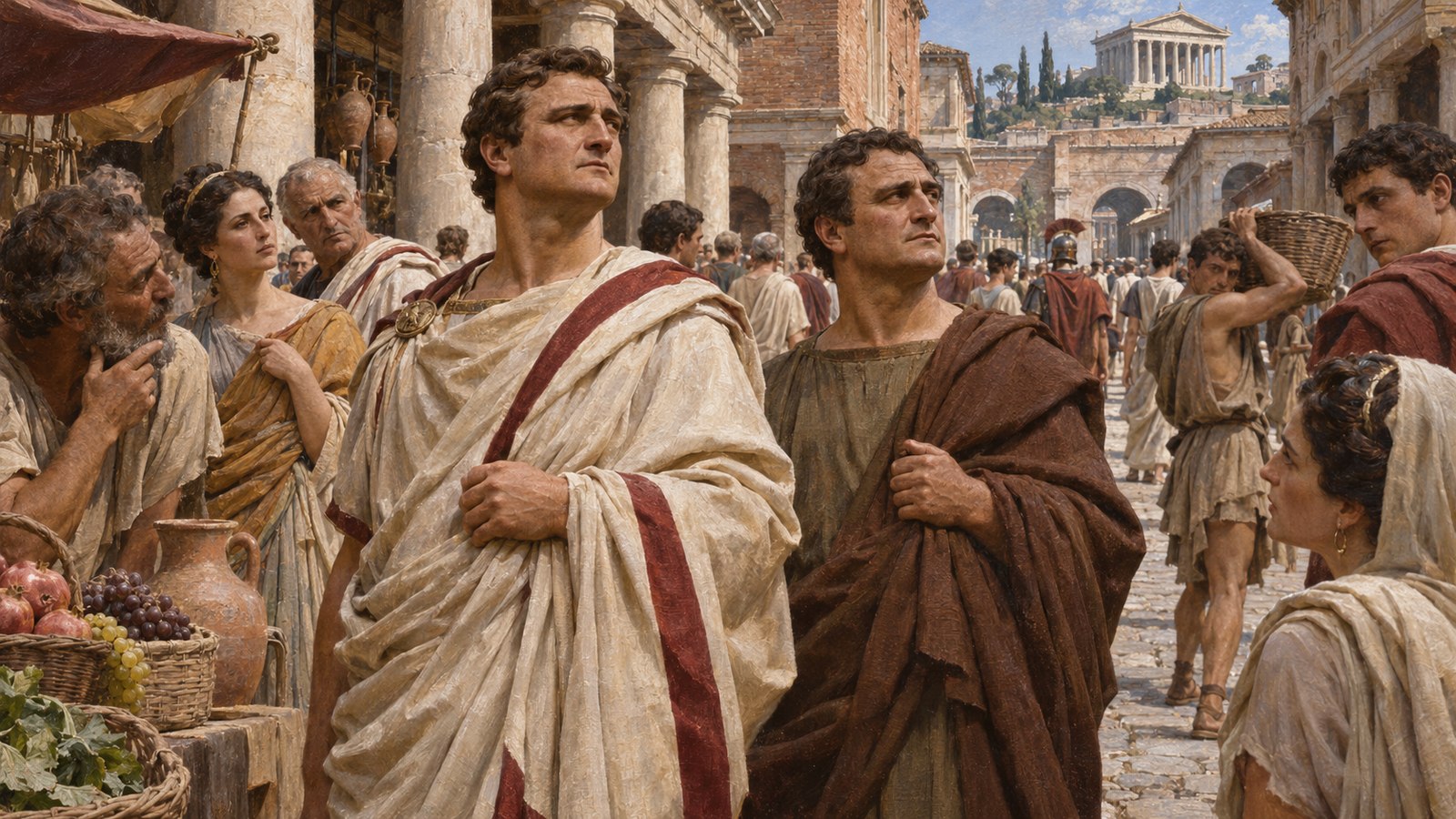
Pliny immediately follows the doubles with another Pompeian resemblance. Pompey’s father, he says, acquired the surname Menogenes because he looked like his cook, who bore that name. The direction of comparison is almost comic: the aristocrat did not lend grandeur to the servant; the servant’s name attached itself to the aristocrat.
Pompey’s father already had the surname Strabo, linked to the appearance of his eyes. Pliny therefore piles resemblance upon physical naming. A face could generate a label, and the label could preserve an uncomfortable social comparison long after the original glance.
He adds a parallel involving a Scipio called Serapio after an enslaved man belonging to a hog dealer. Again, an elite Roman name becomes entangled with someone at the bottom of the status order. Pliny’s sequence turns resemblance into a small solvent applied to hierarchy.
Names in Roman public life were not trivial ornaments. They carried ancestry, distinction and memory. Yet informal surnames could emerge from jokes, defects and comparisons. A different story shows how Roman scholars could dispute the origin of a single official title. Pliny’s resemblance stories show naming from the opposite end: immediate, visual and difficult to control.
The Source Never Turns the Doubles into Impostors
Modern readers are trained to expect a double to become a plot. The lookalike substitutes for the ruler, signs an order or escapes an assassination. Nothing like that appears here. Pliny records resemblance, not impersonation.
This absence is important because it keeps the episode focused on perception. Vibius and Publieius mattered not because they successfully acted as Pompey, but because observers could see Pompey in them. The comparison itself was memorable enough to survive.
It also prevents us from assuming that an elite face automatically conferred elite power. Publieius remained identified by his former enslavement. Vibius remained plebeian. Similarity did not erase the legal and social histories attached to their names.
The anecdote therefore cuts both ways. Appearance was powerful enough for Pliny to describe a brow as dignified, yet powerless to rewrite status by itself. The doubles could reproduce Pompey’s countenance, but they could not reproduce his commands, clients, victories or offices merely by standing in the same light.
Pompey’s Brow Exposed the Limits of Political Image
Pompey invested heavily in public image. Triumphs, buildings and honorifics made his identity visible across Rome. Pliny’s two doubles reveal a boundary to that project. A statesman could cultivate what his face meant, but he could not monopolize the face’s physical arrangement.
That is why the “magnificent brow” is the best detail in the passage. A brow carries no office documents. It cannot command a legion. Yet viewers apparently read dignity there strongly enough that seeing it on two other men required explanation.
Pliny’s sequence refuses to keep nobility visually pure. Pompey resembles a plebeian and a freedman; Pompey’s father resembles his cook; a Scipio resembles an enslaved person connected to a hog dealer. High status repeatedly meets its likeness below.
The result is not a democratic manifesto, and Pliny does not present it as one. It is a natural historian’s catalogue of human repetition. But catalogues can unsettle hierarchy without announcing a theory. Faces recur where law and ancestry say they should not.
The three names in the anecdote stop the resemblance from becoming vague folklore. Pompey is not said merely to have had “some” lookalikes. Pliny identifies Vibius and Publieius and then distinguishes their status. Naming the doubles gives them enough individuality to remain people rather than copies, even while the sentence defines them through another man’s face.
Publieius’s former enslavement is especially revealing because manumission changed legal position without rewriting a person’s features. His face had passed through different social categories while remaining recognizable. The resemblance to Pompey thus sat beside a biography of status that was entirely his own, though Pliny preserves only one piece of it.
Vibius presents a quieter contrast. “Plebeian” marks him as outside Pompey’s aristocratic elevation, but the source supplies no theatrical occupation or scandal to explain why observers noticed him. His ordinary social label makes the extraordinary likeness do all the work.
The father’s nickname Menogenes then proves that comparison could move both upward and downward. Observers did not need the lower-status person to resemble the aristocrat; they could define the aristocrat through resemblance to a cook. The joke or label depended on a community willing to remember both faces.
Pompey’s doubles survive because they separate appearance from possession. Vibius and Publieius could carry the look, including the brow that seemed to embody dignity. Pompey alone carried the political world built around it.
Sources
Pliny the Elder, Natural History, Book 7.