
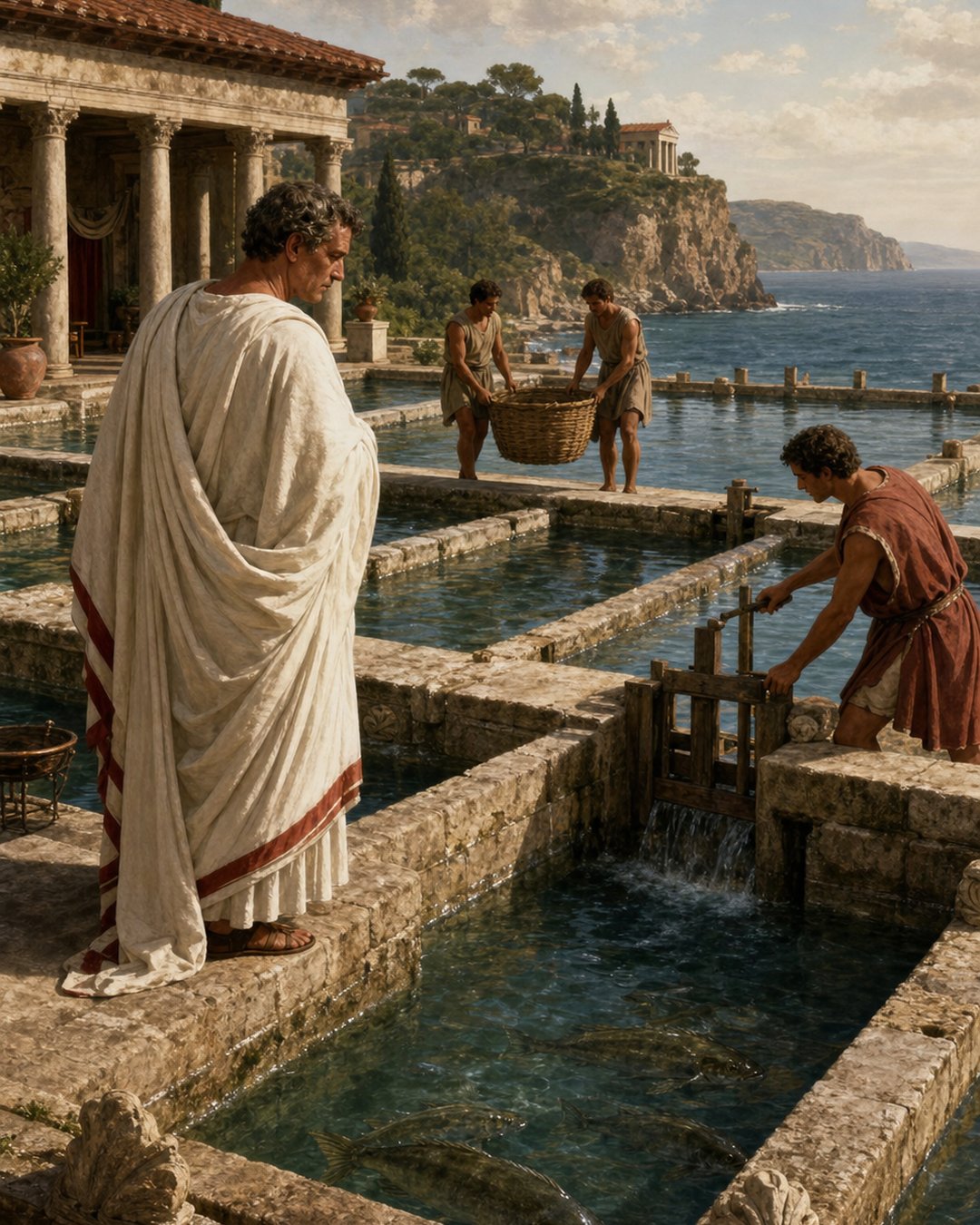
At a Roman coastal villa, dinner could begin with a gate in a stone channel. Seawater moved through a constructed basin while mullet and other prized fish circled in clear compartments. A pond keeper watched the level, feed and flow until the owner ordered one living animal selected for the table.
This was freshness made architectural. The wealthy did not merely buy the day’s catch; some built habitats that held valuable fish beside the house. Masonry, shoreline, labor and appetite became one system. The fishpond displayed control over nature precisely because its living contents could die whenever that control failed.
The shoreline became a managed enclosure
A marine piscina began with geography. A coastal villa needed rock or ground that could hold basins close enough to the sea for exchange. Builders cut or raised walls, created channels and set openings where water could enter and leave. The finished pond belonged simultaneously to the estate and to tides beyond its boundary.
That connection was the central advantage and danger. Fresh seawater carried oxygen and moderated conditions, but storms could damage gates or drive debris into channels. Weak barriers lost stock; blocked openings left water stale. The owner possessed the pond, yet the sea continued to dictate terms every day.
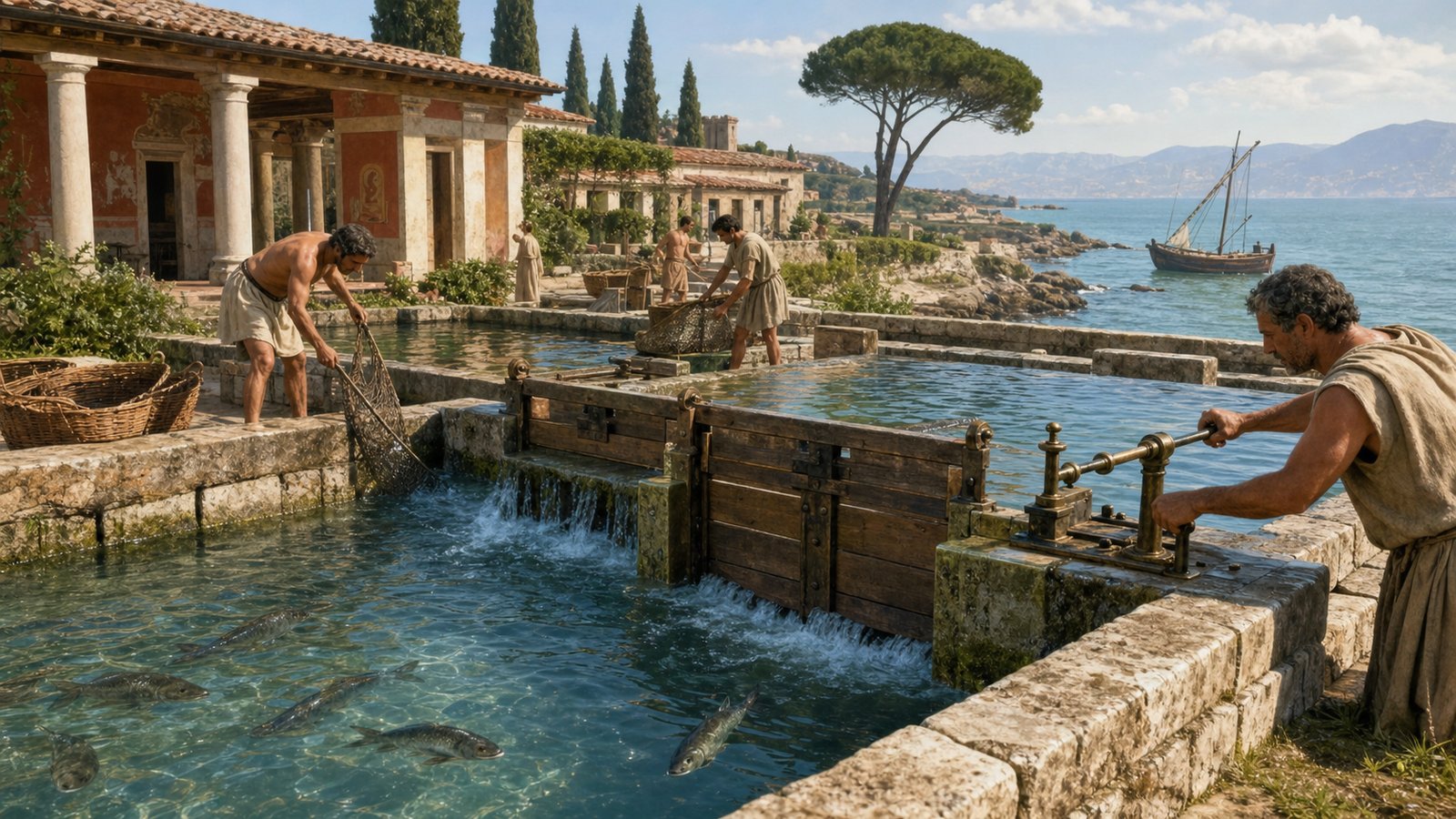
Compartments made control finer. Fish could be separated by species, size, value or immediate purpose rather than sharing one undifferentiated basin. Gates let workers move water or animals while restricting escape. Masonry turned a changing coastal edge into a series of decisions that could be inspected and revised.
The structure announced capital before any guest saw a fish. Stone cutting, hydraulic judgment and shoreline property were expensive. Unlike a decorated dining room, the pond also extended beyond the house toward a working environment. Luxury appeared as an engineered border where saltwater obeyed enough rules to sustain private abundance.
Living stock demanded attention every day
A basket of preserved food can wait in storage. Confined fish cannot. They consume oxygen, respond to temperature, need suitable food and suffer when water quality declines. A pond keeper had to read movement at the surface, changes in clarity and failures in flow before valuable animals floated visibly dead.
Feeding created another balance. Too little weakened stock; too much fouled water. Species behaved differently, and large fish could injure or consume smaller ones. Practical knowledge accumulated through observation rather than ownership alone. The wealthiest patron still depended on someone who recognized when the pond’s rhythm changed.
Cleaning was part of the system even when tides did some work. Silt collected, weeds or marine growth narrowed channels and remains attracted pests. Nets, baskets, gates and edges needed repair. A calm basin seen from a portico concealed a schedule of wet, repetitive labor below the owner’s social performance.
The contrast with garum’s preserved Mediterranean network is sharp. Fish sauce gained mobility by transforming a catch into a durable traded product. A villa pond gained prestige by refusing transformation, keeping fish alive, local and perishable until the exact moment of elite choice.
Freshness became a performance at dinner
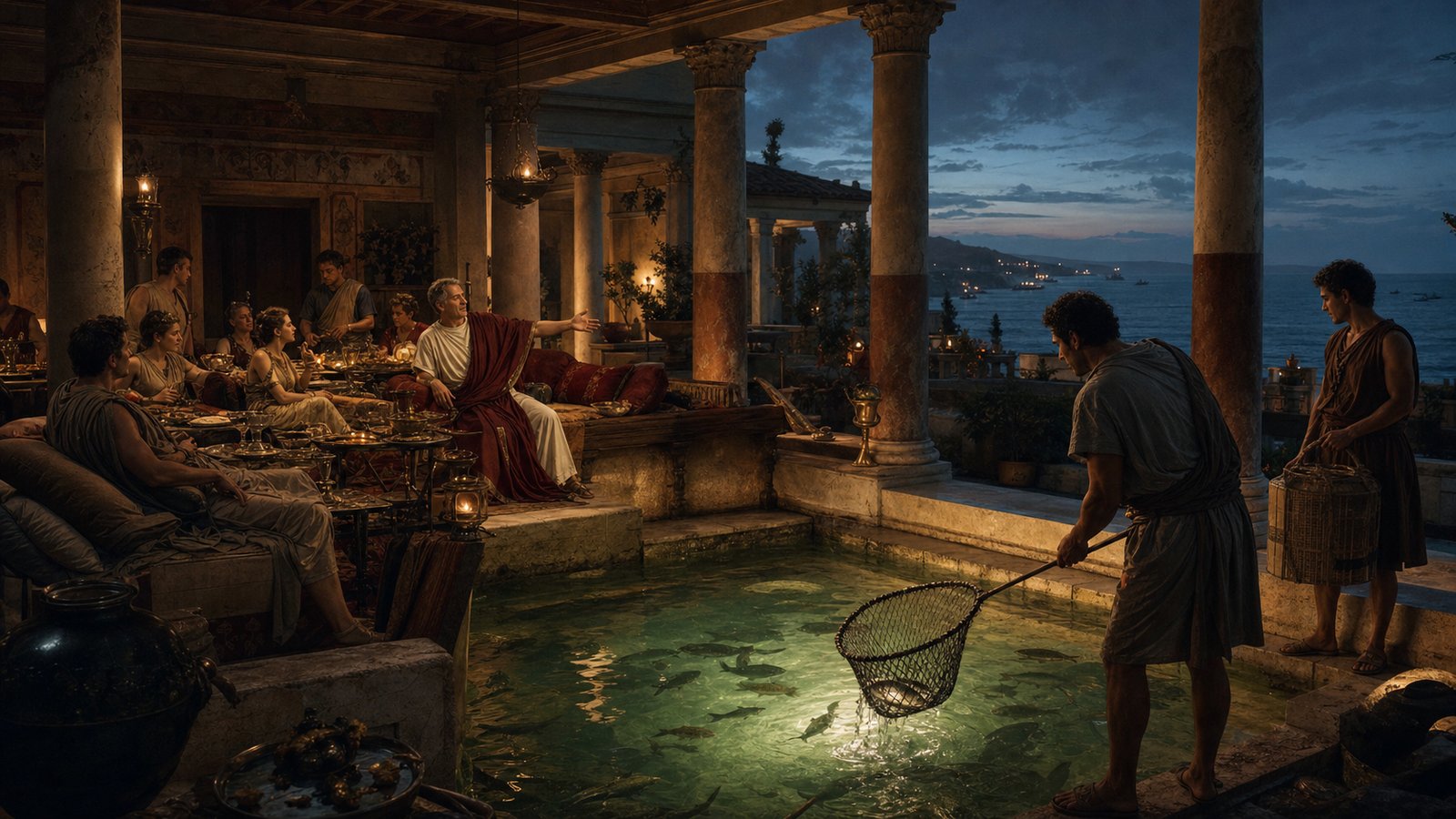
Keeping fish beside the house shortened the interval between selection and cooking. A host could send a servant to the pond during preparations and receive an animal still moving. Freshness became something the estate produced visibly rather than a promise dependent on a fish seller’s arrival from the coast.
The selection could also involve guests. A pond in view invited conversation about size, species, breeding or unusual behavior. The host displayed not just tonight’s dish but a reserve of future dishes circling below. Abundance remained alive after one fish left the water, making consumption appear renewable.
At table, that claim joined the hierarchy of Roman dining rooms. Seating ordered guests around the meal; the pond extended the performance backward into acquisition. The favored diner received fresh fish selected from infrastructure that most people could not afford to build.
Taste was only part of the effect. A market purchase could be delicious, but a private pond proved shoreline access, engineering and staff. The animal carried the story of its enclosure to the plate. Elite food communicated through the chain that made it available, not merely through flavor after the chain disappeared.
Varro saw expense swimming in circles
Varro’s third book on rural economy discusses specialized villa husbandry and treats extravagant fishpond owners with a skeptical eye. His contrast is pointed: ordinary estate production should be judged partly by return, while marine ponds could consume large sums to maintain pleasures and reputations that did not behave like sober farm profit.
This criticism shows that Romans themselves recognized a category problem. Was a fishpond productive agriculture, architectural leisure or competitive consumption? It could yield fish, yet cost more than those fish would fetch in an ordinary market. Economic irrationality was not a defect when overspending helped prove that the owner could afford irrationality.
Moral anecdotes about elite attachment to individual fish sharpened the satire. When owners named, mourned or adorned prized fish, critics could portray luxury as an inversion of proper feeling. The pond became a stage on which Romans argued about whether cultivation refined nature or merely exposed appetite without limit.
Satire must be handled carefully because it exaggerates memorable behavior. Not every pond owner loved a fish, and not every basin was useless. The important evidence is the argument itself. Piscinae were visible enough in elite culture to become tools for discussing wealth, masculinity, management and the distance between earning and display.
The pond converted labor into effortless choice
To the guest, the final gesture could look simple: choose that fish. Behind it stood builders, water managers, feeders, cleaners, cooks and servants carrying messages between pond and kitchen. The owner’s freedom to select at the last moment depended on other people keeping many earlier possibilities alive.
This asymmetry defined much Roman luxury. The patron experienced variety and spontaneity because workers maintained routines. A gate had already been cleared, feed measured and water observed before the host appeared. Choice looked personal while its conditions were collective and often coerced.
The fish themselves made neglect undeniable. Marble could gather dust without vanishing; living stock died. A successful pond therefore proved current organization rather than inherited ownership alone. Clear water and active fish told visitors that resources and supervision continued to reach the villa in the present.
Yet failure could become public just as quickly. A storm-damaged channel, poisoned water or mass death converted display into smell and loss. The more ambitious the enclosure, the more visibly it relied on conditions outside the owner’s command. Living wealth carried its own capacity to accuse its keeper.
Private abundance remained tied to the sea
An elite pond enclosed fish, but did not create the coast. Tides renewed water, local species supplied stock and weather determined danger. The villa appropriated a fragment of marine life through walls and gates while remaining dependent on the larger ecology beyond them. Control was always partial, however impressive the masonry looked.
That dependence gave the pond its fascination. Guests could see wild movement inside geometric basins: bodies turning beneath a measured surface, appetites and currents contained but not silenced. Architecture made nature legible enough for ownership without reducing it to a static ornament.
At political scale, such villas displayed how leading Romans converted conquered wealth and coastal property into private environments. The pond did not issue a law or command an army. It made hierarchy tangible through who could hold living abundance for pleasure while others caught, carried, cleaned and cooked it.
Roman fishponds made fresh fish into living wealth by joining seawater, stone, labor and appetite. Their value moved, ate and could die. That vulnerability was not separate from the display; it made the achievement continual. Each circling fish showed that the owner’s system was still working—for another tide, another guest and another choice.
Sources & Further Reading
- Varro, On Agriculture, Book 3
- Smith Dictionary, Piscina
- Fish pond