
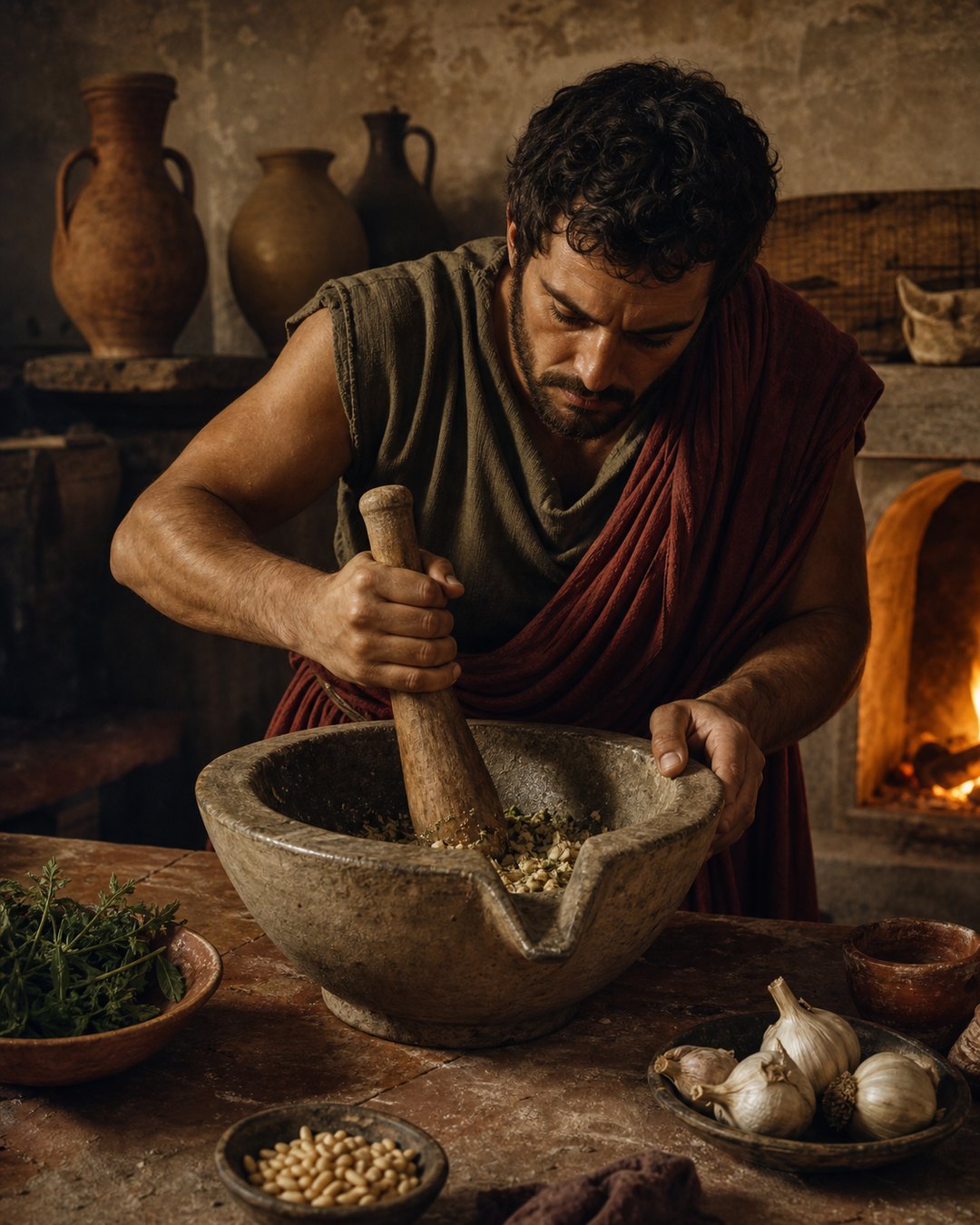
A Roman cook did not need a separate machine to turn hard seeds, herbs and garlic into a paste. A heavy ceramic bowl supplied the resistance. Its broad interior was roughened with embedded grit, its thick rim tolerated force and its small spout guided liquid away when grinding became mixing or pouring. This vessel was the mortarium.
Its design made friction useful. A smooth bowl lets a pestle chase ingredients around the surface. The mortarium caught them between wood or stone and abrasive ceramic, breaking fibers and releasing oils with every circular stroke. What appears in a museum as plain pottery was once noisy kitchen equipment shaped around pressure, texture and a cook’s endurance.
Grit transformed a bowl into a working surface
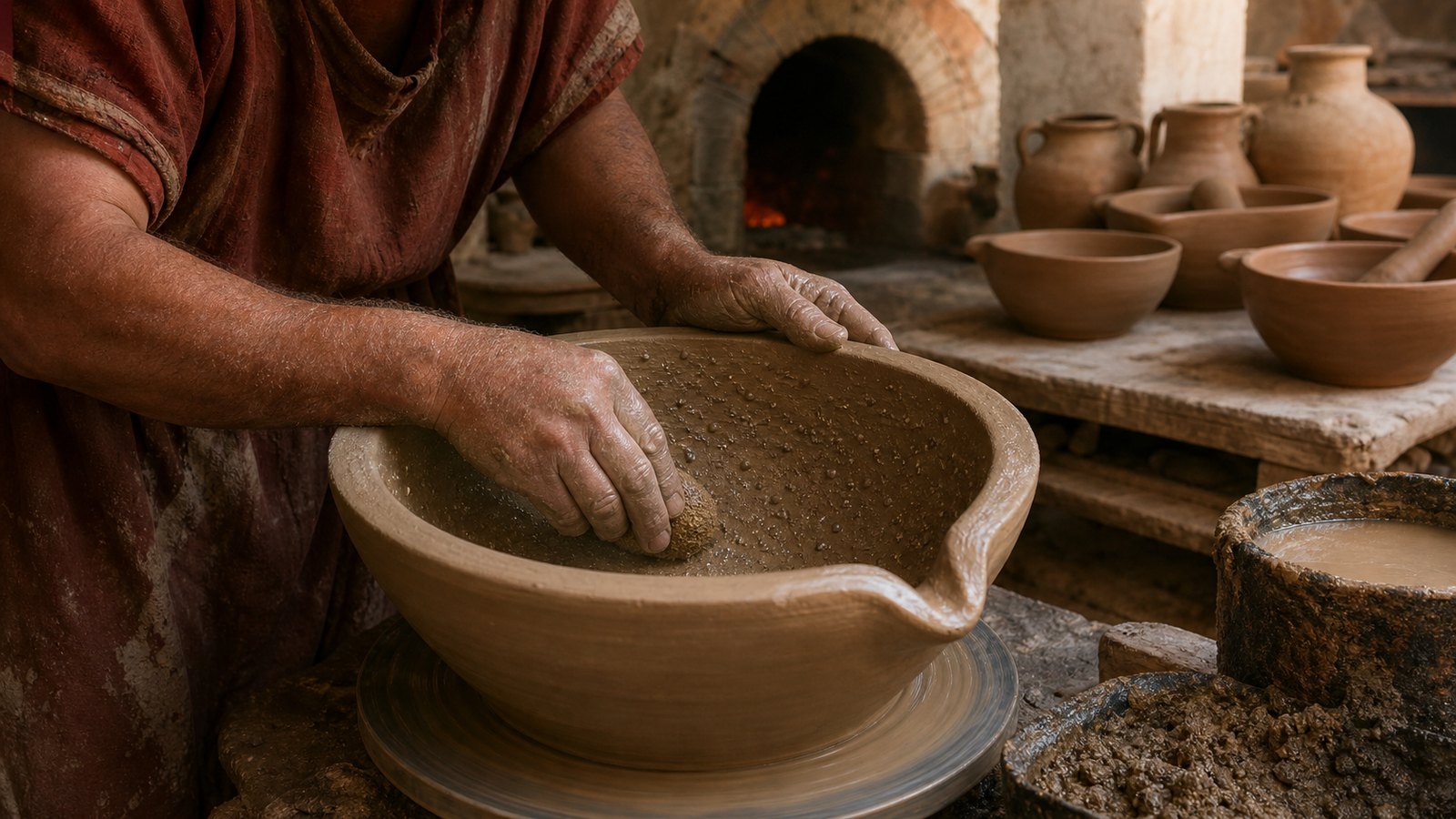
A mortarium’s defining advantage lay inside. Before firing, a potter could press or scatter coarse mineral particles into the damp interior. Once fixed in the ceramic surface, those hard grains formed countless small points against which a pestle could trap food. The bowl did not merely contain the work; it participated in it.
Friction changed the cook’s motion. Instead of only striking downward, the pestle could roll and scrape ingredients around the sloping interior. Seeds cracked, leaves bruised and fibrous pieces broke into smaller fragments. The roughness turned repeated modest pressure into a cumulative mechanical process.
The abrasive layer had to be controlled. Grit that detached too easily contaminated food; a surface without enough texture behaved like ordinary tableware. Firing needed to secure particles while preserving a useful profile. Pottery knowledge therefore determined kitchen performance long after the vessel left the kiln.
This material partnership resembles the slow transformation behind garum, but the mechanism was different. Fermentation let time and microbes change fish. A mortarium concentrated immediate muscular force, letting the cook decide when texture had crossed from pieces to paste.
A broad heavy body resisted the pestle
Grinding pushes sideways as well as down. A narrow light cup would slide, tip or rotate under that pressure. Mortaria were often broad and substantial, spreading weight across the work surface and giving the cook room to follow a circular path. Stability saved effort because the vessel did not have to be restrained after every stroke.
Thick walls and a strong flange rim survived handling that finer pottery could not. The cook might brace a hand against the edge, scrape ingredients back toward the center or strike stubborn material. Repetition punished weak points, especially around a spout or a vessel already cracked by thermal stress.
Size matched task. A household portion did not require the same capacity as preparation for a shop or large dinner. Forms varied across regions and centuries, so the word mortarium should not conjure one exact standardized bowl. The shared logic was a vessel robust enough to make force routine.
Imagine the sound before a meal: a dull scrape circles the bowl, seeds crack sharply, then the rhythm becomes wetter as oil joins crushed herbs. The cook feels remaining lumps through the pestle. Texture is judged by resistance and sound before anyone tastes the finished mixture.
Grinding released flavor by changing structure
Whole ingredients protect much of their chemistry inside cells, skins and seed coats. Crushing increases exposed surface and releases aromatic oils into contact with other foods. Garlic becomes a paste; pepper and cumin become smaller particles; herbs surrender moisture and scent. Mechanical change becomes sensory change.
The cook could control degree. A few blows produced coarse fragments with distinct bites. Longer circular grinding made a smoother mixture whose ingredients were harder to separate on the tongue. Adding salt supplied more abrasive crystals; adding oil changed drag and carried fat-soluble aromas through the paste.
Order mattered. Dry seeds could be broken before wet leaves softened the mixture. Liquid added too early let hard pieces skate rather than meet grit. A practiced cook learned the sequence through the vessel’s response, not through exact clocks or modern measurements. The mortarium made recipes bodily knowledge.
Roman daily food ranged far beyond elite literary menus. The same mechanical tool could prepare modest herbs, medicinal mixtures or elaborate sauces depending on ingredients and context. Archaeology identifies a capability, not every recipe performed inside it, so vivid reconstruction must remain broader than unsupported claims about one household.
The spout moved the mixture without wasting it
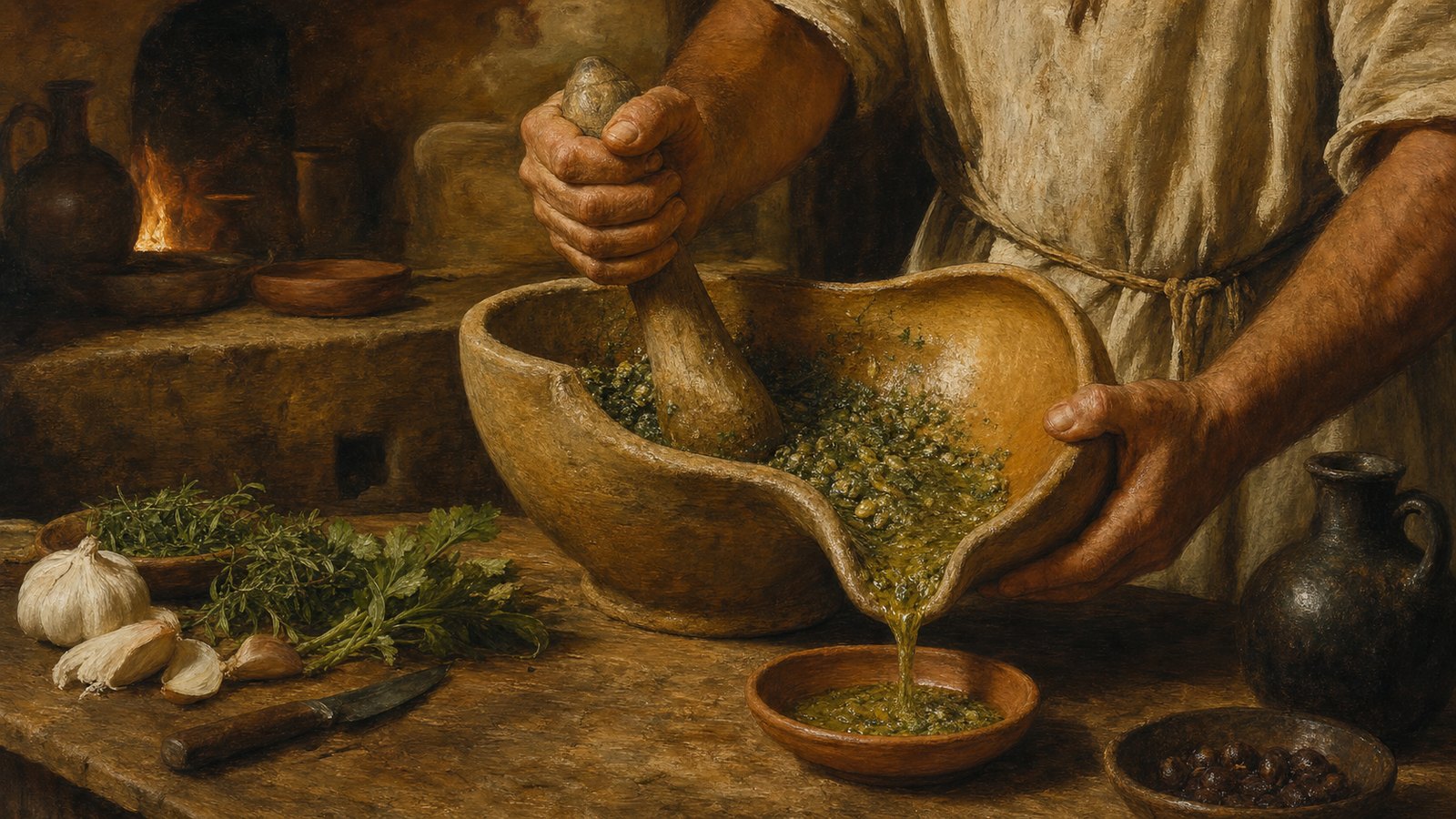
Many mortaria include a spout formed through or across the heavy rim. After grinding, the cook could thin a paste with oil, wine, vinegar or water and guide it into another vessel. A controlled outlet mattered when ingredients were costly and a broad bowl otherwise encouraged liquid to run unpredictably along the edge.
The spout united preparation stages. Grind, mix and pour could occur without scraping everything into a second container between each operation. Fewer transfers saved labor and reduced loss on vessel walls. Design followed workflow: the bowl accepted force first, then behaved as a pouring tool when the texture was ready.
Spout shape also tested the potter. It needed a clear channel, a sound join with the rim and enough projection to separate the stream from the outer wall. Poorly formed pottery dribbled or trapped residue. A small feature carried evidence that makers understood use beyond the kiln.
This practical attention parallels the slit and edge of a reed pen. In both cases, a narrow shaped opening controlled flow. One guided ink toward papyrus; the other guided a crushed mixture toward the next stage of a meal.
Potters supplied kitchens across long distances
Mortaria were workshop products. Clay had to be selected and prepared, the broad body formed, the rim and spout shaped, grit applied, the vessel dried and the firing completed without warping its working surface. Each step combined ordinary ceramic practice with requirements specific to forceful use.
Some makers stamped their wares. A name or mark should not be read as a modern brand in every respect, but it can help archaeologists connect vessels, workshops and distribution. Fragments found far from a production area reveal that useful kitchen forms traveled through the same commercial networks as more glamorous goods.
Distribution complicates the idea of a single Roman cuisine. A recognizable tool could spread while local clays, ingredients and cooking habits remained diverse. Imported mortaria may indicate trade and preference; local imitations show potters adapting a functional idea. The vessel connected kitchens without making every meal identical.
The system sits between street-level trade in tabernae and household labor. Someone bought the pot, someone carried it, and someone converted its rough surface into daily value. Commerce delivered a capability whose results disappeared at the table.
Wear made repeated meals visible
Every stroke altered the mortarium slightly. The pestle polished high points, loosened grit and scratched paths across the interior. Over years, the rough field became smoother and less efficient. A vessel could remain unbroken yet lose the texture that had made it valuable for grinding.
Cracks posed another limit. Force concentrated around flaws, while liquids entered porous surfaces and old residue lodged near chips. Cleaning removed food without restoring lost grit. The cook judged when a familiar vessel had become too slow, unstable or difficult to keep usable, then reassigned or discarded it.
Archaeological fragments preserve that ordinary exhaustion. A stamped rim helps identify a maker; a worn interior records action; a spout identifies intended movement of liquid. None names the cook, but together they recover posture, repeated pressure and the preparation that happened before visible dining ritual began.
Roman mortaria made grinding part of cooking by building resistance into pottery. Grit caught ingredients, weight steadied the hand, the rim tolerated force and the spout carried the result onward. The vessel’s plainness is the point: it translated workshop knowledge and human muscle into flavor so routinely that the finished meal concealed the labor.
Sources & Further Reading
- Mortarium
- World History Encyclopedia, Roman Daily Life
- British Museum mortarium collection object