
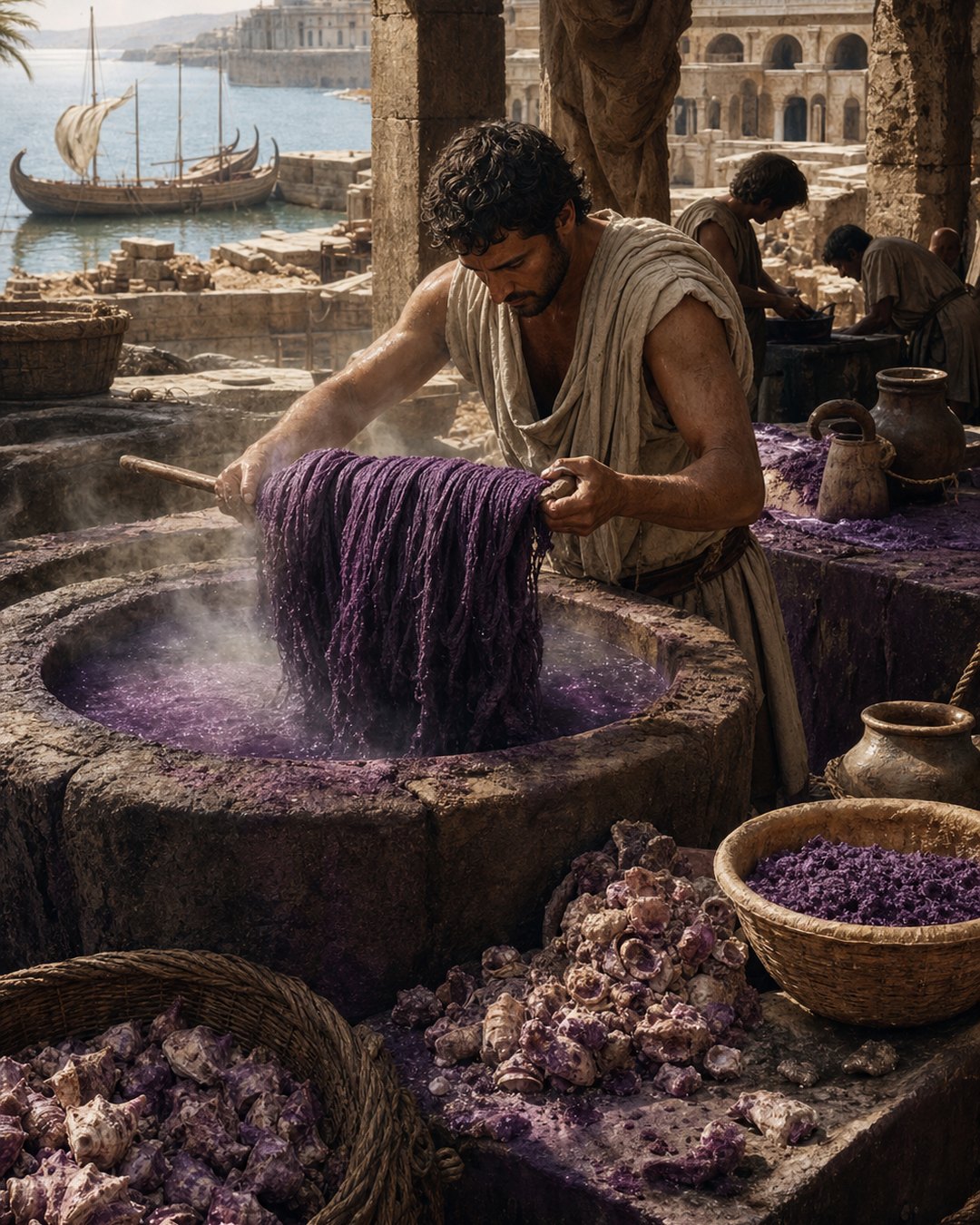
A purple border could look effortless when it entered a Roman procession. The cloth lay against white wool, the color seemed deep enough to belong there forever, and the wearer received the attention. Far from the forum, however, that strip began inside a predatory sea snail. Coastal workers gathered baskets of murex, broke or opened hard shells, found a tiny dye-bearing gland and repeated the operation until a vat held enough material to matter.
The transformation was neither clean nor instant. Marine tissue, salt, heat, time, light and air had to be managed while smells clung to the workshop. The desired shade emerged through changes that were difficult to judge before the cloth was lifted and aired. Purple therefore carried more than color into Rome. It condensed coastline, biological scarcity, skilled observation, damaged shells and disagreeable labor into a surface that could announce rank without explaining any of them.
A valuable color began with very little material
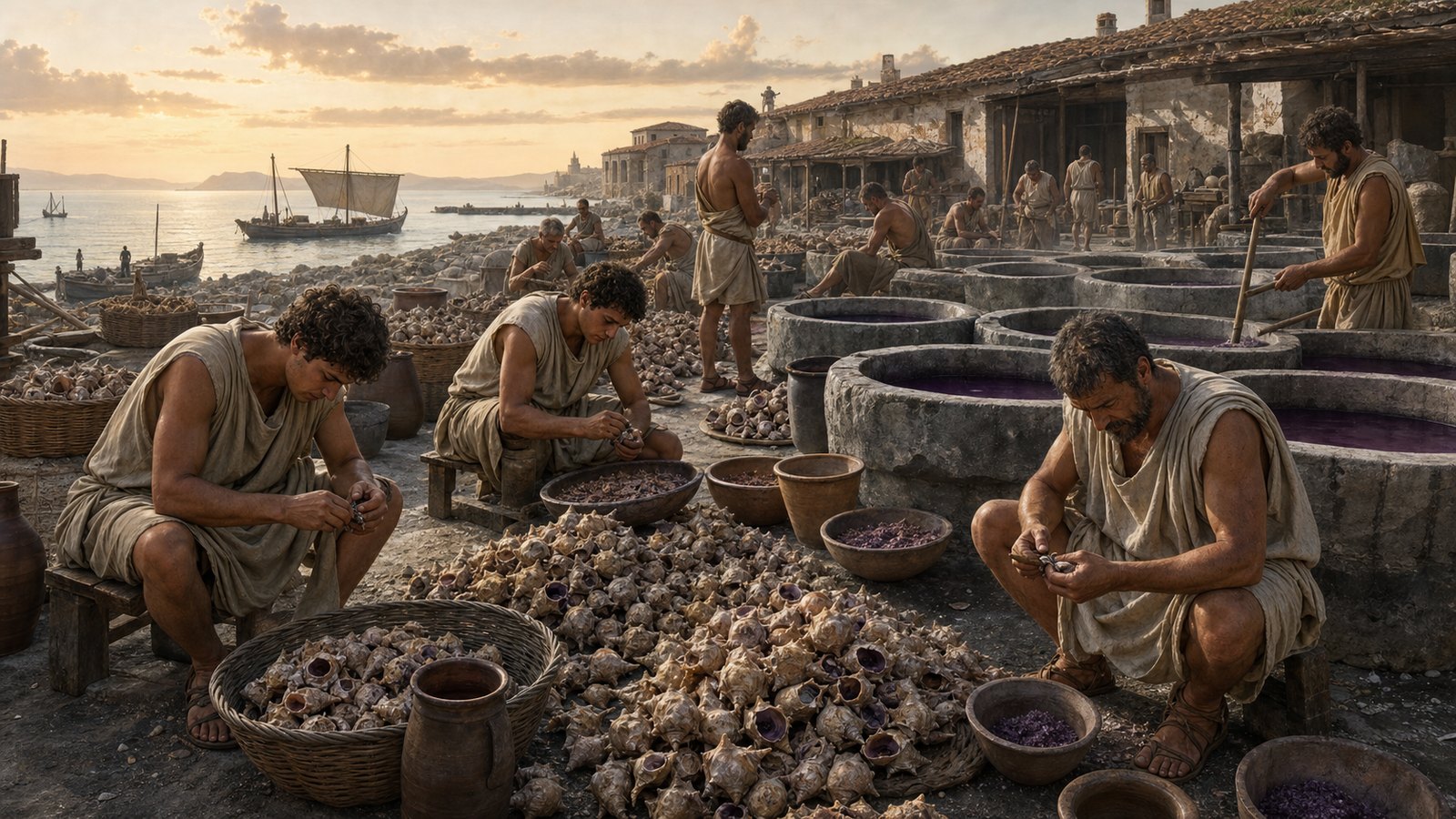
Murex shells protected the animal well and frustrated the dyer for the same reason. The useful secretion came from a small part of the creature, not from the whole mass piled in a basket. Each shell therefore demanded handling for a modest return. A worker could not turn one impressive specimen into a senatorial stripe; value accumulated through repetition, with many small extractions gathered into one controlled batch.
Archaeological heaps of broken shells make that arithmetic visible. They are production debris, the negative shape of finished cloth. A purple garment traveled onward, while the sharp pale fragments remained beside the coast. The contrast explains why scarcity was practical rather than mythical: collecting, transporting and opening shellfish consumed labor before dyeing began, and the raw material could spoil while workers assembled enough for a vat.
The shell heap also fixes production to a place in a way the textile cannot. Cloth was cut, inherited, repaired and eventually lost; durable shells stayed where workers discarded them. Their concentration lets archaeology distinguish ordinary food refuse from repeated industrial handling. The evidence does not reveal every recipe, but it proves that famous color depended on an immense mismatch between bulky raw animals and the small quantity of material the dyer wanted.
The coast became part of the workshop
Purple production belonged naturally near murex beds. Moving live or freshly opened shellfish far inland added delay and weight while carrying little useful dye material. Coastal installations could combine boats, gatherers, baskets, water, fuel and vats within the same working landscape. Tyre became the most famous name attached to the color, yet ancient purple manufacture was not confined to one city; shell debris and workshops appear around the Mediterranean.
This geography connected dye to the commercial systems described in Roman amphora traffic. Purple was not poured like wine into every familiar transport jar, but both industries depended on ports turning local material into portable value. A heap of shellfish had little status on a beach. Dyed wool could cross the sea, survive handling and arrive in a city as a compact luxury whose difficult origin was no longer visible.
Fuel and clean water widened the coastal footprint. Vats needed heat, fibers needed preparation and finished material needed washing. A productive site therefore joined marine harvesting to resources gathered on land. Competition was not only for snails; it extended to wood, labor, workshop space and access to transport. The color’s price represented this assembled landscape even when a buyer saw only a folded length on a merchant’s counter.
Smell separated prestige from production
Ancient purple workshops were associated with an offensive smell. Marine tissue being processed in quantity does not resemble the clean abstraction of a color chart; it decomposes, sticks to tools and announces itself beyond the wall. Workers lived with that sensory fact while customers encountered only washed, finished cloth. The industry placed physical distance between the people who made prestige and the people whose bodies displayed it.
The odor also warned that time mattered. Organic material could not simply wait without changing, and a vat was an active environment rather than a storage jar. Heat, concentration and duration needed attention. Too little processing wasted precious secretion; careless treatment risked a poor or uneven result after the shells had already been sacrificed. Expertise lay partly in judging stages that offered no modern thermometer, standardized reagent or written formula beside the vat.
Such expertise was sensory. Workers watched liquid and fiber, felt heat near the vessel and recognized when an unpleasant smell signaled the expected process rather than simple ruin. Knowledge lived in sequences of action and comparison between batches. A written ancient description can name ingredients or marvel at value, but the repeatable craft depended on judgments too ordinary for elite authors to record and too perishable to survive in the archaeological shell dump.
Air helped reveal the shade
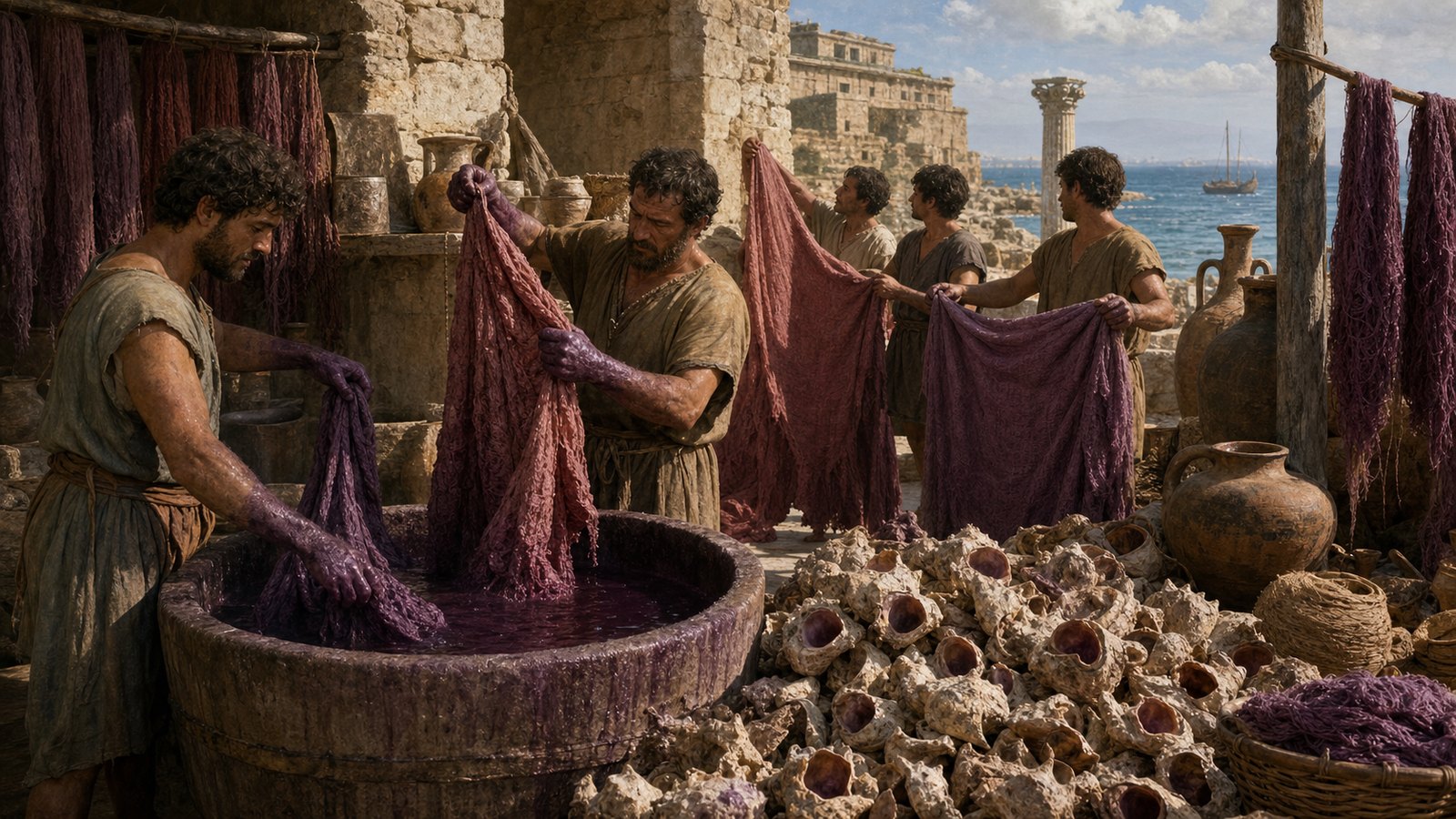
The dye material did not necessarily present its final famous color the moment it left the animal. Processing and exposure to light and oxygen drove visible changes. Cloth lifted from a vat could pass through unexpected tones before settling toward red-purple or violet. That sequence made airing part of production: the workshop courtyard, the timing of a lift and the practiced eye all participated in what buyers later treated as a stable property of the textile.
Variation was not automatically failure. Different murex species, concentrations, fibers and procedures could produce a range rather than one universal imperial swatch. Modern labels can make ancient color words look more precise than they were. A Roman observer read shade together with fabric, width, placement and wearer. The meaning of a narrow stripe differed from a full field of expensive color even when both came from related dye technology.
A small stripe could carry a large claim
Roman public dress rationed purple visually. Senators and equestrians were distinguished by purple stripes of different widths, and magistrates or triumphal display could use more emphatic forms. The mechanism described in the toga as public dress depended on this legibility: observers recognized not merely a pleasant hue but a regulated relationship between color, garment and rank.
The economy of the stripe was powerful. A narrow band used less dyed material than an entire robe while remaining conspicuous against pale wool. It made scarcity readable at a distance and allowed hierarchy to be graded. The expensive chain of shells and vats did not need to cover every inch to perform social work. Once convention had taught the crowd what the border meant, a modest quantity of pigment could enlarge a political distinction.
The finished cloth hid a chain of maintenance
Dyeing was not the last touch. Wool needed washing, finishing and care, tasks that connected purple to the fullonica’s public business. Aggressive treatment could threaten an expensive surface, while dirt and wear diminished the display for which the material had been purchased. Owners depended on craftspeople to preserve value that had already passed through several specialized hands.
Roman murex purple turned shellfish into status by hiding scale inside color. Thousands of hard shells, a tiny biological source, coastal collection, foul vats, uncertain shade changes and textile finishing disappeared into one durable visual signal. The wearer did not carry the workshop’s smell into the forum, but the price and prestige remembered its difficulty. Purple looked authoritative precisely because so much awkward matter and practiced labor had been made to vanish.
Sources & Further Reading
- Tyrian purple
- World History Encyclopedia, Tyrian Purple
- Pliny, Natural History 9.60